The Story
Plant Bio
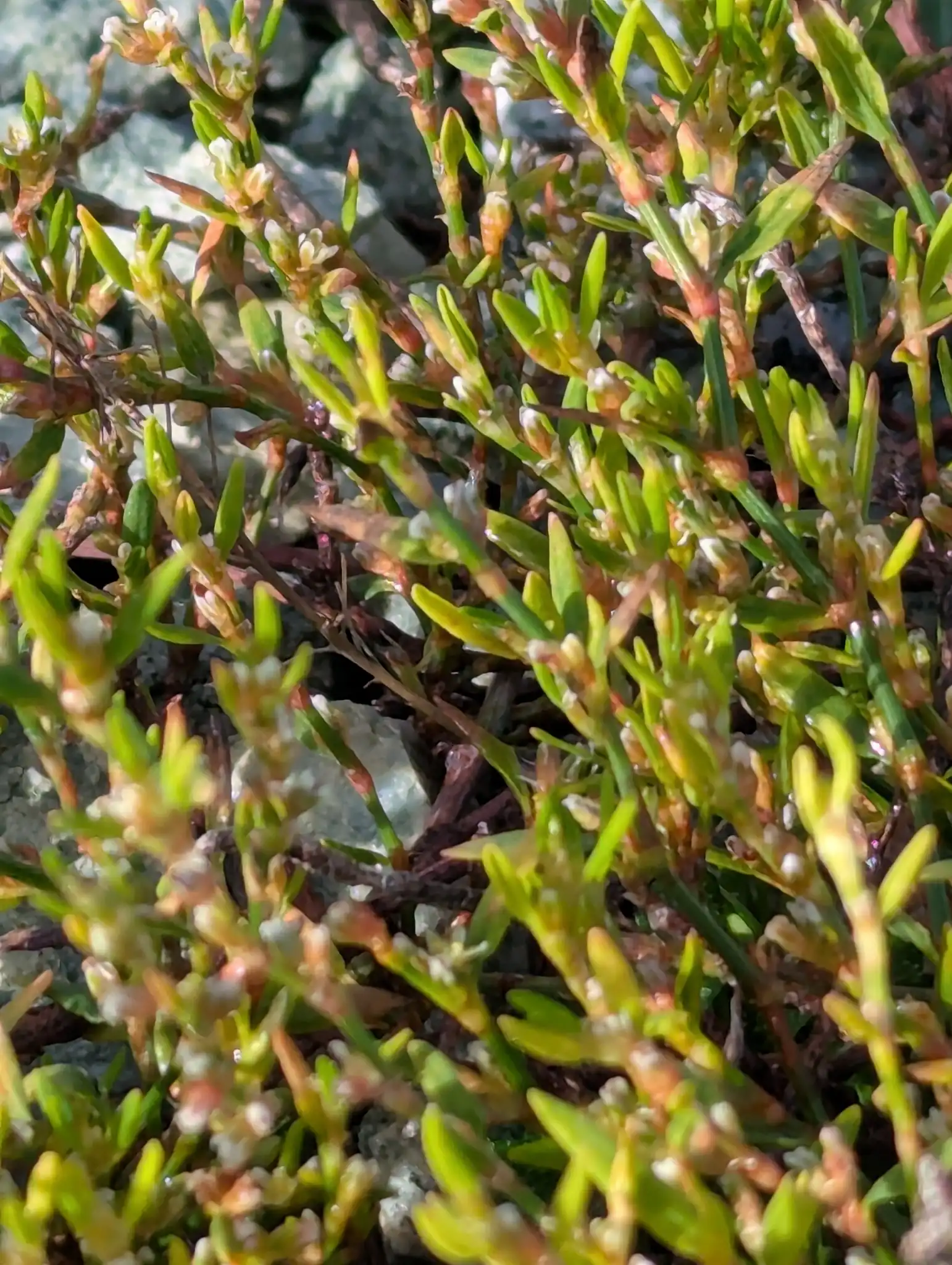
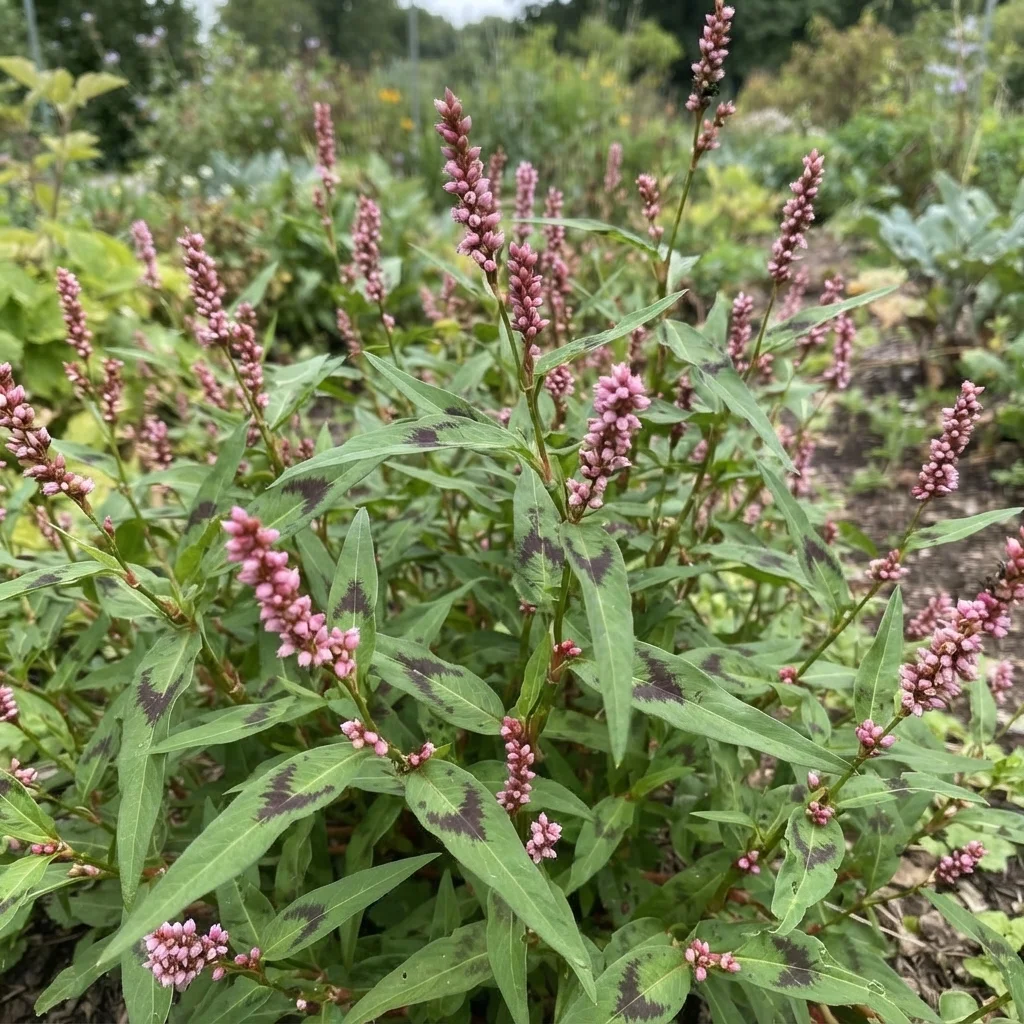
Polygonum aviculare, commonly known as prostrate knotweed, is a low-growing annual or short-lived perennial herb native to Eurasia that has naturalized globally. It forms dense, flat mats of tough, wiry, jointed stems detailed by prominent, silvery-white membranous sheaths at the leaf nodes.
This species is distinguished by its extreme tolerance for compacted, heavily trampled soils where other vegetation fails to survive. Its small, bluish-green, lanceolate leaves are accompanied by tiny, greenish-white flowers with pink or purple margins nestled in the leaf axils.
Uses & Benefits:
Essentials
At a Glance
Plant Type
Annual
Height
4"
Width
48"
Light
Full Sun
Zones
4, 5, 6, 7, 8, 9
Water
Low
Humidity
High
Lifespan
Annual
Native To
Eurasia
Toxicity
Non-toxic
Bloom period
Summer – Fall
In flower about 6 months of the year
Planting
How to Grow
- Identify seedlings early in spring by their narrow, bluish-green leaves and wiry, prostrate growth habit.
- Hoe or hand-pull young plants before they develop a deep, tenacious taproot.
- Sever mature plants below the crown using a sharp weeding tool to prevent regrowth.
- Bag and dispose of pulled plants immediately if flowers or seeds are present to prevent soil seed bank accumulation.
Pro Tip
To eradicate established plants, sever the tough, woody taproot completely below the soil surface; simple hand-pulling often snaps the wiry stems, leaving the crown to resprout.
Keep It Thriving
Care Guide
Do
- Sever the taproot below the crown to ensure complete removal of mature plants.
- Improve soil aeration and drainage to discourage colonization in turfgrass.
- Clean garden tools after working in infested areas to avoid spreading seeds.
Don't
- Do not allow plants to set seed, as a single specimen can rapidly populate garden beds.
- Do not rely on shallow hand-pulling, which leaves the root crown intact.
- Do not compost seeding plants, as the seeds survive standard cold composting processes.
Seasonal Care Calendar
| Task | Jan | Feb | Mar | Apr | May | Jun | Jul | Aug | Sep | Oct | Nov | Dec |
|---|---|---|---|---|---|---|---|---|---|---|---|---|
| Pest Check | ||||||||||||
| Spray | ||||||||||||
| Spring Cleanup | ||||||||||||
| Winter Prep |
Watch Out For
Pests & Diseases
Common Pests
Common Diseases
Good to Know
Common Questions
Prostrate Knotweed questions
What zones can Prostrate Knotweed grow in?
Prostrate Knotweed is hardy in USDA Zones 4–9. Inside that range it survives winter in the ground; outside it, grow it as an annual or a container plant you protect.
When does Prostrate Knotweed bloom?
Prostrate Knotweed typically blooms in summer through fall. Exact timing shifts a week or two with your zone — Sow's bloom calendar maps it to your garden.
Does Prostrate Knotweed need full sun?
Prostrate Knotweed does best in full sun (6+ hours).
Is Prostrate Knotweed drought tolerant?
Yes — once established (usually after the first full season), Prostrate Knotweed handles dry spells with minimal watering. Water deeply its first year to build the root system that makes that possible.
More Polygonum to compare
Keep exploring
Explore the genus
Grow Prostrate Knotweed with confidence
See it in a design of your actual yard, get zone-matched care reminders, and track it season by season in your garden journal.