The Story
Plant Bio
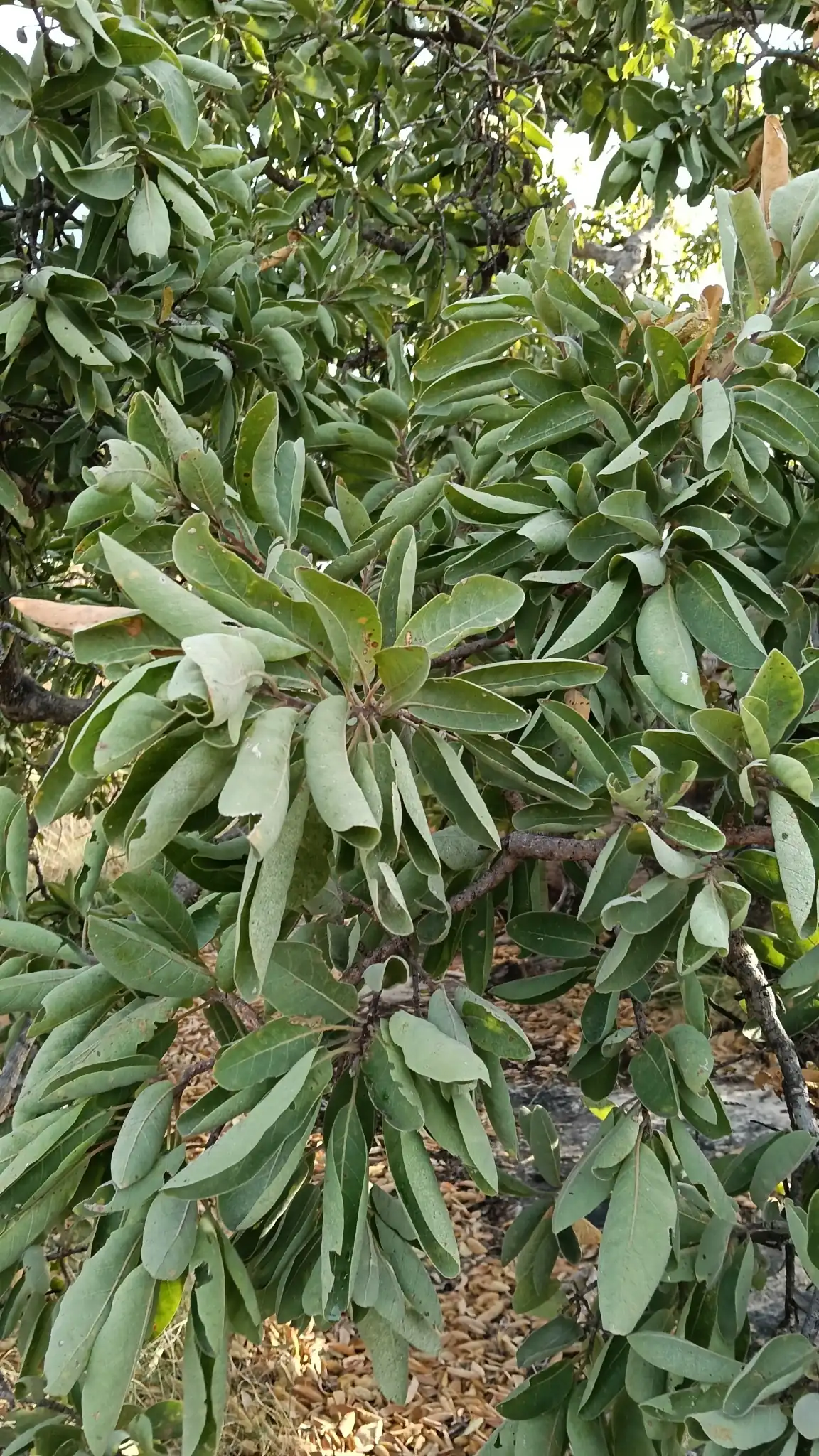
Terminalia ferdinandiana is a deciduous tropical tree native to northern Australia, characterized by a straight trunk, crooked branches, and an open, spreading crown. The tree drops its leaves during the dry season, displaying alternate, glossy green leaves clustered at the branchlet tips that turn yellow or red before falling.
This species is highly sought after for its smooth, fleshy green drupes, which are famous for containing exceptionally high concentrations of vitamin C. Small, creamy-white to greenish-yellow flowers appear on slender spikes in spring, followed by the tart, edible fruits.
Uses & Benefits:
Essentials
At a Glance
Plant Type
Tree
Height
551"
Width
394"
Light
Full Sun
Zones
10
Water
Low
Humidity
High
Lifespan
Long
Native To
Australia
Toxicity
Non-toxic
Bloom period
Spring – Early summer
In flower about 4 months of the year
Planting
How to Grow
- Select a deep container filled with a highly porous, sandy potting medium to ensure rapid drainage.
- Position the plant in a location that receives full sun and maintains warm, frost-free temperatures year-round.
- Water deeply during the active summer growing season, allowing the substrate to dry out completely between waterings.
- Reduce watering to a bare minimum during the cool winter months when the tree sheds its leaves and enters dormancy.
Pro Tip
Do not mistake dry-season leaf drop for death; this deciduous phase is a natural survival mechanism, and watering must be severely restricted during this dormant period to prevent root rot.
Keep It Thriving
Care Guide
Do
- Ensure the growing medium has excellent drainage to prevent waterlogging.
- Provide maximum sunlight exposure to mimic its native open woodland habitat.
- Protect the plant from any exposure to frost or freezing temperatures.
Don't
- Do not overwater during the cool or dormant winter phase.
- Do not plant in heavy clay soils or poorly drained containers.
- Do not prune heavily into old, leafless wood.
Seasonal Care Calendar
| Task | Jan | Feb | Mar | Apr | May | Jun | Jul | Aug | Sep | Oct | Nov | Dec |
|---|---|---|---|---|---|---|---|---|---|---|---|---|
| Fertilize | ||||||||||||
| Pest Check | ||||||||||||
| Prune | ||||||||||||
| Winter Prep |
Watch Out For
Pests & Diseases
Common Pests
Common Diseases
In the Garden
Landscape Uses & Companions
Landscape Uses
Companion Plants
Multiply
Propagation Methods
Good to Know
Common Questions
Kakadu Plum questions
What zones can Kakadu Plum grow in?
Kakadu Plum is hardy in USDA Zone 10. Inside that range it survives winter in the ground; outside it, grow it as an annual or a container plant you protect.
When does Kakadu Plum bloom?
Kakadu Plum typically blooms in spring through early summer. Exact timing shifts a week or two with your zone — Sow's bloom calendar maps it to your garden.
Does Kakadu Plum need full sun?
Kakadu Plum does best in full sun (6+ hours).
Is Kakadu Plum drought tolerant?
Yes — once established (usually after the first full season), Kakadu Plum handles dry spells with minimal watering. Water deeply its first year to build the root system that makes that possible.
Keep exploring
Explore the genus
Hardy in your zone?
Grow Kakadu Plum with confidence
See it in a design of your actual yard, get zone-matched care reminders, and track it season by season in your garden journal.