The Story
Plant Bio
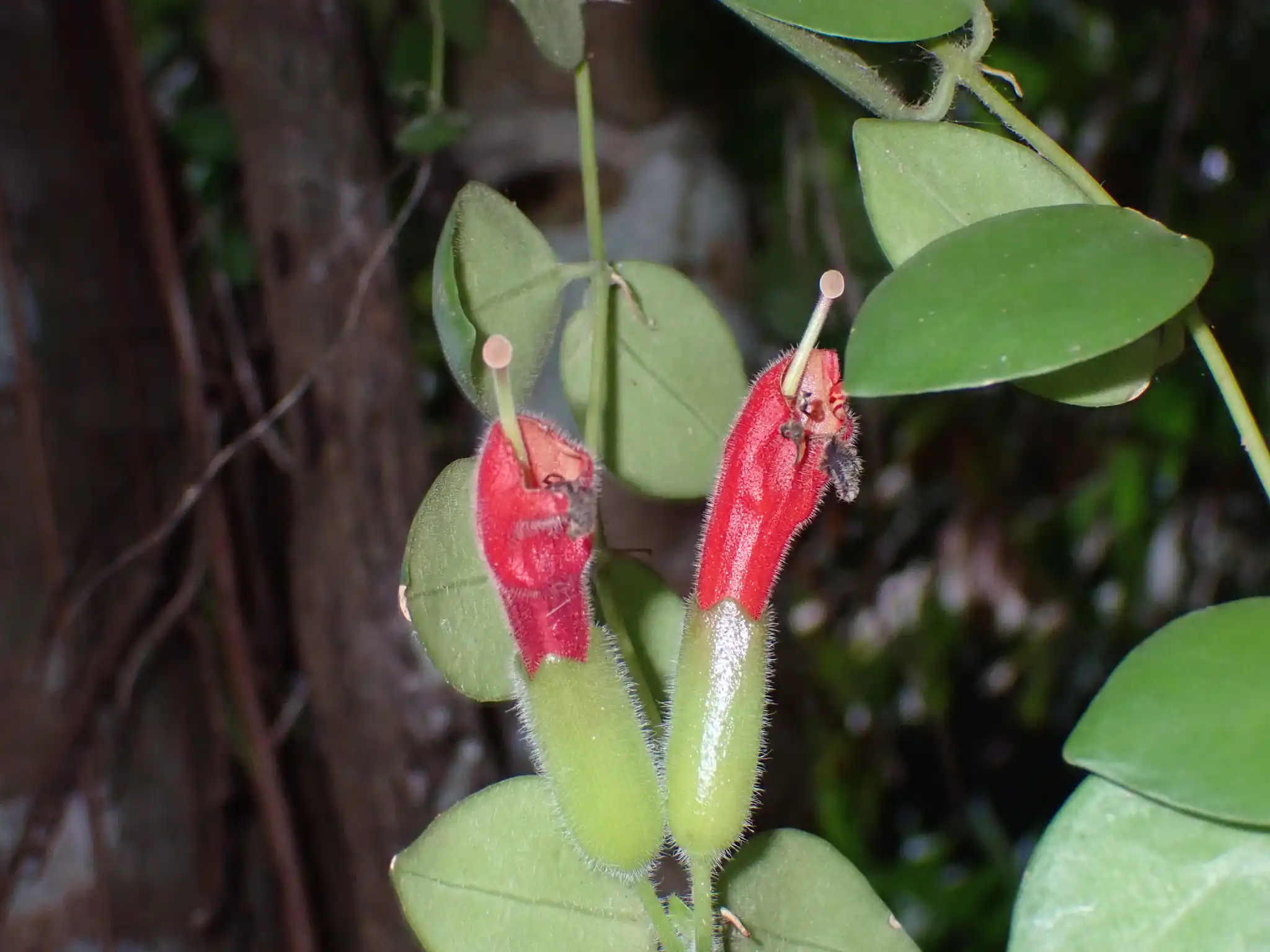
Aeschynanthus radicans is an epiphytic evergreen perennial native to the humid tropical forests of Southeast Asia, characterized by its trailing, arching stems. The fleshy, leathery, dark green leaves provide a dense backdrop for terminal clusters of tubular, bright red flowers that emerge from dark maroon calyces.
The distinctive tubular flowers resemble a tube of lipstick emerging from its case, attracting hummingbirds when grown outdoors. Under high light levels, the glossy new foliage often develops subtle red margins or tints.
Uses & Benefits:
Essentials
At a Glance
Plant Type
Tropical
Height
60"
Width
20"
Light
Partial Sun, Shade
Zones
10
Water
Moderate
Humidity
High (50%-80%)
Lifespan
Perennial
Native To
Southeast Asia
Toxicity
Non-toxic
Bloom period
Spring – Summer
In flower about 6 months of the year
Planting
How to Grow
- Plant in a loose, highly organic epiphytic medium blending orchid bark, peat moss, and perlite to ensure rapid drainage.
- Position in bright, indirect light, shielding the foliage from direct afternoon sun which scorches the leaves.
- Water thoroughly when the top inch of the medium feels dry, maintaining even moisture without allowing the roots to sit in standing water.
- Maintain high humidity levels between 50% and 80% using a humidifier or gravel tray, ensuring adequate air circulation around the stems.
Pro Tip
A cool, dry winter rest period triggers abundant spring bud initiation; overwatering during this semi-dormant phase or misting the open flowers directly will cause root and blossom rot.
Keep It Thriving
Care Guide
Do
- Allow the plant to experience slightly cooler temperatures and reduced watering in winter to stimulate spring flowering.
- Prune trailing stems back by a few inches after the flowering season to encourage bushier growth.
- Apply a balanced, low-concentration liquid fertilizer monthly during the active spring and summer growing periods.
Don't
- Do not cut back into old, leafless woody stems as they fail to regenerate new growth.
- Do not use heavy, dense garden soils which suffocate the epiphytic root system and cause rot.
- Do not mist the flowers directly, as trapped moisture leads to blossom rot.
Seasonal Care Calendar
| Task | Jan | Feb | Mar | Apr | May | Jun | Jul | Aug | Sep | Oct | Nov | Dec |
|---|---|---|---|---|---|---|---|---|---|---|---|---|
| Fertilize | ||||||||||||
| Pest Check | ||||||||||||
| Prune | ||||||||||||
| Winter Prep |
Watch Out For
Pests & Diseases
Common Pests
Common Diseases
In the Garden
Landscape Uses & Companions
Landscape Uses
Companion Plants
Multiply
Propagation Methods
Good to Know
Common Questions
Lipstick Plant questions
What zones can Lipstick Plant grow in?
Lipstick Plant is hardy in USDA Zone 10. Inside that range it survives winter in the ground; outside it, grow it as an annual or a container plant you protect.
When does Lipstick Plant bloom?
Lipstick Plant typically blooms in spring through summer. Exact timing shifts a week or two with your zone — Sow's bloom calendar maps it to your garden.
Does Lipstick Plant need full sun?
Lipstick Plant does best in part shade.
Keep exploring
Explore the genus
Hardy in your zone?
Grow Lipstick Plant with confidence
See it in a design of your actual yard, get zone-matched care reminders, and track it season by season in your garden journal.