The Story
Plant Bio
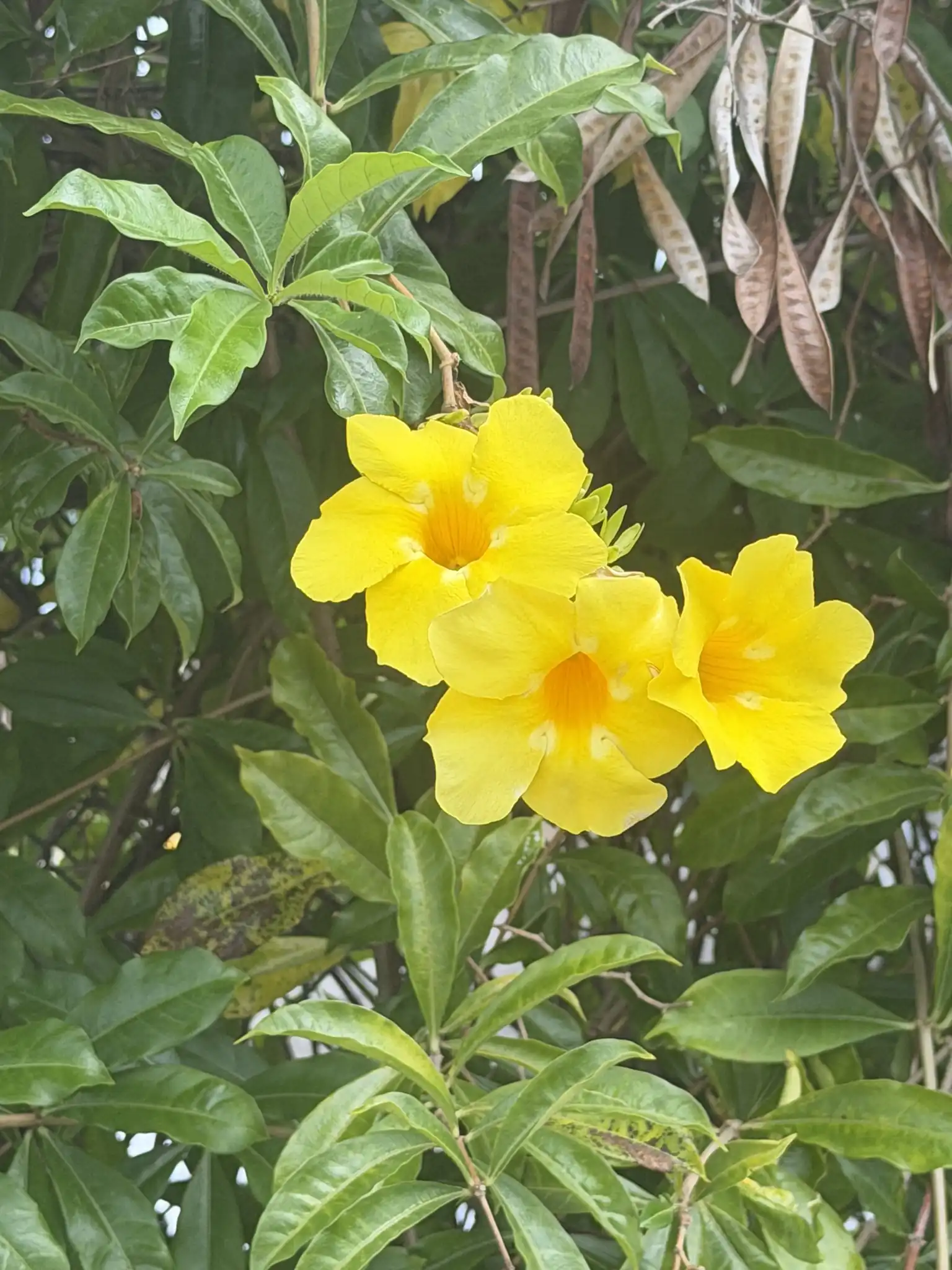
Allamanda cathartica is an evergreen, woody-stemmed scrambling shrub or climbing vine native to Central and South America. Lacking tendrils, aerial roots, or twining mechanisms, the plant relies on physical support to ascend, displaying glossy, leathery dark green leaves arranged in whorls along stems that exude a milky, toxic latex when cut.
This species is distinguished by its large, bright golden-yellow, trumpet-shaped flowers that reach up to six inches across and feature a long cylindrical tube with five overlapping lobes. The blooms appear in terminal clusters from late spring through fall, or continuously year-round in frost-free tropical climates.
Uses & Benefits:
Essentials
At a Glance
Plant Type
Vine
Height
240"
Width
120"
Light
Full Sun, Partial Sun
Zones
10
Water
Moderate
Humidity
High
Lifespan
Perennial
Native To
Central and South America
Toxicity
Toxic if ingested; sap is a skin irritant
Bloom period
Late spring – Fall
In flower about 7 months of the year
Planting
How to Grow
- Plant in a location receiving at least six hours of direct daily sunlight to maximize flower production.
- Use rich, organic, highly permeable soil with a slightly acidic to neutral pH between 5.5 and 7.0.
- Water consistently to keep the soil evenly moist during the active growing season, ensuring excellent drainage to prevent root rot.
- Apply a balanced or high-potassium liquid fertilizer every two to three weeks from spring through summer.
Pro Tip
Secure the lax, non-twining stems to a sturdy trellis or support structure manually, as the vine cannot self-cling and will otherwise collapse into a sprawling shrub.
Keep It Thriving
Care Guide
Do
- Wear gloves when pruning to protect skin from the irritating milky latex sap.
- Prune the plant back hard in late winter or early spring to stimulate new flowering wood.
- Provide a strong physical support structure and tie the stems regularly.
Don't
- Do not allow the soil to become waterlogged, as stagnant moisture quickly causes fatal root rot.
- Do not fertilize during the winter rest period when active growth slows.
- Do not plant outdoors in regions subject to frost or freezing temperatures.
Seasonal Care Calendar
| Task | Jan | Feb | Mar | Apr | May | Jun | Jul | Aug | Sep | Oct | Nov | Dec |
|---|---|---|---|---|---|---|---|---|---|---|---|---|
| Fertilize | ||||||||||||
| Pest Check | ||||||||||||
| Prune | ||||||||||||
| Winter Prep |
Watch Out For
Pests & Diseases
Common Pests
Common Diseases
In the Garden
Landscape Uses & Companions
Landscape Uses
Companion Plants
Multiply
Propagation Methods
Good to Know
Common Questions
Golden Trumpet questions
What zones can Golden Trumpet grow in?
Golden Trumpet is hardy in USDA Zone 10. Inside that range it survives winter in the ground; outside it, grow it as an annual or a container plant you protect.
When does Golden Trumpet bloom?
Golden Trumpet typically blooms in late spring through fall. Exact timing shifts a week or two with your zone — Sow's bloom calendar maps it to your garden.
Does Golden Trumpet need full sun?
Golden Trumpet does best in full sun to part shade. In hot climates, afternoon shade keeps blooms fresher longer.
Is Golden Trumpet drought tolerant?
Yes — once established (usually after the first full season), Golden Trumpet handles dry spells with minimal watering. Water deeply its first year to build the root system that makes that possible.
Keep exploring
Explore the genus
Hardy in your zone?
Grow Golden Trumpet with confidence
See it in a design of your actual yard, get zone-matched care reminders, and track it season by season in your garden journal.