The Story
Plant Bio
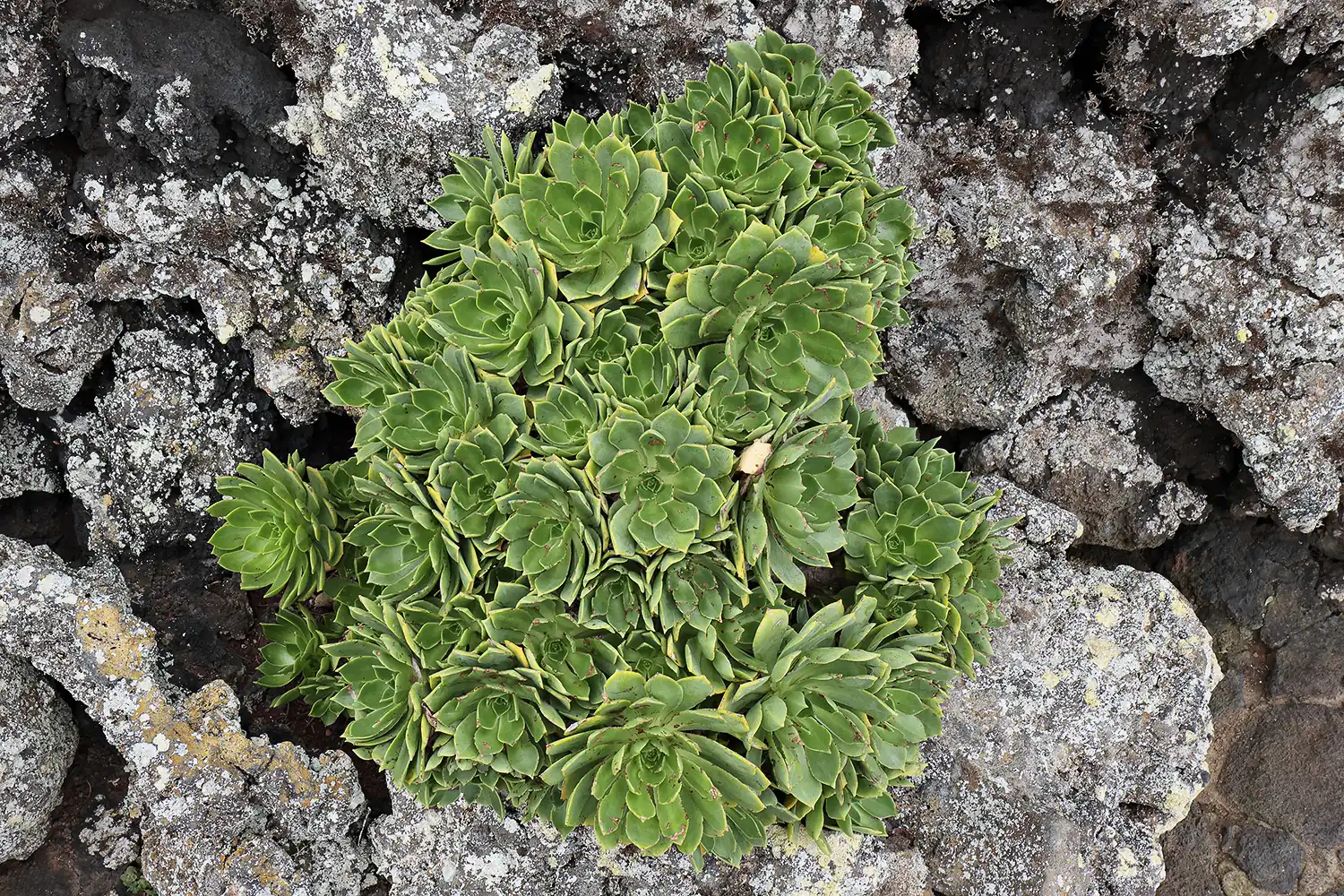
Aeonium lancerottense is a densely branched succulent subshrub native to the volcanic soils of Lanzarote, forming a low, hemispherical mound of ascending stems. Fleshy, smooth, green to yellowish-green leaves with reddish margins are arranged in flat terminal rosettes that reach up to seven inches in diameter.
In summer, cone-shaped clusters of whitish flowers with distinctive pink median stripes rise on strong stalks up to two feet above the foliage. The plant undergoes a semi-dormancy period during the heat of summer, during which its water requirements drop significantly.
Uses & Benefits:
Essentials
At a Glance
Plant Type
Cactus Succulent
Height
24"
Width
35"
Light
Full Sun, Partial Sun
Zones
9, 10
Water
Low
Humidity
Low to Moderate
Lifespan
Perennial
Native To
Canary Islands (Lanzarote)
Toxicity
Non-toxic
Bloom period
Summer
In flower about 3 months of the year
Planting
How to Grow
- Select a planting site with full sun to partial shade, ensuring protection from intense, baking afternoon sun which can scorch the foliage.
- Plant in exceptionally well-draining soil, such as a gritty sandy loam or a specialized cactus and succulent potting mix.
- Water deeply but infrequently during the active winter and spring growth phases, allowing the soil to dry out completely between waterings.
- Withhold water almost entirely during the hot summer months when the plant enters its natural semi-dormancy.
Pro Tip
Do not mistake summer leaf curling for dehydration; this is a natural heat-defense mechanism, and watering during this semi-dormant period frequently causes fatal root rot.
Keep It Thriving
Care Guide
Do
- Ensure the planting medium has sharp, immediate drainage to prevent wet soil from rotting the root system.
- Protect the plant from hard freezes, as it is tender and suffers damage below 20 degrees Fahrenheit.
- Remove spent flower stalks and completely dried lower leaves to maintain a clean appearance.
Don't
- Do not overwater during the summer dormancy period when the plant's metabolic activity slows.
- Do not prune aggressively into old, leafless woody stems, as these areas often fail to produce new buds.
- Do not apply heavy horticultural oils to treat pests, as these ruin the natural finish of the leaves.
Seasonal Care Calendar
| Task | Jan | Feb | Mar | Apr | May | Jun | Jul | Aug | Sep | Oct | Nov | Dec |
|---|---|---|---|---|---|---|---|---|---|---|---|---|
| Fertilize | ||||||||||||
| Pest Check | ||||||||||||
| Propagate | ||||||||||||
| Prune |
Watch Out For
Pests & Diseases
Common Pests
Common Diseases
In the Garden
Landscape Uses & Companions
Landscape Uses
Companion Plants
Multiply
Propagation Methods
Good to Know
Common Questions
Lava-field aeonium questions
What zones can Lava-field aeonium grow in?
Lava-field aeonium is hardy in USDA Zones 9–10. Inside that range it survives winter in the ground; outside it, grow it as an annual or a container plant you protect.
Is Lava-field aeonium deer resistant?
Yes — Lava-field aeonium is rated deer-resistant. Deer typically pass it over, though extreme hunger can override any plant's defenses.
When does Lava-field aeonium bloom?
Lava-field aeonium typically blooms in summer through summer. Exact timing shifts a week or two with your zone — Sow's bloom calendar maps it to your garden.
Does Lava-field aeonium need full sun?
Lava-field aeonium does best in full sun to part shade. In hot climates, afternoon shade keeps blooms fresher longer.
Is Lava-field aeonium drought tolerant?
Yes — once established (usually after the first full season), Lava-field aeonium handles dry spells with minimal watering. Water deeply its first year to build the root system that makes that possible.
More Aeonium to compare
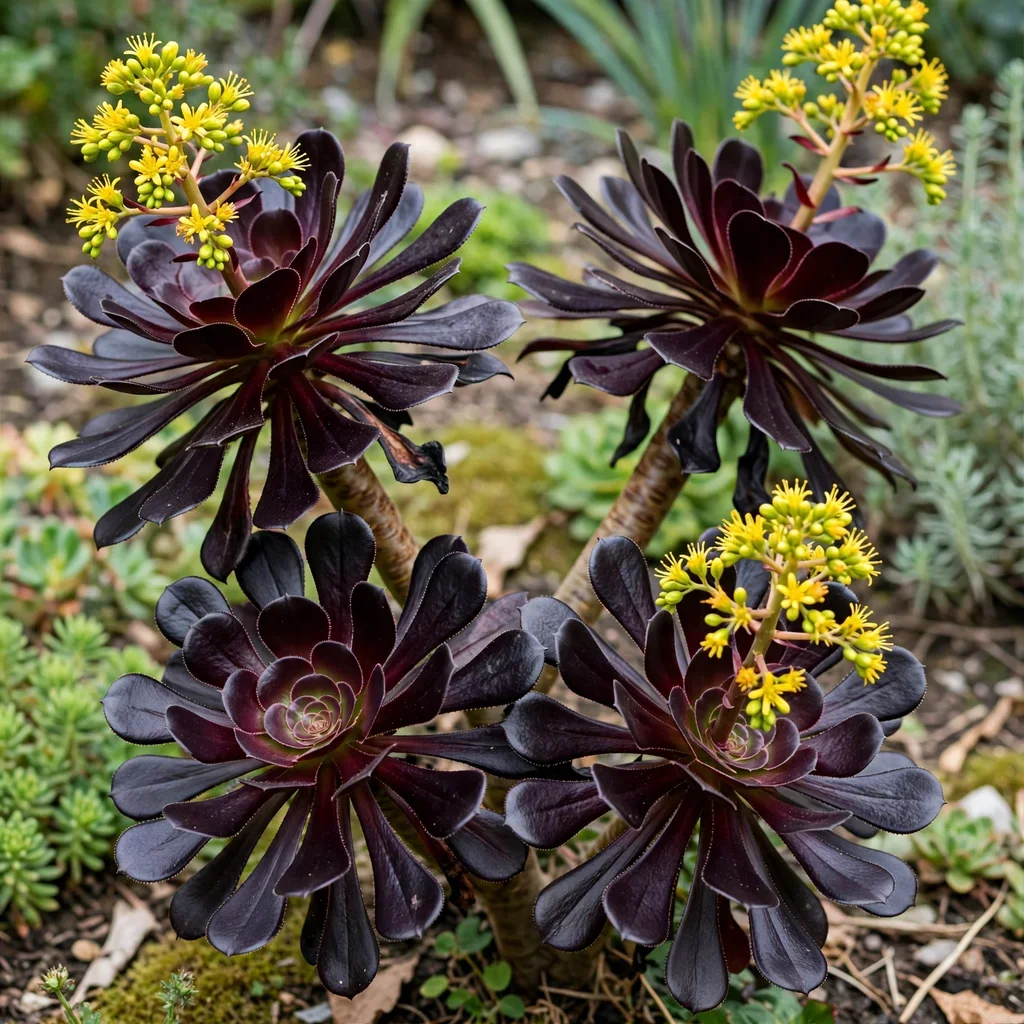
Black Rose Aeonium
Aeonium arboreum 'Zwartkop'
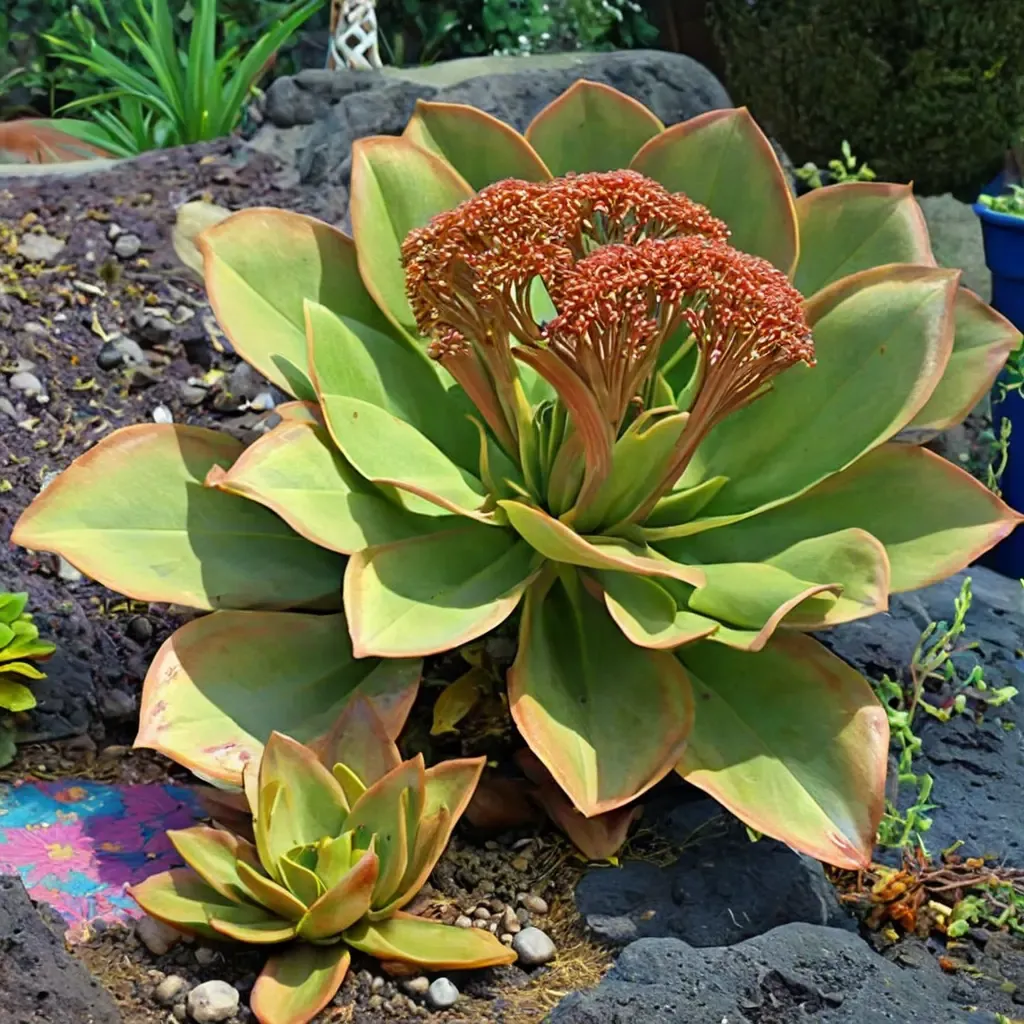
Noble Aeonium
Aeonium nobile
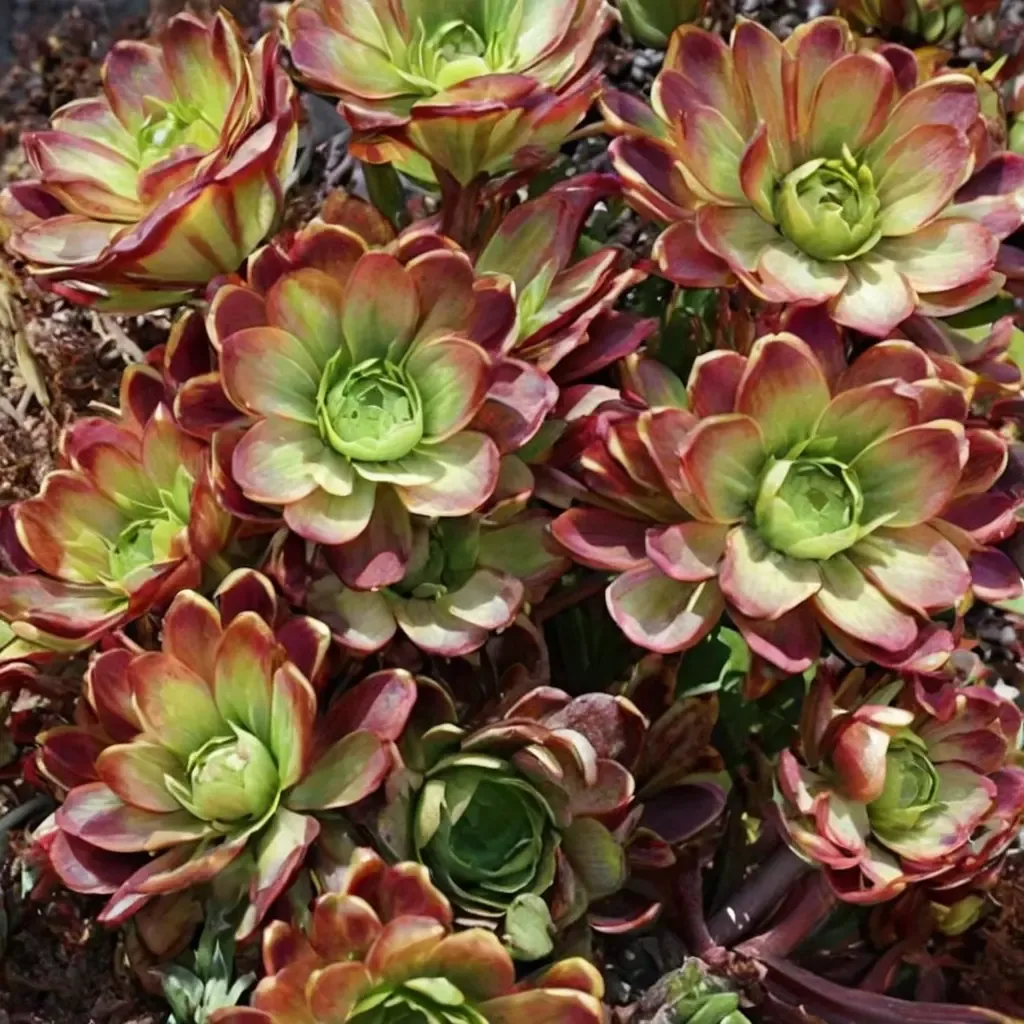
Jack Catlin aeonium Tree aeonium
Aeonium arboreum 'Jack Catlin'
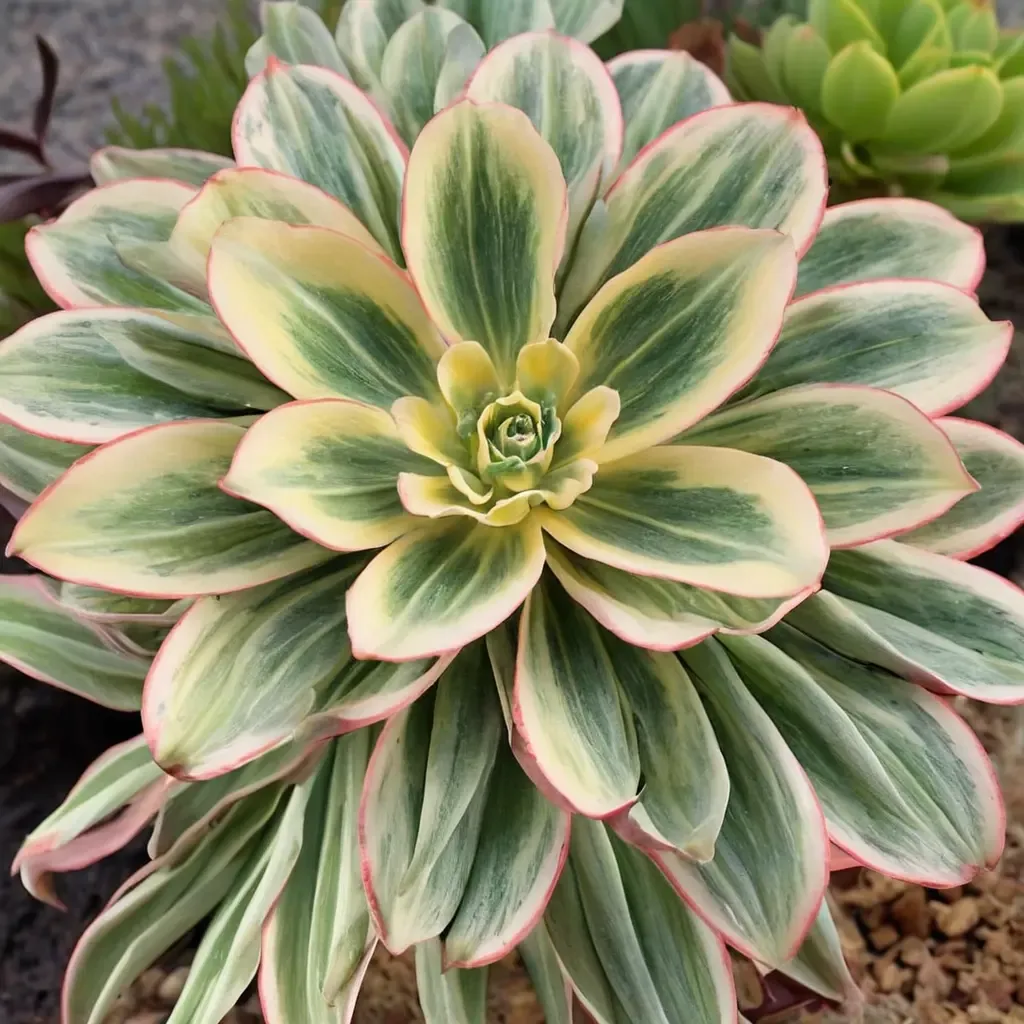
Sunburst Aeonium
Aeonium decorum 'Sunburst'
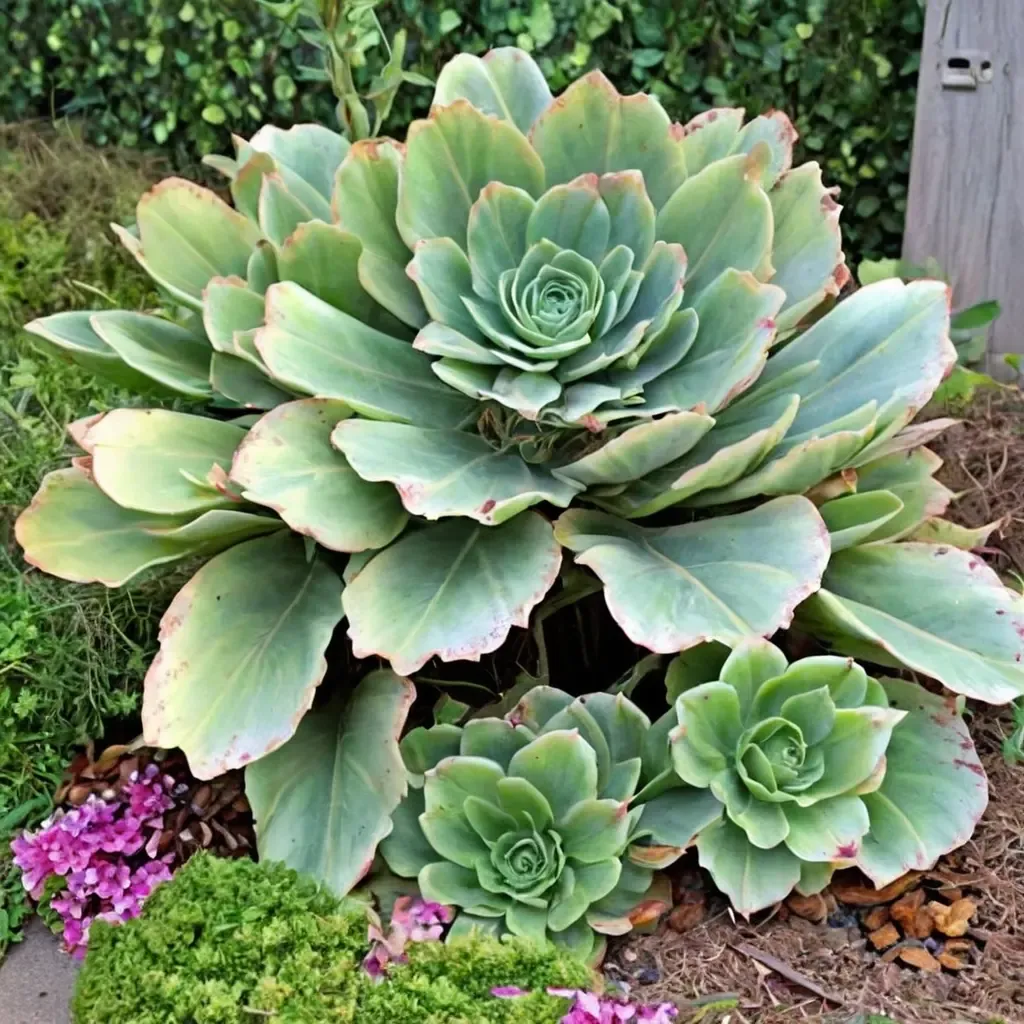
Tree Houseleek
Aeonium escobarii
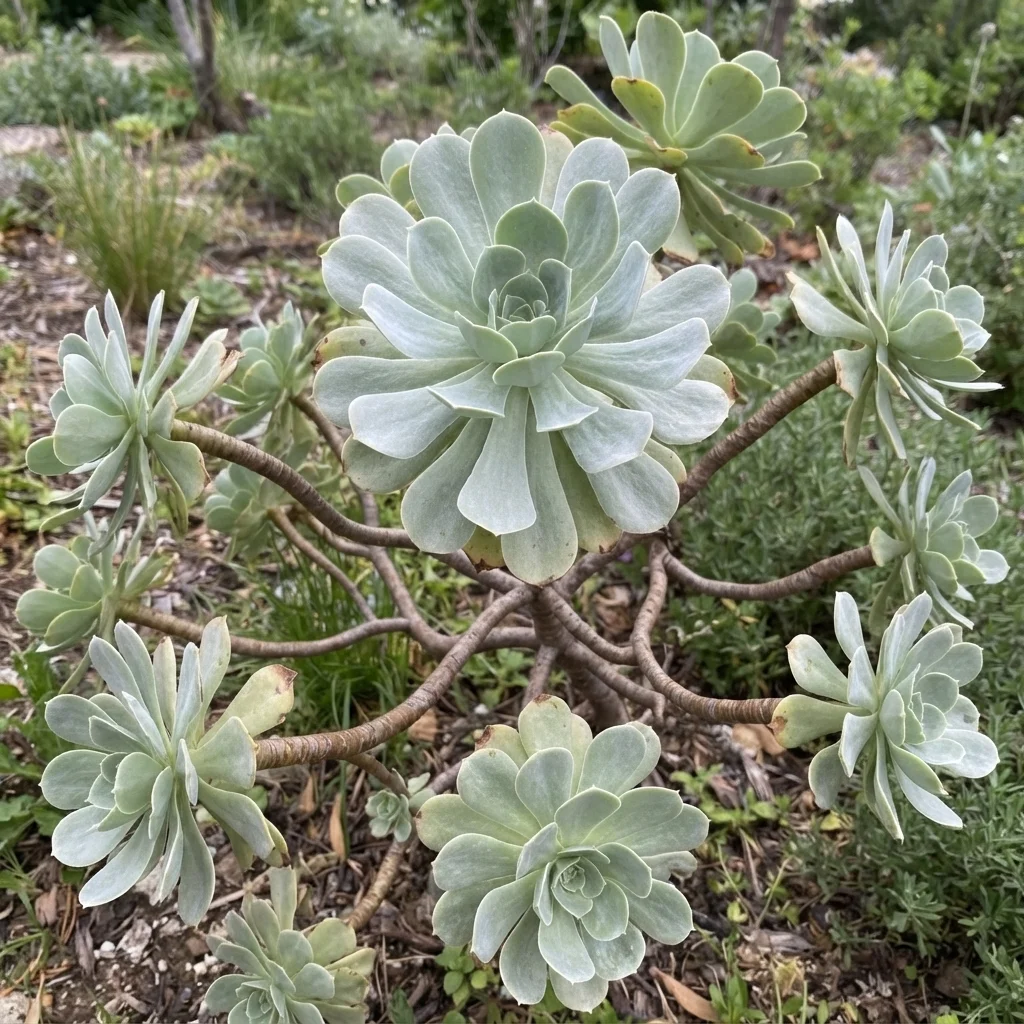
Balsam Aeonium
Aeonium balsamiferum
Keep exploring
Explore the genus
Hardy in your zone?
Grow Lava-field aeonium with confidence
See it in a design of your actual yard, get zone-matched care reminders, and track it season by season in your garden journal.