The Story
Plant Bio
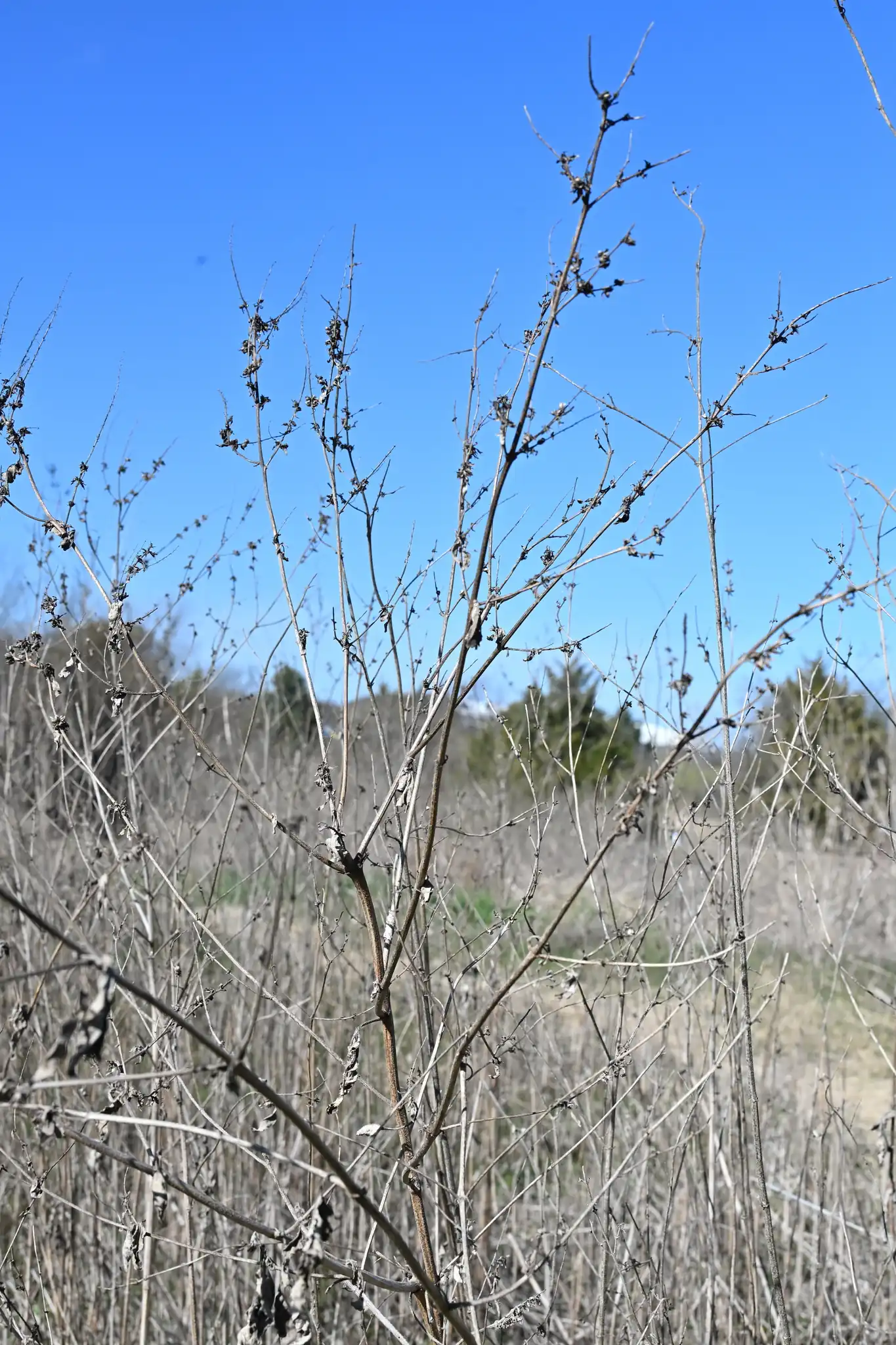
Ambrosia trifida, commonly known as giant ragweed, is a robust, fast-growing summer annual native to North America that thrives in fertile, moist soils. The erect, branching stems bear large, rough-textured leaves with three to five deep lobes and produce inconspicuous greenish flower spikes from summer into fall.
This species is distinguished by its immense height, often exceeding ten feet in optimal conditions, and its production of highly allergenic wind-borne pollen. The seeds provide high-energy nutrition for game birds and small mammals, though the plant is widely classified as a noxious agricultural weed.
Uses & Benefits:
Essentials
At a Glance
Plant Type
Annual
Height
142"
Width
47"
Light
Full Sun
Zones
4, 5, 6, 7, 8, 9
Water
Medium
Humidity
High
Lifespan
Annual
Native To
North America
Toxicity
Skin Irritant / Allergenic Pollen
Bloom period
Summer – Fall
In flower about 6 months of the year
Planting
How to Grow
- Sow seeds directly into moist, nitrogen-rich loam or clay in a location receiving full sun.
- Maintain consistent soil moisture during early growth stages to support rapid stem elongation.
- Monitor for stalk-boring insects and hand-pick or remove affected stems immediately.
- Cut the entire plant to the ground in late summer before seed heads mature to control spreading.
Pro Tip
To prevent aggressive self-seeding and the release of allergenic pollen, cut the stalks down completely before the terminal male flowers begin to shed pollen in midsummer.
Keep It Thriving
Care Guide
Do
- Grow only in controlled restoration areas where its aggressive self-seeding can be managed.
- Wear gloves and long sleeves when handling the plant to avoid skin irritation from the sap.
- Allow seeds to persist into winter if managing specifically for game bird forage.
Don't
- Do not apply supplemental fertilizer, as this species already thrives aggressively on existing soil nutrients.
- Do not use overhead watering, which increases susceptibility to powdery mildew and leaf scorch.
- Do not allow the plant to flower if sensitive individuals in the area suffer from seasonal hay fever.
Seasonal Care Calendar
| Task | Jan | Feb | Mar | Apr | May | Jun | Jul | Aug | Sep | Oct | Nov | Dec |
|---|---|---|---|---|---|---|---|---|---|---|---|---|
| Harvest | ||||||||||||
| Pest Check | ||||||||||||
| Plant | ||||||||||||
| Prune |
Watch Out For
Pests & Diseases
Common Pests
Common Diseases
In the Garden
Landscape Uses & Companions
Landscape Uses
Multiply
Propagation Methods
Good to Know
Common Questions
Giant Ragweed questions
What zones can Giant Ragweed grow in?
Giant Ragweed is hardy in USDA Zones 4–9. Inside that range it survives winter in the ground; outside it, grow it as an annual or a container plant you protect.
Is Giant Ragweed deer resistant?
Not reliably. Deer may browse Giant Ragweed, especially tender spring growth — plan on repellents or fencing where pressure is high.
When does Giant Ragweed bloom?
Giant Ragweed typically blooms in summer through fall. Exact timing shifts a week or two with your zone — Sow's bloom calendar maps it to your garden.
Does Giant Ragweed need full sun?
Giant Ragweed does best in full sun (6+ hours).
More Ambrosia to compare
Keep exploring
Explore the genus
Grow Giant Ragweed with confidence
See it in a design of your actual yard, get zone-matched care reminders, and track it season by season in your garden journal.