The Story
Plant Bio
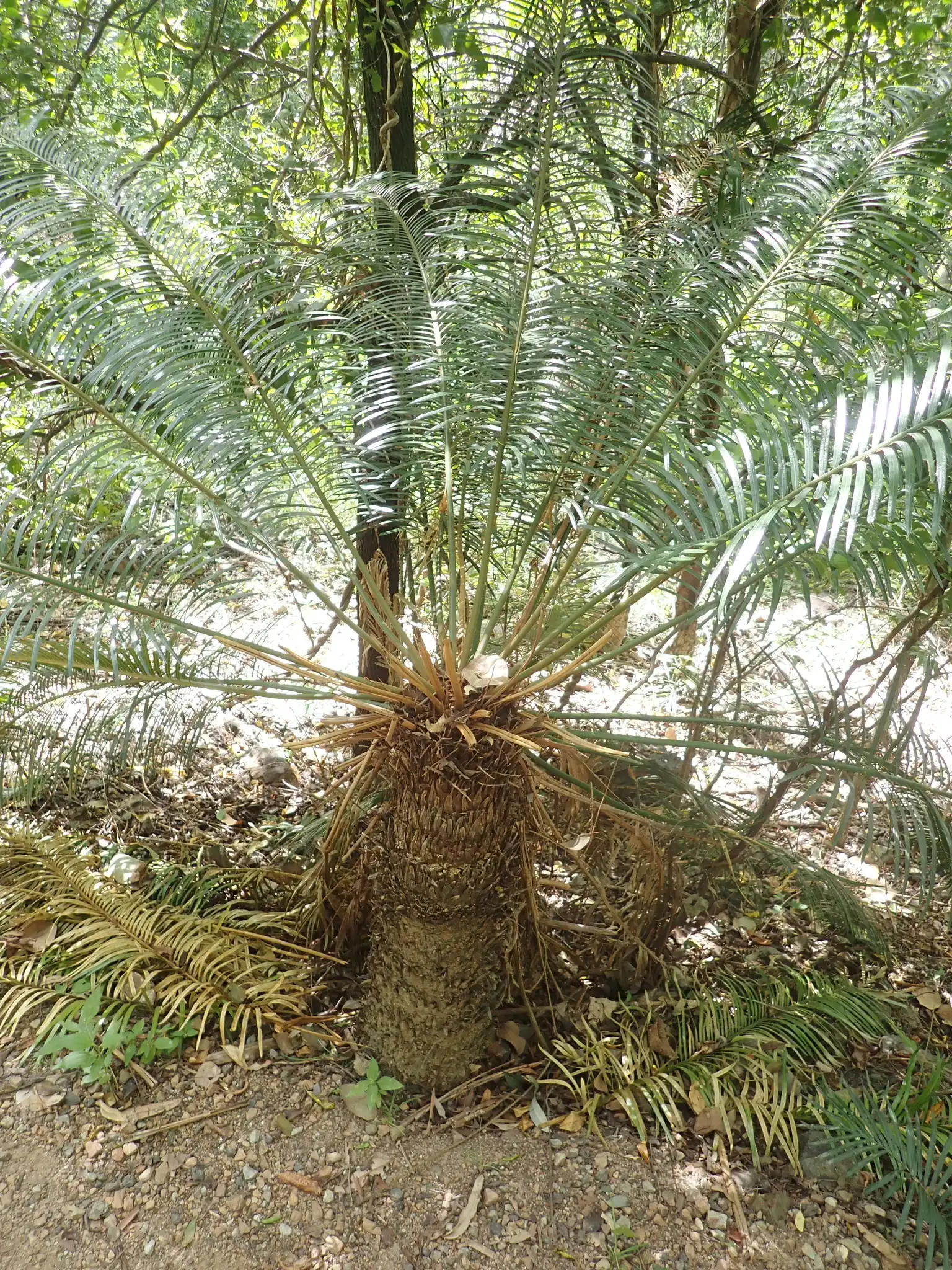
Cycas media is an arborescent, palm-like gymnosperm featuring a single, woody, columnar trunk topped with a crown of stiff, arching pinnate fronds. The dark green, highly glossy leaves carry rigid, narrow leaflets with recurved margins and sharp terminal points.
This dioecious species produces large, woolly, brownish-yellow pollen cones on male plants, while female plants bear orange-yellow seeds on modified leaf-like structures. New foliage emerges in distinct, vibrant bright green flushes from the center of the crown.
Uses & Benefits:
Essentials
At a Glance
Plant Type
Tropical
Height
240"
Width
90"
Light
Full Sun, Partial Sun
Zones
9, 10
Water
Low
Humidity
High
Lifespan
Long-lived (decades)
Native To
Australia, New Guinea
Toxicity
Highly toxic to humans and pets
Bloom period
Spring – Summer
In flower about 6 months of the year
Planting
How to Grow
- Select a planting site with full sun to partial shade and exceptionally well-draining sandy or loamy soil.
- Dig a hole twice as wide as the root ball but no deeper, ensuring the plant sits at the same soil level as in its container.
- Water deeply immediately after planting, then allow the soil to dry out completely between waterings to prevent root rot.
- Apply a slow-release, balanced palm or cycad fertilizer containing magnesium and manganese once in spring and once in summer.
Pro Tip
Never prune green fronds to shape the crown or create a 'pineapple' look, as this starves the trunk of essential carbohydrates; remove only completely dead, brown lower leaves.
Keep It Thriving
Care Guide
Do
- Plant in sharply draining sandy or rocky soil mixes.
- Water sparingly, allowing the root zone to dry completely between applications.
- Wear thick gloves when handling to protect against sharp leaf spines.
- Apply a balanced cycad fertilizer with micronutrients twice a year.
Don't
- Do not plant in heavy clay or low-lying areas where water pools.
- Do not cut off green or partially yellowing fronds.
- Do not overwater during cool winter months when growth slows.
- Do not allow pets or livestock near the plant due to extreme toxicity.
Seasonal Care Calendar
| Task | Jan | Feb | Mar | Apr | May | Jun | Jul | Aug | Sep | Oct | Nov | Dec |
|---|---|---|---|---|---|---|---|---|---|---|---|---|
| Fertilize | ||||||||||||
| Pest Check | ||||||||||||
| Prune | ||||||||||||
| Winter Prep |
Watch Out For
Pests & Diseases
Common Pests
Common Diseases
In the Garden
Landscape Uses & Companions
Landscape Uses
Companion Plants
Multiply
Propagation Methods
Good to Know
Common Questions
Zamia Palm questions
What zones can Zamia Palm grow in?
Zamia Palm is hardy in USDA Zones 9–10. Inside that range it survives winter in the ground; outside it, grow it as an annual or a container plant you protect.
Is Zamia Palm deer resistant?
Yes — Zamia Palm is rated deer-resistant. Deer typically pass it over, though extreme hunger can override any plant's defenses.
When does Zamia Palm bloom?
Zamia Palm typically blooms in spring through summer. Exact timing shifts a week or two with your zone — Sow's bloom calendar maps it to your garden.
Does Zamia Palm need full sun?
Zamia Palm does best in full sun to part shade. In hot climates, afternoon shade keeps blooms fresher longer.
Is Zamia Palm drought tolerant?
Yes — once established (usually after the first full season), Zamia Palm handles dry spells with minimal watering. Water deeply its first year to build the root system that makes that possible.
More Cycas to compare
Keep exploring
Explore the genus
Hardy in your zone?
Grow Zamia Palm with confidence
See it in a design of your actual yard, get zone-matched care reminders, and track it season by season in your garden journal.