The Story
Plant Bio
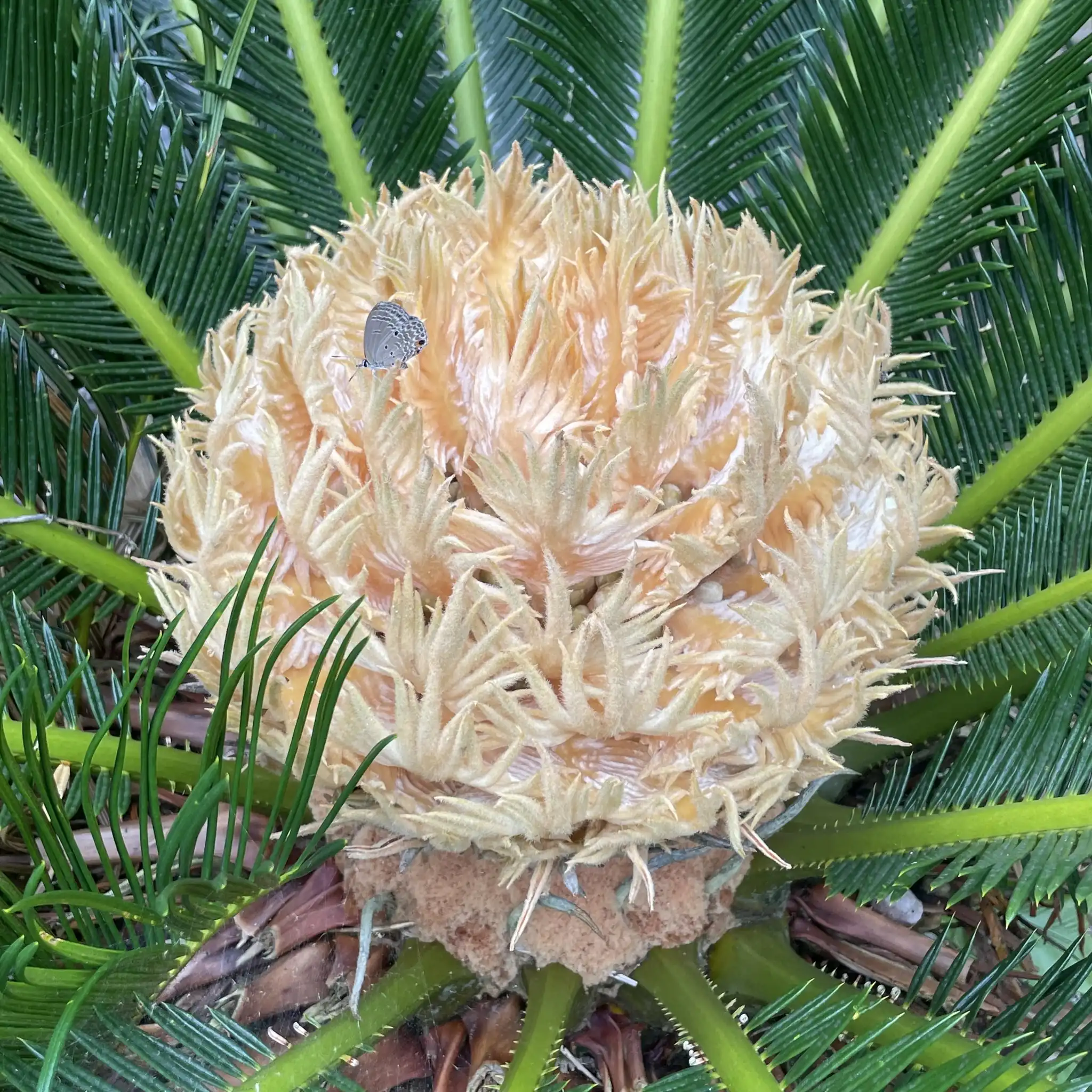
Cycas revoluta is a very slow-growing, evergreen cycad, often called a 'living fossil' due to its ancient lineage. It features a thick, shaggy trunk topped with a rosette of stiff, glossy, dark green, pinnate leaves.
Despite its common name, the Sago Palm is not a true palm but a cycad, more closely related to conifers. All parts of the plant, especially the seeds, are extremely toxic to humans and pets if ingested.
Uses & Benefits:
Essentials
At a Glance
Plant Type
Tree
Height
96"
Width
72"
Light
Full Sun, Partial Sun
Zones
9, 10
Water
Low to moderate
Humidity
Moderate
Lifespan
Very long-lived (over 100 years)
Native To
Southern Japan
Toxicity
Highly toxic to humans, dogs, and cats
Bloom period
Mid-summer – Late summer
In flower about 2 months of the year
Marketplace
Where to Buy
Shipping costs Year-round shipping Free shipping
Planting
How to Grow
- Select a spot with bright, indirect light or some direct sun.
- Use a fast-draining soil mix, like a cactus or palm potting mix.
- Dig a hole slightly larger than the root ball.
- Plant so the top of the root ball is slightly above the soil line.
- Backfill and water thoroughly, allowing soil to dry between waterings.
- Do not overwater, as this is the primary cause of failure.
Pro Tip
Excellent drainage is non-negotiable; amend soil with sand or grit to prevent root rot, the most common issue.
Keep It Thriving
Care Guide
Do
- Provide excellent drainage.
- Allow the soil to dry out completely between waterings.
- Fertilize with a slow-release palm fertilizer containing micronutrients.
- Protect from hard frosts in colder zones.
Don't
- Don't overwater or let the plant sit in soggy soil.
- Don't plant it deeper than it was in its nursery pot.
- Don't remove yellowing fronds until they are completely brown; the plant is reabsorbing nutrients.
- Don't plant where pets or small children might ingest any part of it.
Seasonal Care Calendar
| Task | Jan | Feb | Mar | Apr | May | Jun | Jul | Aug | Sep | Oct | Nov | Dec |
|---|---|---|---|---|---|---|---|---|---|---|---|---|
| Fertilize | ||||||||||||
| Pest Check | ||||||||||||
| Plant | ||||||||||||
| Prune |
Watch Out For
Pests & Diseases
Common Pests
Common Diseases
In the Garden
Landscape Uses & Companions
Landscape Uses
Multiply
Propagation Methods
Good to Know
Common Questions
Sago Palm questions
What zones can Sago Palm grow in?
Sago Palm is hardy in USDA Zones 9–10. Inside that range it survives winter in the ground; outside it, grow it as an annual or a container plant you protect.
Is Sago Palm deer resistant?
Yes — Sago Palm is rated deer-resistant. Deer typically pass it over, though extreme hunger can override any plant's defenses.
When does Sago Palm bloom?
Sago Palm typically blooms in mid-summer through late summer. Exact timing shifts a week or two with your zone — Sow's bloom calendar maps it to your garden.
Does Sago Palm need full sun?
Sago Palm does best in full sun to part shade. In hot climates, afternoon shade keeps blooms fresher longer.
Is Sago Palm drought tolerant?
Yes — once established (usually after the first full season), Sago Palm handles dry spells with minimal watering. Water deeply its first year to build the root system that makes that possible.
More Cycas to compare
Keep exploring
Explore the genus
Hardy in your zone?
Grow Sago Palm with confidence
See it in a design of your actual yard, get zone-matched care reminders, and track it season by season in your garden journal.