The Story
Plant Bio
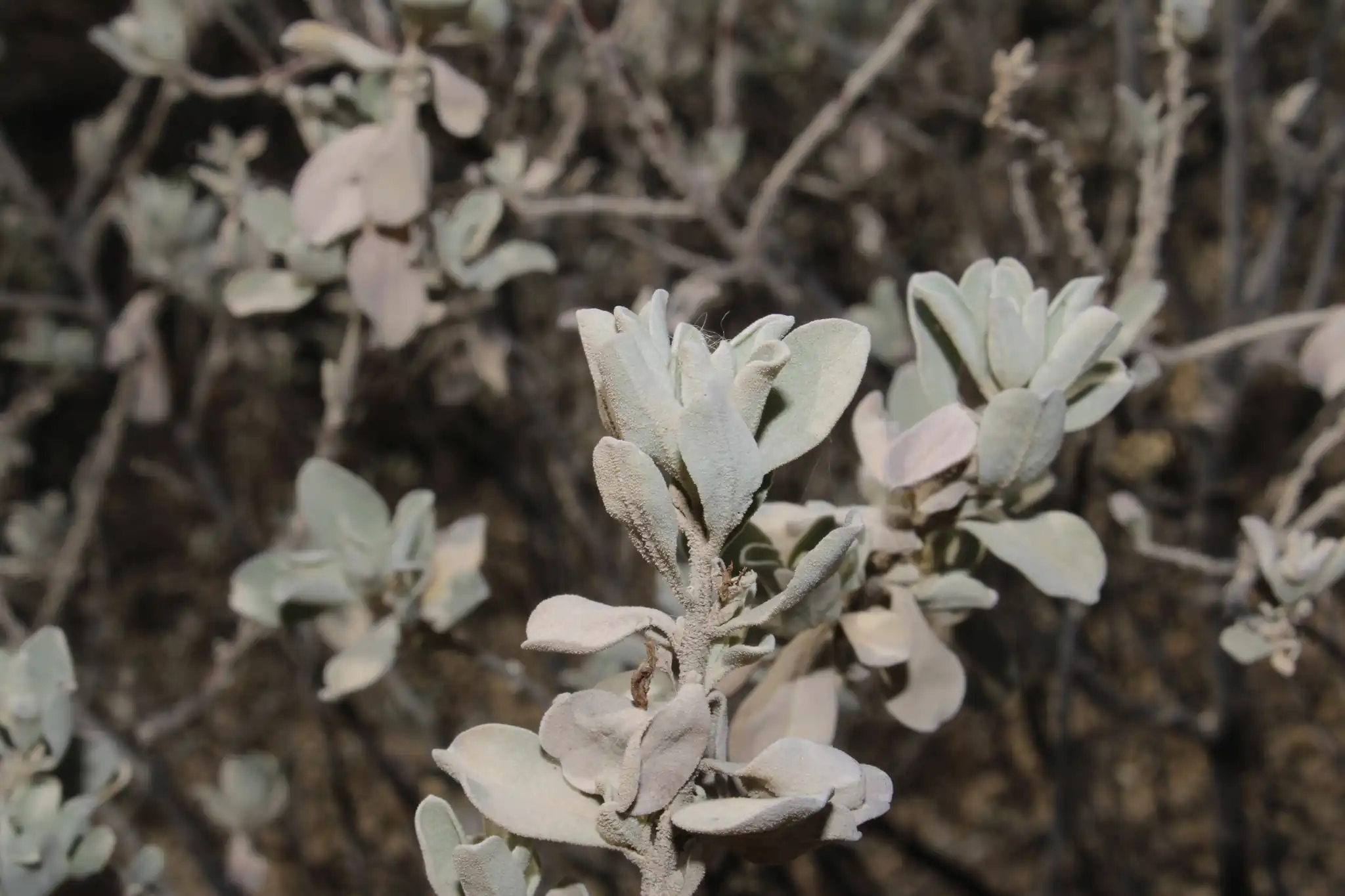
Leucophyllum frutescens, commonly known as Texas sage, is a compact, rounded evergreen shrub native to the arid regions of southwestern Texas and northern Mexico. The foliage is densely covered in fine, star-shaped silvery hairs that give the plant its characteristic ashy-gray appearance and provide exceptional heat and drought resistance.
The bell-shaped, pink-to-purple flowers emerge singly from the leaf axils in intermittent flushes from spring through fall. These blooms are heavily triggered by sudden increases in atmospheric humidity preceding rainfall, earning the plant the common name barometer bush.
Uses & Benefits:
Essentials
At a Glance
Plant Type
Shrub
Height
118"
Width
71"
Light
Full Sun, Partial Sun
Zones
8, 9, 10
Water
Low
Humidity
Low
Lifespan
Long
Native To
North America
Toxicity
Non-toxic
Bloom period
Spring – Fall
In flower about 9 months of the year
Marketplace
Where to Buy
Shipping costs Year-round shipping Free shipping
Planting
How to Grow
- Select a planting site in full sun with exceptionally well-drained soil, such as a sandy loam, gravelly slope, or raised bed.
- Dig a hole twice as wide as the root ball but no deeper, ensuring the top of the root ball sits slightly above the surrounding soil level to prevent water from pooling around the crown.
- Backfill the hole with native soil without adding organic amendments or fertilizer, as this plant thrives in lean, low-fertility conditions.
- Water deeply immediately after planting to settle the soil, then allow the soil to dry out completely between waterings during the establishment period.
Pro Tip
Avoid planting in heavy clay or low-lying areas where water accumulates, as wet roots trigger rapid decline and cotton root rot. When shaping, never shear back into old, leafless interior wood, which lacks active buds and fails to regenerate.
Keep It Thriving
Care Guide
Do
- Plant in full sun to maximize flower production and maintain a dense, compact growth habit.
- Ensure the soil has exceptional drainage, using raised beds or gravel amendments if planting in heavier soils.
- Allow the soil to dry out completely between waterings once the root system is established.
- Lightly shear the outer foliage after a major flowering cycle to maintain a tidy shape.
Don't
- Do not apply heavy nitrogen fertilizers, which cause weak, leggy growth and reduce flowering.
- Do not plant in low-lying areas, heavy clay, or spots with standing water.
- Do not prune hard into old, leafless interior wood, as it will not readily sprout new growth.
- Do not over-water during the winter months when the plant's metabolic activity is low.
Seasonal Care Calendar
| Task | Jan | Feb | Mar | Apr | May | Jun | Jul | Aug | Sep | Oct | Nov | Dec |
|---|---|---|---|---|---|---|---|---|---|---|---|---|
| Pest Check | ||||||||||||
| Propagate | ||||||||||||
| Prune | ||||||||||||
| Spring Cleanup |
Watch Out For
Pests & Diseases
Common Pests
Common Diseases
In the Garden
Landscape Uses & Companions
Landscape Uses
Multiply
Propagation Methods
Good to Know
Common Questions
Texas Sage questions
What zones can Texas Sage grow in?
Texas Sage is hardy in USDA Zones 8–10. Inside that range it survives winter in the ground; outside it, grow it as an annual or a container plant you protect.
Is Texas Sage deer resistant?
Yes — Texas Sage is rated deer-resistant. Deer typically pass it over, though extreme hunger can override any plant's defenses.
When does Texas Sage bloom?
Texas Sage typically blooms in spring through fall. Exact timing shifts a week or two with your zone — Sow's bloom calendar maps it to your garden.
Does Texas Sage need full sun?
Texas Sage does best in full sun to part shade. In hot climates, afternoon shade keeps blooms fresher longer.
Is Texas Sage drought tolerant?
Yes — once established (usually after the first full season), Texas Sage handles dry spells with minimal watering. Water deeply its first year to build the root system that makes that possible.
Keep exploring
Explore the genus
Hardy in your zone?
Grow Texas Sage with confidence
See it in a design of your actual yard, get zone-matched care reminders, and track it season by season in your garden journal.