

The Story
Plant Bio
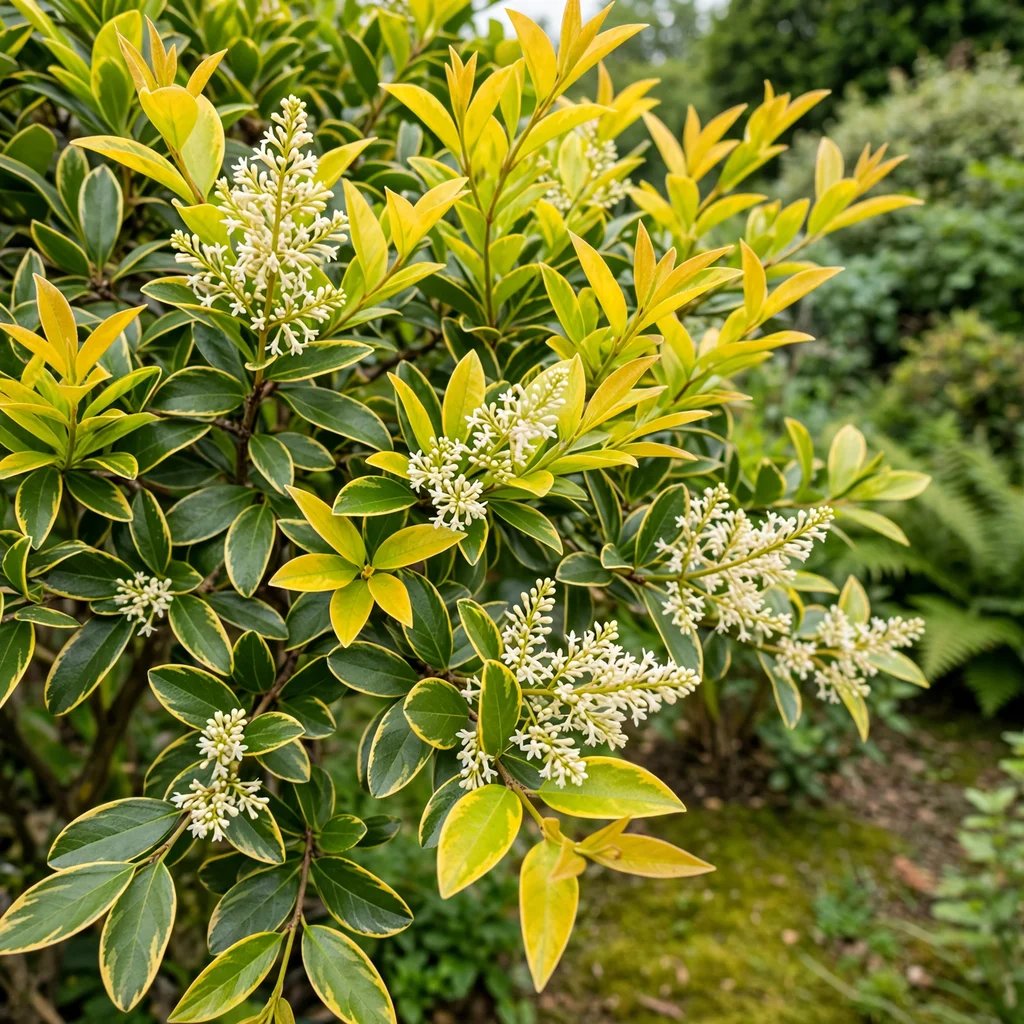
Ligustrum japonicum is a dense, upright, multi-stemmed evergreen shrub that develops a rounded to broad-oval crown of thick, leathery, glossy dark green leaves. In late spring and early summer, it produces terminal clusters of small, fragrant, cream-colored flowers that mature into dark blue-black berries.
'Texanum Aureum' is distinguished by its striking foliage coloration, where new growth emerges with a bright golden-yellow to chartreuse flush. This variegation is a stable genetic trait that intensifies with direct sunlight exposure rather than indicating a nutrient deficiency.
Uses & Benefits:
Essentials
At a Glance
Plant Type
Shrub
Height
118"
Width
98"
Light
Full Sun, Partial Sun
Zones
7, 8, 9, 10
Water
Low to moderate
Humidity
High
Lifespan
Long-lived
Native To
Asia (Japan, Korea)
Toxicity
Toxic to humans, dogs, cats, and livestock
Bloom period
Late spring – Early summer
In flower about 2 months of the year
Planting
How to Grow
- Plant in a location receiving full sun to partial shade, prioritizing maximum sun exposure to bring out the brightest golden foliage colors.
- Ensure the soil is well-draining, as wet, heavy soils promote destructive Phytophthora and Armillaria root rots.
- Water regularly during the first growing season to establish a deep, drought-tolerant root system.
- Apply a balanced, slow-release fertilizer sparingly in early spring to support steady growth without forcing excessive green shoots.
Pro Tip
Avoid over-fertilizing this cultivar, as excess nitrogen triggers rapid, succulent green growth that dilutes the golden variegation and increases susceptibility to sap-sucking pests.
Keep It Thriving
Care Guide
Do
- Prune annually after the early summer flowering period to maintain a tight, dense hedge shape.
- Monitor leaf undersides regularly for scale insects, whiteflies, and spider mites.
- Use physical barriers if deer or rabbits begin browsing the lower foliage.
Don't
- Do not plant in low-lying areas or heavy clay pockets where water pools and soil remains saturated.
- Avoid over-fertilizing, which triggers weak, succulent growth susceptible to pests.
- Do not ingest any part of the plant, as the leaves and berries are highly toxic to humans and pets.
Seasonal Care Calendar
| Task | Jan | Feb | Mar | Apr | May | Jun | Jul | Aug | Sep | Oct | Nov | Dec |
|---|---|---|---|---|---|---|---|---|---|---|---|---|
| Fertilize | ||||||||||||
| Pest Check | ||||||||||||
| Propagate | ||||||||||||
| Prune |
Watch Out For
Pests & Diseases
Common Pests
Common Diseases
In the Garden
Landscape Uses & Companions
Landscape Uses
Companion Plants
Multiply
Propagation Methods
Good to Know
Common Questions
Japanese Privet questions
What zones can Japanese Privet grow in?
Japanese Privet is hardy in USDA Zones 7–10. Inside that range it survives winter in the ground; outside it, grow it as an annual or a container plant you protect.
Is Japanese Privet deer resistant?
Not reliably. Deer may browse Japanese Privet, especially tender spring growth — plan on repellents or fencing where pressure is high.
When does Japanese Privet bloom?
Japanese Privet typically blooms in late spring through early summer. Exact timing shifts a week or two with your zone — Sow's bloom calendar maps it to your garden.
Does Japanese Privet need full sun?
Japanese Privet does best in full sun to part shade. In hot climates, afternoon shade keeps blooms fresher longer.
Is Japanese Privet drought tolerant?
Yes — once established (usually after the first full season), Japanese Privet handles dry spells with minimal watering. Water deeply its first year to build the root system that makes that possible.
More Ligustrum to compare
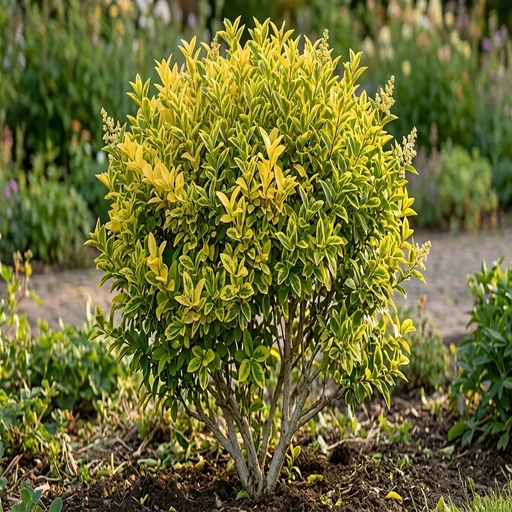
Golden Privet
Ligustrum vicaryi
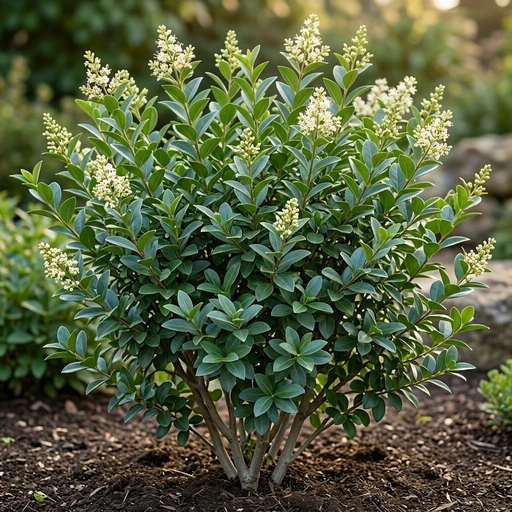
California Privet
Ligustrum ovalifolium
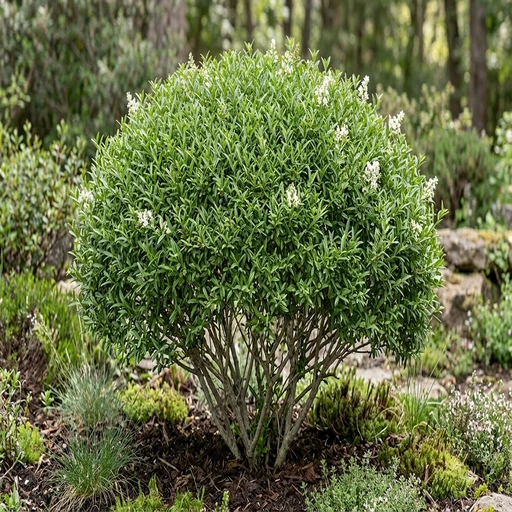
Lodense European Privet
Ligustrum vulgare 'Lodense'
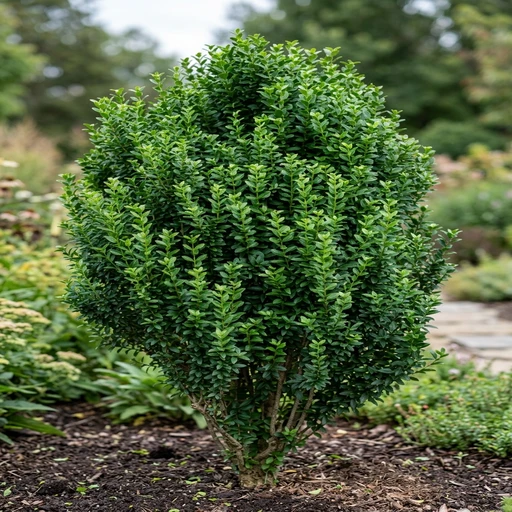
Straight Talk Privet
Ligustrum vulgare 'Straight Talk'
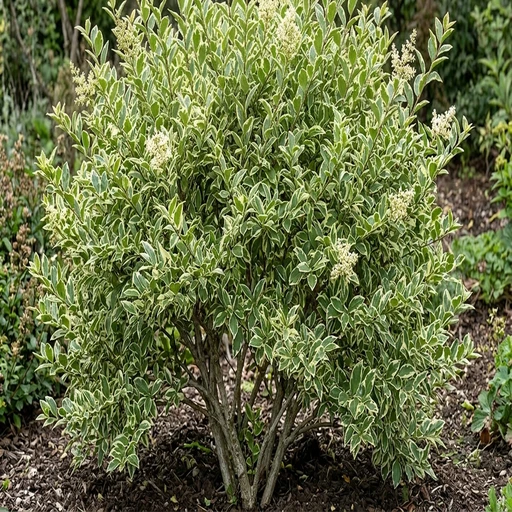
Variegated Chinese Privet
Ligustrum sinense 'Variegatum'
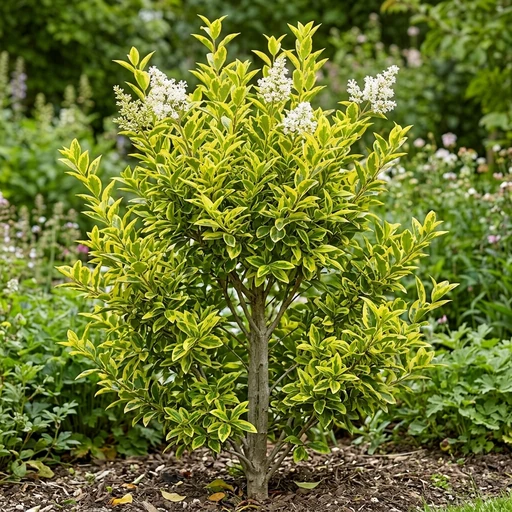
Howard's Ligustrum
Ligustrum japonicum 'Howardi'
Keep exploring
Explore the genus
Hardy in your zone?
Grow Japanese Privet with confidence
See it in a design of your actual yard, get zone-matched care reminders, and track it season by season in your garden journal.