

The Story
Plant Bio
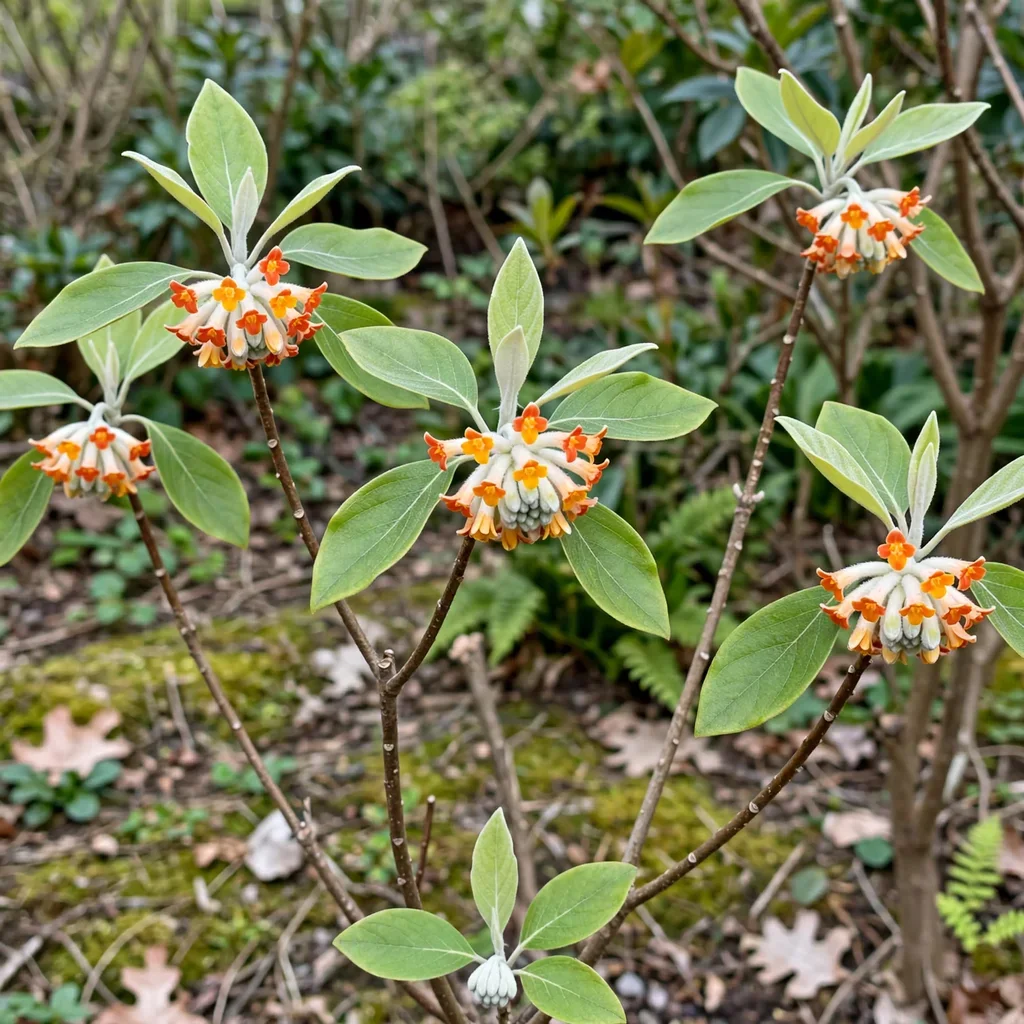
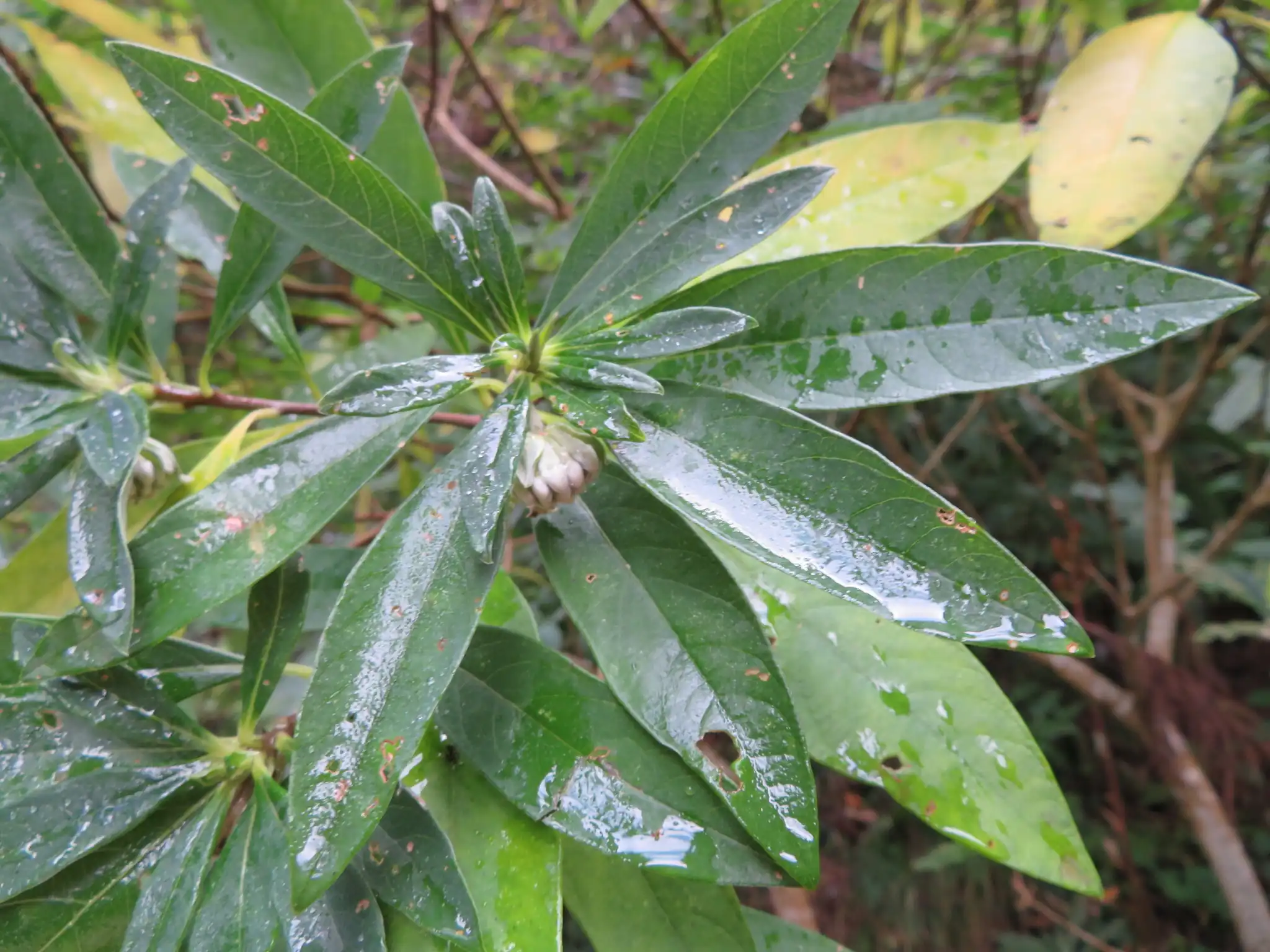
Edgeworthia chrysantha is a broadleaf deciduous, multi-stemmed shrub with an open rounded habit and characteristic three-pronged branching architecture. Its alternate, narrow-ovate leaves emerge covered in silvery hairs before maturing to bluish-green and dropping in fall to reveal dense clusters of nodding flower buds.
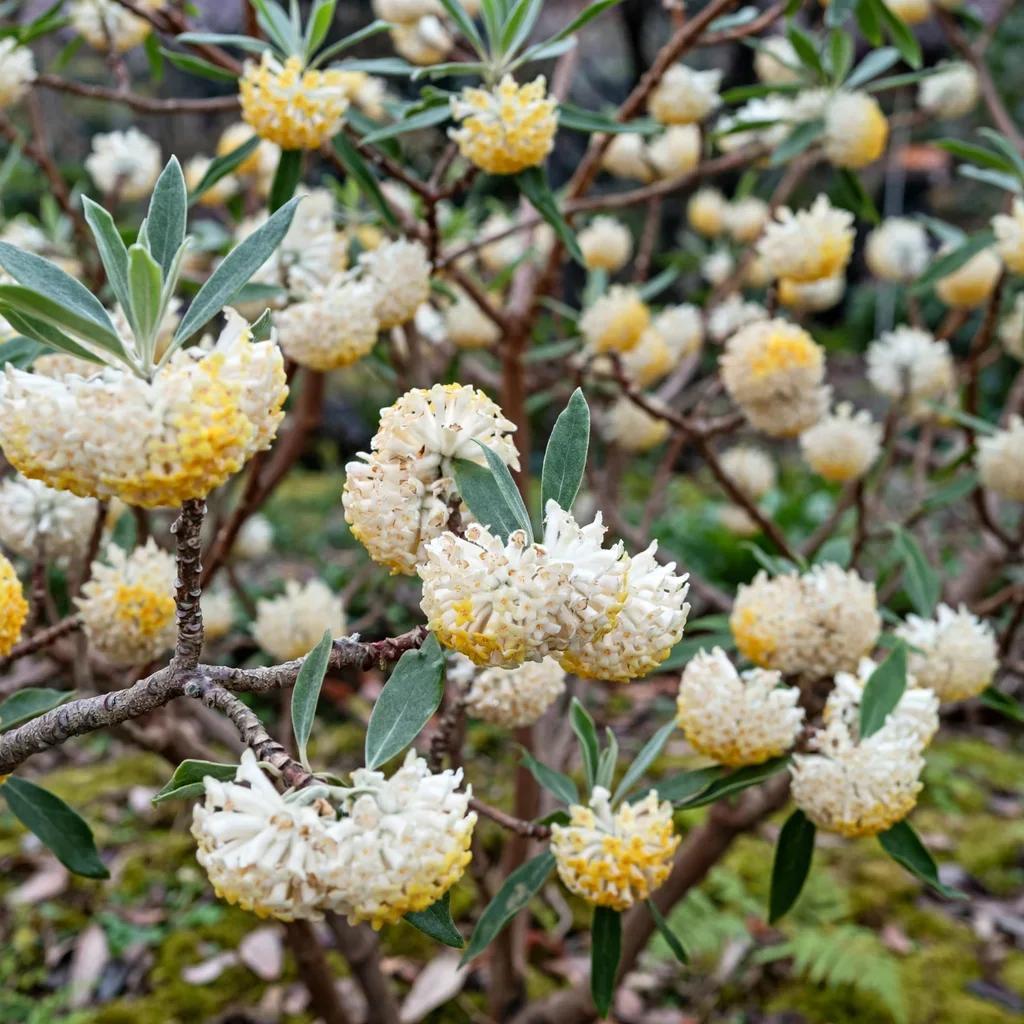
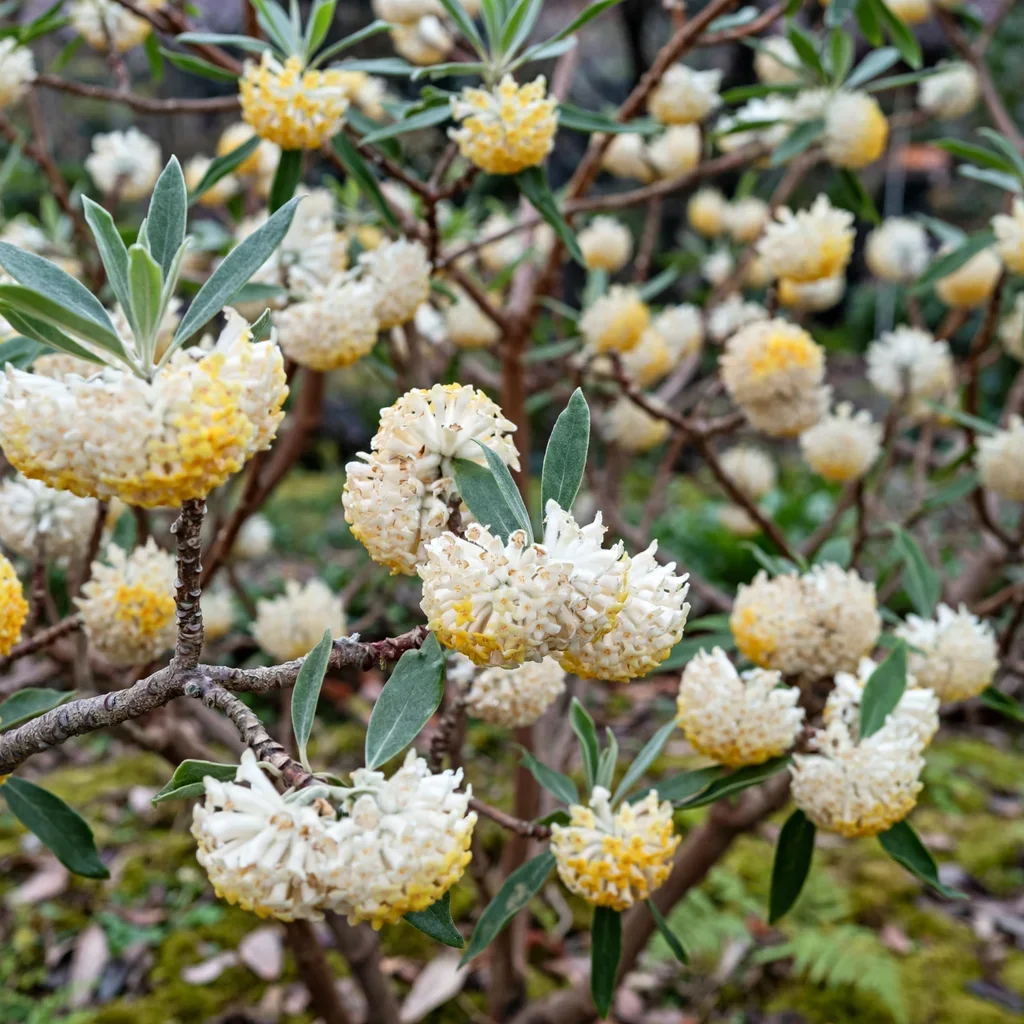
'Gold Rush' is distinguished by its rich golden-yellow florets held in dense, rounded clusters of up to 40 apetalous, tubular flowers. The intense floral display opens on bare stems from late winter into early spring, releasing a sweet fragrance before new foliage emerges.
Uses & Benefits:
Essentials
At a Glance
Plant Type
Shrub
Height
71"
Width
71"
Light
Partial Sun, Shade
Zones
7, 8, 9, 10
Water
Moderate
Humidity
Moderate to High
Lifespan
Perennial
Native To
China, Himalayas
Toxicity
Toxic if ingested
Bloom period
Late winter – Early spring
In flower about 2 months of the year
Planting
How to Grow
- Select a planting location in partial to dappled shade protected from intense afternoon sun.
- Amend heavy garden soil with organic matter to ensure sharp drainage and a neutral to slightly acidic pH.
- Plant the root ball flush with surrounding soil, avoiding deep burial or excessive root manipulation.
- Apply a 2-inch layer of organic mulch around the root zone and water deeply to settle.
Pro Tip
Prune lightly immediately after flowering; cutting back into old leafless wood fails to regenerate growth and removes late-summer flower bud development for the following season.
Keep It Thriving
Care Guide
Do
- Keep soil evenly moist throughout summer and fall when next year's flower buds develop.
- Provide dappled shade or morning sun with protection from afternoon heat.
- Mulch annually with organic material to retain moisture and keep roots cool.
Don't
- Do not allow soil to remain waterlogged or plant in heavy, compacted clays.
- Do not prune hard into old bare stems, as they will not sprout new growth.
- Do not attempt to dig up or relocate established plants once rooted in place.
Seasonal Care Calendar
| Task | Jan | Feb | Mar | Apr | May | Jun | Jul | Aug | Sep | Oct | Nov | Dec |
|---|---|---|---|---|---|---|---|---|---|---|---|---|
| Fertilize | ||||||||||||
| Mulch | ||||||||||||
| Pest Check | ||||||||||||
| Propagate | ||||||||||||
| Prune |
Watch Out For
Pests & Diseases
Common Pests
Common Diseases
In the Garden
Landscape Uses & Companions
Landscape Uses
Companion Plants
Multiply
Propagation Methods
Good to Know
Common Questions
Paperbush questions
What zones can Paperbush grow in?
Paperbush is hardy in USDA Zones 7–10. Inside that range it survives winter in the ground; outside it, grow it as an annual or a container plant you protect.
Is Paperbush deer resistant?
Not reliably. Deer may browse Paperbush, especially tender spring growth — plan on repellents or fencing where pressure is high.
When does Paperbush bloom?
Paperbush typically blooms in late winter through early spring. Exact timing shifts a week or two with your zone — Sow's bloom calendar maps it to your garden.
Does Paperbush need full sun?
Paperbush does best in part shade.
More Edgeworthia to compare
Keep exploring
Explore the genus
Hardy in your zone?
Grow Paperbush with confidence
See it in a design of your actual yard, get zone-matched care reminders, and track it season by season in your garden journal.