The Story
Plant Bio
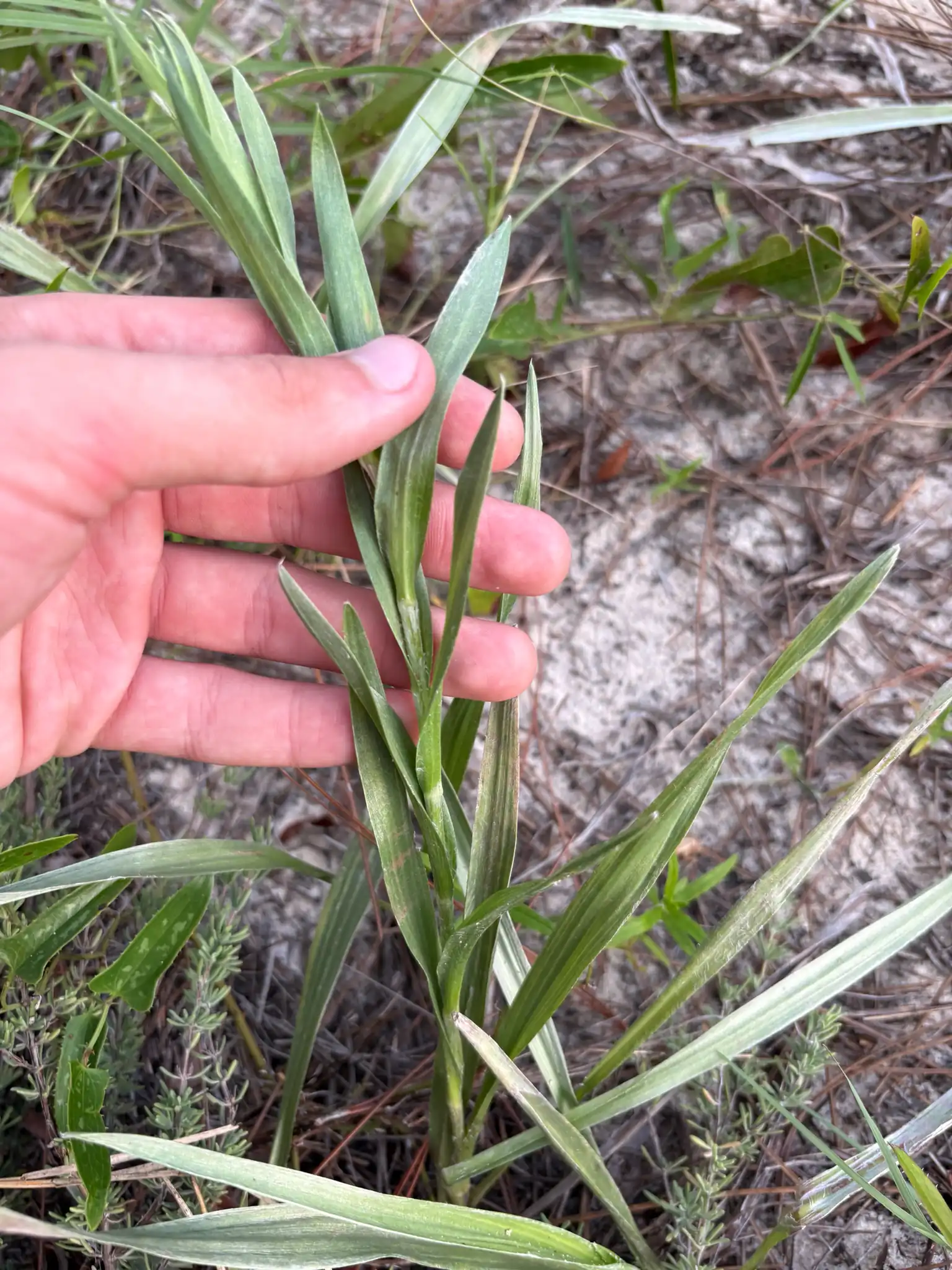
Pityopsis graminifolia is a rhizomatous, clump-forming herbaceous perennial native to the southeastern and south-central United States, where it inhabits dry sandy pinelands and open woodlands. The plant forms a low basal rosette of narrow, grass-like leaves covered in fine, silky, silvery-white hairs that give the foliage a distinct gray-green appearance.
Bright yellow, daisy-like flower heads measuring up to two inches across emerge in loose terminal clusters on upright stems during late summer and fall. The dense, reflective pubescence on the foliage provides exceptional heat and drought tolerance while deterring herbivores.
Uses & Benefits:
Essentials
At a Glance
Plant Type
Perennial
Height
30"
Width
24"
Light
Full Sun
Zones
5, 6, 7, 8, 9, 10
Water
Low
Humidity
High
Lifespan
Perennial
Native To
North America
Toxicity
Non-toxic
Bloom period
Late summer – Fall
In flower about 4 months of the year
Planting
How to Grow
- Select a planting site in full sun with lean, fast-draining sandy or sandy-loam soil.
- Dig a hole twice the width of the root ball and set the plant at the same depth as its nursery container.
- Water sparingly during the first few weeks to establish the root system, then cease supplemental irrigation.
- Avoid applying organic mulches or fertilizers, which retain excess moisture and nutrients around the crown.
Pro Tip
Plant in lean, sandy, or rocky soil with sharp drainage and baking sun; rich soils or excess fertilizer cause the stems to become leggy and flop.
Keep It Thriving
Care Guide
Do
- Grow in poor, sandy, or rocky soils to maintain a tight, upright habit.
- Ensure the planting site has excellent drainage to prevent root rot.
- Cut back old foliage and spent flower stalks in late winter before new growth emerges.
Don't
- Do not fertilize, as excess nutrients cause the plant to flop and lose its tight form.
- Do not plant in heavy clay, rich loam, or poorly drained wet areas.
- Do not shear severely into old, leafless wood when pruning.
Seasonal Care Calendar
| Task | Jan | Feb | Mar | Apr | May | Jun | Jul | Aug | Sep | Oct | Nov | Dec |
|---|---|---|---|---|---|---|---|---|---|---|---|---|
| Divide | ||||||||||||
| Pest Check | ||||||||||||
| Propagate | ||||||||||||
| Spring Cleanup |
Watch Out For
Pests & Diseases
Common Pests
Common Diseases
In the Garden
Landscape Uses & Companions
Landscape Uses
Companion Plants
Multiply
Propagation Methods
Good to Know
Common Questions
Narrowleaf silkgrass questions
What zones can Narrowleaf silkgrass grow in?
Narrowleaf silkgrass is hardy in USDA Zones 5–10. Inside that range it survives winter in the ground; outside it, grow it as an annual or a container plant you protect.
Is Narrowleaf silkgrass deer resistant?
Yes — Narrowleaf silkgrass is rated deer-resistant. Deer typically pass it over, though extreme hunger can override any plant's defenses.
When does Narrowleaf silkgrass bloom?
Narrowleaf silkgrass typically blooms in late summer through fall. Exact timing shifts a week or two with your zone — Sow's bloom calendar maps it to your garden.
Does Narrowleaf silkgrass need full sun?
Narrowleaf silkgrass does best in full sun (6+ hours).
Is Narrowleaf silkgrass drought tolerant?
Yes — once established (usually after the first full season), Narrowleaf silkgrass handles dry spells with minimal watering. Water deeply its first year to build the root system that makes that possible.
Keep exploring
Explore the genus
Grow Narrowleaf silkgrass with confidence
See it in a design of your actual yard, get zone-matched care reminders, and track it season by season in your garden journal.