
Garden hybrid
This is a garden hybrid, bred from more than one wild species, so it has no single species page of its own.
The Story
Plant Bio
Diplacus is a genus of evergreen shrubs and perennials native to western North America, characterized by sticky, resinous foliage and tubular, two-lipped flowers. These plants thrive in chaparral and coastal scrub environments, requiring exceptional soil drainage and minimal summer moisture to survive.
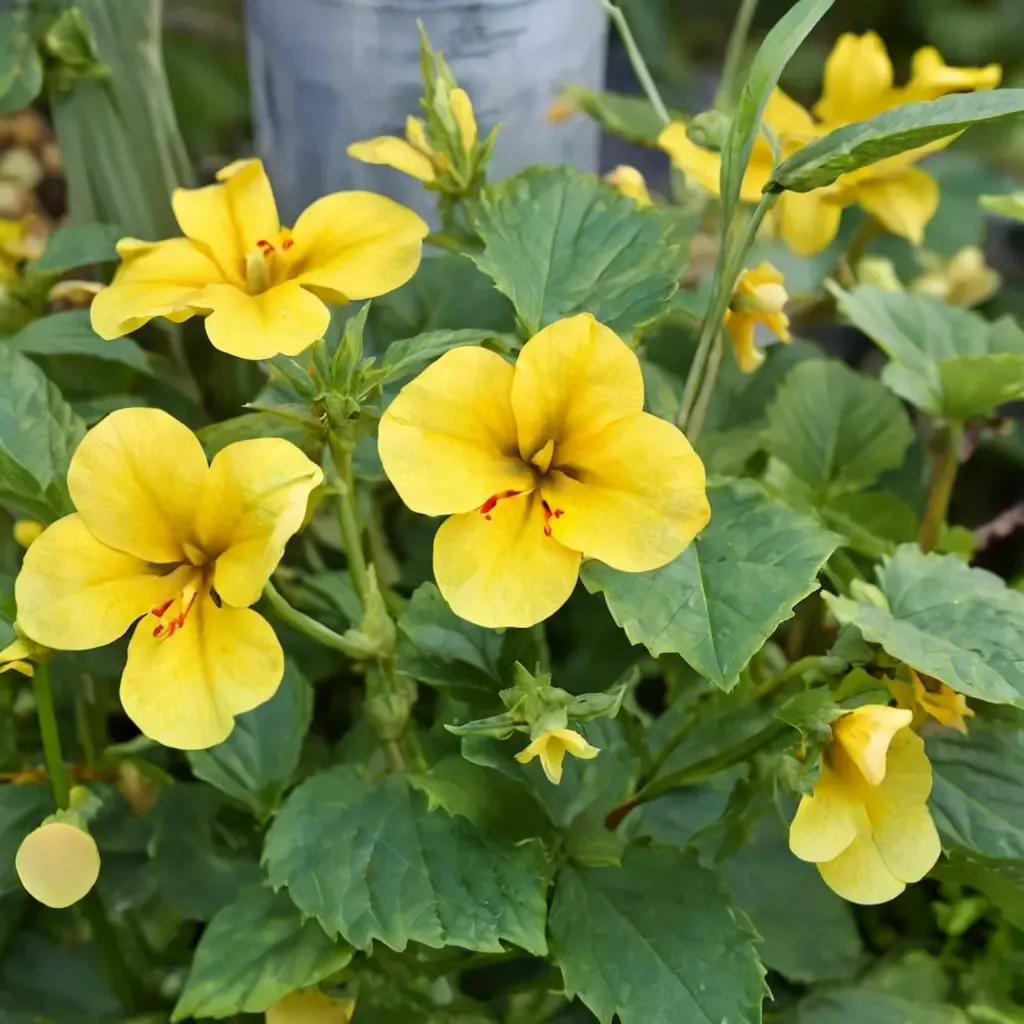
'Jelly Bean Betabel' is a compact, mounding subshrub distinguished by its vivid rose-magenta to deep beet-red flowers with contrasting golden-yellow throats. The glossy, dark green leaves secrete a sticky resin that helps conserve moisture and deters browsing herbivores.
Uses & Benefits:
Bred from more than one wild species, so it has no species page of its own.
Essentials
At a Glance
Plant Type
Shrub
Height
24"
Width
24"
Light
Full Sun, Partial Sun
Zones
9, 10
Water
Low to moderate
Humidity
Low to moderate
Lifespan
Short-lived perennial
Native To
North America (hybrid origin)
Toxicity
Non-toxic (foliage oils may cause mild skin irritation)
Bloom period
Spring – Fall
In flower about 9 months of the year
Planting
How to Grow
- Select a planting site with full sun to partial shade and exceptionally well-drained sandy or loamy soil.
- Dig a hole twice as wide as the root ball but equal in depth, ensuring the crown sits slightly above the surrounding soil level to prevent collar rot.
- Water deeply immediately after planting to settle the soil, then reduce watering frequency as the root system establishes.
- Apply a thin layer of organic mulch around the base, keeping it several inches away from the main stems to avoid moisture retention.
Pro Tip
Avoid summer irrigation and heavy fertilizers, which trigger fatal root rot; instead, allow the soil to dry completely between infrequent waterings to mimic natural chaparral conditions.
Keep It Thriving
Care Guide
Do
- Prune lightly after the main flowering flush to maintain a dense, mounding shape.
- Grow in raised beds or containers if the garden soil lacks excellent drainage.
- Allow the soil to dry out significantly between waterings once established.
Don't
- Do not prune hard into old, leafless, woody stems, as they fail to resprout.
- Do not apply heavy organic fertilizers or high-phosphorus feeds.
- Do not overwater during the warm summer dormancy period.
Seasonal Care Calendar
| Task | Jan | Feb | Mar | Apr | May | Jun | Jul | Aug | Sep | Oct | Nov | Dec |
|---|---|---|---|---|---|---|---|---|---|---|---|---|
| Pest Check | ||||||||||||
| Propagate | ||||||||||||
| Prune | ||||||||||||
| Spring Cleanup |
Watch Out For
Pests & Diseases
Common Pests
Common Diseases
In the Garden
Landscape Uses & Companions
Landscape Uses
Multiply
Propagation Methods
Good to Know
Common Questions
Jelly Bean Betabel Monkey Flower questions
What zones can Jelly Bean Betabel Monkey Flower grow in?
Jelly Bean Betabel Monkey Flower is hardy in USDA Zones 9–10. Inside that range it survives winter in the ground; outside it, grow it as an annual or a container plant you protect.
Is Jelly Bean Betabel Monkey Flower deer resistant?
Yes — Jelly Bean Betabel Monkey Flower is rated deer-resistant. Deer typically pass it over, though extreme hunger can override any plant's defenses.
When does Jelly Bean Betabel Monkey Flower bloom?
Jelly Bean Betabel Monkey Flower typically blooms in spring through fall. Exact timing shifts a week or two with your zone — Sow's bloom calendar maps it to your garden.
Does Jelly Bean Betabel Monkey Flower need full sun?
Jelly Bean Betabel Monkey Flower does best in full sun to part shade. In hot climates, afternoon shade keeps blooms fresher longer.
Is Jelly Bean Betabel Monkey Flower drought tolerant?
Yes — once established (usually after the first full season), Jelly Bean Betabel Monkey Flower handles dry spells with minimal watering. Water deeply its first year to build the root system that makes that possible.
More Diplacus to compare
Keep exploring
Explore the genus
Hardy in your zone?
Grow Jelly Bean Betabel Monkey Flower with confidence
See it in a design of your actual yard, get zone-matched care reminders, and track it season by season in your garden journal.