
Species
 Liriodendron tulipiferaTulip Poplar
2 other cultivars


The Story
Plant Bio
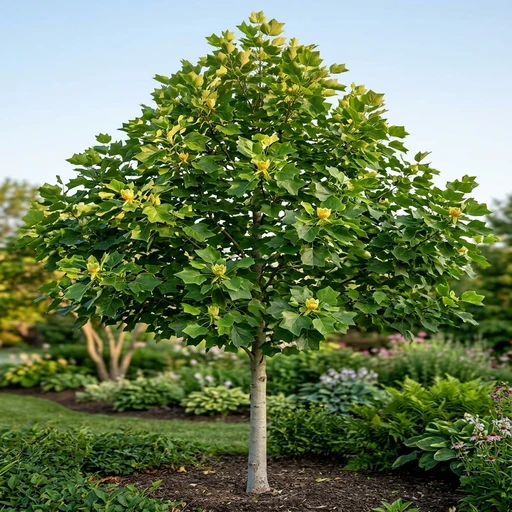
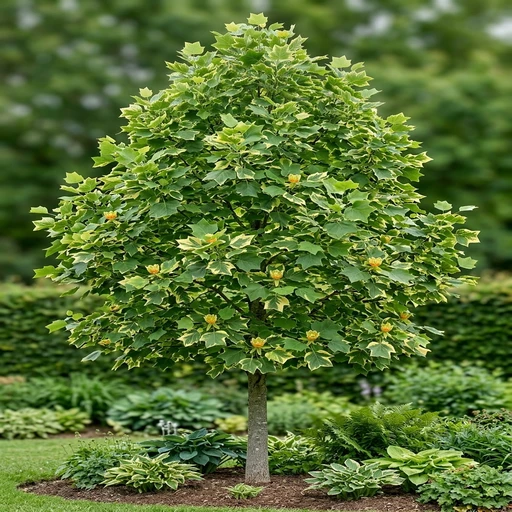
Liriodendron tulipifera, the Tulip Tree, is a large, majestic, and fast-growing deciduous tree native to eastern North America. It is known for its uniquely shaped leaves and large, tulip-like, greenish-yellow flowers.
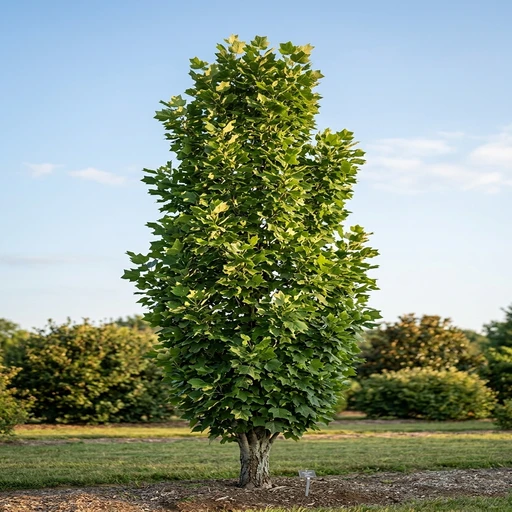
The 'Fastigiatum' cultivar (also sold as 'Arnold') is distinguished by its narrow, upright, columnar form. This makes the grandeur of the Tulip Tree accessible to smaller landscapes, formal gardens, or for use as a tall, dramatic screen.
Uses & Benefits:
Essentials
At a Glance
Plant Type
Tree
Height
600"
Width
180"
Light
Full Sun
Zones
4, 5, 6, 7, 8, 9
Water
Moderate to high
Humidity
Prefers moderate to high
Lifespan
150+ years
Native To
Eastern North America
Toxicity
Non-toxic to humans, but parts can be toxic to horses.
Bloom period
Late spring – Early summer
In flower about 2 months of the year
Planting
How to Grow
- Select a site in full sun with deep, moist, well-drained soil.
- Dig a planting hole at least twice the width of the root ball.
- Set the tree in the hole, making sure the root flare is at or above grade.
- Backfill with the original soil, tamping lightly to remove air pockets.
- Water deeply immediately after planting to settle the soil.
- Mulch with 3-4 inches of organic matter to conserve moisture.
Pro Tip
Provide consistent moisture, especially during establishment and dry spells, as this tree does not tolerate drought well and will drop leaves.
Keep It Thriving
Care Guide
Do
- Water deeply once a week during dry periods, especially when young.
- Allow plenty of vertical space for it to reach its mature height.
- Appreciate the unique flowers, which are often high in the canopy.
- Rake the large leaves in fall, as they can smother a lawn.
Don't
- Don't plant in dry, compacted, or shallow soils.
- Avoid planting in windy, exposed sites as the wood can be brittle.
- Don't plant too close to buildings or power lines due to its height.
- Avoid under-watering; it is not a drought-tolerant tree.
Seasonal Care Calendar
| Task | Jan | Feb | Mar | Apr | May | Jun | Jul | Aug | Sep | Oct | Nov | Dec |
|---|---|---|---|---|---|---|---|---|---|---|---|---|
| Mulch | ||||||||||||
| Pest Check | ||||||||||||
| Prune |
Watch Out For
Pests & Diseases
Common Pests
Common Diseases
In the Garden
Landscape Uses & Companions
Landscape Uses
Multiply
Propagation Methods
Good to Know
Common Questions
Columnar Tulip Tree questions
What zones can Columnar Tulip Tree grow in?
Columnar Tulip Tree is hardy in USDA Zones 4–9. Inside that range it survives winter in the ground; outside it, grow it as an annual or a container plant you protect.
Is Columnar Tulip Tree deer resistant?
Yes — Columnar Tulip Tree is rated deer-resistant. Deer typically pass it over, though extreme hunger can override any plant's defenses.
When does Columnar Tulip Tree bloom?
Columnar Tulip Tree typically blooms in late spring through early summer. Exact timing shifts a week or two with your zone — Sow's bloom calendar maps it to your garden.
Does Columnar Tulip Tree need full sun?
Columnar Tulip Tree does best in full sun (6+ hours).
More Liriodendron to compare
Keep exploring
Explore the genus
Grow Columnar Tulip Tree with confidence
See it in a design of your actual yard, get zone-matched care reminders, and track it season by season in your garden journal.