The Story
Plant Bio
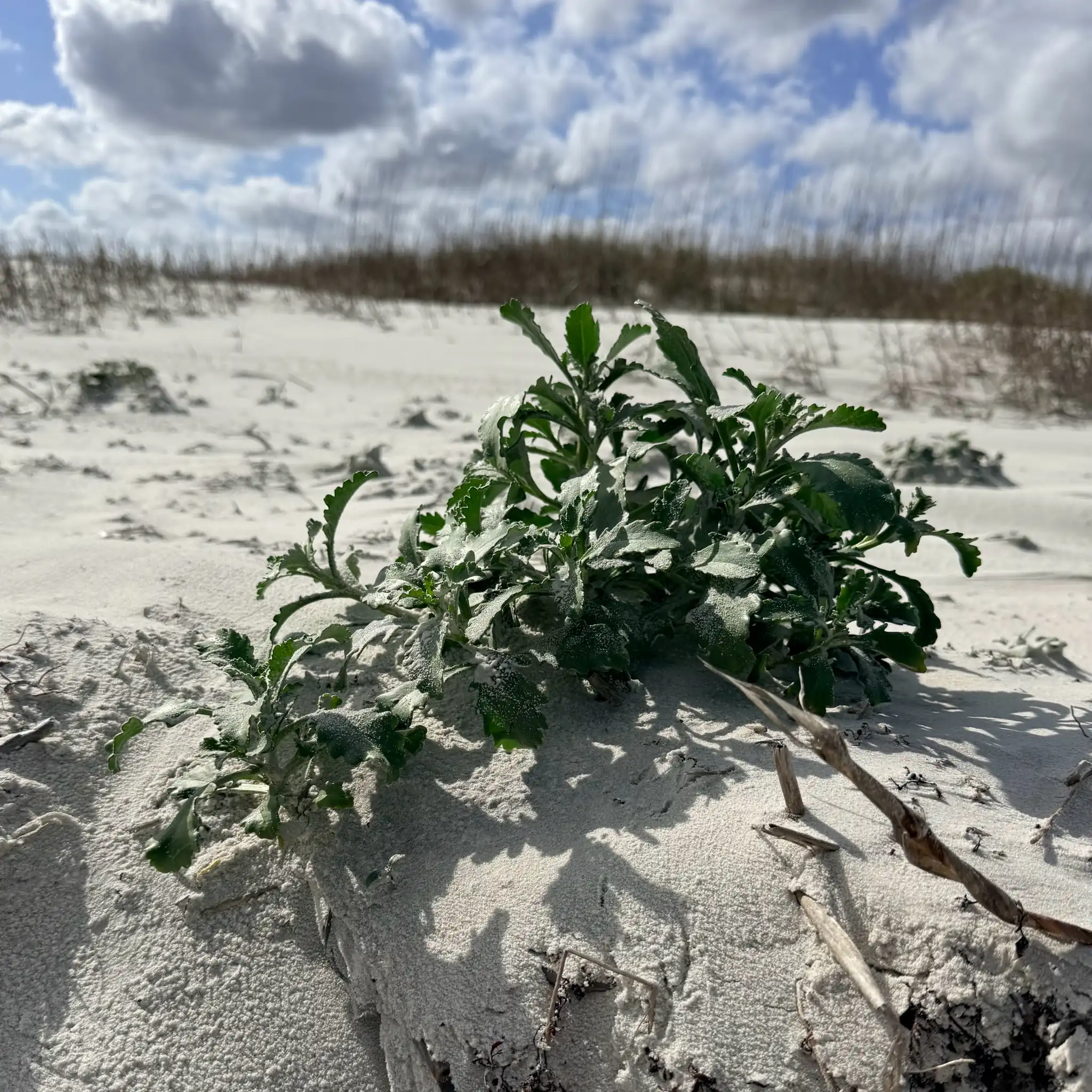
Cakile edentula, commonly known as American searocket, is a succulent annual herb native to the coastal dunes and beaches of North America. It forms a low, branching mound of fleshy, dark green foliage that helps stabilize shifting sands against wind and tides.
The plant produces small, four-petaled flowers ranging from white to pale pink or lavender from spring through fall. These are followed by unique two-segmented seedpods, where the buoyant upper joint detaches to float away on ocean currents while the lower joint remains to germinate locally.
Uses & Benefits:
Essentials
At a Glance
Plant Type
Annual
Height
24"
Width
20"
Light
Full Sun
Zones
4, 5, 6, 7, 8, 9
Water
Low
Humidity
High
Lifespan
Annual
Native To
North America
Toxicity
Non-toxic
Bloom period
Spring – Fall
In flower about 9 months of the year
Planting
How to Grow
- Select a site with full, unobstructed sun and exceptionally well-drained, sandy soil.
- Sow seeds directly into the sand in early spring, pressing them lightly into the surface.
- Water sparingly during the germination phase, then cease irrigation once the taproot establishes.
- Avoid all fertilizers and soil amendments, as nutrient-poor conditions are essential to maintain the plant's compact, succulent form.
Pro Tip
Grow this species in pure, nutrient-poor sand under baking sun; planting it in rich, loamy garden soil or applying fertilizer triggers rapid rot and stem collapse.
Keep It Thriving
Care Guide
Do
- Sow seeds directly in pure sand or gravelly coastal soils.
- Ensure the planting site receives full, all-day sun.
- Allow the soil to dry out completely between occasional waterings.
Don't
- Do not plant in rich, organic, or loamy garden soils.
- Do not apply fertilizers, which cause weak, leggy growth and rot.
- Do not water excessively or allow the soil to become waterlogged.
Seasonal Care Calendar
| Task | Jan | Feb | Mar | Apr | May | Jun | Jul | Aug | Sep | Oct | Nov | Dec |
|---|---|---|---|---|---|---|---|---|---|---|---|---|
| Harvest | ||||||||||||
| Pest Check | ||||||||||||
| Plant | ||||||||||||
| Spring Cleanup |
Watch Out For
Pests & Diseases
Common Pests
Common Diseases
In the Garden
Landscape Uses & Companions
Landscape Uses
Companion Plants
Multiply
Propagation Methods
Good to Know
Common Questions
American Searocket questions
What zones can American Searocket grow in?
American Searocket is hardy in USDA Zones 4–9. Inside that range it survives winter in the ground; outside it, grow it as an annual or a container plant you protect.
When does American Searocket bloom?
American Searocket typically blooms in spring through fall. Exact timing shifts a week or two with your zone — Sow's bloom calendar maps it to your garden.
Does American Searocket need full sun?
American Searocket does best in full sun (6+ hours).
Is American Searocket drought tolerant?
Yes — once established (usually after the first full season), American Searocket handles dry spells with minimal watering. Water deeply its first year to build the root system that makes that possible.
Keep exploring
Explore the genus
Grow American Searocket with confidence
See it in a design of your actual yard, get zone-matched care reminders, and track it season by season in your garden journal.