The Story
Plant Bio
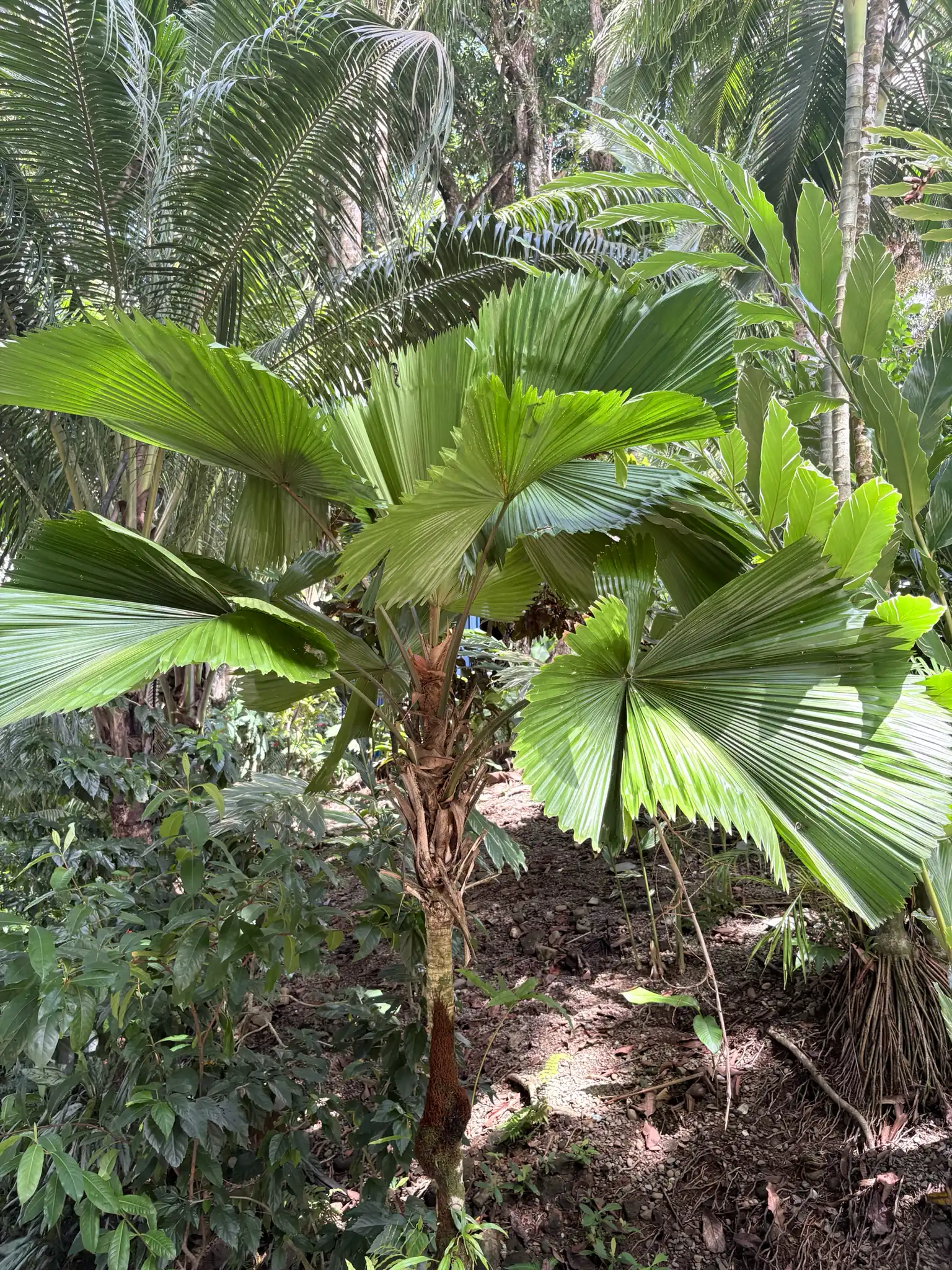
Licuala grandis is a slow-growing, solitary understory palm native to the wet tropical rainforests of Vanuatu and the Solomon Islands. It develops a slender, fiber-wrapped trunk topped by a neat crown of twelve to twenty large, undivided, pleated leaves that form almost perfect circles.
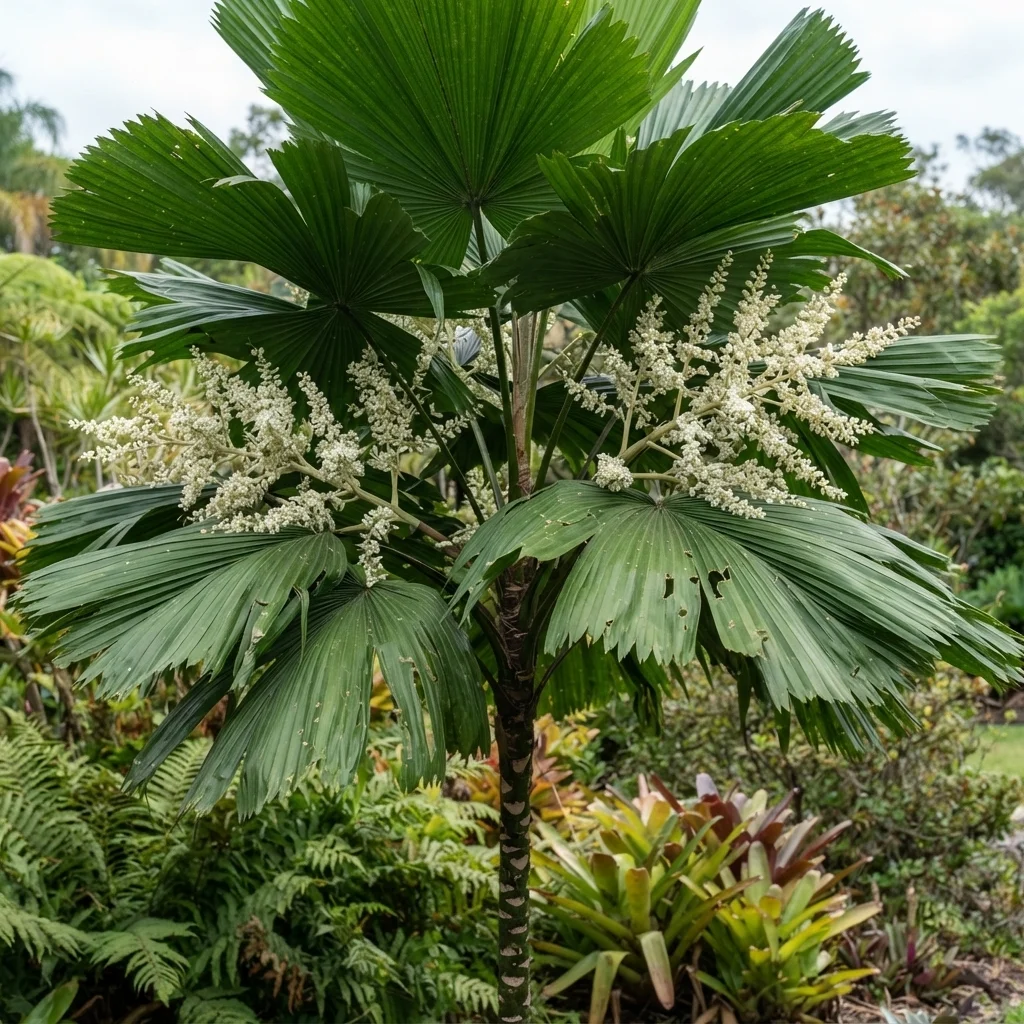
The glossy green, fan-shaped leaves feature notched margins and petioles armed with sharp, curved teeth. Long, arching inflorescences emerge from the leaf bases in summer, producing small yellowish flowers followed by clusters of round, bright red fruits.
Uses & Benefits:
Essentials
At a Glance
Plant Type
Tropical
Height
118"
Width
98"
Light
Partial Sun, Shade
Zones
10
Water
Consistent moisture
Humidity
High (above 50-60%)
Lifespan
Long-lived
Native To
Oceania (Vanuatu, Solomon Islands)
Toxicity
Non-toxic, but features sharp spines on petioles
Bloom period
Early summer – Mid summer
In flower about 2 months of the year
Planting
How to Grow
- Select a location with bright, filtered shade or dappled light, completely shielded from direct afternoon sun.
- Plant in a rich, highly organic, fast-draining medium such as a sandy loam amended with peat moss and compost.
- Water consistently to keep the soil evenly moist but never waterlogged, allowing the top inch of soil to dry slightly between waterings.
- Maintain high ambient humidity above fifty percent, especially when growing indoors, by using humidifiers or grouping plants.
Pro Tip
Never prune green fronds or strip living leaves from the trunk; this slow-growing palm cannot quickly replace photosynthetic tissue, and premature removal severely weakens the plant.
Keep It Thriving
Care Guide
Do
- Prune only completely dead, brown lower fronds close to the trunk using sterilized shears.
- Apply a diluted, balanced palm fertilizer monthly during the active spring and summer growth phases.
- Protect the plant from cold drafts and temperatures below thirty-seven degrees Fahrenheit.
Don't
- Do not allow the soil to dry out completely, as this palm has very low drought tolerance.
- Do not use heavy, clay-rich soils that retain stagnant moisture and trigger root rot.
- Do not place the plant in direct, intense sunlight which rapidly scorches the delicate fronds.
Seasonal Care Calendar
| Task | Jan | Feb | Mar | Apr | May | Jun | Jul | Aug | Sep | Oct | Nov | Dec |
|---|---|---|---|---|---|---|---|---|---|---|---|---|
| Fertilize | ||||||||||||
| Pest Check | ||||||||||||
| Prune | ||||||||||||
| Winter Prep |
Watch Out For
Pests & Diseases
Common Pests
Common Diseases
In the Garden
Landscape Uses & Companions
Landscape Uses
Companion Plants
Multiply
Propagation Methods
Good to Know
Common Questions
Ruffled Fan Palm questions
What zones can Ruffled Fan Palm grow in?
Ruffled Fan Palm is hardy in USDA Zone 10. Inside that range it survives winter in the ground; outside it, grow it as an annual or a container plant you protect.
When does Ruffled Fan Palm bloom?
Ruffled Fan Palm typically blooms in early summer through mid summer. Exact timing shifts a week or two with your zone — Sow's bloom calendar maps it to your garden.
Does Ruffled Fan Palm need full sun?
Ruffled Fan Palm does best in part shade.
More Licuala to compare
Keep exploring
Explore the genus
Hardy in your zone?
Grow Ruffled Fan Palm with confidence
See it in a design of your actual yard, get zone-matched care reminders, and track it season by season in your garden journal.