The Story
Plant Bio
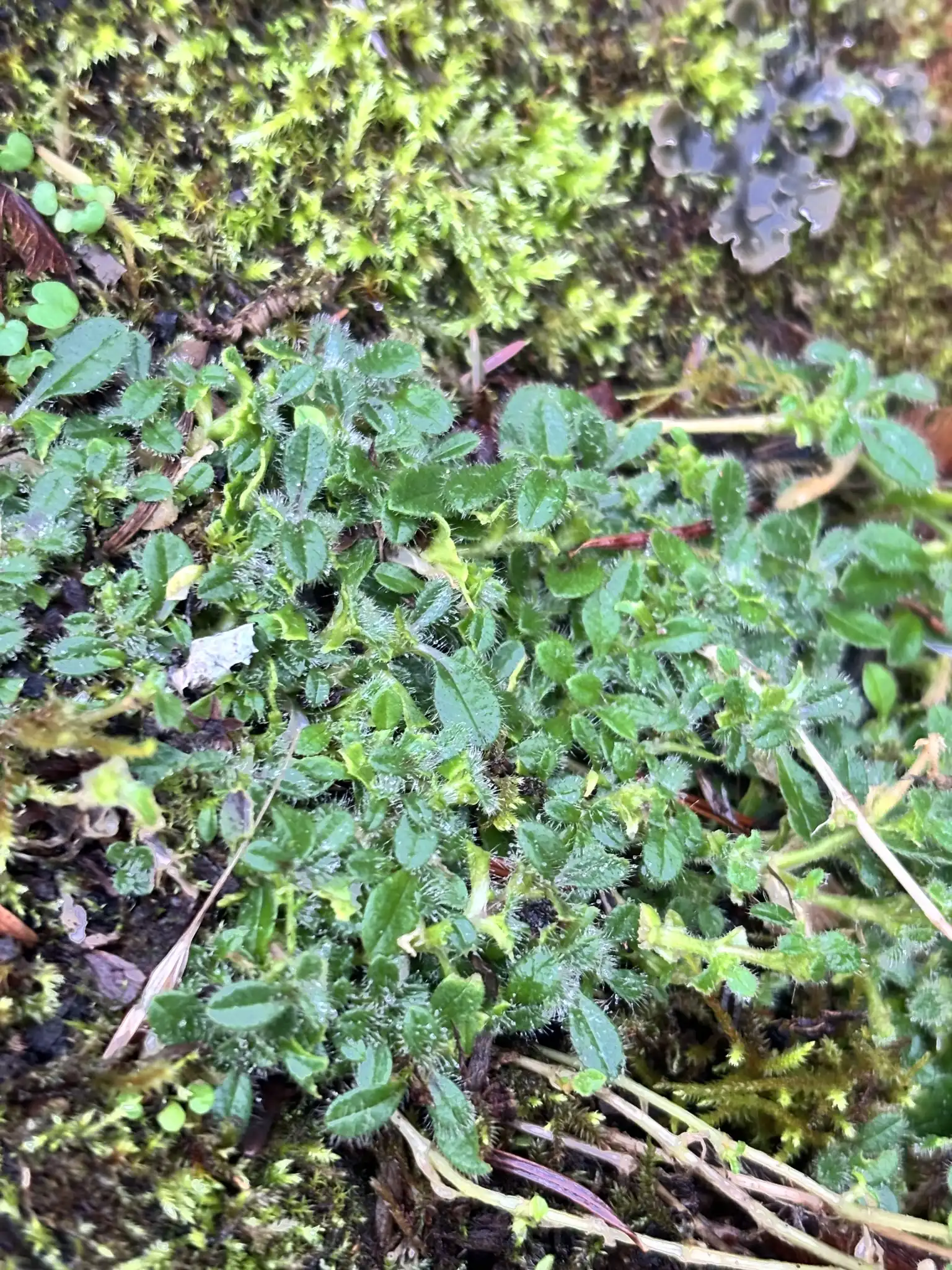
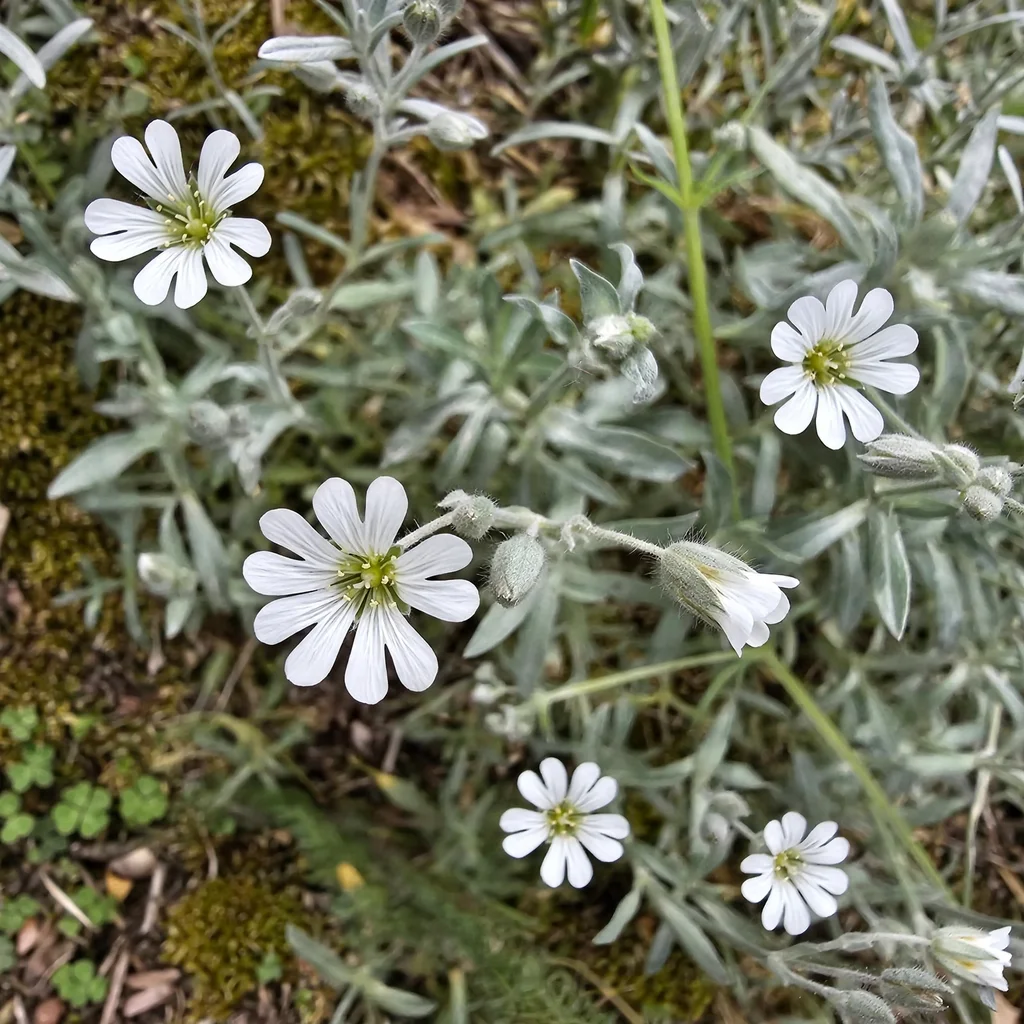
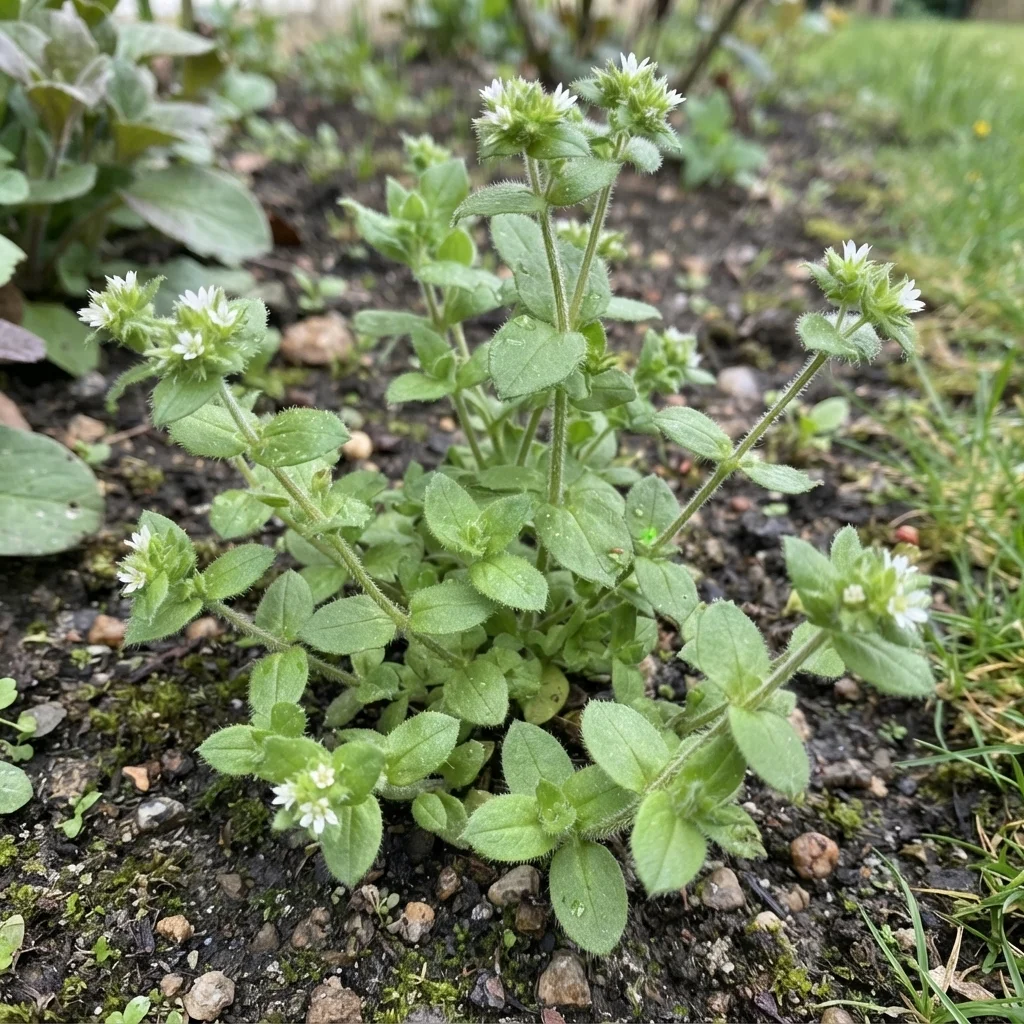
Cerastium fontanum, commonly known as mouse-ear chickweed, is a mat-forming perennial or biennial characterized by dark green to grayish-green foliage covered in soft, fine hairs. The plant spreads via creeping stems that root at the nodes, producing small white flowers with deeply notched petals from spring through summer.
This species is distinguished by its highly adaptable nature, thriving in disturbed soils, lawns, and agricultural fields across North America. Its low-growing, prostrate habit allows it to persist under regular mowing, making it a highly resilient and often aggressive ground cover.
Uses & Benefits:
Essentials
At a Glance
Plant Type
Perennial
Height
18"
Width
24"
Light
Full Sun, Partial Sun
Zones
4, 5, 6, 7, 8, 9
Water
Medium to High
Humidity
Moderate to High
Lifespan
Perennial
Native To
Europe, Asia, North Africa
Toxicity
Generally non-toxic (nitrate accumulator)
Bloom period
Spring – Summer
In flower about 6 months of the year
Planting
How to Grow
- Select a site with full sun to partial shade and moist, well-draining soil.
- Press seeds lightly into the soil surface, as they require light to germinate.
- Maintain consistent moisture during establishment, ensuring the soil does not dry out completely.
- Control spreading stems by hand-pulling or installing physical borders around the planting area.
Pro Tip
Mowing or shearing the mats immediately after flowering prevents seed set and limits the aggressive spread of creeping stems.
Keep It Thriving
Care Guide
Do
- Hand-pull unwanted plants early in spring before they set seed.
- Keep the soil consistently moist to support healthy growth.
- Mow or cut back the foliage to manage the spread of creeping stems.
Don't
- Do not apply heavy fertilizers, as this plant thrives in low-nutrient soils.
- Do not allow the soil to dry out completely, as drought tolerance is low.
- Do not plant near delicate, slow-growing species that can be easily smothered.
Seasonal Care Calendar
| Task | Jan | Feb | Mar | Apr | May | Jun | Jul | Aug | Sep | Oct | Nov | Dec |
|---|---|---|---|---|---|---|---|---|---|---|---|---|
| Pest Check | ||||||||||||
| Propagate | ||||||||||||
| Prune | ||||||||||||
| Spring Cleanup |
Watch Out For
Pests & Diseases
Common Pests
Common Diseases
In the Garden
Landscape Uses & Companions
Landscape Uses
Companion Plants
Multiply
Propagation Methods
Good to Know
Common Questions
Common Mouse-Ear Chickweed questions
What zones can Common Mouse-Ear Chickweed grow in?
Common Mouse-Ear Chickweed is hardy in USDA Zones 4–9. Inside that range it survives winter in the ground; outside it, grow it as an annual or a container plant you protect.
Is Common Mouse-Ear Chickweed deer resistant?
Not reliably. Deer may browse Common Mouse-Ear Chickweed, especially tender spring growth — plan on repellents or fencing where pressure is high.
When does Common Mouse-Ear Chickweed bloom?
Common Mouse-Ear Chickweed typically blooms in spring through summer. Exact timing shifts a week or two with your zone — Sow's bloom calendar maps it to your garden.
Does Common Mouse-Ear Chickweed need full sun?
Common Mouse-Ear Chickweed does best in full sun to part shade. In hot climates, afternoon shade keeps blooms fresher longer.
More Cerastium to compare
Keep exploring
Explore the genus
Grow Common Mouse-Ear Chickweed with confidence
See it in a design of your actual yard, get zone-matched care reminders, and track it season by season in your garden journal.