The Story
Plant Bio
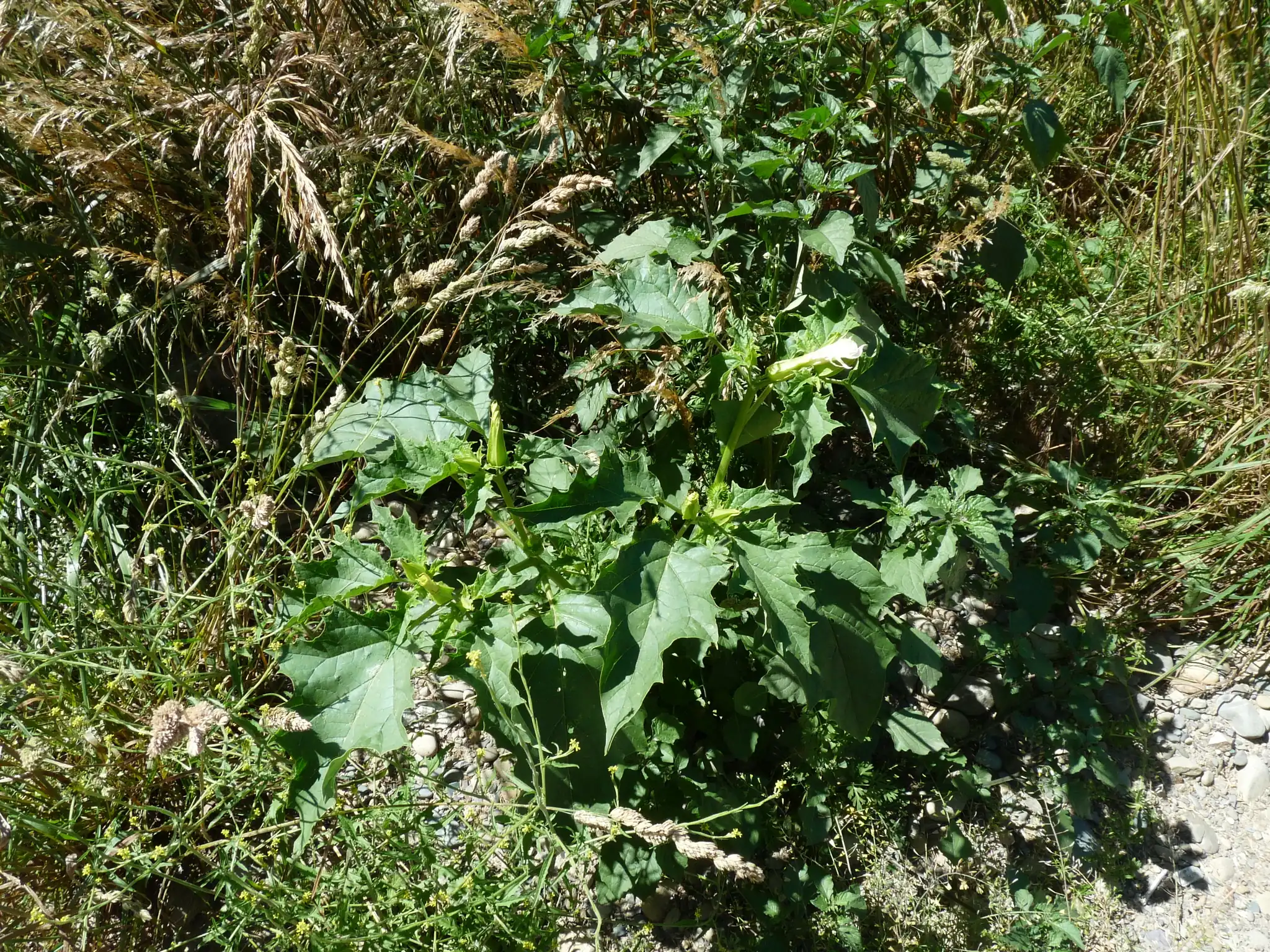
Datura stramonium is a stout, erect, branching annual herb characterized by its coarse, deeply lobed foliage and a strong, unpleasant odor when crushed. The solitary, trumpet-shaped white or pale lavender flowers open at night during summer and fall, followed by spiny, upright seed capsules.
This species is distinguished from ornamental angel's trumpets by its herbaceous annual habit and upright, prickly seed pods rather than pendulous flowers on woody stems. The entire plant contains high concentrations of toxic tropane alkaloids, making it a regulated agricultural weed rather than a standard garden subject.
Uses & Benefits:
Essentials
At a Glance
Plant Type
Annual
Height
59"
Width
47"
Light
Full Sun
Zones
4, 5, 6, 7, 8, 9
Water
Low
Humidity
Moderate to high
Lifespan
Annual
Native To
North America
Toxicity
High severity toxicity
Bloom period
Summer – Fall
In flower about 6 months of the year
Planting
How to Grow
- Sow seeds directly into well-drained, nitrogen-rich soil in a full sun location after the last frost.
- Water moderately until established, after which the plant exhibits high drought tolerance.
- Monitor foliage for hornworms and flea beetles, removing pests manually while wearing gloves.
- Cut down the plant and remove spiny capsules before they split to prevent aggressive self-seeding.
Pro Tip
Wear heavy gloves when handling this plant to avoid skin irritation from the sap, and remove the spiny seed pods before they mature to prevent aggressive self-seeding.
Keep It Thriving
Care Guide
Do
- Wear thick gloves when handling any part of the plant to prevent contact dermatitis.
- Remove seed pods before they mature to control spreading.
Don't
- Do not plant in areas accessible to children, pets, or livestock.
- Do not compost the seed-bearing capsules.
Seasonal Care Calendar
| Task | Jan | Feb | Mar | Apr | May | Jun | Jul | Aug | Sep | Oct | Nov | Dec |
|---|---|---|---|---|---|---|---|---|---|---|---|---|
| Pest Check | ||||||||||||
| Plant | ||||||||||||
| Prune | ||||||||||||
| Spring Cleanup |
Watch Out For
Pests & Diseases
Common Pests
Common Diseases
In the Garden
Landscape Uses & Companions
Landscape Uses
Multiply
Propagation Methods
Good to Know
Common Questions
Jimsonweed questions
What zones can Jimsonweed grow in?
Jimsonweed is hardy in USDA Zones 4–9. Inside that range it survives winter in the ground; outside it, grow it as an annual or a container plant you protect.
Is Jimsonweed deer resistant?
Yes — Jimsonweed is rated deer-resistant. Deer typically pass it over, though extreme hunger can override any plant's defenses.
When does Jimsonweed bloom?
Jimsonweed typically blooms in summer through fall. Exact timing shifts a week or two with your zone — Sow's bloom calendar maps it to your garden.
Does Jimsonweed need full sun?
Jimsonweed does best in full sun (6+ hours).
Is Jimsonweed drought tolerant?
Yes — once established (usually after the first full season), Jimsonweed handles dry spells with minimal watering. Water deeply its first year to build the root system that makes that possible.
More Datura to compare
Keep exploring
Explore the genus
Grow Jimsonweed with confidence
See it in a design of your actual yard, get zone-matched care reminders, and track it season by season in your garden journal.