The Story
Plant Bio
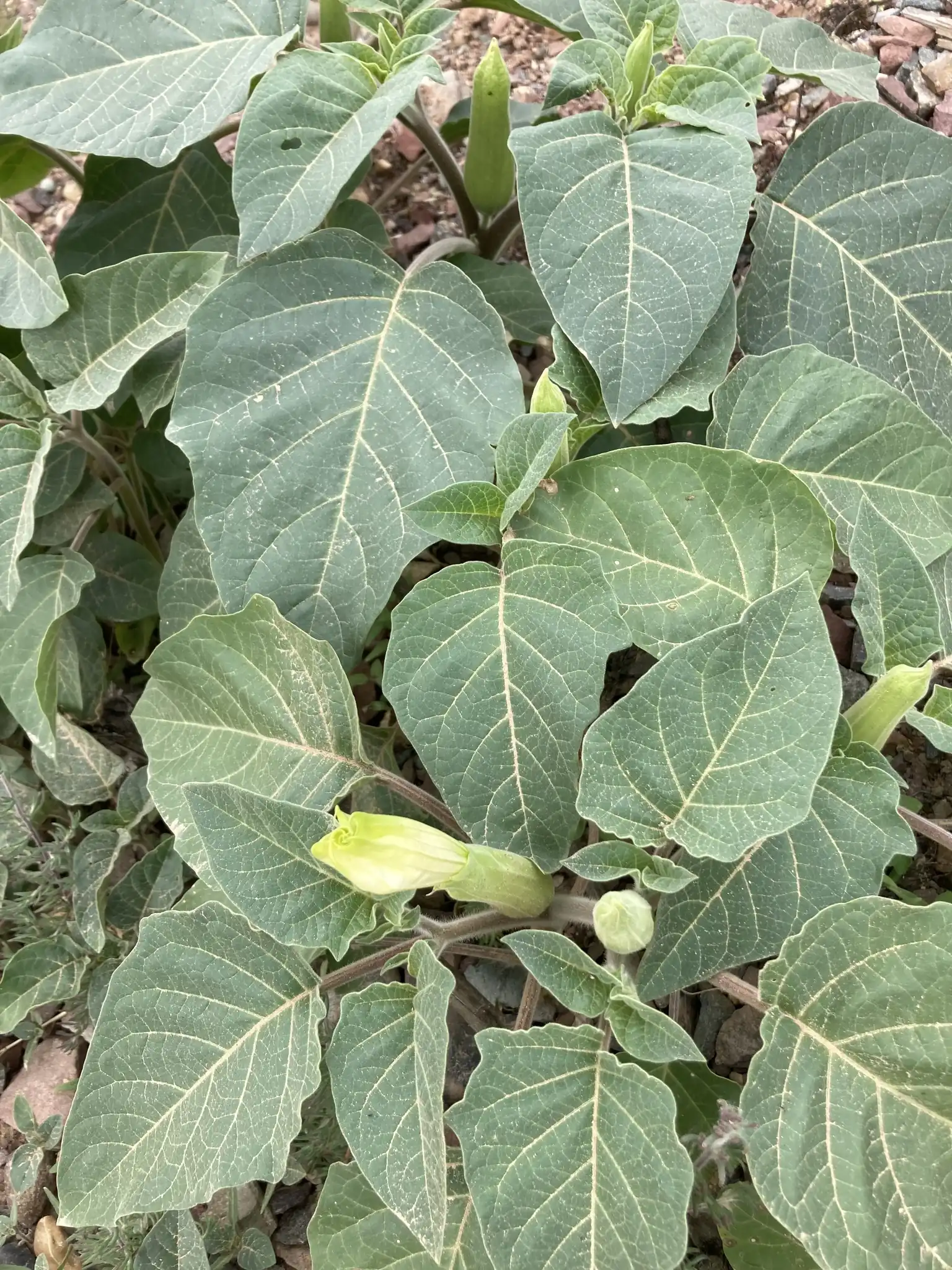
Datura innoxia, the downy thorn-apple, is a robust, sprawling herbaceous perennial or annual subshrub reaching two to five feet in height, with dull grayish-green leaves covered in soft glandular hairs. The foliage feels clammy to the touch and emits a heavy, narcotic scent when bruised or disturbed.
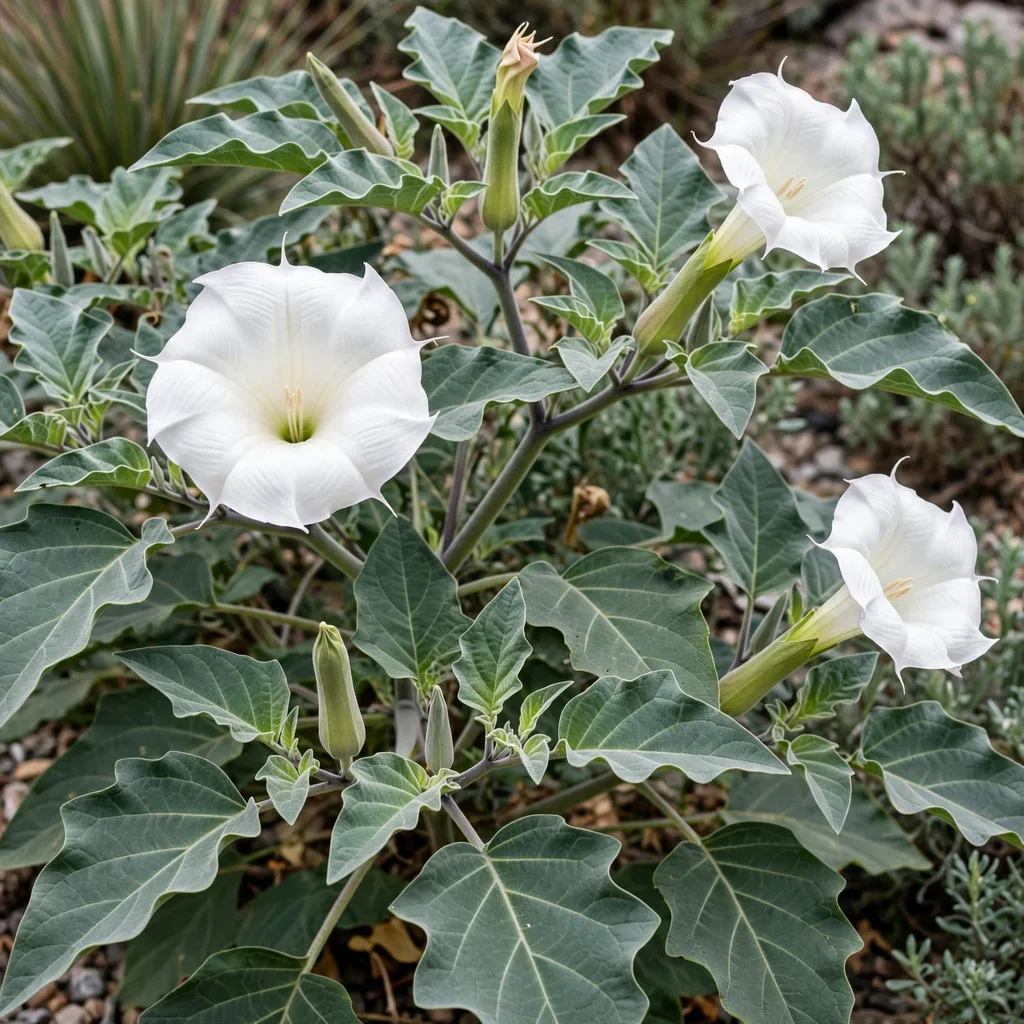
This species produces large, upright, pure white trumpet-shaped flowers that open in the evening and emit a strong fragrance to attract nocturnal pollinators. It is distinguished from the closely related Datura wrightii by its straight, erect glandular hairs and solid white corollas that lack any lavender or pink tinting.
Uses & Benefits:
Essentials
At a Glance
Plant Type
Perennial
Height
60"
Width
80"
Light
Full Sun, Partial Sun
Zones
9, 10
Water
Low
Humidity
Low to Moderate
Lifespan
Short-lived perennial or annual
Native To
The Americas
Toxicity
Highly Toxic
Bloom period
Summer – Fall
In flower about 6 months of the year
Planting
How to Grow
- Select a planting site in full sun with loose, sandy, or gravelly soil that drains rapidly.
- Sow seeds directly into the garden after the last spring frost, or transplant established plugs carefully to avoid disturbing the roots.
- Water sparingly once the plant is established, allowing the soil to dry out completely between waterings.
- Wear gloves when handling any part of the plant to avoid contact with the sticky, toxic glandular sap.
Pro Tip
Avoid planting in waterlogged or heavily compacted soils, as the fleshy root system is highly susceptible to rot under wet conditions. If growing as a perennial in cold-winter zones, cut the stems back hard and move the container indoors before the first frost.
Keep It Thriving
Care Guide
Do
- Wear gloves and wash hands thoroughly after pruning or handling the foliage.
- Grow in poor, well-drained soils to maintain a compact, sturdy growth habit.
- Provide full sun exposure to maximize flower production and prevent leggy stems.
Don't
- Do not overwater or plant in heavy clay soils that retain moisture.
- Do not apply heavy nitrogen fertilizers, which stimulate excessive foliage at the expense of blooms.
- Do not plant near agricultural crops like tomatoes or potatoes to prevent the spread of shared viruses.
Seasonal Care Calendar
| Task | Jan | Feb | Mar | Apr | May | Jun | Jul | Aug | Sep | Oct | Nov | Dec |
|---|---|---|---|---|---|---|---|---|---|---|---|---|
| Deadhead | ||||||||||||
| Pest Check | ||||||||||||
| Plant | ||||||||||||
| Winter Prep |
Watch Out For
Pests & Diseases
Common Pests
Common Diseases
In the Garden
Landscape Uses & Companions
Landscape Uses
Companion Plants
Multiply
Propagation Methods
Good to Know
Common Questions
Downy Thorn-Apple questions
What zones can Downy Thorn-Apple grow in?
Downy Thorn-Apple is hardy in USDA Zones 9–10. Inside that range it survives winter in the ground; outside it, grow it as an annual or a container plant you protect.
Is Downy Thorn-Apple deer resistant?
Yes — Downy Thorn-Apple is rated deer-resistant. Deer typically pass it over, though extreme hunger can override any plant's defenses.
When does Downy Thorn-Apple bloom?
Downy Thorn-Apple typically blooms in summer through fall. Exact timing shifts a week or two with your zone — Sow's bloom calendar maps it to your garden.
Does Downy Thorn-Apple need full sun?
Downy Thorn-Apple does best in full sun to part shade. In hot climates, afternoon shade keeps blooms fresher longer.
Is Downy Thorn-Apple drought tolerant?
Yes — once established (usually after the first full season), Downy Thorn-Apple handles dry spells with minimal watering. Water deeply its first year to build the root system that makes that possible.
More Datura to compare
Keep exploring
Explore the genus
Hardy in your zone?
Grow Downy Thorn-Apple with confidence
See it in a design of your actual yard, get zone-matched care reminders, and track it season by season in your garden journal.