Also known as Jimsonweed · 12 saves
Datura
Datura, the genus most gardeners know as jimsonweed. We track 3 varieties; the ones most used by real gardeners.
The 3 most-saved Datura varieties
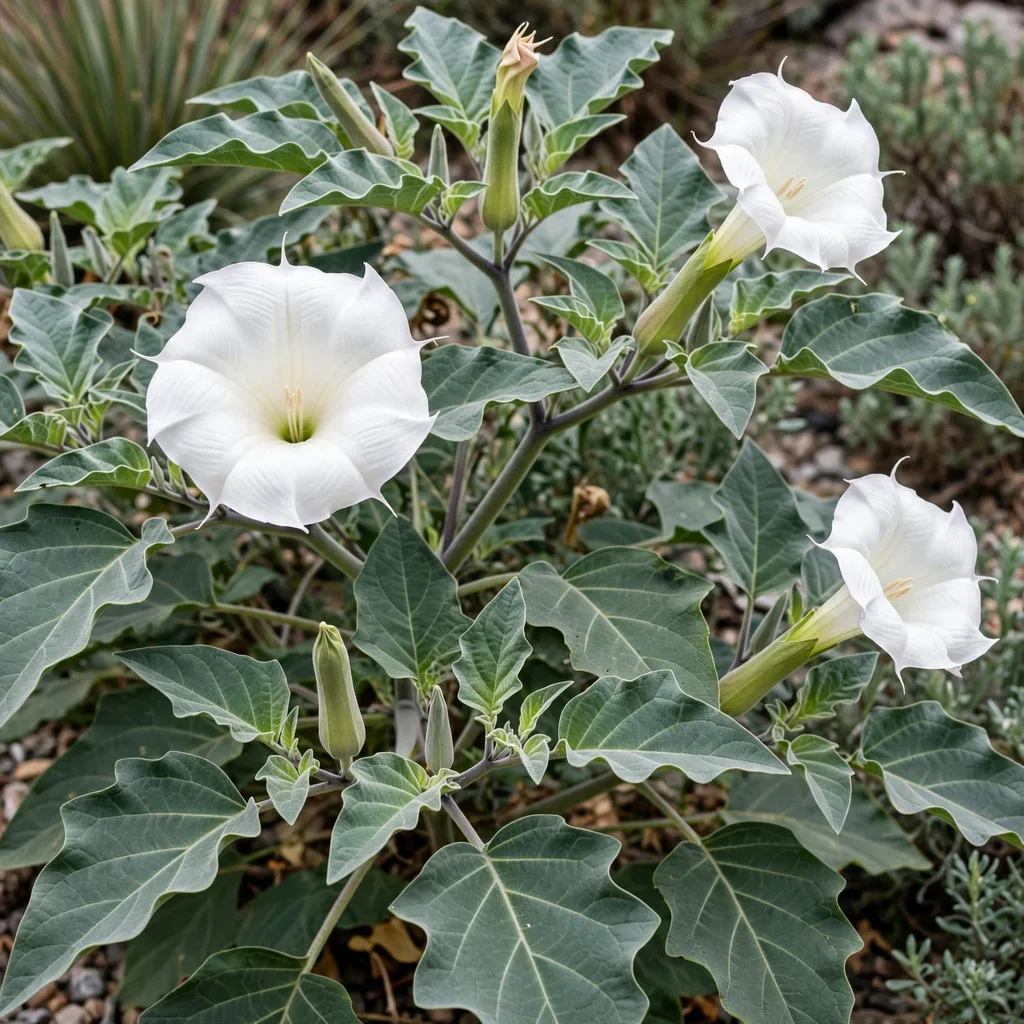
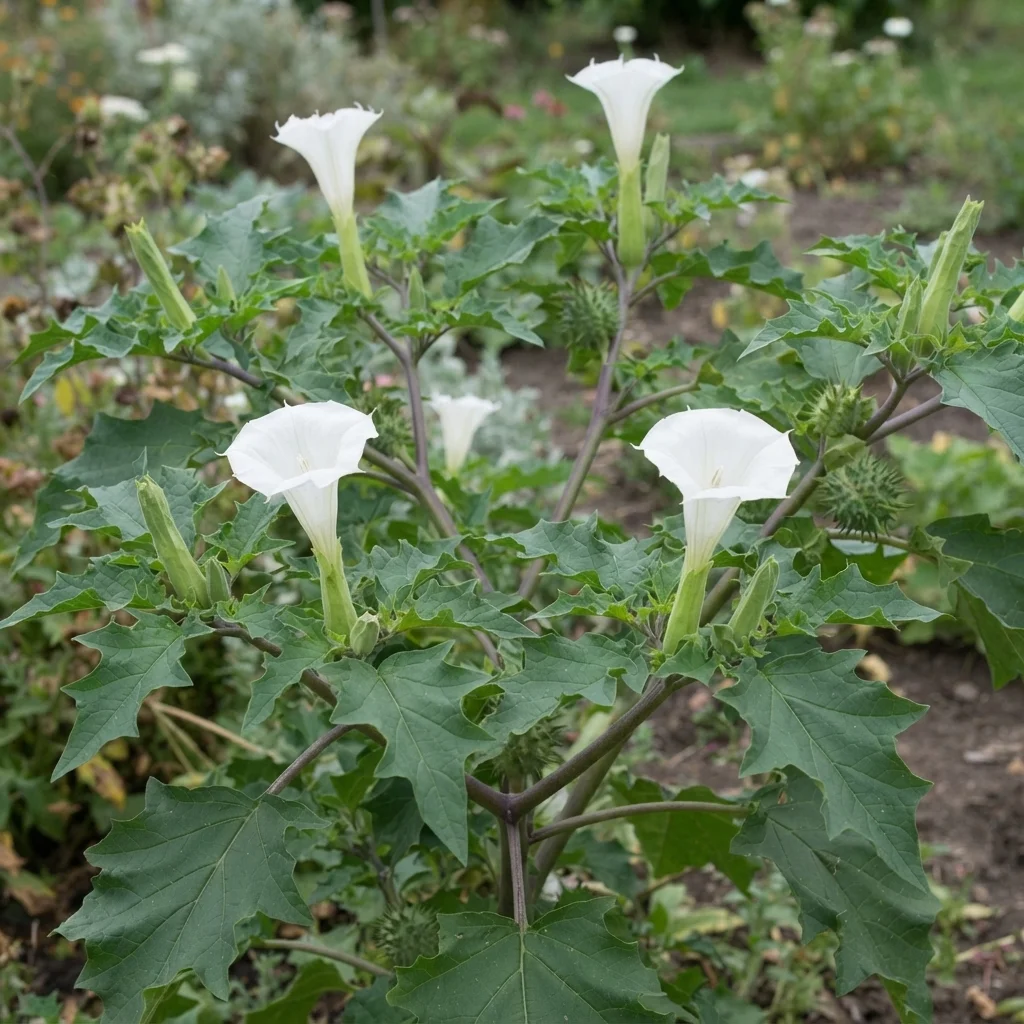
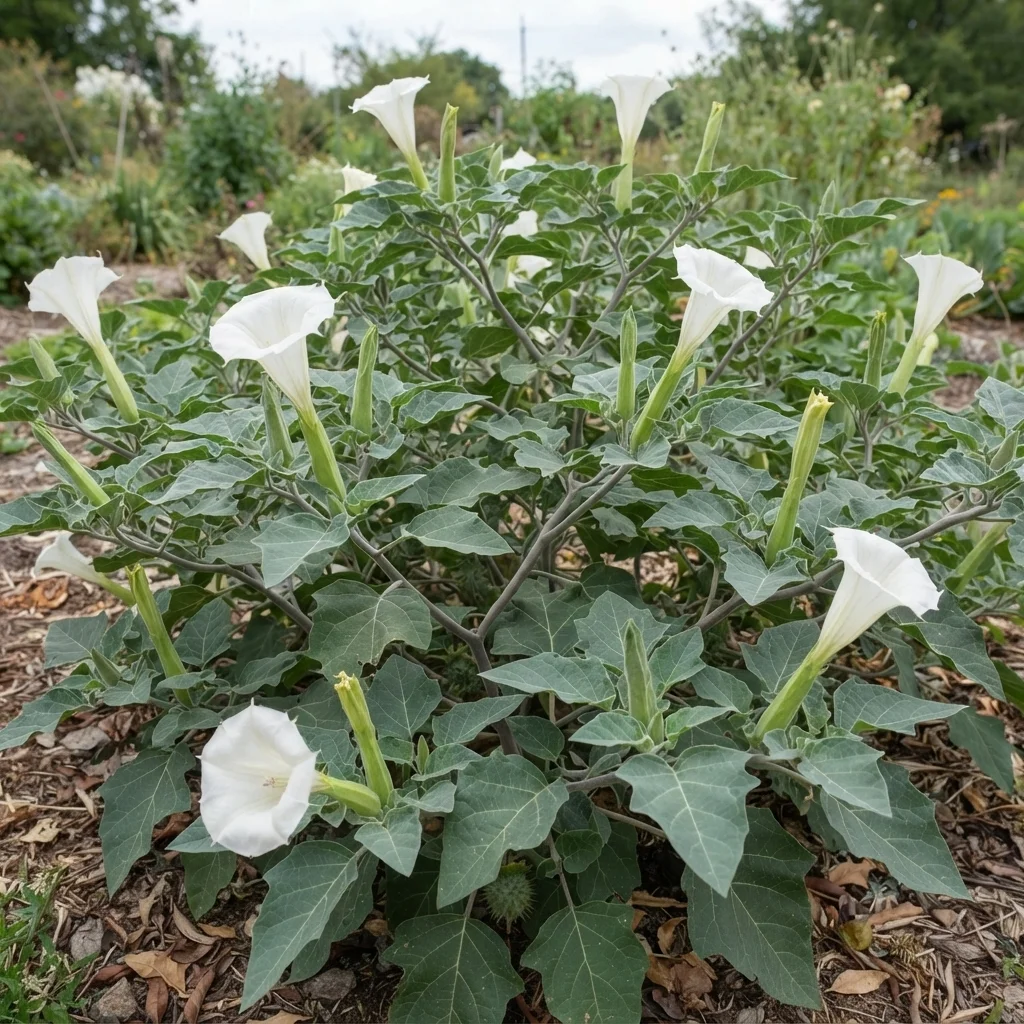
3 species of Datura
Each one is a parent of the varieties above.
Track your Datura in Sow
Save the Datura you grow and get care reminders timed to your zone.
How to grow Datura
Whats common across all Datura varieties in our catalog — drawn from the care records of the 3 most-grown of them.
The Datura year
- Check for PestsJune–August100% of varieties
Check leaves for flea beetles and tomato hornworms; hand-pick hornworms wearing gloves.
- PlantApril and May67% of varieties
Sow seeds directly outdoors after the final frost in a full sun location.


Do
- Wear thick gloves when handling any part of the plant to prevent contact dermatitis.
- Remove seed pods before they mature to control spreading.
- Wear gloves and wash hands thoroughly after pruning or handling the foliage.
- Grow in poor, well-drained soils to maintain a compact, sturdy growth habit.
- Provide full sun exposure to maximize flower production and prevent leggy stems.
Avoid
- Do not plant in areas accessible to children, pets, or livestock.
- Do not compost the seed-bearing capsules.
- Do not overwater or plant in heavy clay soils that retain moisture.
- Do not apply heavy nitrogen fertilizers, which stimulate excessive foliage at the expense of blooms.
What goes wrong with Datura
| Problem | What you'll see | What to do |
|---|---|---|
| Aphids | Sucking sap from new growth | Apply a strong water jet or spray with insecticidal soap. |
| Tomato hornworms | Defoliation of the branches | Hand-pick larvae while wearing gloves, or apply Bacillus thuringiensis. |
| Fleabeetles | Feeding damage causing shot-holes in leaves | Use row covers or apply insecticidal soap. |
| Spider mites | Tiny pests causing yellow stippling on leaves in hot, dry conditions. | Apply miticides or wash foliage regularly with strong water jets. |
| Root rot | Decay caused by overwatering in poorly drained soils | Improve soil drainage and reduce watering frequency. |
| Powdery mildew | White fungal growth on leaf surfaces | Improve air circulation around the plant or apply sulfur fungicide. |
| Potyviruses | Systemic viruses causing leaf mottling, distortion, and stunted growth. | Remove and destroy infected plants immediately; do not compost. |
Making more Datura
Seed
- Collect seeds from mature, dry, spiny capsules before they split open.
- Sow seeds directly into well-drained soil in spring after the danger of frost has passed.
- Press seeds lightly into the soil surface, as they require light and warmth to germinate.
- Keep the soil moist but not waterlogged until seedlings emerge and establish.
Stem Cuttings
- Take soft-wood stem cuttings in late spring or early summer.
- Remove the lower leaves and dip the cut end in rooting hormone.
- Insert the cutting into a moist, sterile, sandy potting mix.
- Keep the medium lightly moist and place in bright, indirect light until roots form.
Datura questions
How many types of Datura are there?
The Sow catalog tracks 3 distinct Datura varieties. The most popular — ranked by 12 real gardeners — are shown first above.
What zones does Datura grow in?
Across its varieties, Datura covers USDA Zones 4–10. Individual varieties differ — each plant page lists its exact range, and Sow filters the catalog to your zone automatically.
When does Datura bloom?
Most Datura varieties bloom in summer. Staggering early, mid, and late varieties extends the genus's season in one bed.
Which Datura should I choose?
Start from the most-saved varieties above — popularity across thousands of gardens is a strong signal of reliability — then filter by your zone and sun. In the Sow app you can preview any of them in a photo of your actual yard before you buy.