1 named cultivar
The Story
Plant Bio
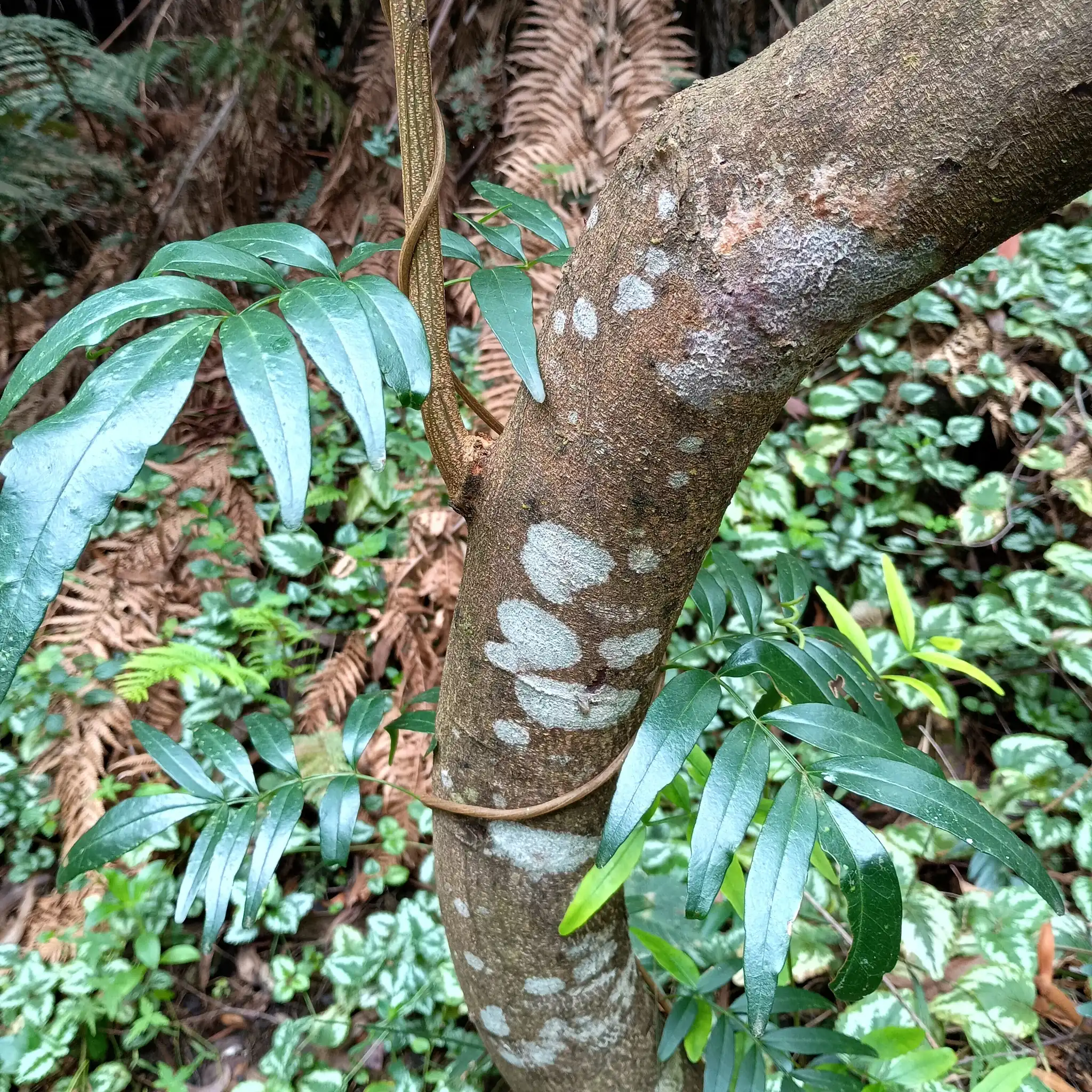
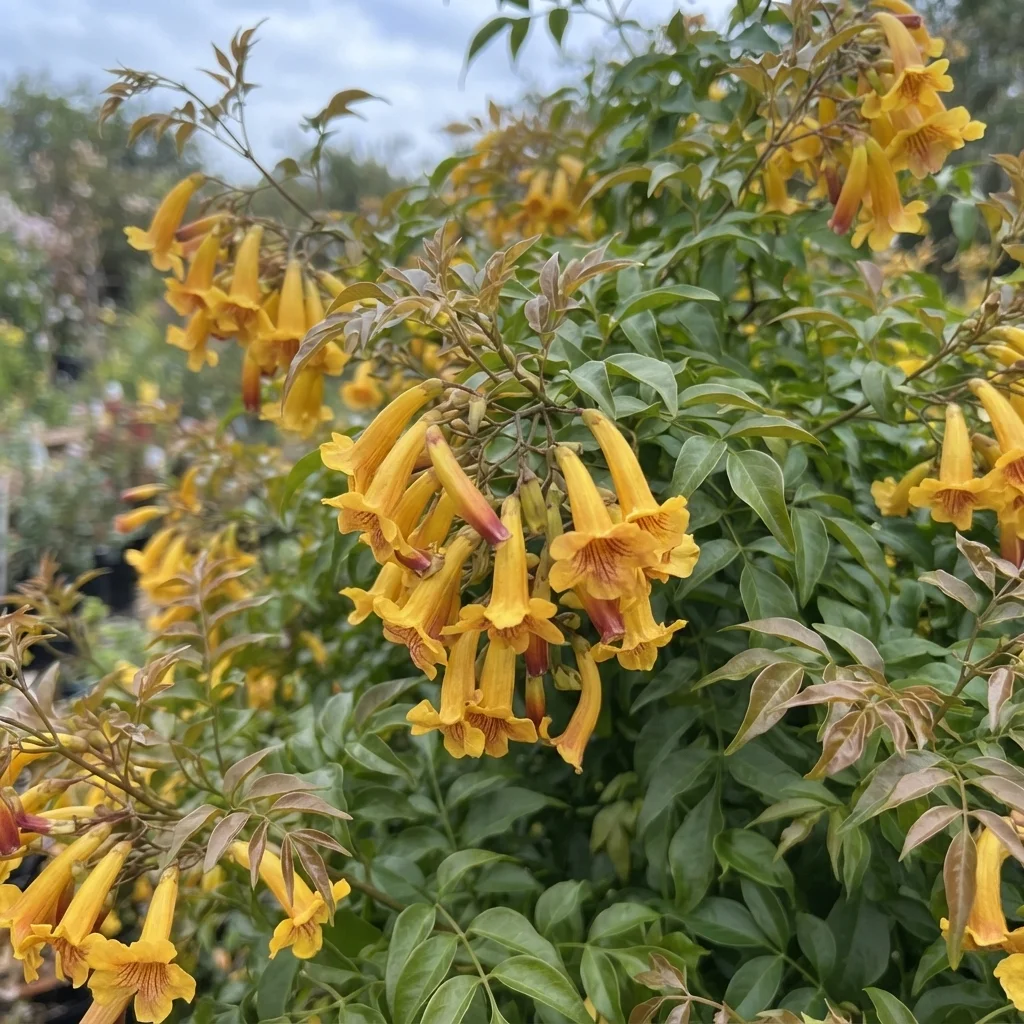
Pandorea pandorana, the Wonga-wonga vine, is a vigorous, woody, evergreen climber native to Australia and the Southwest Pacific. It features a distinct foliage transition, producing highly divided, fern-like leaflets on juvenile stems before developing larger, glossy, pinnate adult leaves.
The species produces terminal panicles of tubular, cream to pale yellow flowers heavily marked with maroon or purple in the throat during spring. In North America, it is grown as a tender exotic climber restricted to milder, frost-free regions or large containers.
Uses & Benefits:
Essentials
At a Glance
Plant Type
Vine
Height
354"
Width
236"
Light
Full Sun, Partial Sun
Zones
9, 10
Water
Moderate
Humidity
Moderate to high
Lifespan
Perennial
Native To
Australia, Malesia, Southwest Pacific
Toxicity
Non-toxic
Planting
How to Grow
- Select a planting site with well-draining soil and a sturdy support structure like a trellis or arbor.
- Dig a hole twice the width of the root ball and set the plant at the same depth as its nursery container.
- Water deeply at planting to settle the soil around the roots, ensuring no water pools permanently.
- Apply a thin layer of organic mulch around the base to retain moisture, keeping it clear of the main stem.
Pro Tip
Prune immediately after the spring flowering flush to control the vine's vigorous reach; cutting back into old, leafless wood often fails to produce new shoots.
Keep It Thriving
Care Guide
Do
- Water regularly during the first growing season to establish a deep root system.
- Provide a strong trellis, fence, or pergola for the twining stems to ascend.
- Apply a balanced, general-purpose fertilizer sparingly in early spring.
Don't
- Do not overfertilize, as excess nitrogen stimulates aggressive leaf growth at the expense of flowers.
- Do not plant in low-lying areas prone to standing water or chronic waterlogging.
- Do not prune heavily into old, bare wood that lacks active green foliage.
Seasonal Care Calendar
| Task | Jan | Feb | Mar | Apr | May | Jun | Jul | Aug | Sep | Oct | Nov | Dec |
|---|---|---|---|---|---|---|---|---|---|---|---|---|
| Fertilize | ||||||||||||
| Pest Check | ||||||||||||
| Prune | ||||||||||||
| Winter Prep |
Watch Out For
Pests & Diseases
Common Pests
Common Diseases
In the Garden
Landscape Uses & Companions
Landscape Uses
Companion Plants
Multiply
Propagation Methods
Good to Know
Common Questions
Wonga-wonga Vine questions
What zones can Wonga-wonga Vine grow in?
Wonga-wonga Vine is hardy in USDA Zones 9–10. Inside that range it survives winter in the ground; outside it, grow it as an annual or a container plant you protect.
Is Wonga-wonga Vine deer resistant?
Not reliably. Deer may browse Wonga-wonga Vine, especially tender spring growth — plan on repellents or fencing where pressure is high.
When does Wonga-wonga Vine bloom?
Wonga-wonga Vine typically blooms in spring through early summer. Exact timing shifts a week or two with your zone — Sow's bloom calendar maps it to your garden.
Does Wonga-wonga Vine need full sun?
Wonga-wonga Vine does best in full sun to part shade. In hot climates, afternoon shade keeps blooms fresher longer.
Is Wonga-wonga Vine drought tolerant?
Yes — once established (usually after the first full season), Wonga-wonga Vine handles dry spells with minimal watering. Water deeply its first year to build the root system that makes that possible.
More Pandorea to compare
Keep exploring
Explore the genus
Hardy in your zone?
Grow Wonga-wonga Vine with confidence
See it in a design of your actual yard, get zone-matched care reminders, and track it season by season in your garden journal.