1 named cultivar

The Story
Plant Bio
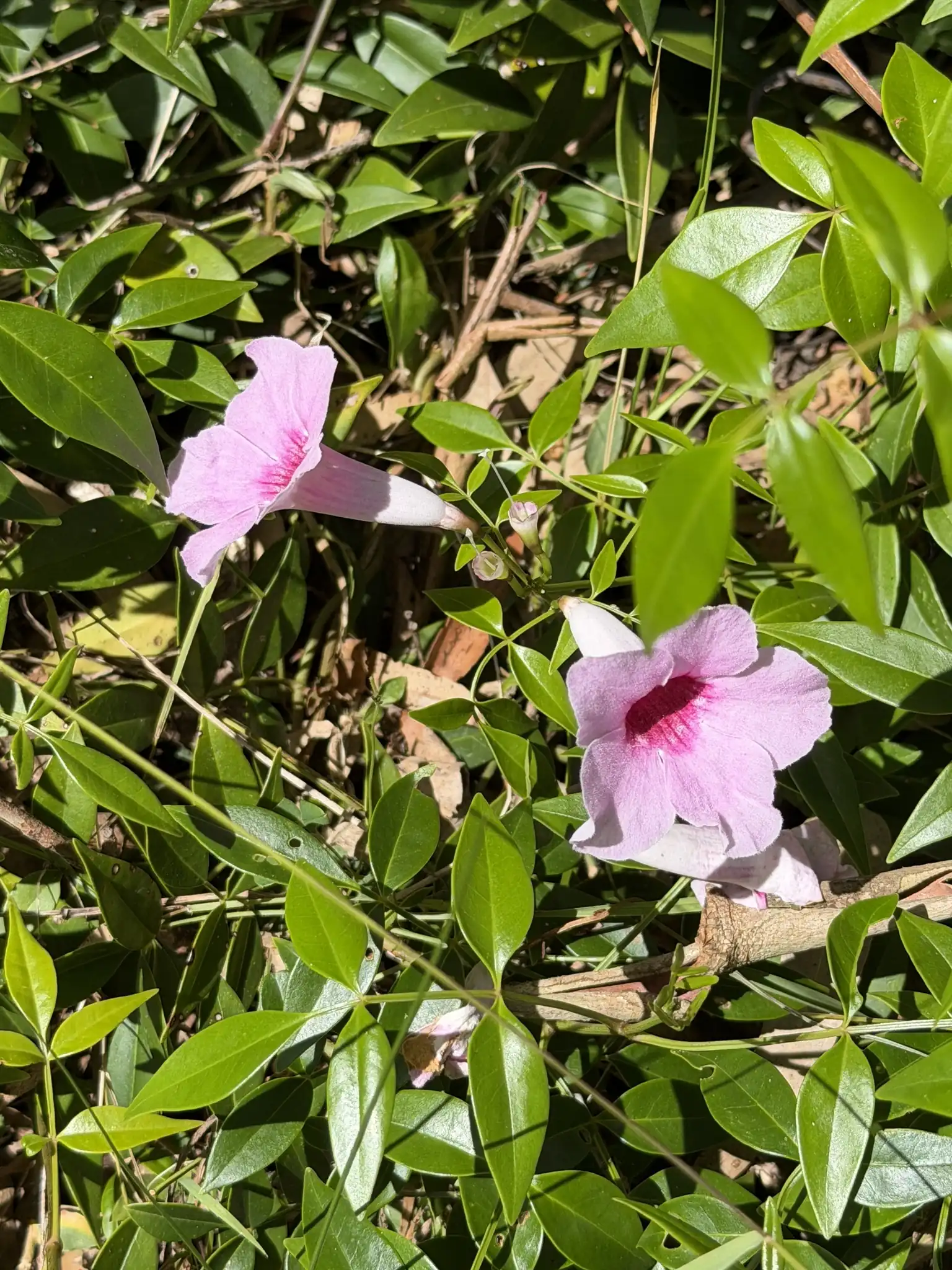
Pandorea jasminoides, commonly known as bower vine, is a vigorous evergreen climber native to the rainforest margins of eastern Australia. It climbs by twining woody stems clothed in glossy, dark green pinnate leaves that emerge with a bronze tint.
The trumpet-shaped flowers feature white to pale pink petals with a contrasting deep maroon, hairy throat, appearing in clusters from spring through summer. These nectar-rich blooms attract bees and butterflies while the dense foliage provides nesting cover for small birds.
Uses & Benefits:
Essentials
At a Glance
Plant Type
Vine
Height
315"
Width
118"
Light
Full Sun, Partial Sun
Zones
9, 10
Water
Moderate
Humidity
Moderate to High
Lifespan
Perennial
Native To
Australia
Toxicity
Non-toxic
Planting
How to Grow
- Select a planting site in full sun with fertile, highly permeable soil to prevent waterlogging.
- Install a sturdy trellis, arbor, or fence support before planting to accommodate the vigorous twining stems.
- Water deeply and regularly during the first growing season to establish a deep, resilient root system.
- Apply a light layer of organic mulch around the base to retain moisture, keeping it clear of the main stem.
Pro Tip
Prune immediately after the main summer flowering flush, taking care not to cut back into old, leafless woody stems which fail to shoot from bare wood.
Keep It Thriving
Care Guide
Do
- Prune annually immediately after flowering to maintain shape and size.
- Provide a strong support structure for the twining stems to climb.
- Ensure the soil drains rapidly to prevent root rot.
Don't
- Do not cut back into old, leafless woody stems as they will not regenerate.
- Do not overwater or plant in heavy, poorly drained clay soils.
- Do not over-fertilize, which stimulates excessive foliage at the expense of flowers.
Seasonal Care Calendar
| Task | Jan | Feb | Mar | Apr | May | Jun | Jul | Aug | Sep | Oct | Nov | Dec |
|---|---|---|---|---|---|---|---|---|---|---|---|---|
| Fertilize | ||||||||||||
| Pest Check | ||||||||||||
| Prune | ||||||||||||
| Winter Prep |
Watch Out For
Pests & Diseases
Common Pests
Common Diseases
In the Garden
Landscape Uses & Companions
Landscape Uses
Multiply
Propagation Methods
Good to Know
Common Questions
Bower Vine questions
What zones can Bower Vine grow in?
Bower Vine is hardy in USDA Zones 9–10. Inside that range it survives winter in the ground; outside it, grow it as an annual or a container plant you protect.
Is Bower Vine deer resistant?
Not reliably. Deer may browse Bower Vine, especially tender spring growth — plan on repellents or fencing where pressure is high.
When does Bower Vine bloom?
Bower Vine typically blooms in spring through summer. Exact timing shifts a week or two with your zone — Sow's bloom calendar maps it to your garden.
Does Bower Vine need full sun?
Bower Vine does best in full sun to part shade. In hot climates, afternoon shade keeps blooms fresher longer.
Is Bower Vine drought tolerant?
Yes — once established (usually after the first full season), Bower Vine handles dry spells with minimal watering. Water deeply its first year to build the root system that makes that possible.
More Pandorea to compare
Keep exploring
Explore the genus
Hardy in your zone?
Grow Bower Vine with confidence
See it in a design of your actual yard, get zone-matched care reminders, and track it season by season in your garden journal.