



The Story
Plant Bio
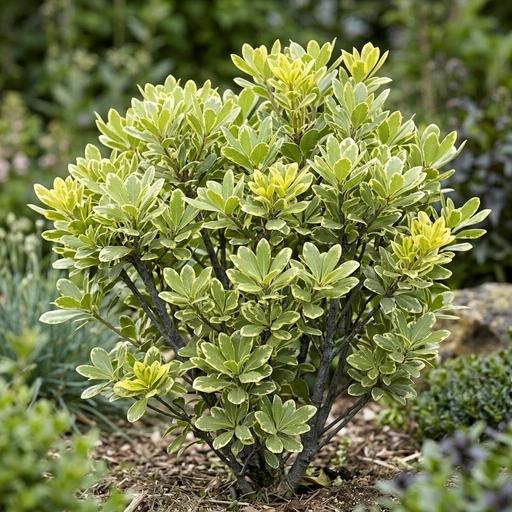
Pittosporum tobira is an evergreen shrub native to temperate coastal regions of East Asia, characterized by its tough, leathery foliage and highly fragrant flowers. The species forms a broad, dense mound of glossy dark green leaves arranged in whorls, producing clusters of sweet-scented white blossoms that fade to yellow in late spring.
'Miss Muffet' is a distinct dwarf cultivar that maintains a tightly compacted, low-spreading habit, reaching only 20 to 39 inches in height. Its vibrant light green spring growth provides a sharp contrast against the mature, deep green foliage before the fragrant, cream-colored flowers emerge.
Uses & Benefits:
Essentials
At a Glance
Plant Type
Shrub
Height
39"
Width
59"
Light
Full Sun, Partial Sun
Zones
8, 9, 10
Water
Low to moderate
Humidity
Moderate to high
Lifespan
Long-lived
Native To
Asia
Toxicity
Toxic if ingested; sap is a skin irritant
Bloom period
Spring – Early summer
In flower about 4 months of the year
Planting
How to Grow
- Select a planting site with full sun to partial shade, ensuring some afternoon shade is provided in hot inland climates.
- Prepare the soil to guarantee high drainage, as waterlogged sand, loam, or clay will cause fatal root rot.
- Dig a hole twice as wide as the root ball and plant at the same depth as the nursery container, backfilling with native soil.
- Water deeply to establish the root system, then reduce watering frequency to accommodate its high drought tolerance.
Pro Tip
Lightly tip-prune the outer stems after the spring flowering to maintain the natural rounded shape; shearing the plant into rigid spheres with hedge shears in late winter removes the flower buds that develop on old wood.
Keep It Thriving
Care Guide
Do
- Ensure the soil drains rapidly to prevent root rot.
- Provide afternoon shade if planting in hot inland regions.
- Prune selectively in warmer months after the main flowering flush.
- Apply a balanced, slow-release fertilizer in early spring and fall.
Don't
- Do not shear harshly into old, leafless wood as it resprouts poorly.
- Do not overwater or allow the roots to sit in waterlogged soil.
- Do not prune heavily right before spring, which removes developing flower buds.
- Do not plant in areas with heavy deer or rabbit browsing pressure without physical barriers.
Seasonal Care Calendar
| Task | Jan | Feb | Mar | Apr | May | Jun | Jul | Aug | Sep | Oct | Nov | Dec |
|---|---|---|---|---|---|---|---|---|---|---|---|---|
| Fertilize | ||||||||||||
| Pest Check | ||||||||||||
| Prune | ||||||||||||
| Winter Prep |
Watch Out For
Pests & Diseases
Common Pests
Common Diseases
In the Garden
Landscape Uses & Companions
Landscape Uses
Companion Plants
Multiply
Propagation Methods
Good to Know
Common Questions
Dwarf Japanese Pittosporum questions
What zones can Dwarf Japanese Pittosporum grow in?
Dwarf Japanese Pittosporum is hardy in USDA Zones 8–10. Inside that range it survives winter in the ground; outside it, grow it as an annual or a container plant you protect.
Is Dwarf Japanese Pittosporum deer resistant?
Not reliably. Deer may browse Dwarf Japanese Pittosporum, especially tender spring growth — plan on repellents or fencing where pressure is high.
When does Dwarf Japanese Pittosporum bloom?
Dwarf Japanese Pittosporum typically blooms in spring through early summer. Exact timing shifts a week or two with your zone — Sow's bloom calendar maps it to your garden.
Does Dwarf Japanese Pittosporum need full sun?
Dwarf Japanese Pittosporum does best in full sun to part shade. In hot climates, afternoon shade keeps blooms fresher longer.
Is Dwarf Japanese Pittosporum drought tolerant?
Yes — once established (usually after the first full season), Dwarf Japanese Pittosporum handles dry spells with minimal watering. Water deeply its first year to build the root system that makes that possible.
More Pittosporum to compare
Mojo Pittosporum
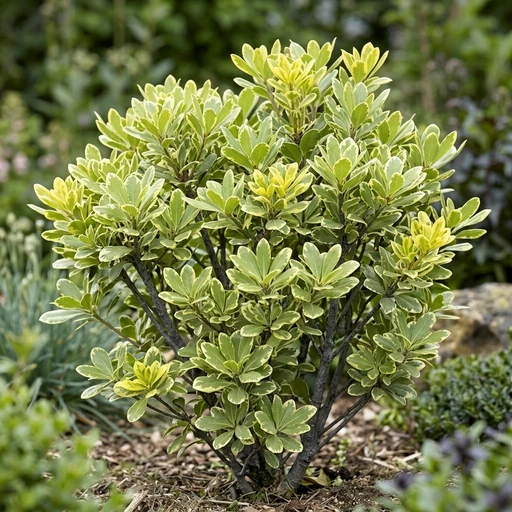
Pittosporum tobira 'Mojo'
Wheeler's Dwarf Pittosporum
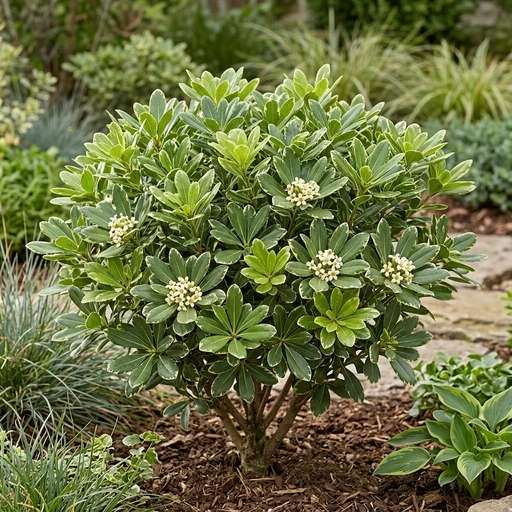
Pittosporum tobira 'Wheeler'
Japanese Pittosporum
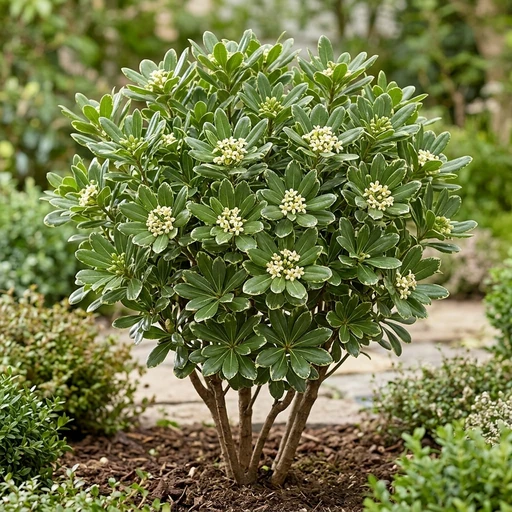
Pittosporum tobira
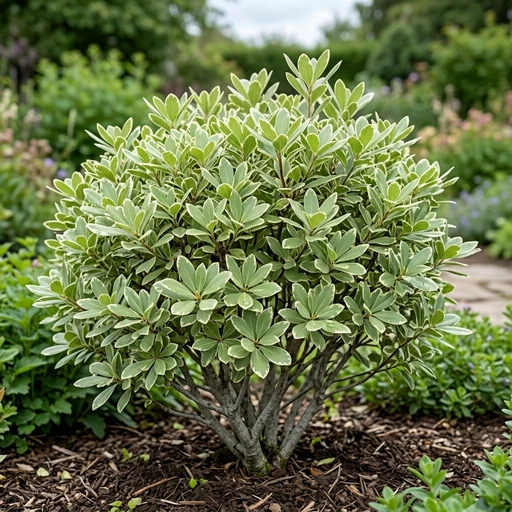
Variegated Japanese Pittosporum
Pittosporum tobira 'Variegatum'
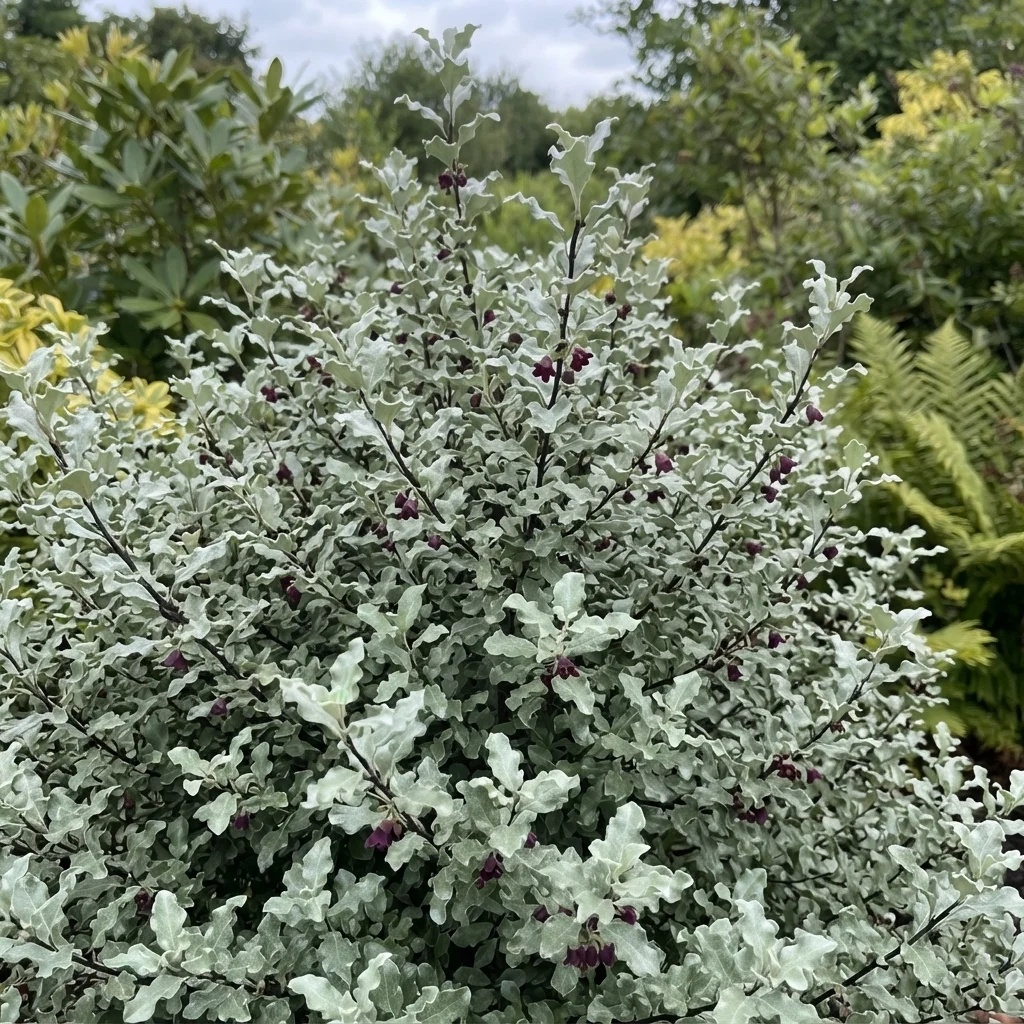
James Stirling Kohuhu
Pittosporum tenuifolium 'James Stirling'
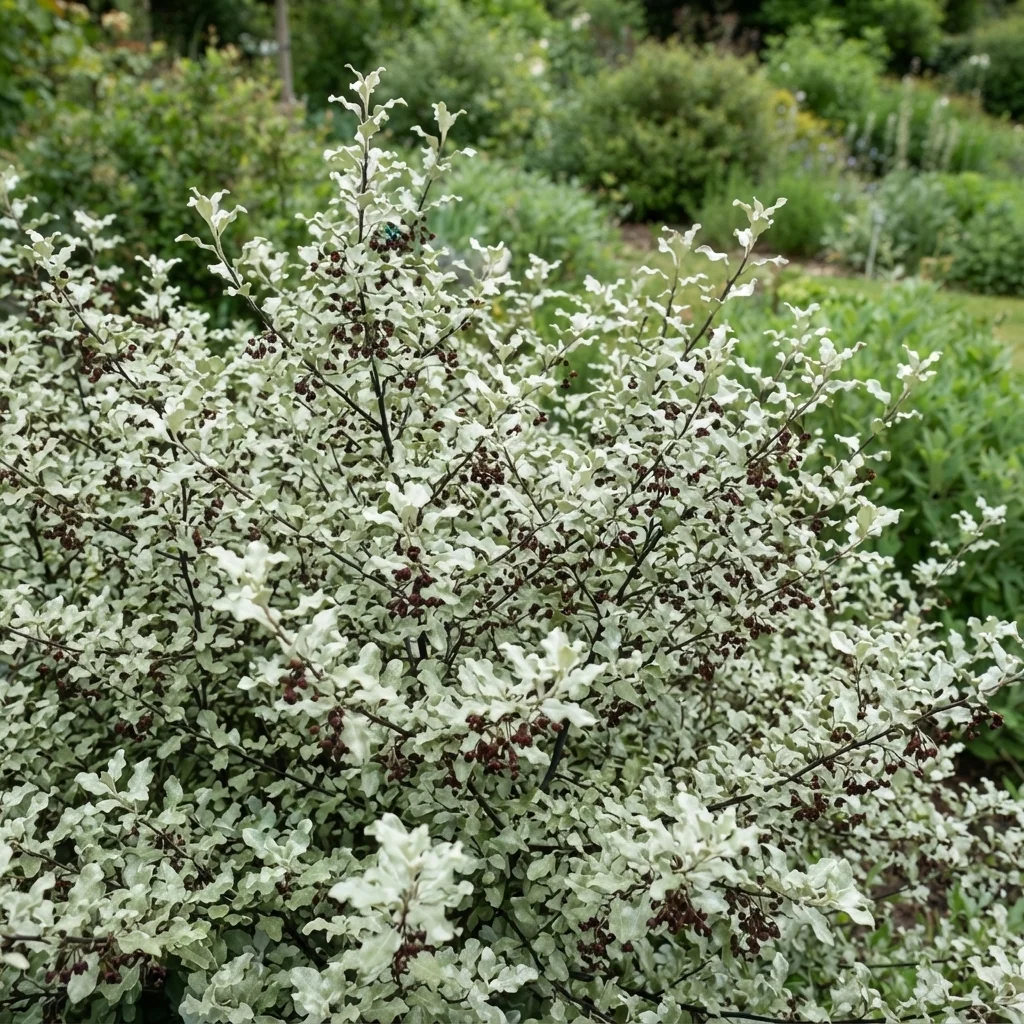
Silver Sheen Kohuhu
Pittosporum tenuifolium 'Silver Sheen'
Keep exploring
Explore the genus
Hardy in your zone?
Grow Dwarf Japanese Pittosporum with confidence
See it in a design of your actual yard, get zone-matched care reminders, and track it season by season in your garden journal.