Species
2 other cultivars
The Story
Plant Bio
Pittosporum tenuifolium is an evergreen shrub or small tree native to New Zealand, characterized by its dark, wiry stems and dense growth habit. In its native habitat, it grows in coastal and lower montane forest margins, adapting to a variety of well-drained soils.
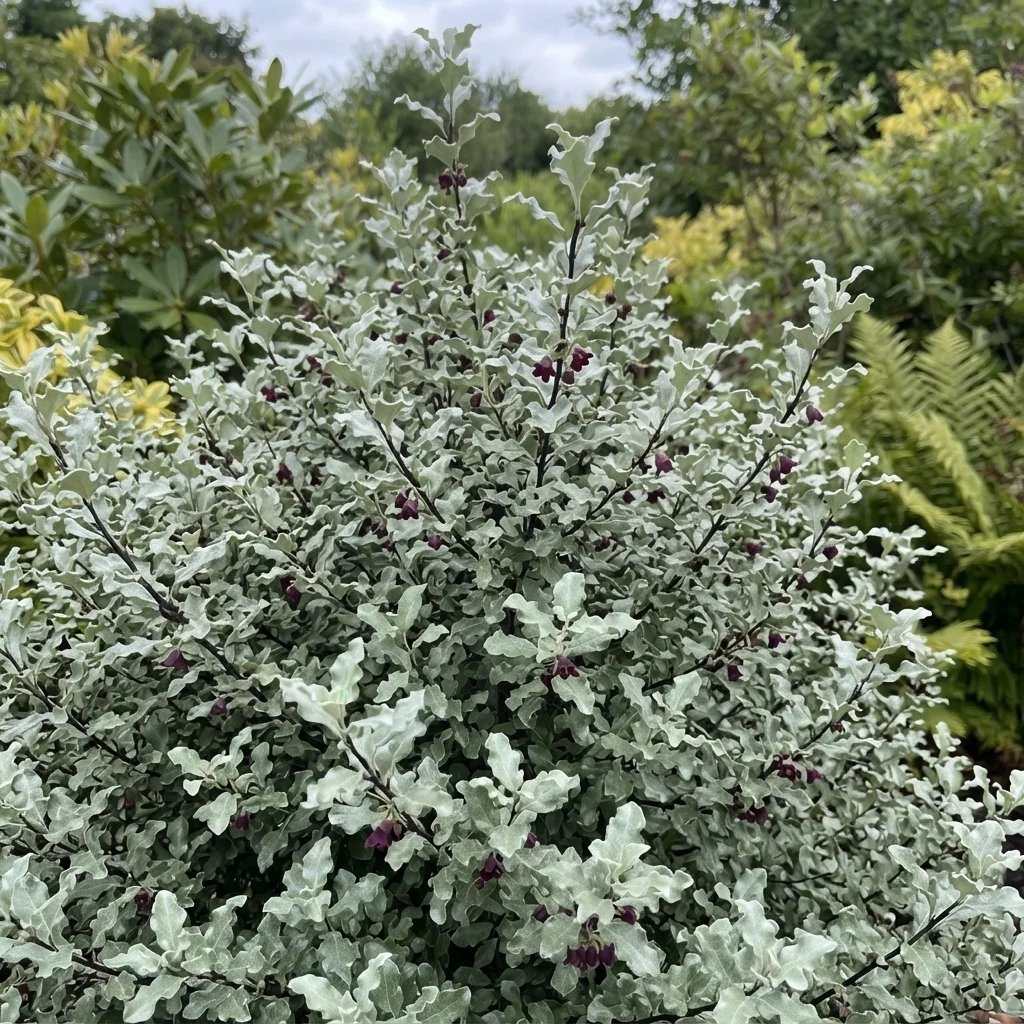
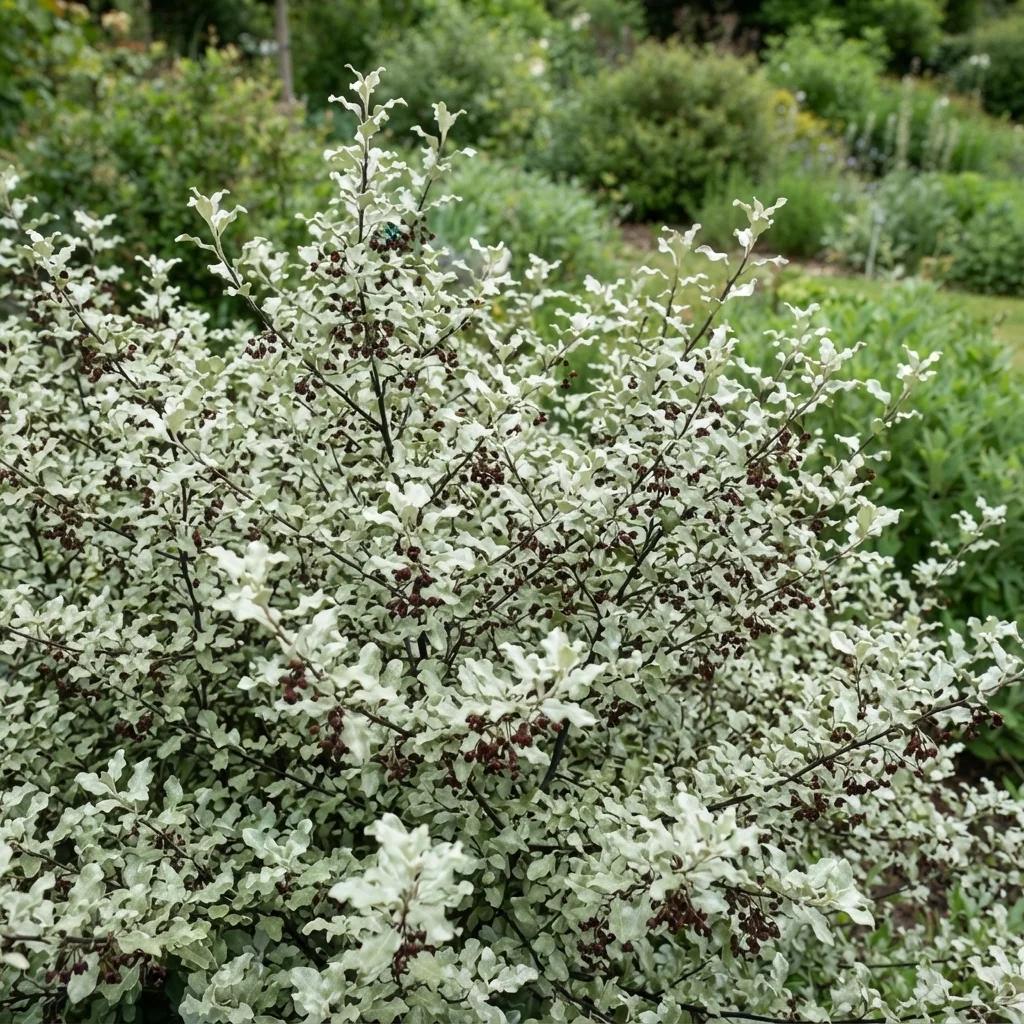
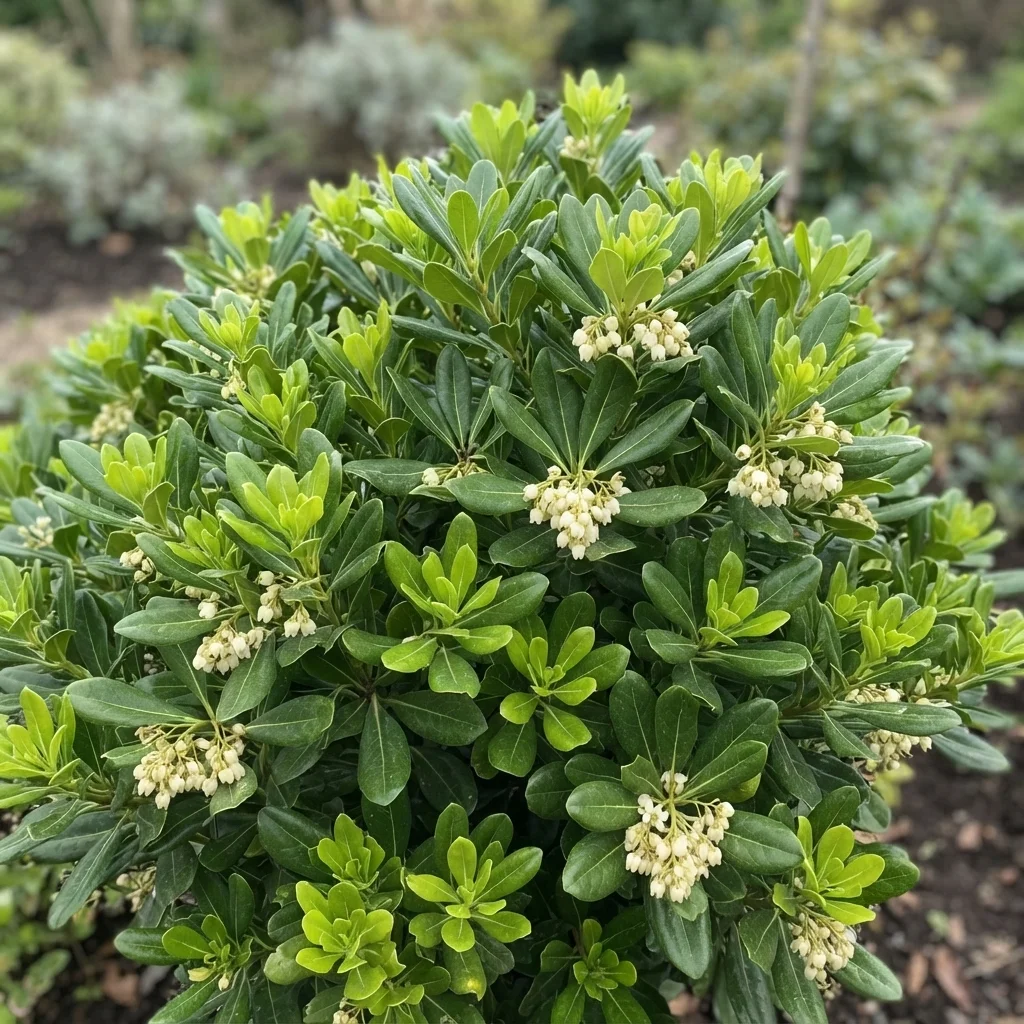
'James Stirling' is distinguished by its exceptionally narrow, upright columnar form and small, silvery-green to platinum-blue leaves with wavy margins. The pale, shimmering foliage contrasts sharply against the near-black twigs, making it a highly decorative choice for hedges or screens.
Uses & Benefits:
Essentials
At a Glance
Plant Type
Shrub
Height
196"
Width
98"
Light
Full Sun, Partial Sun
Zones
7, 8, 9, 10
Water
Moderate
Humidity
Low to moderate
Lifespan
Multi-decade
Native To
New Zealand
Toxicity
Skin irritant
Bloom period
Spring
In flower about 3 months of the year
Planting
How to Grow
- Select a site with full sun to partial shade and exceptionally well-drained soil.
- Dig a hole twice as wide as the root ball but no deeper, ensuring the crown sits slightly above the surrounding soil level to prevent collar rot.
- Backfill with native soil, press firmly to eliminate air pockets, and water deeply to settle the roots.
- Apply a thin layer of organic mulch around the base, keeping it several inches away from the trunk to avoid moisture retention against the bark.
Pro Tip
Never shear past the green foliage line into the bare, dark interior wood, as the plant lacks the ability to regenerate from old stems.
Keep It Thriving
Care Guide
Do
- Plant in raised beds or sloped areas if your garden has heavy clay soil.
- Water regularly during the first summer to establish a deep, resilient root system.
- Prune lightly in spring to maintain a tight, dense habit.
Don't
- Do not overwater or allow the soil to remain soggy, which triggers rapid root rot.
- Do not cut back into bare, leafless interior wood when shearing.
- Do not plant in low-lying areas where cold air or water pools.
Seasonal Care Calendar
| Task | Jan | Feb | Mar | Apr | May | Jun | Jul | Aug | Sep | Oct | Nov | Dec |
|---|---|---|---|---|---|---|---|---|---|---|---|---|
| Fertilize | ||||||||||||
| Mulch | ||||||||||||
| Pest Check | ||||||||||||
| Prune |
Watch Out For
Pests & Diseases
Common Pests
Common Diseases
In the Garden
Landscape Uses & Companions
Landscape Uses
Companion Plants
Multiply
Propagation Methods
Good to Know
Common Questions
James Stirling Kohuhu questions
What zones can James Stirling Kohuhu grow in?
James Stirling Kohuhu is hardy in USDA Zones 7–10. Inside that range it survives winter in the ground; outside it, grow it as an annual or a container plant you protect.
Is James Stirling Kohuhu deer resistant?
Not reliably. Deer may browse James Stirling Kohuhu, especially tender spring growth — plan on repellents or fencing where pressure is high.
When does James Stirling Kohuhu bloom?
James Stirling Kohuhu typically blooms in spring through spring. Exact timing shifts a week or two with your zone — Sow's bloom calendar maps it to your garden.
Does James Stirling Kohuhu need full sun?
James Stirling Kohuhu does best in full sun to part shade. In hot climates, afternoon shade keeps blooms fresher longer.
Is James Stirling Kohuhu drought tolerant?
Yes — once established (usually after the first full season), James Stirling Kohuhu handles dry spells with minimal watering. Water deeply its first year to build the root system that makes that possible.
More Pittosporum to compare
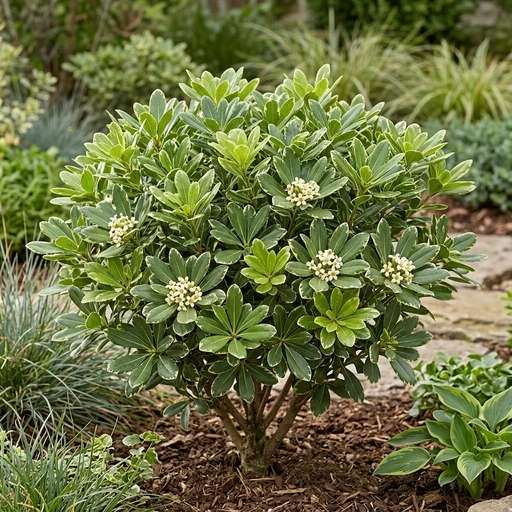
Mojo Pittosporum
Pittosporum tobira 'Mojo'
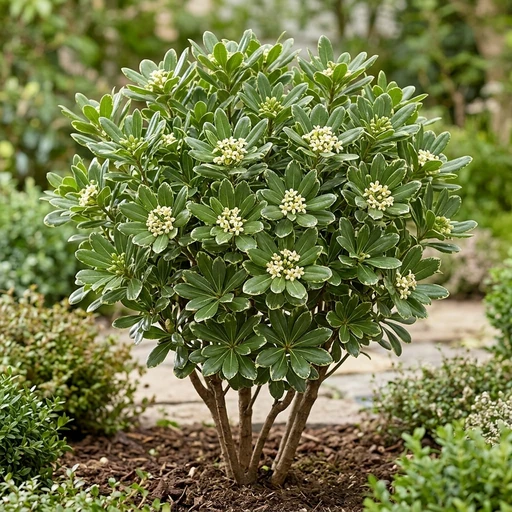
Wheeler's Dwarf Pittosporum
Pittosporum tobira 'Wheeler'
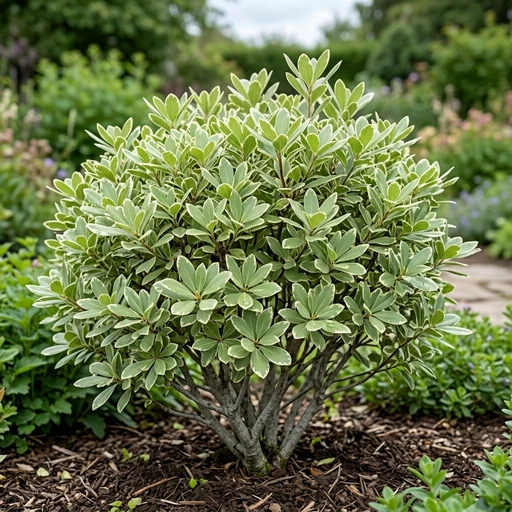
Japanese Pittosporum
Pittosporum tobira
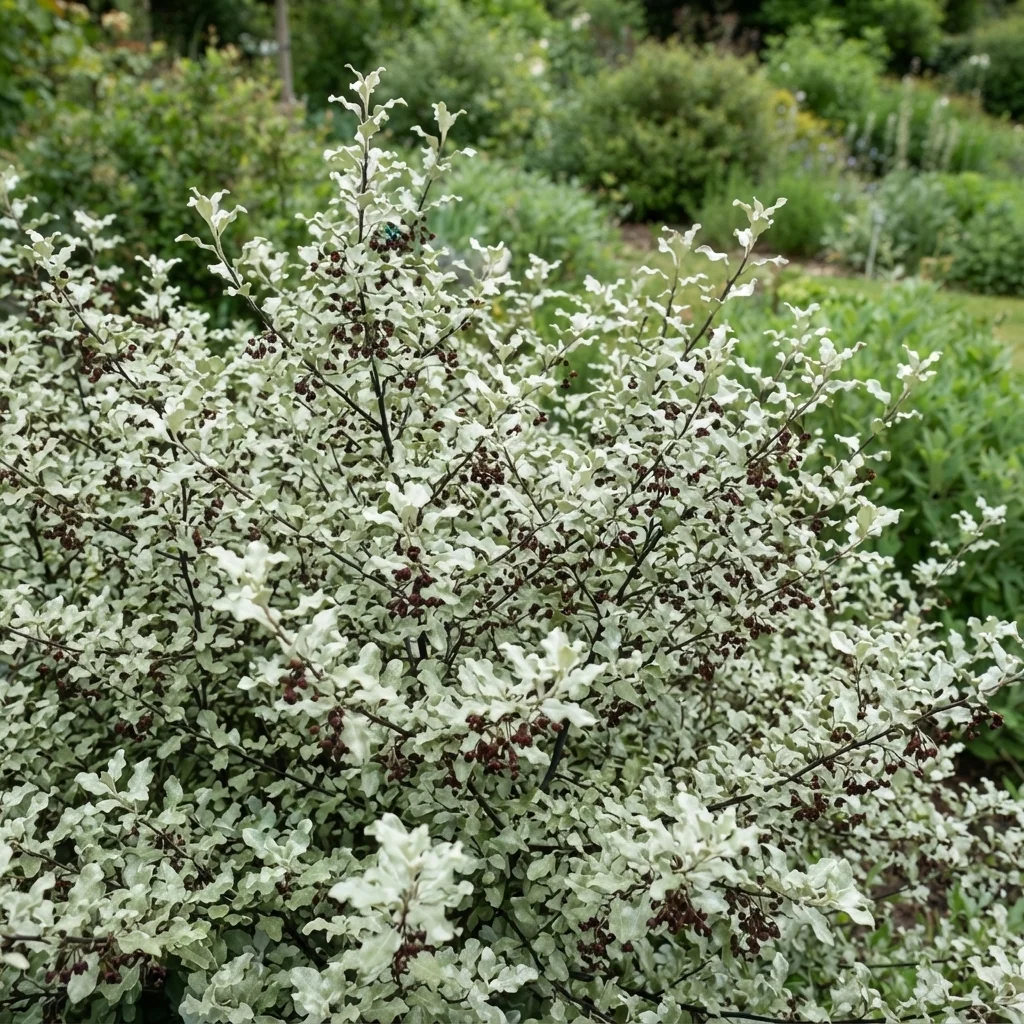
Variegated Japanese Pittosporum
Pittosporum tobira 'Variegatum'
Silver Sheen Kohuhu
Pittosporum tenuifolium 'Silver Sheen'
Dwarf Japanese Pittosporum
Pittosporum tobira 'Miss Muffet'
Keep exploring
Explore the genus
Hardy in your zone?
Grow James Stirling Kohuhu with confidence
See it in a design of your actual yard, get zone-matched care reminders, and track it season by season in your garden journal.