The Story
Plant Bio
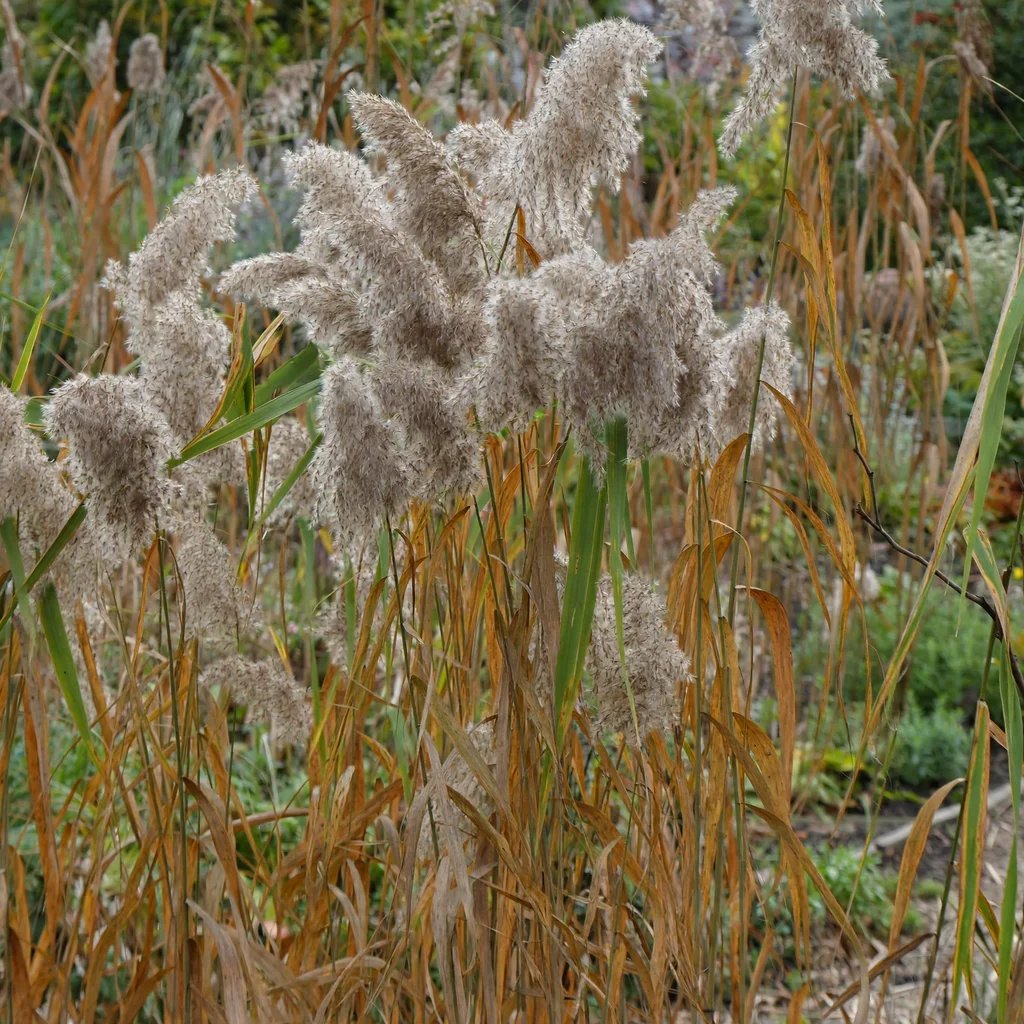
Phragmites australis, the common reed, is a massive, colony-forming perennial wetland grass native to temperate and tropical regions worldwide. It produces upright, cane-like stems clad in stiff, sharp-edged green leaves that turn a warm straw color in winter.
This species is distinguished by its towering height and large, feathery terminal flower panicles that emerge purplish-brown before maturing to a fluffy silvery-white. It spreads aggressively via an extensive network of underground rhizomes and stolons, making it highly effective for stabilizing wet soils but prone to dominating open water.
Uses & Benefits:
Essentials
At a Glance
Plant Type
Grass
Height
150"
Width
120"
Light
Full Sun
Zones
4, 5, 6, 7, 8, 9
Water
High
Humidity
High
Lifespan
Perennial
Native To
Cosmopolitan
Toxicity
Non-toxic (sharp leaves can cause cuts)
Bloom period
Summer – Autumn
In flower about 6 months of the year
Planting
How to Grow
- Select a site in full sun with wet, saturated soil or shallow standing water up to several inches deep.
- Dig a planting hole twice the width of the root ball and set the plant at the same depth it was growing in the container.
- Backfill with native soil and water thoroughly to settle the roots, ensuring the soil remains consistently wet during establishment.
- Monitor the planting area regularly to manually pull or sever any escaping rhizomes that venture beyond the designated boundary.
Pro Tip
To prevent this aggressive spreader from completely choking out neighboring aquatic plants, install physical root barriers at least two feet deep or restrict plantings to completely isolated, lined water features.
Keep It Thriving
Care Guide
Do
- Cut dead stems back to the ground in late winter to make room for clean spring growth.
- Wear heavy leather gloves when handling the plant to protect hands from the sharp leaf margins.
- Keep the soil saturated or submerged to maintain vigorous growth and prevent premature summer dormancy.
Don't
- Do not plant this species in small, uncontained garden ponds where its rhizomes can easily puncture liners or overwhelm other plants.
- Avoid pruning or shearing the green stems during the active summer growing season unless managing spread.
- Do not apply high-nitrogen fertilizers, as the plant is already naturally aggressive and highly efficient at nutrient uptake.
Seasonal Care Calendar
| Task | Jan | Feb | Mar | Apr | May | Jun | Jul | Aug | Sep | Oct | Nov | Dec |
|---|---|---|---|---|---|---|---|---|---|---|---|---|
| Pest Check | ||||||||||||
| Propagate | ||||||||||||
| Spring Cleanup | ||||||||||||
| Winter Prep |
Watch Out For
Pests & Diseases
Common Pests
Common Diseases
In the Garden
Landscape Uses & Companions
Landscape Uses
Companion Plants
Multiply
Propagation Methods
Good to Know
Common Questions
Common Reed questions
What zones can Common Reed grow in?
Common Reed is hardy in USDA Zones 4–9. Inside that range it survives winter in the ground; outside it, grow it as an annual or a container plant you protect.
Is Common Reed deer resistant?
Not reliably. Deer may browse Common Reed, especially tender spring growth — plan on repellents or fencing where pressure is high.
When does Common Reed bloom?
Common Reed typically blooms in summer through autumn. Exact timing shifts a week or two with your zone — Sow's bloom calendar maps it to your garden.
Does Common Reed need full sun?
Common Reed does best in full sun (6+ hours).
Keep exploring
Explore the genus
Grow Common Reed with confidence
See it in a design of your actual yard, get zone-matched care reminders, and track it season by season in your garden journal.