
The Story
Plant Bio
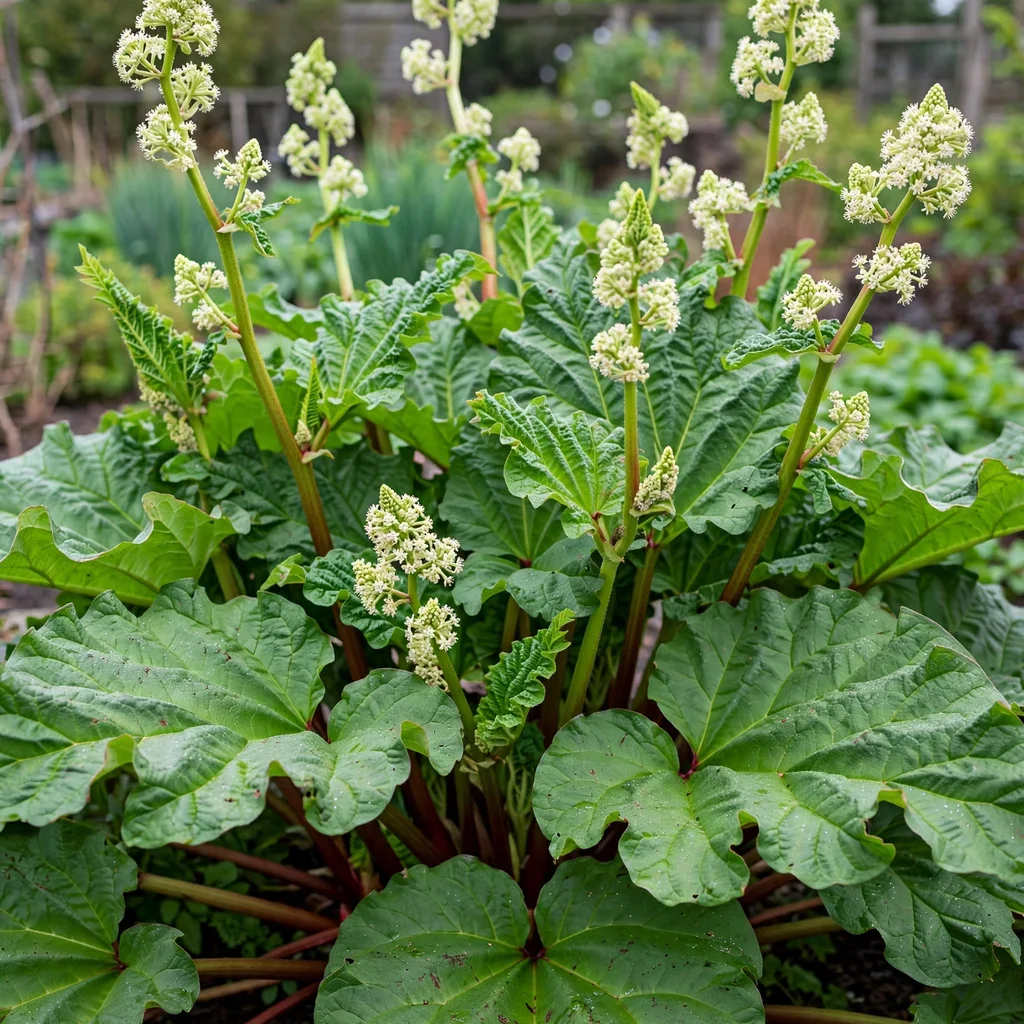
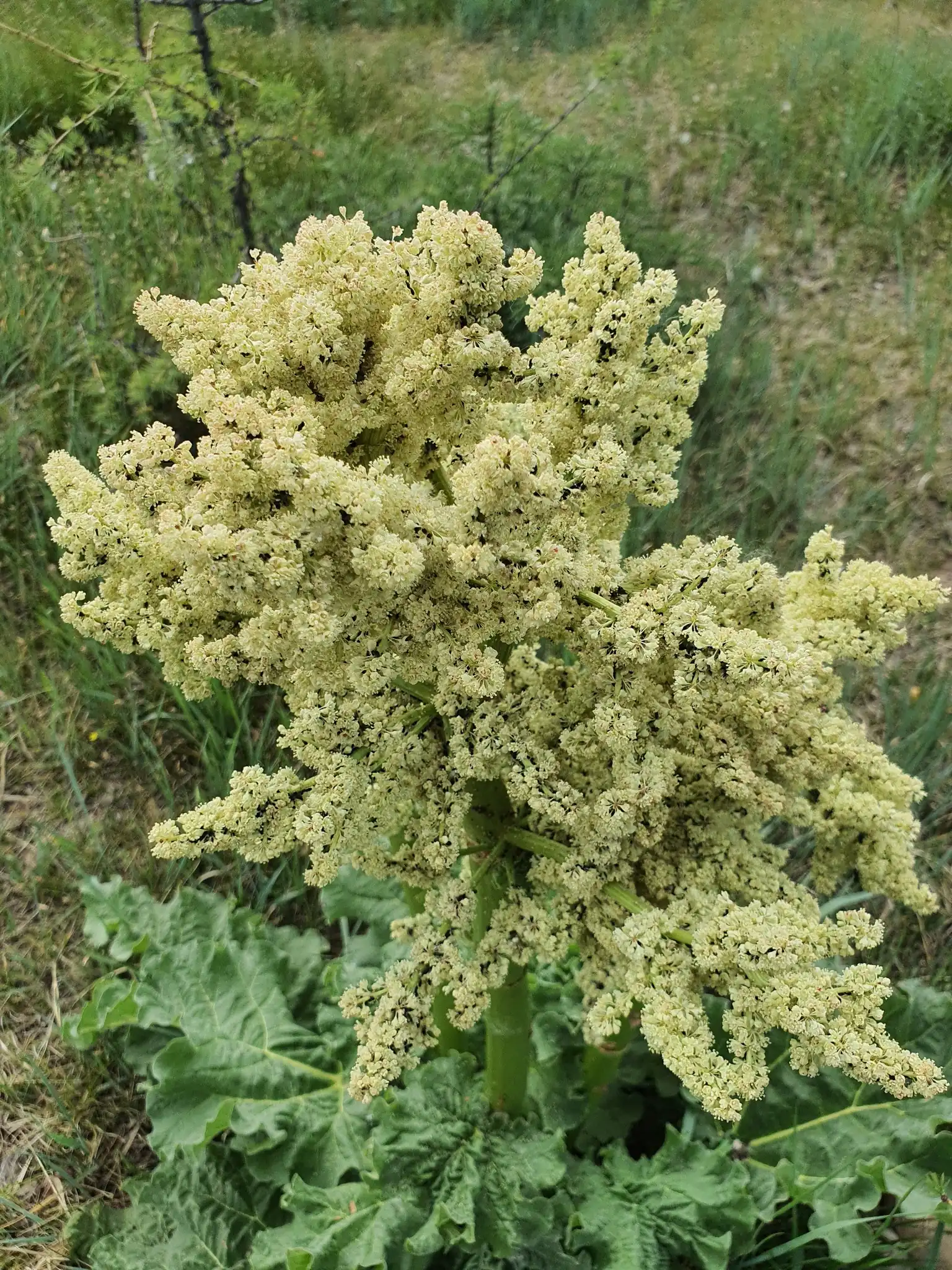
Rheum rhaponticum, commonly known as false rhubarb, is a robust, clump-forming deciduous perennial that produces massive, heart-shaped dark green leaves on thick, succulent stalks. In late spring, the plant sends up tall, hollow stems topped with dense, branching panicles of small, greenish-white flowers.
This species represents the true wild European rhubarb, distinct from modern culinary hybrids, and is restricted in the wild to Bulgaria's Rila Mountains. Its highly ornamental, deeply veined foliage emerges with reddish tints in early spring, creating a dramatic architectural presence in damp, fertile borders.
Uses & Benefits:
Essentials
At a Glance
Plant Type
Perennial
Height
48"
Width
48"
Light
Full Sun, Partial Sun
Zones
4, 5, 6, 7, 8
Water
Medium
Humidity
Moderate
Lifespan
Perennial
Native To
Europe
Toxicity
Toxic to Humans
Bloom period
Late spring – Early summer
In flower about 2 months of the year
Planting
How to Grow
- Select a planting site in full sun to partial shade with deep, fertile, humus-rich soil that retains moisture but drains well.
- Plant bare-root crowns in early spring, positioning the buds one to two inches below the soil surface and spacing plants four feet apart.
- Water deeply and regularly to keep the soil consistently moist, especially during hot summer dry spells.
- Apply a thick layer of organic mulch around the base of the plant to conserve soil moisture and suppress weeds, keeping mulch away from the crown itself.
Pro Tip
Do not harvest any leaf stalks during the first growing season to allow the root system to establish; pulling stalks too early permanently stunts the crown's development.
Keep It Thriving
Care Guide
Do
- Remove emerging flower stalks immediately to direct the plant's energy into root and foliage development.
- Apply a generous layer of well-rotted compost or balanced organic fertilizer each spring.
- Divide the root crowns every three to four years in early spring to maintain plant vigor.
- Cut all dead foliage cleanly to the ground in late fall after the first hard freeze.
Don't
- Do not harvest any leaf stalks during the first year of planting to avoid weakening the root system.
- Never consume the leaf blades, as they contain highly toxic concentrations of oxalic acid.
- Do not plant in low-lying, poorly drained areas where water pools, which triggers crown rot.
- Avoid cutting into the old, hard, leafless woody sections of the crown when dividing.
Seasonal Care Calendar
| Task | Jan | Feb | Mar | Apr | May | Jun | Jul | Aug | Sep | Oct | Nov | Dec |
|---|---|---|---|---|---|---|---|---|---|---|---|---|
| Divide | ||||||||||||
| Fertilize | ||||||||||||
| Pest Check | ||||||||||||
| Prune | ||||||||||||
| Winter Prep |
Watch Out For
Pests & Diseases
Common Pests
Common Diseases
In the Garden
Landscape Uses & Companions
Landscape Uses
Companion Plants
Multiply
Propagation Methods
Good to Know
Common Questions
False Rhubarb questions
What zones can False Rhubarb grow in?
False Rhubarb is hardy in USDA Zones 4–8. Inside that range it survives winter in the ground; outside it, grow it as an annual or a container plant you protect.
When does False Rhubarb bloom?
False Rhubarb typically blooms in late spring through early summer. Exact timing shifts a week or two with your zone — Sow's bloom calendar maps it to your garden.
Does False Rhubarb need full sun?
False Rhubarb does best in full sun to part shade. In hot climates, afternoon shade keeps blooms fresher longer.
More Rheum to compare
Keep exploring
Explore the genus
Hardy in your zone?
Grow False Rhubarb with confidence
See it in a design of your actual yard, get zone-matched care reminders, and track it season by season in your garden journal.