
The Story
Plant Bio
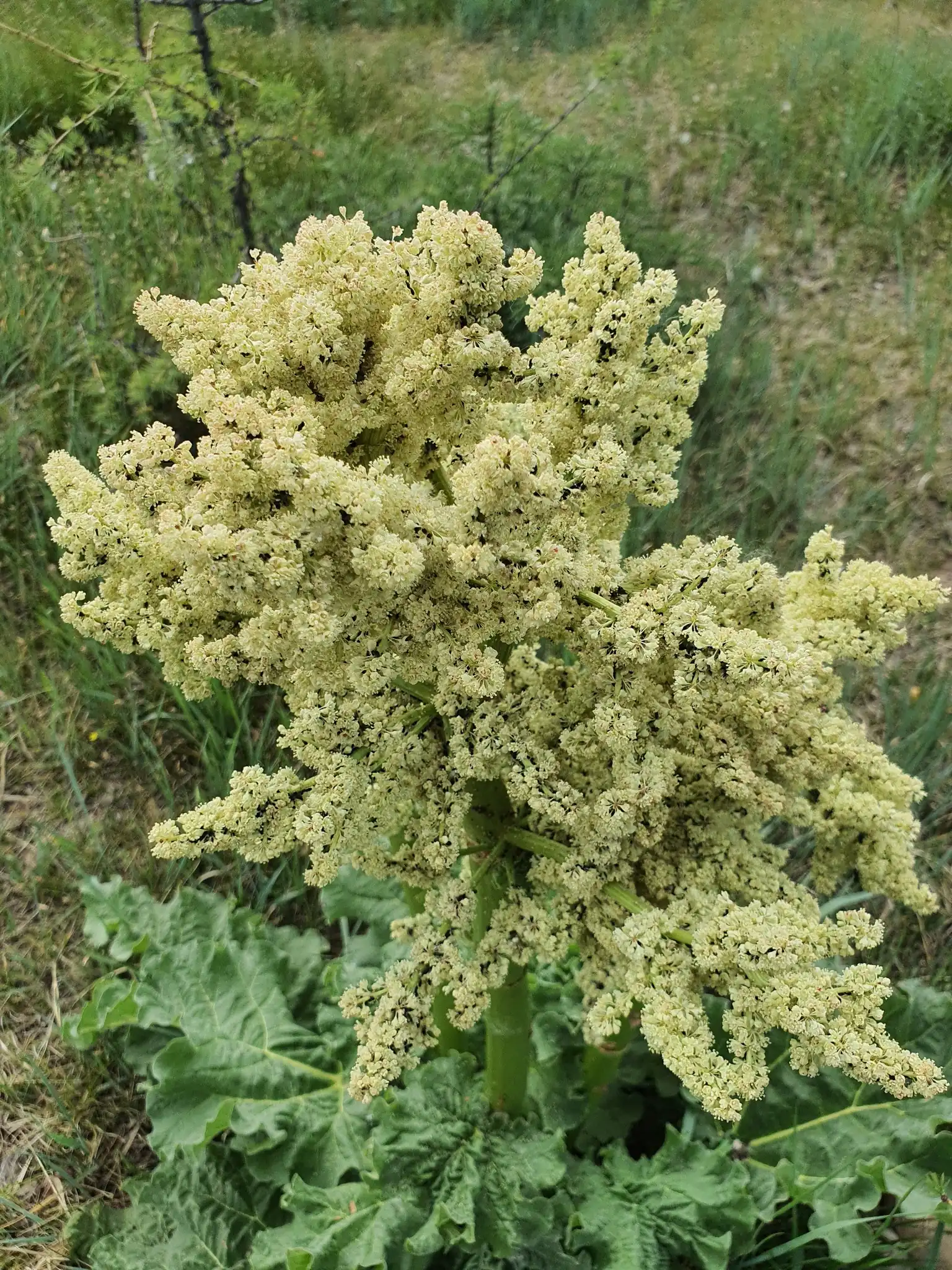
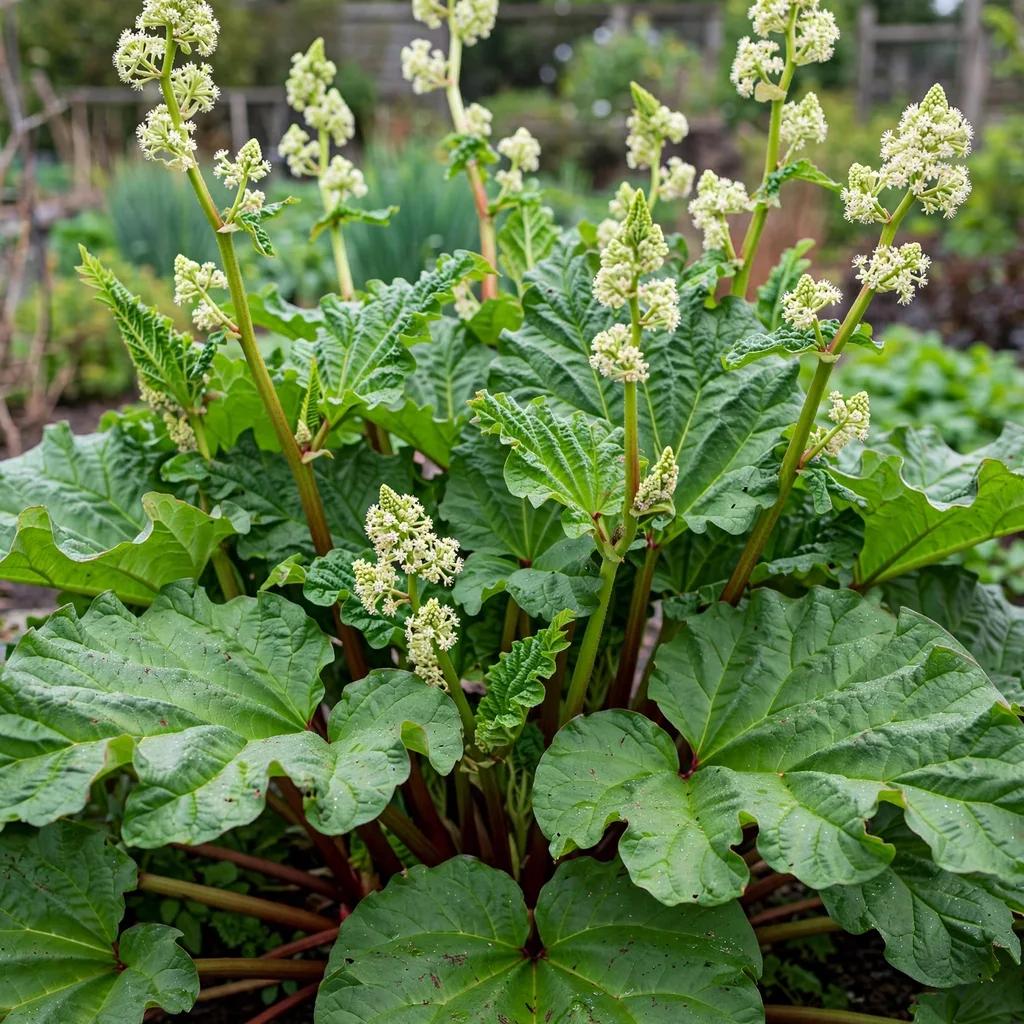
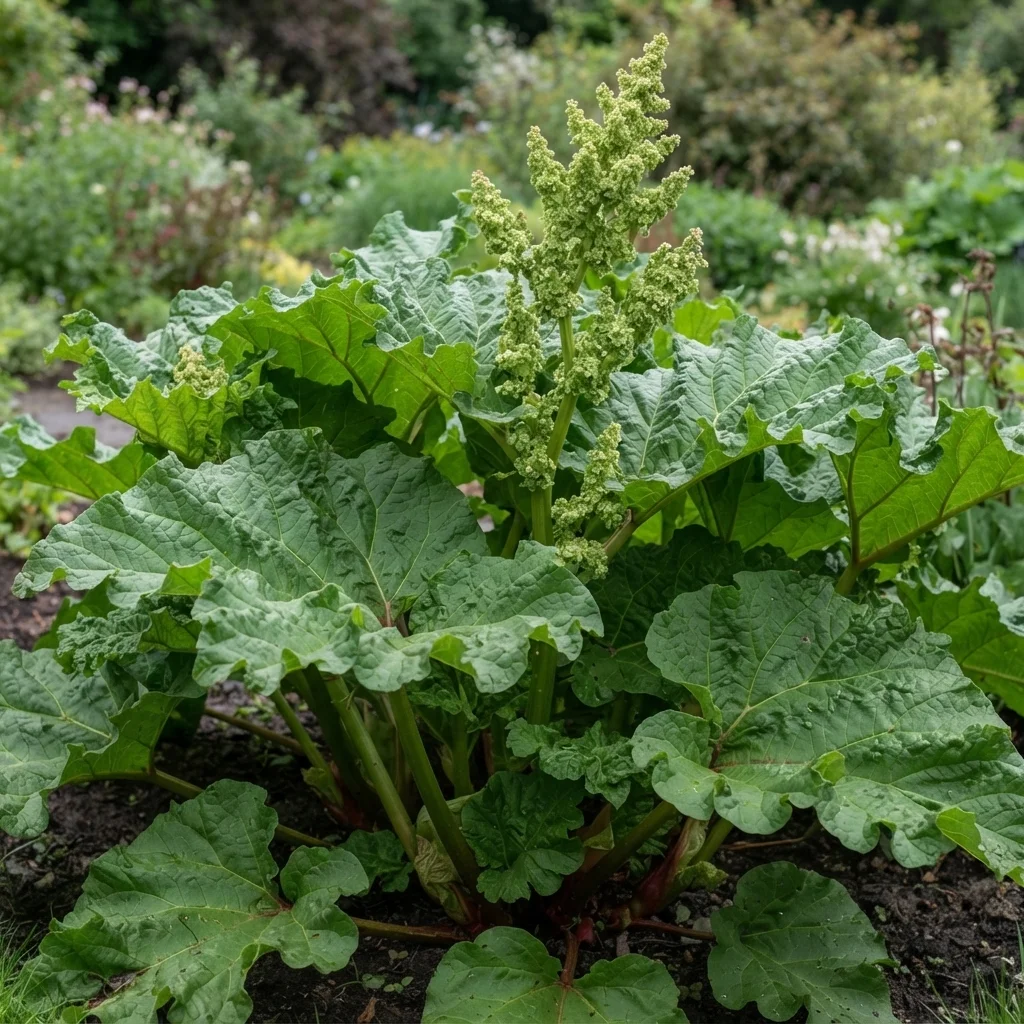
Rheum rhabarbarum, rhubarb, is a large clumping herbaceous perennial from Asia, forming a crown of huge crinkled green leaves up to two feet across on thick fleshy red or green stalks. Tall spikes of small greenish-white flowers rise in late spring, and the plant dies back completely to the crown each winter.
Eat the stalks and never the leaf blades: the leaves contain enough oxalic acid to be genuinely poisonous, and the distinction is not obvious to anyone who has not been told. Cut the flower spikes out as soon as they appear, since a plant allowed to flower puts its energy into seed and the stalk crop drops away sharply.
Uses & Benefits:
Essentials
At a Glance
Plant Type
Fruit Vegetable
Height
36"
Width
42"
Light
Full Sun, Partial Sun
Zones
4, 5, 6, 7, 8
Water
Moderate
Humidity
Moderate
Lifespan
Perennial
Native To
Asia
Toxicity
Stalks edible; leaf blades poisonous
Planting
How to Grow
- Plant crowns in autumn or early spring in full sun.
- Give it deep, rich, well-drained soil and plenty of room.
- Do not harvest at all in the first year.
- Cut out flower spikes as soon as they appear.
- Pull stalks with a twist rather than cutting them.
- Leave at least a third of the stalks on the plant.
Pro Tip
Pull stalks with a sideways twist rather than cutting them — a cut stub rots back into the crown and invites disease.
Keep It Thriving
Care Guide
Do
- Cut out flower spikes at once ✂️
- Pull stalks with a twist, not a knife 🌱
- Feed and mulch generously each spring 🍂
- Leave a third of the stalks standing 🌿
Don't
- Eat the leaf blades — they are poisonous ❌
- Harvest anything in the first year ❌
- Let it flower unchecked ❌
Seasonal Care Calendar
| Task | Jan | Feb | Mar | Apr | May | Jun | Jul | Aug | Sep | Oct | Nov | Dec |
|---|---|---|---|---|---|---|---|---|---|---|---|---|
| Feed | ||||||||||||
| Harvest |
Watch Out For
Pests & Diseases
Common Pests
Common Diseases
In the Garden
Landscape Uses & Companions
Landscape Uses
Companion Plants
Multiply
Propagation Methods
Good to Know
Common Questions
Rhubarb questions
What zones can Rhubarb grow in?
Rhubarb is hardy in USDA Zones 4–8. Inside that range it survives winter in the ground; outside it, grow it as an annual or a container plant you protect.
Is Rhubarb deer resistant?
Yes — Rhubarb is rated deer-resistant. Deer typically pass it over, though extreme hunger can override any plant's defenses.
When does Rhubarb bloom?
Rhubarb typically blooms in late spring through early summer. Exact timing shifts a week or two with your zone — Sow's bloom calendar maps it to your garden.
Does Rhubarb need full sun?
Rhubarb does best in full sun to part shade. In hot climates, afternoon shade keeps blooms fresher longer.
More Rheum to compare
Keep exploring
Explore the genus
Hardy in your zone?
Grow Rhubarb with confidence
See it in a design of your actual yard, get zone-matched care reminders, and track it season by season in your garden journal.