The Story
Plant Bio
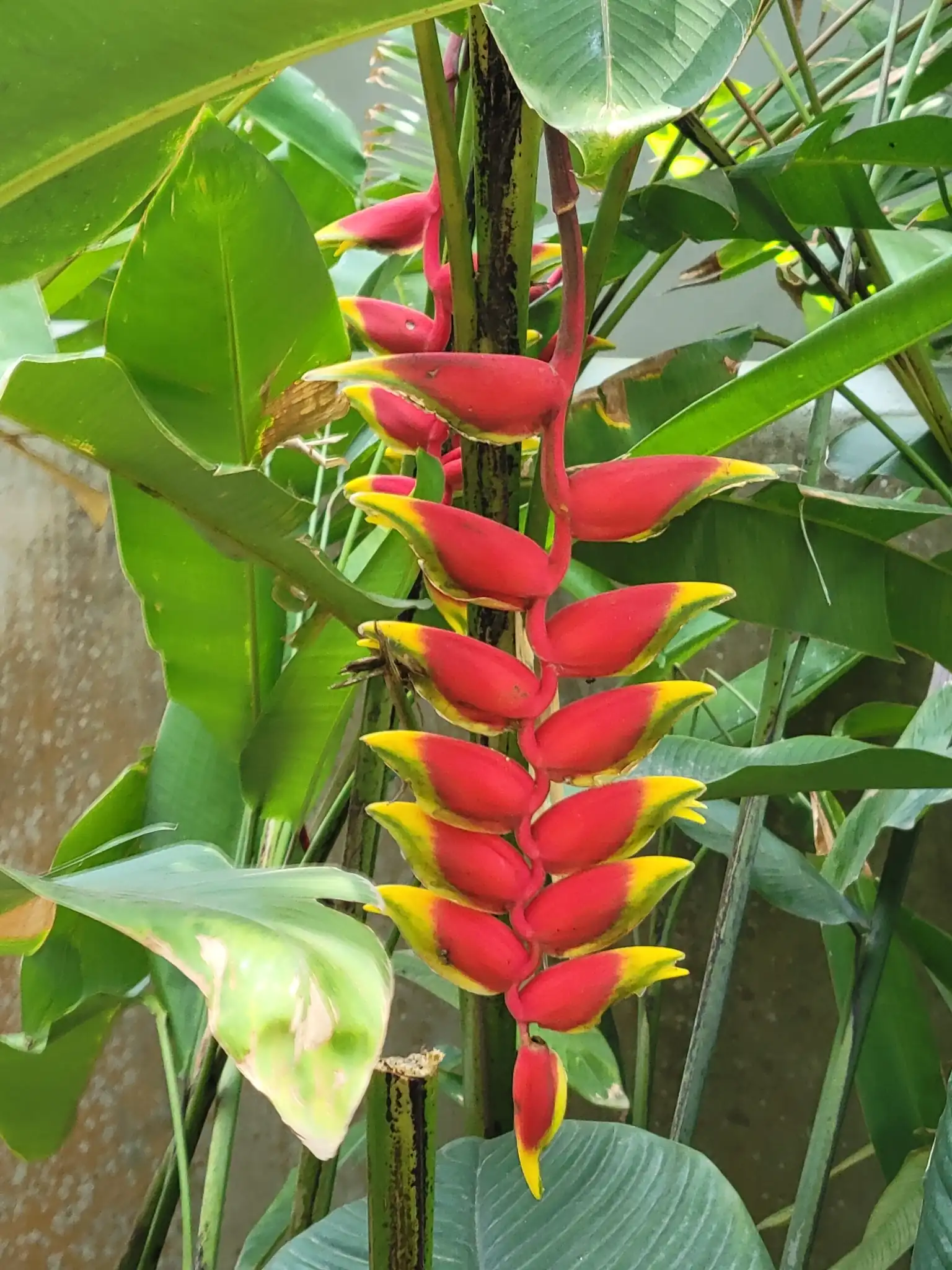
Heliconia rostrata, the hanging lobster claw, is an evergreen herbaceous perennial that produces massive, banana-like, glossy dark green leaves from underground rhizomes. The plant is distinguished by its dramatic, downward-hanging zigzag flower spikes that feature brilliant scarlet-red, boat-shaped waxy bracts tipped with yellow and green.
This species is highly valued for its pendulous inflorescences, which can reach up to two feet in length and hang gracefully below the foliage. Unlike upright heliconias, the weeping habit of these heavy spikes makes them an architectural focal point in tropical landscapes.
Uses & Benefits:
Essentials
At a Glance
Plant Type
Tropical
Height
71"
Width
71"
Light
Full Sun, Partial Sun
Zones
10
Water
High
Humidity
High
Lifespan
Perennial
Native To
Central and South America
Toxicity
Non-toxic
Bloom period
Spring – Fall
In flower about 9 months of the year
Marketplace
Where to Buy
Shipping costs Year-round shipping Free shipping
Planting
How to Grow
- Select a planting site with rich, organic, moisture-retentive loam that receives full sun to light dappled shade.
- Provide consistent, abundant moisture to keep the soil evenly damp, as the plant has low drought tolerance and will scorch in dry conditions.
- Apply a balanced, slow-release granular fertilizer with added micronutrients regularly during the active spring and summer growing seasons.
- Shelter the plant from strong, dry winds to prevent leaf shredding and margin burn, maintaining high ambient humidity.
Pro Tip
Never cut down green, unflowered pseudostems thinking they behave like typical herbaceous perennials that die back in winter; these stems must mature sequentially over seasons, and only spent, faded flower stems should be removed at ground level.
Keep It Thriving
Care Guide
Do
- Keep the soil consistently moist and well-drained.
- Prune out spent flower stems at ground level after blooming.
- Provide shelter from dry, salt-laden winds.
- Apply organic mulch to retain soil moisture and add nutrients.
Don't
- Do not cut back live, green, unflowered pseudostems.
- Do not allow the soil to dry out completely.
- Do not plant in areas prone to standing water or waterlogging.
- Do not expose the plant to freezing temperatures or frost.
Seasonal Care Calendar
| Task | Jan | Feb | Mar | Apr | May | Jun | Jul | Aug | Sep | Oct | Nov | Dec |
|---|---|---|---|---|---|---|---|---|---|---|---|---|
| Divide | ||||||||||||
| Fertilize | ||||||||||||
| Pest Check | ||||||||||||
| Prune | ||||||||||||
| Winter Prep |
Watch Out For
Pests & Diseases
Common Pests
Common Diseases
In the Garden
Landscape Uses & Companions
Landscape Uses
Multiply
Propagation Methods
Good to Know
Common Questions
Hanging Lobster Claw questions
What zones can Hanging Lobster Claw grow in?
Hanging Lobster Claw is hardy in USDA Zone 10. Inside that range it survives winter in the ground; outside it, grow it as an annual or a container plant you protect.
When does Hanging Lobster Claw bloom?
Hanging Lobster Claw typically blooms in spring through fall. Exact timing shifts a week or two with your zone — Sow's bloom calendar maps it to your garden.
Does Hanging Lobster Claw need full sun?
Hanging Lobster Claw does best in full sun to part shade. In hot climates, afternoon shade keeps blooms fresher longer.
More Heliconia to compare
Keep exploring
Explore the genus
Hardy in your zone?
Grow Hanging Lobster Claw with confidence
See it in a design of your actual yard, get zone-matched care reminders, and track it season by season in your garden journal.