The Story
Plant Bio
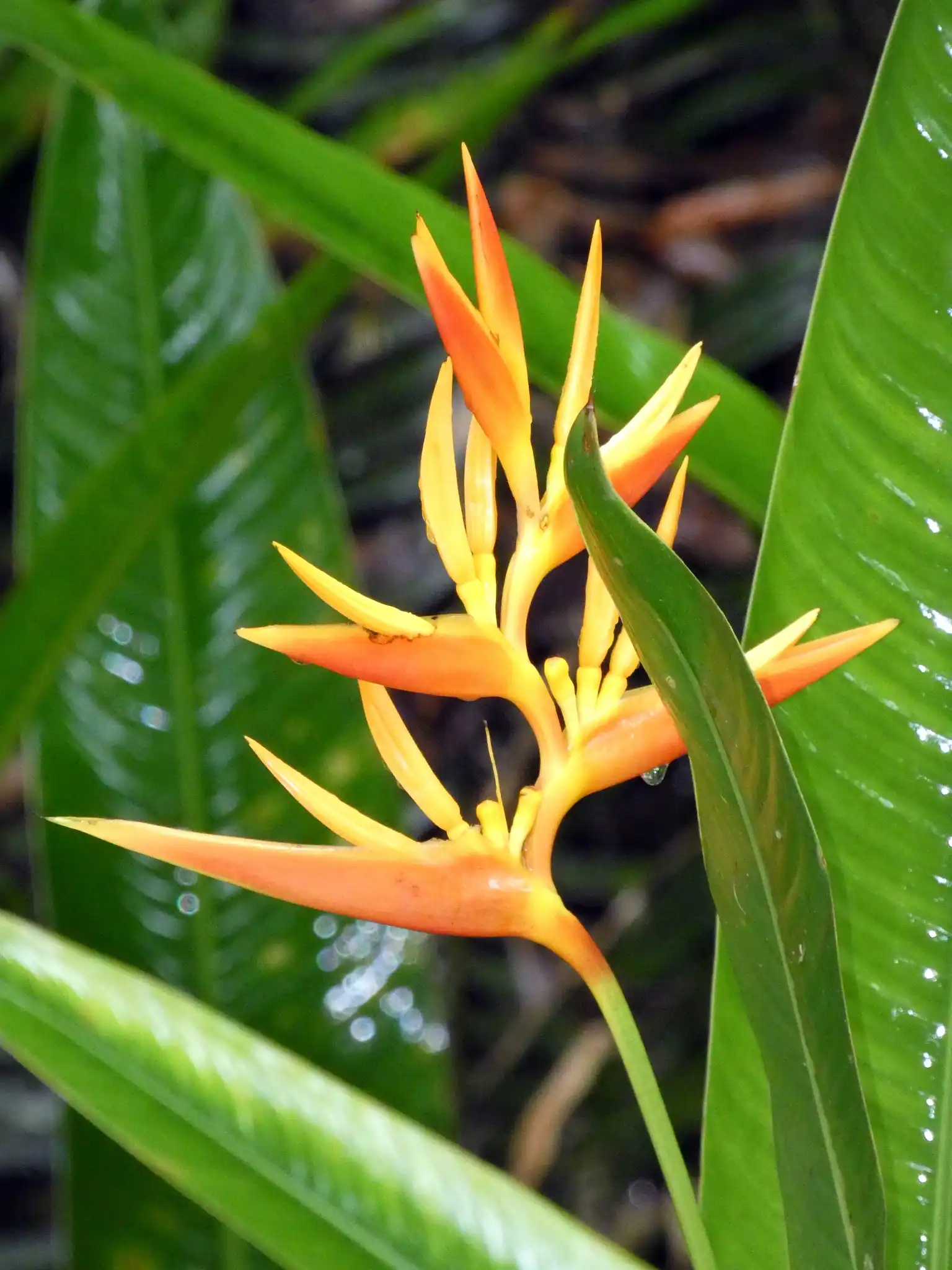
Heliconia psittacorum is an upright, rhizomatous tropical perennial producing slender pseudostems clothed in large, lanceolate, banana-like leaves with prominent midribs. The inflorescences feature erect, waxy, brightly colored bracts that enclose small, tubular flowers, appearing continuously from spring through fall in frost-free climates.
This species spreads via running underground rhizomes to form dense, architectural clumps that serve as structural accents in warm landscapes. The long-lasting, warm-toned bracts function as highly effective nectar sources for hummingbirds.
Uses & Benefits:
Essentials
At a Glance
Plant Type
Tropical
Height
60"
Width
36"
Light
Full Sun, Partial Sun
Zones
10
Water
High
Humidity
High
Lifespan
Perennial
Native To
Central and South America, Caribbean
Toxicity
Non-toxic, but sap may cause mild skin irritation
Bloom period
Spring – Fall
In flower about 9 months of the year
Planting
How to Grow
- Select a planting site with rich, organically fertile loam or sandy soil with a pH between 5.5 and 6.5.
- Amend the planting area with compost to ensure high moisture retention while maintaining sharp drainage.
- Plant rhizomes shallowly, covering them with two to three inches of soil, and water thoroughly to settle.
- Maintain consistent soil moisture and apply a balanced slow-release fertilizer monthly during the warm growing season.
Pro Tip
Avoid pruning green, leafy pseudostems that have not yet flowered, as continuous removal of active vegetative growth stunts future flower production.
Keep It Thriving
Care Guide
Do
- Cut spent flower stems and ragged leaves cleanly back to soil level after flowering finishes.
- Provide high humidity and shelter from drying winds to prevent leaf margins from scorching.
- Bring container-grown specimens indoors or to a heated greenhouse when temperatures drop below 50 degrees Fahrenheit.
Don't
- Do not allow the soil to dry out completely, as drought causes immediate growth stall and foliage damage.
- Do not plant in heavy, poorly drained clay soils where the running rhizomes will rot.
- Do not hack active, non-flowering green stems indiscriminately.
Seasonal Care Calendar
| Task | Jan | Feb | Mar | Apr | May | Jun | Jul | Aug | Sep | Oct | Nov | Dec |
|---|---|---|---|---|---|---|---|---|---|---|---|---|
| Divide | ||||||||||||
| Fertilize | ||||||||||||
| Pest Check | ||||||||||||
| Prune | ||||||||||||
| Winter Prep |
Watch Out For
Pests & Diseases
Common Pests
Common Diseases
In the Garden
Landscape Uses & Companions
Landscape Uses
Multiply
Propagation Methods
Good to Know
Common Questions
Parrot Flower questions
What zones can Parrot Flower grow in?
Parrot Flower is hardy in USDA Zone 10. Inside that range it survives winter in the ground; outside it, grow it as an annual or a container plant you protect.
Is Parrot Flower deer resistant?
Yes — Parrot Flower is rated deer-resistant. Deer typically pass it over, though extreme hunger can override any plant's defenses.
When does Parrot Flower bloom?
Parrot Flower typically blooms in spring through fall. Exact timing shifts a week or two with your zone — Sow's bloom calendar maps it to your garden.
Does Parrot Flower need full sun?
Parrot Flower does best in full sun to part shade. In hot climates, afternoon shade keeps blooms fresher longer.
More Heliconia to compare
Keep exploring
Explore the genus
Hardy in your zone?
Grow Parrot Flower with confidence
See it in a design of your actual yard, get zone-matched care reminders, and track it season by season in your garden journal.