Also known as Tree Fern · 5 saves
Cyathea
Cyathea, the genus most gardeners know as tree fern. We track 3 varieties; the ones most used by real gardeners.
The 3 most-saved Cyathea varieties
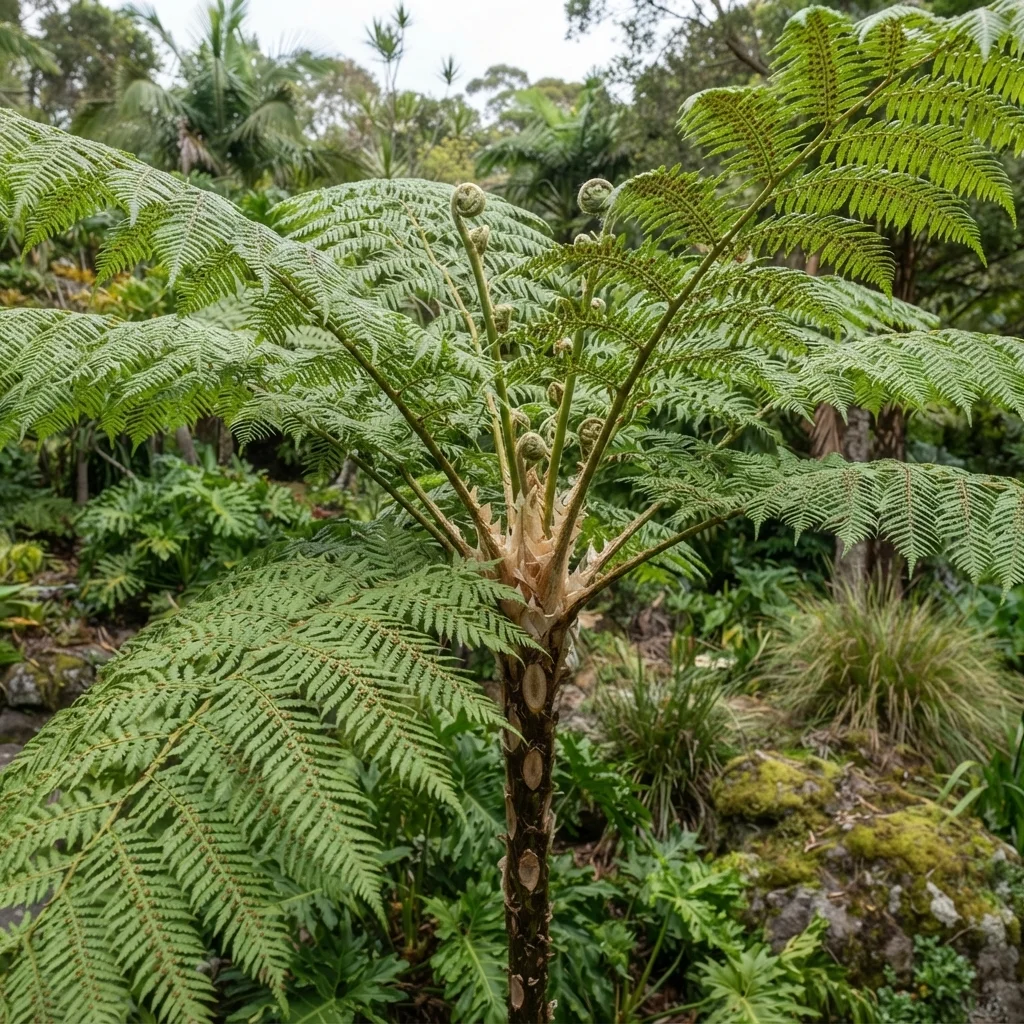
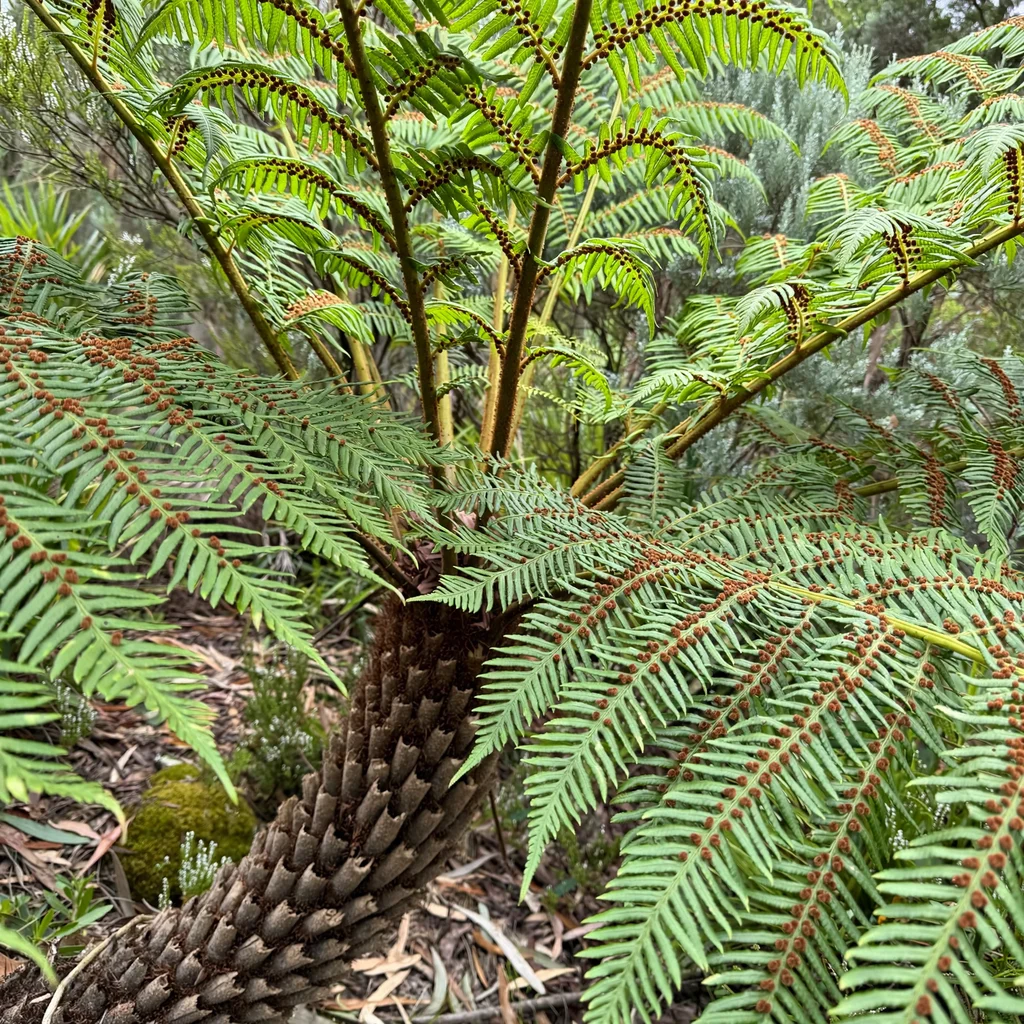
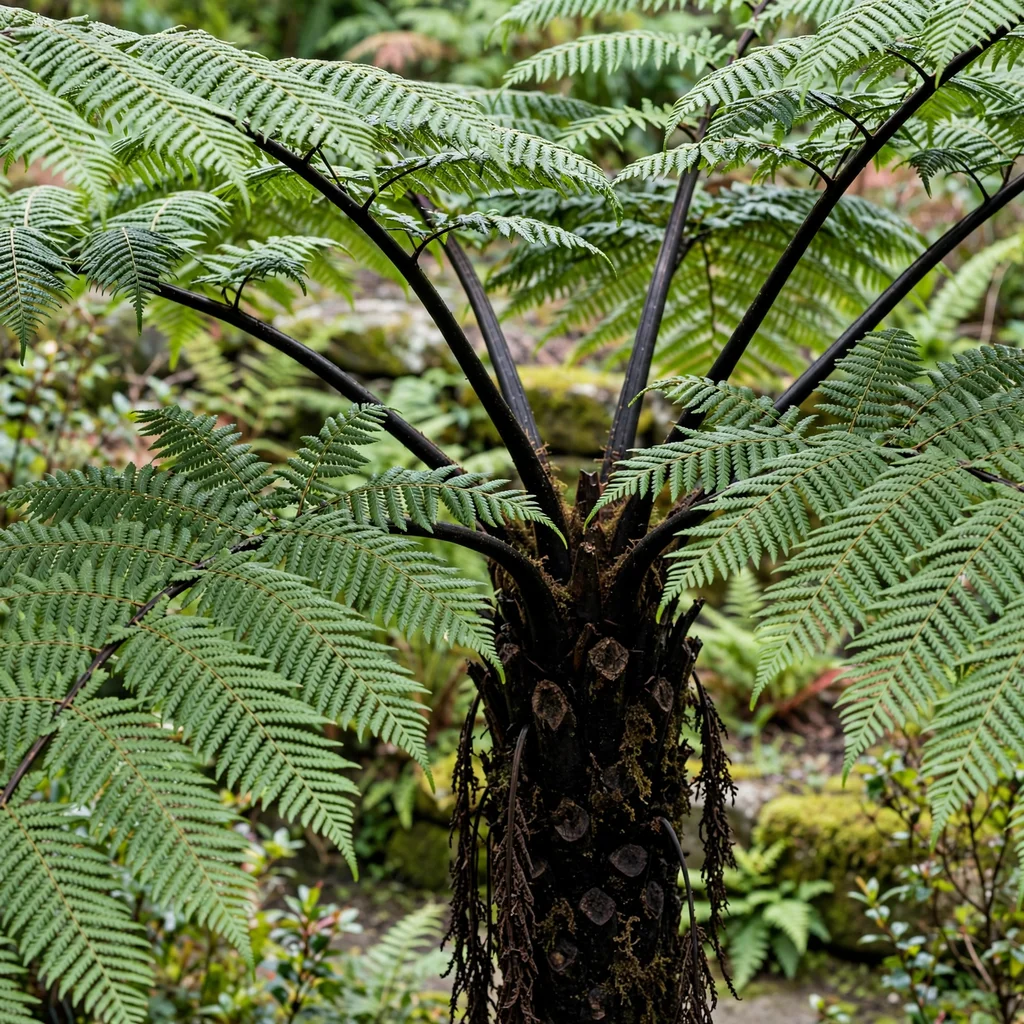
3 species of Cyathea
Each one is a parent of the varieties above.
Track your Cyathea in Sow
Save the Cyathea you grow and get care reminders timed to your zone.
How to grow Cyathea
Whats common across all Cyathea varieties in our catalog — drawn from the care records of the 3 most-grown of them.
The Cyathea year
- MulchMay100% of varieties
Replenish organic mulch around the base to conserve moisture and protect roots.
- PruneMarch and October100% of varieties
Cut away completely dead, brown fronds at the base of the petiole close to the trunk.
- FertilizeApril and June100% of varieties
Apply a diluted, balanced liquid organic fertilizer to the root zone and trunk.
- Check for PestsJune–August100% of varieties
Inspect the undersides of fronds and fiddleheads for scale, mealybugs, and spider mites.
- Winter PrepNovember and December100% of varieties
In marginal zones, wrap the trunk and crown with burlap to protect the growing tip from light frosts.


Do
- Keep the soil consistently moist but well-drained to prevent root rot.
- Water the fibrous trunk directly during hot or dry periods to maintain hydration.
- Apply a diluted, balanced organic fertilizer during the active spring and summer growing seasons.
- Provide shelter from strong winds that can tear the delicate, lacy fronds.
- Keep the root zone and trunk fibrous outer sheath consistently moist without waterlogging.
Avoid
- Never cut or damage the single growing tip at the top of the trunk, as this kills the plant.
- Do not prune green, healthy fronds; remove only completely dead, brown fronds at the base.
- Avoid planting in heavy, compacted clay soils or areas prone to standing water.
- Do not use heavy chemical fertilizers, which can burn the sensitive root system.
What goes wrong with Cyathea
| Problem | What you'll see | What to do |
|---|---|---|
| Spider mites | Fine webbing on the undersides of fronds accompanied by yellow speckling and dry, dusty foliage. | Increase local humidity and spray the undersides of the fronds with a strong stream of water or insecticidal soap. |
| Scale insects | Small, brown, dome-shaped bumps clustered along the frond stems, often accompanied by sticky honeydew. | Wipe the scales off manually with a damp cloth or treat with horticultural oil in cool weather. |
| Mealybugs | White, cottony masses in the crevices of the fiddleheads and leaf bases, causing stunted growth. | Dab the pests directly with a cotton swab dipped in rubbing alcohol or apply insecticidal soap. |
| Slugs and snails | Irregular chew marks and ragged damage on soft, unrolling young fiddleheads. | Scatter iron-phosphate slug bait around the base or install copper tape barriers on containers. |
| Root rot | Wilting, yellowing fronds and a soft, decaying trunk base caused by waterlogged soil. | Improve soil drainage immediately, reduce watering frequency, and ensure the plant is not sitting in standing water. |
| Fungal leaf spot | Dark brown or black spots on the pinnules under excessively damp, stagnant conditions. | Improve air circulation around the crown and avoid overhead watering late in the evening. |
Making more Cyathea
Spores
- Collect mature spores from the brown sori on the undersides of healthy fronds.
- Sow the spores evenly over a sterile, moist peat-based seed-starting mix.
- Cover the container with plastic wrap to maintain high humidity and place in indirect light.
- Mist regularly and transplant the emerging sporophytes once they develop small fronds.
Spore propagation
- Collect ripe spores from undersides of mature fronds onto clean paper.
- Sow spores evenly over sterilized, moist peat-based medium in a enclosed container.
- Maintain misted, high-humidity environment at moderate room temperature until prothalli emerge.
- Prick out tiny young fern plantlets into individual pots once small fronds develop.
Cyathea questions
How many types of Cyathea are there?
The Sow catalog tracks 3 distinct Cyathea varieties. The most popular — ranked by 5 real gardeners — are shown first above.
What zones does Cyathea grow in?
Across its varieties, Cyathea covers USDA Zones 9–10. Individual varieties differ — each plant page lists its exact range, and Sow filters the catalog to your zone automatically.
Which Cyathea should I choose?
Start from the most-saved varieties above — popularity across thousands of gardens is a strong signal of reliability — then filter by your zone and sun. In the Sow app you can preview any of them in a photo of your actual yard before you buy.