The Story
Plant Bio
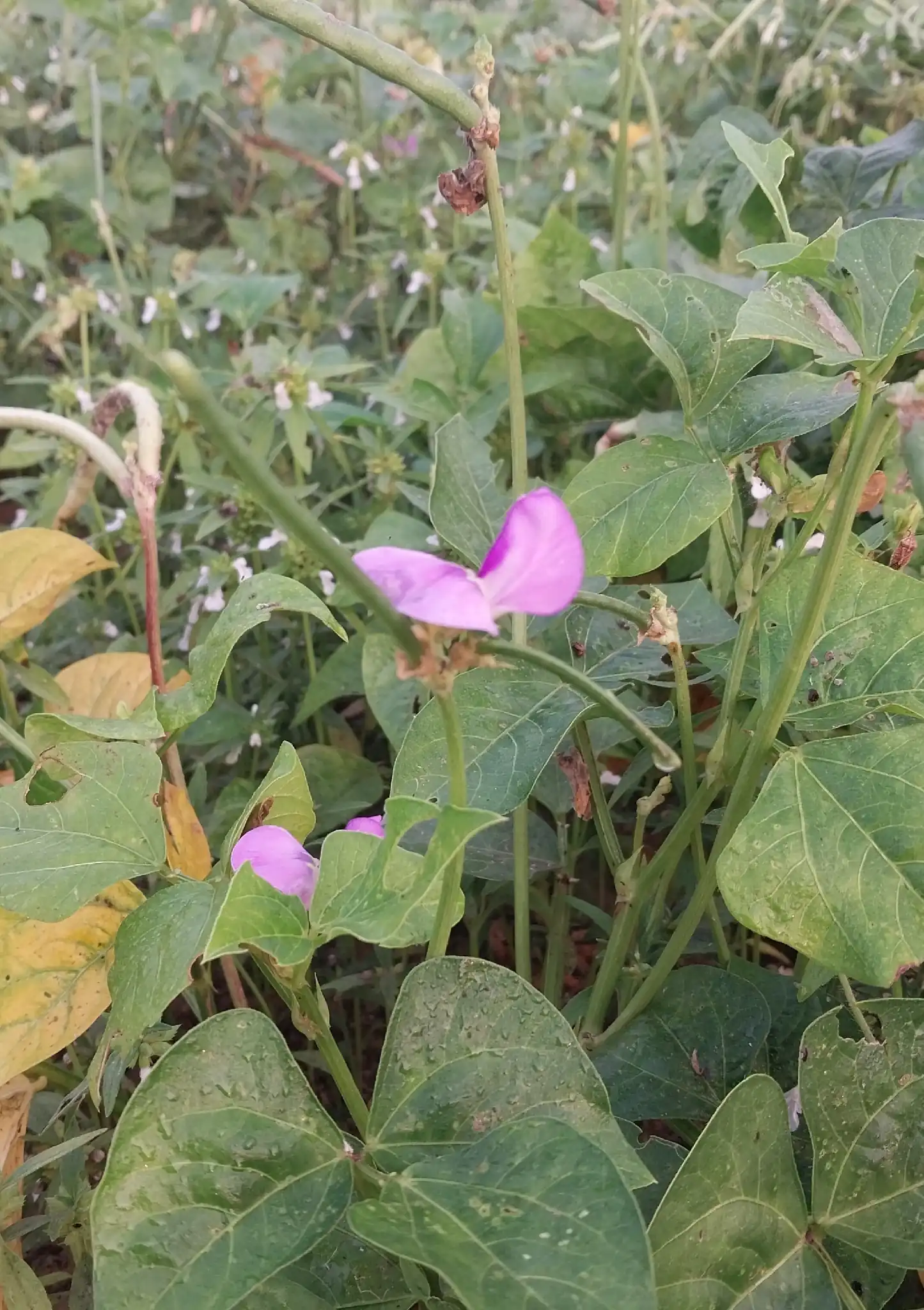
Vigna unguiculata is a versatile warm-season annual legume native to Africa, encompassing both compact bush forms and vigorous twining vines with bright green trifoliate leaves. It produces pale white, yellowish, or lavender pea-like flowers on long stalks through summer, followed by elongated edible seedpods.
This species is highly valued for its exceptional heat and drought tolerance, driven by a deep taproot that sustains the plant in poor soils. As a nitrogen-fixing plant, it improves soil fertility while providing a highly nutritious harvest of edible young pods and dry seeds.
Uses & Benefits:
Essentials
At a Glance
Plant Type
Fruit Vegetable
Height
120"
Width
40"
Light
Full Sun
Zones
4, 5, 6, 7, 8, 9, 10
Water
Low
Humidity
High
Lifespan
Annual
Native To
Africa
Toxicity
Non-toxic when cooked
Bloom period
Summer – Fall
In flower about 6 months of the year
Planting
How to Grow
- Select a planting site in full sun with well-drained sandy loam or clay loam soil.
- Sow seeds directly into the ground at a depth of one inch once soil temperatures consistently exceed 70 degrees Fahrenheit.
- Install a trellis, stakes, or netting at planting time if growing a climbing or vining cultivar.
- Water deeply but infrequently once established, allowing the top few inches of soil to dry out between waterings.
Pro Tip
Avoid applying high-nitrogen fertilizers, which stimulate excessive, sprawling vine growth at the expense of flowers and pod development.
Keep It Thriving
Care Guide
Do
- Inoculate seeds with rhizobium bacteria before planting to maximize nitrogen fixation in new garden beds.
- Provide sturdy vertical support early in the season for climbing varieties to keep pods off the damp ground.
- Practice a three-year crop rotation to prevent the buildup of soil-borne pathogens and nematodes.
Don't
- Do not plant seeds in cold, wet spring soils, which leads to seed rot rather than germination.
- Do not use high-nitrogen fertilizers, as the plant hosts its own nitrogen-fixing bacteria.
- Do not overhead water late in the day, as prolonged leaf wetness encourages powdery mildew and bacterial blight.
Seasonal Care Calendar
| Task | Jan | Feb | Mar | Apr | May | Jun | Jul | Aug | Sep | Oct | Nov | Dec |
|---|---|---|---|---|---|---|---|---|---|---|---|---|
| Harvest | ||||||||||||
| Pest Check | ||||||||||||
| Plant | ||||||||||||
| Stake |
Watch Out For
Pests & Diseases
Common Pests
Common Diseases
In the Garden
Landscape Uses & Companions
Landscape Uses
Companion Plants
Multiply
Propagation Methods
Good to Know
Common Questions
Cowpea questions
What zones can Cowpea grow in?
Cowpea is hardy in USDA Zones 4–10. Inside that range it survives winter in the ground; outside it, grow it as an annual or a container plant you protect.
Is Cowpea deer resistant?
Not reliably. Deer may browse Cowpea, especially tender spring growth — plan on repellents or fencing where pressure is high.
When does Cowpea bloom?
Cowpea typically blooms in summer through fall. Exact timing shifts a week or two with your zone — Sow's bloom calendar maps it to your garden.
Does Cowpea need full sun?
Cowpea does best in full sun (6+ hours).
Is Cowpea drought tolerant?
Yes — once established (usually after the first full season), Cowpea handles dry spells with minimal watering. Water deeply its first year to build the root system that makes that possible.
Keep exploring
Explore the genus
Grow Cowpea with confidence
See it in a design of your actual yard, get zone-matched care reminders, and track it season by season in your garden journal.