The Story
Plant Bio
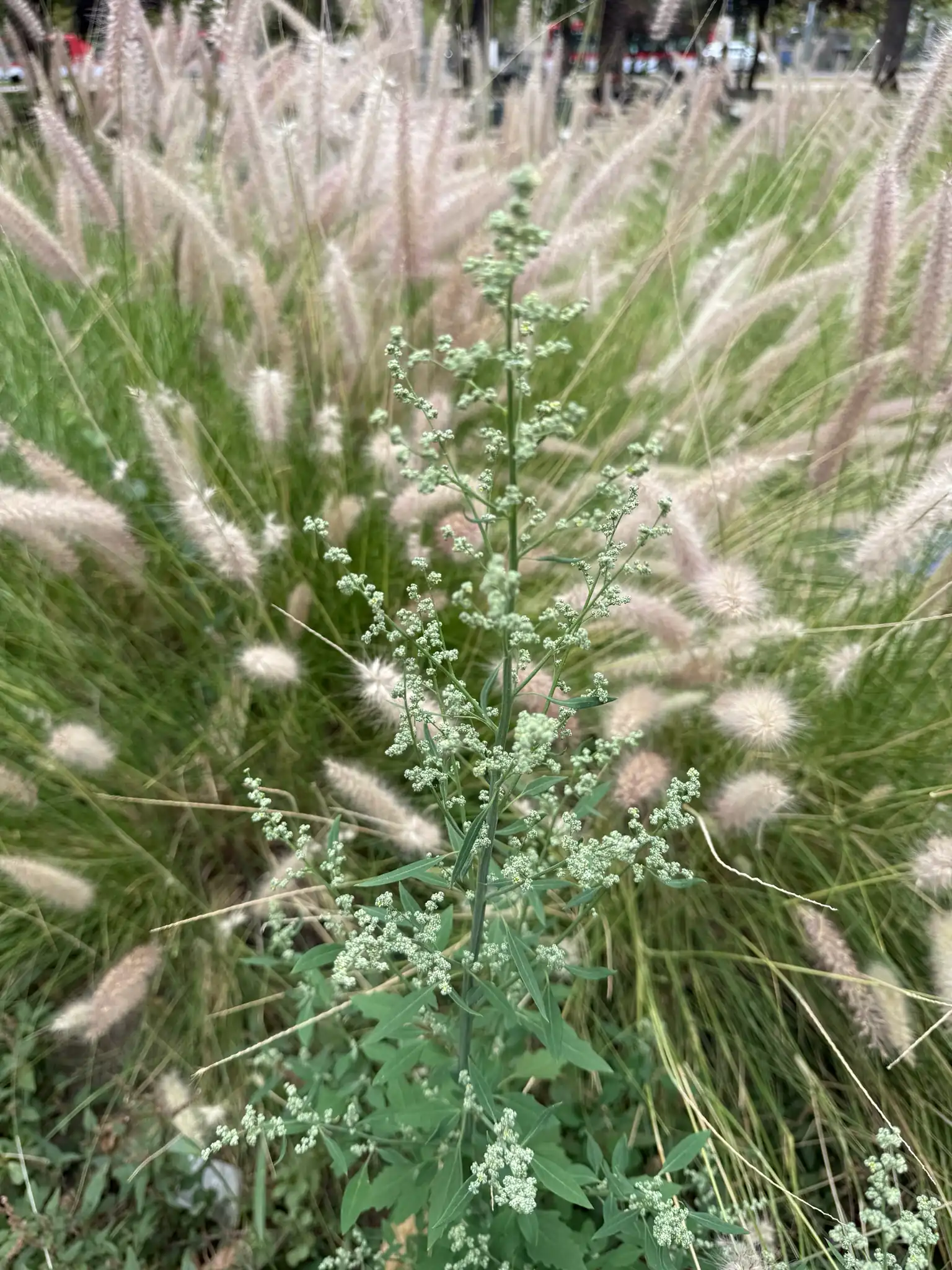
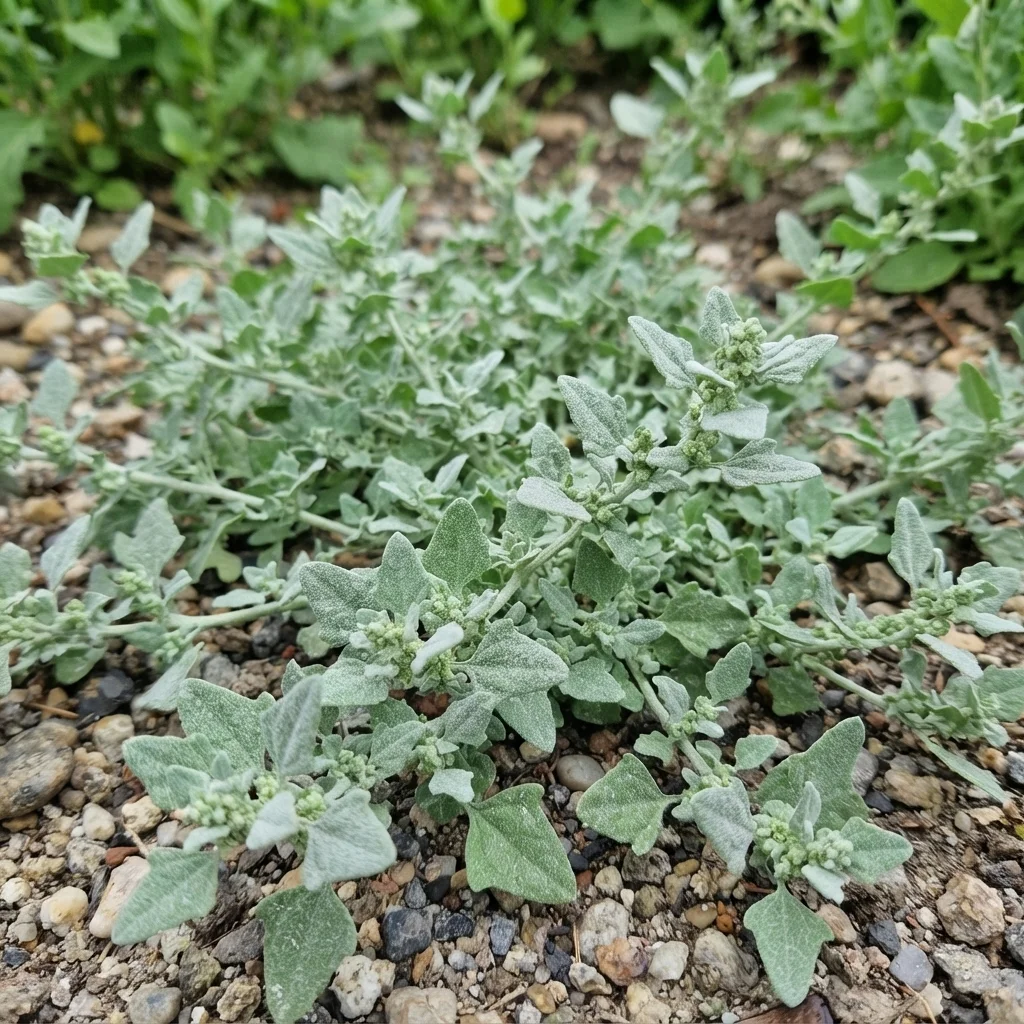
Chenopodium album is a fast-growing, erect summer annual characterized by its strongly branching stems and a distinctive mealy, white powdery coating on young growth. The alternate leaves vary from lanceolate to rhombic-ovate with irregularly serrate margins, while the small, green to grey-green flowers form dense, paniculate clusters at the stem tips.
This highly adaptable species thrives in disturbed soils across a wide pH range and demonstrates notable tolerance to moderate drought and light frosts. Its prolific seed production allows a single plant to release tens of thousands of long-lived seeds, which can persist in the soil seed bank for decades.
Uses & Benefits:
Essentials
At a Glance
Plant Type
Annual
Height
98"
Width
39"
Light
Full Sun
Zones
4, 5, 6, 7, 8, 9, 10
Water
Low to Moderate
Humidity
High
Lifespan
Annual
Native To
Eurasia
Toxicity
Toxic to livestock in large quantities
Bloom period
Summer – Fall
In flower about 6 months of the year
Planting
How to Grow
- Sow seeds directly into disturbed, well-draining soil in a location receiving full sun after the danger of hard freeze has passed.
- Refrain from applying supplemental fertilizers, as this species easily extracts sufficient nutrients from poor or compacted soils.
- Monitor soil moisture and water only during prolonged dry spells, as established plants possess moderate to high drought tolerance.
- Hand-pull or cultivate the soil to remove unwanted plants before the green flower spikes mature and release seeds.
Pro Tip
Eradicate plants mechanically or with selective herbicides well before flowering; allowing even a single specimen to set seed ensures decades of persistent weed pressure in the surrounding soil.
Keep It Thriving
Care Guide
Do
- Remove flowering spikes before they mature to prevent aggressive self-seeding.
- Wear gloves if sensitive to pollen, as the plant can trigger seasonal allergies.
- Provide full sun exposure to ensure robust growth.
Don't
- Do not overwater or plant in poorly drained, waterlogged soils where root rot develops.
- Do not allow livestock to graze on large stands of this plant due to high oxalate and nitrate levels.
- Do not apply nitrogen-rich fertilizers, which can cause excessive nitrate accumulation in the foliage.
Seasonal Care Calendar
| Task | Jan | Feb | Mar | Apr | May | Jun | Jul | Aug | Sep | Oct | Nov | Dec |
|---|---|---|---|---|---|---|---|---|---|---|---|---|
| Harvest | ||||||||||||
| Pest Check | ||||||||||||
| Prune |
Watch Out For
Pests & Diseases
Common Pests
Common Diseases
In the Garden
Landscape Uses & Companions
Landscape Uses
Companion Plants
Multiply
Propagation Methods
Good to Know
Common Questions
Lamb's Quarters questions
What zones can Lamb's Quarters grow in?
Lamb's Quarters is hardy in USDA Zones 4–10. Inside that range it survives winter in the ground; outside it, grow it as an annual or a container plant you protect.
Is Lamb's Quarters deer resistant?
Not reliably. Deer may browse Lamb's Quarters, especially tender spring growth — plan on repellents or fencing where pressure is high.
When does Lamb's Quarters bloom?
Lamb's Quarters typically blooms in summer through fall. Exact timing shifts a week or two with your zone — Sow's bloom calendar maps it to your garden.
Does Lamb's Quarters need full sun?
Lamb's Quarters does best in full sun (6+ hours).
Is Lamb's Quarters drought tolerant?
Yes — once established (usually after the first full season), Lamb's Quarters handles dry spells with minimal watering. Water deeply its first year to build the root system that makes that possible.
More Chenopodium to compare
Keep exploring
Explore the genus
Grow Lamb's Quarters with confidence
See it in a design of your actual yard, get zone-matched care reminders, and track it season by season in your garden journal.