The Story
Plant Bio
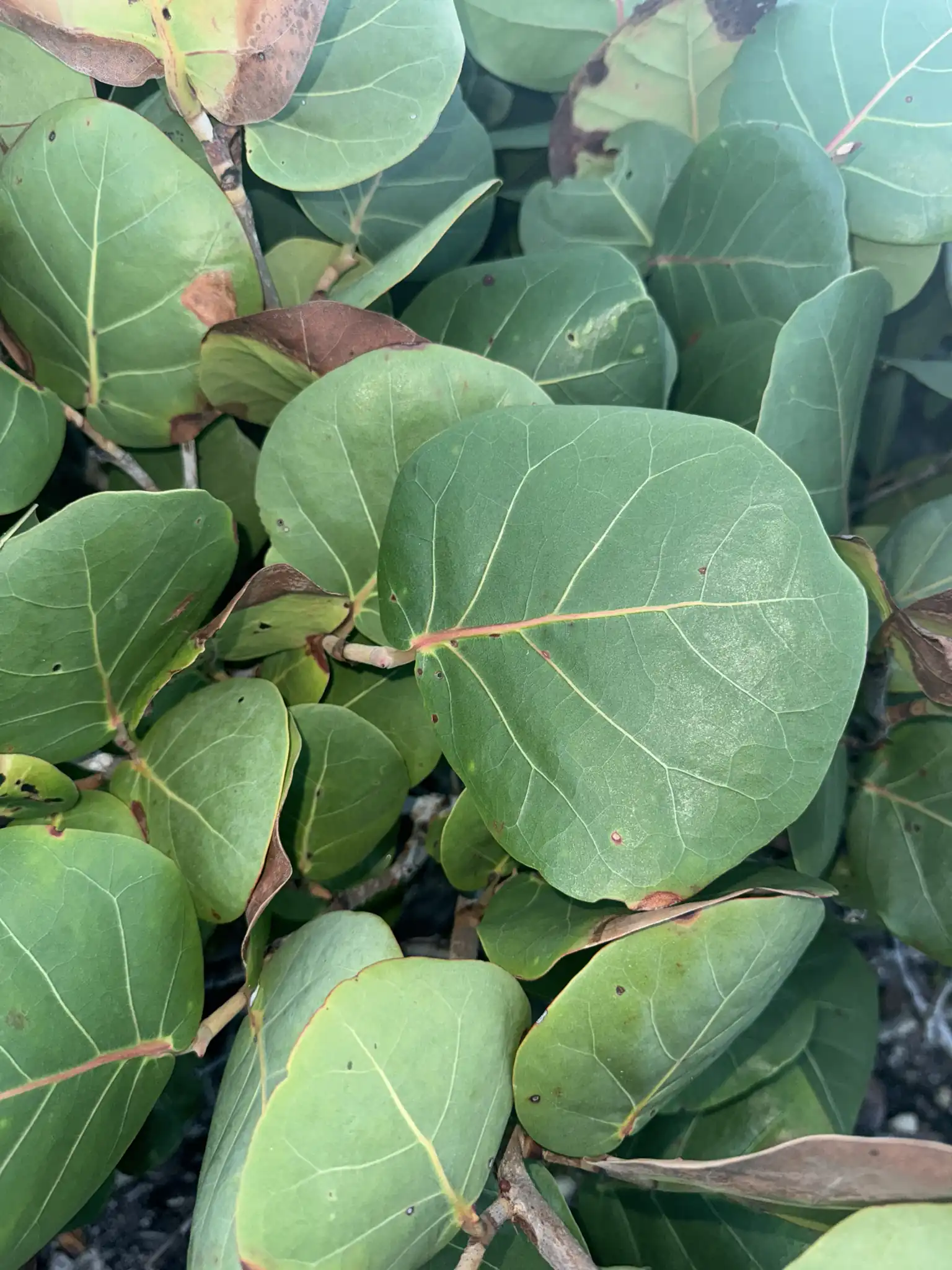
Coccoloba uvifera is a multi-stemmed evergreen tree native to coastal beaches and tropical areas of the Americas, including southern Florida and the Caribbean. It develops a contorted, twisting trunk and a spreading, rounded crown that can reach up to fifty feet in height if left unpruned.
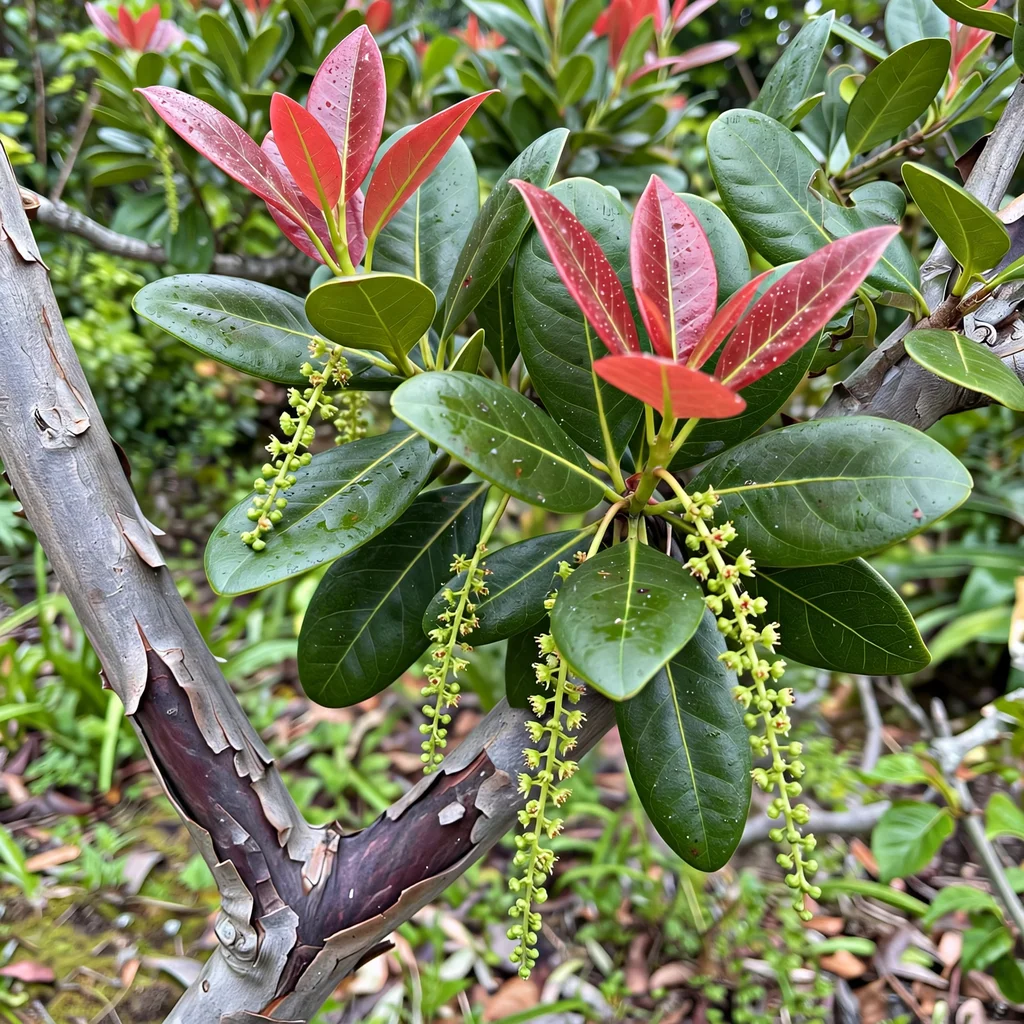
The species is distinguished by large, leathery, nearly round leaves with prominent red veins that emerge bronze before maturing to a glossy dark green. Female plants produce long, hanging clusters of edible, grape-like purple fruit in late summer, provided a male pollinator is nearby.
Uses & Benefits:
Essentials
At a Glance
Plant Type
Tree
Height
600"
Width
360"
Light
Full Sun, Partial Sun
Zones
10
Water
Low
Humidity
High
Lifespan
Long-lived
Native To
Americas
Toxicity
Non-toxic
Bloom period
Spring – Early summer
In flower about 4 months of the year
Marketplace
Where to Buy
Shipping costs Year-round shipping Free shipping
Planting
How to Grow
- Select a planting site in full sun with sandy or highly porous, well-draining soil.
- Dig a hole twice as wide as the root ball but no deeper, ensuring the crown sits level with the surrounding soil.
- Water deeply immediately after planting to settle the soil around the roots, then water weekly until established.
- Apply a light layer of organic mulch around the base to retain moisture, keeping it several inches away from the trunk.
Pro Tip
Plant in coarse, rapidly draining soil in full sun to prevent root rot and maintain dense, compact foliage. Leggy growth and sparse leafing are direct results of planting in heavy interior shade.
Keep It Thriving
Care Guide
Do
- Prune regularly to maintain a compact hedge or to train a strong single-trunk tree form.
- Ensure the planting site has excellent drainage to prevent soggy root zones.
- Protect young plants from frost if temperatures threaten to drop below freezing.
Don't
- Do not plant in heavy, waterlogged clay soils that retain water for prolonged periods.
- Do not harvest wild specimens from beaches, as they are legally protected to prevent dune erosion.
- Do not expect fruit production unless both male and female plants are present in the immediate area.
Seasonal Care Calendar
| Task | Jan | Feb | Mar | Apr | May | Jun | Jul | Aug | Sep | Oct | Nov | Dec |
|---|---|---|---|---|---|---|---|---|---|---|---|---|
| Fertilize | ||||||||||||
| Pest Check | ||||||||||||
| Prune | ||||||||||||
| Spring Cleanup |
Watch Out For
Pests & Diseases
Common Pests
Common Diseases
In the Garden
Landscape Uses & Companions
Landscape Uses
Multiply
Propagation Methods
Good to Know
Common Questions
Seagrape questions
What zones can Seagrape grow in?
Seagrape is hardy in USDA Zone 10. Inside that range it survives winter in the ground; outside it, grow it as an annual or a container plant you protect.
When does Seagrape bloom?
Seagrape typically blooms in spring through early summer. Exact timing shifts a week or two with your zone — Sow's bloom calendar maps it to your garden.
Does Seagrape need full sun?
Seagrape does best in full sun to part shade. In hot climates, afternoon shade keeps blooms fresher longer.
Is Seagrape drought tolerant?
Yes — once established (usually after the first full season), Seagrape handles dry spells with minimal watering. Water deeply its first year to build the root system that makes that possible.
More Coccoloba to compare
Keep exploring
Explore the genus
Hardy in your zone?
Grow Seagrape with confidence
See it in a design of your actual yard, get zone-matched care reminders, and track it season by season in your garden journal.