The Story
Plant Bio
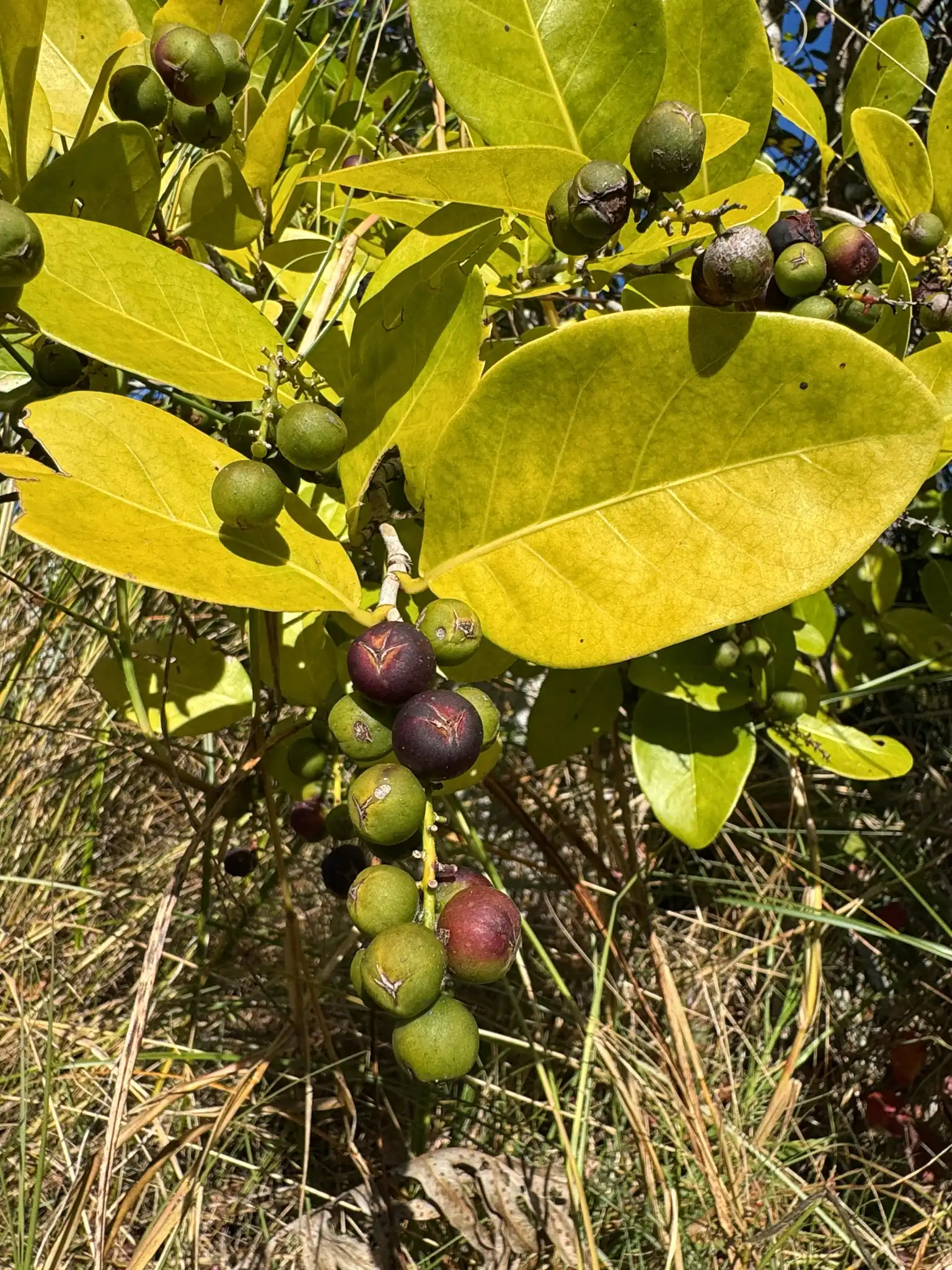
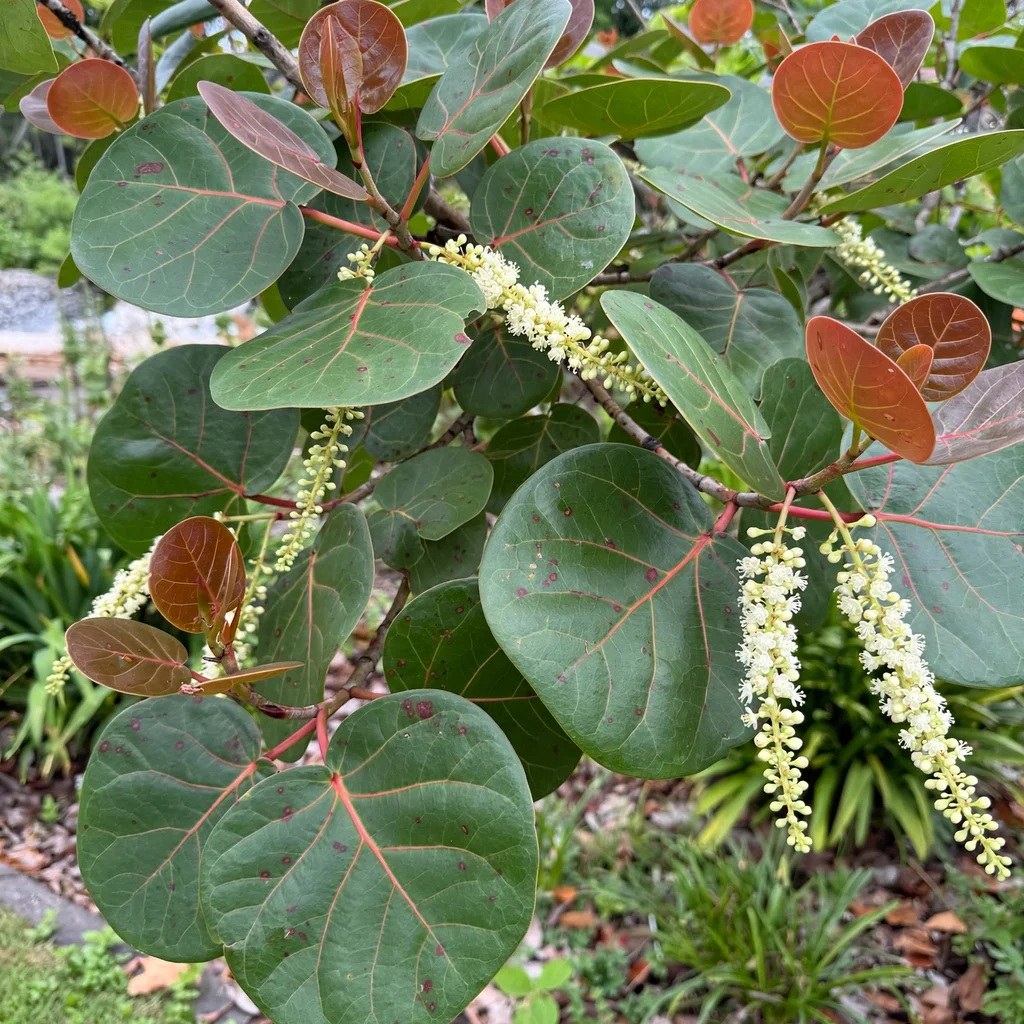
Coccoloba diversifolia, the pigeon plum, is an evergreen tree native to coastal hammocks of southern Florida and the Caribbean, reaching twenty to forty feet in height with a dense, rounded crown. The leathery, dark green leaves emerge as a striking bright red, providing a stark contrast against the mature foliage throughout the growing season.
Small, inconspicuous whitish-green flowers bloom on slender racemes during spring and summer, developing into dark purple, edible fruits that heavily attract native birds. The bark matures to a smooth, gray surface that flakes off in patches to reveal a rich, dark purplish-brown layer underneath.
Uses & Benefits:
Essentials
At a Glance
Plant Type
Tree
Height
472"
Width
417"
Light
Full Sun, Partial Sun
Zones
10
Water
Low
Humidity
High
Lifespan
Long-lived
Native To
North America, Central America, and the Caribbean
Toxicity
Non-toxic
Bloom period
Spring – Summer
In flower about 6 months of the year
Planting
How to Grow
- Plant in a full sun to partially shaded location with exceptionally well-drained sandy, limestone, or rocky soil.
- Water regularly during the first growing season to establish a deep root system, then reduce watering significantly.
- Apply a thin layer of organic mulch around the base to retain moisture, keeping it clear of the trunk to prevent rot.
- Prune young trees selectively to establish a strong structural framework, removing crossing branches or low competing leaders.
Pro Tip
Do not mistake the oversized, heart-shaped juvenile leaves for a different species or a sign of disease; they naturally shrink and become elliptic as the tree matures.
Keep It Thriving
Care Guide
Do
- Water sparingly once established, allowing the soil to dry out completely between waterings.
- Protect young trees from cold winter winds and any threat of frost.
- Allow the natural leaf litter to accumulate to nourish the soil.
Don't
- Do not plant in low-lying areas prone to standing water or prolonged flooding.
- Do not shear the outer foliage regularly, as this ruins the natural symmetrical crown.
- Do not over-fertilize; a single light application of slow-release fertilizer in spring is sufficient.
Seasonal Care Calendar
| Task | Jan | Feb | Mar | Apr | May | Jun | Jul | Aug | Sep | Oct | Nov | Dec |
|---|---|---|---|---|---|---|---|---|---|---|---|---|
| Fertilize | ||||||||||||
| Mulch | ||||||||||||
| Pest Check | ||||||||||||
| Prune |
Watch Out For
Pests & Diseases
Common Pests
Common Diseases
In the Garden
Landscape Uses & Companions
Landscape Uses
Multiply
Propagation Methods
Good to Know
Common Questions
Pigeon Plum questions
What zones can Pigeon Plum grow in?
Pigeon Plum is hardy in USDA Zone 10. Inside that range it survives winter in the ground; outside it, grow it as an annual or a container plant you protect.
When does Pigeon Plum bloom?
Pigeon Plum typically blooms in spring through summer. Exact timing shifts a week or two with your zone — Sow's bloom calendar maps it to your garden.
Does Pigeon Plum need full sun?
Pigeon Plum does best in full sun to part shade. In hot climates, afternoon shade keeps blooms fresher longer.
Is Pigeon Plum drought tolerant?
Yes — once established (usually after the first full season), Pigeon Plum handles dry spells with minimal watering. Water deeply its first year to build the root system that makes that possible.
More Coccoloba to compare
Keep exploring
Explore the genus
Hardy in your zone?
Grow Pigeon Plum with confidence
See it in a design of your actual yard, get zone-matched care reminders, and track it season by season in your garden journal.