The Story
Plant Bio
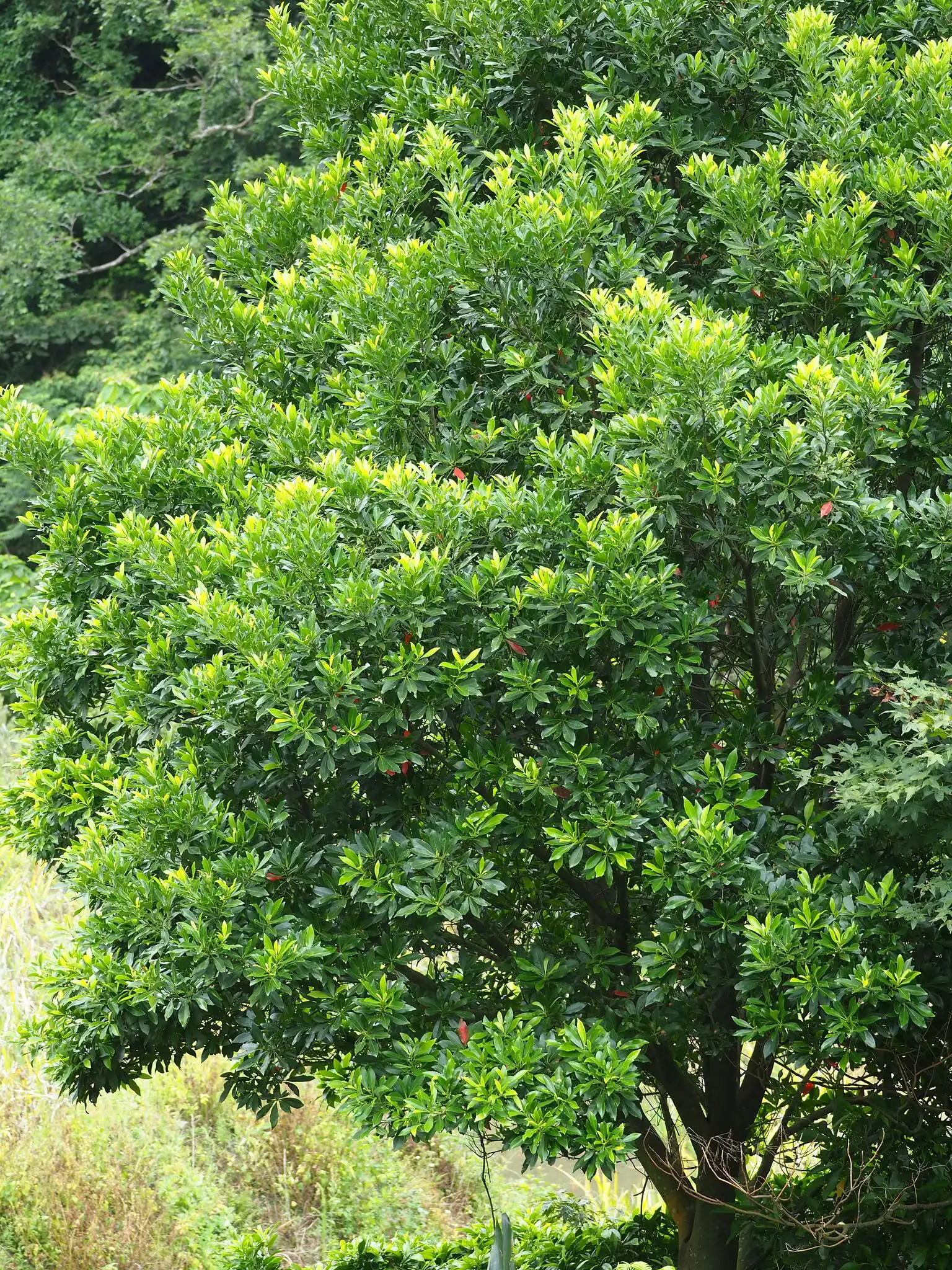
Elaeocarpus decipiens is a handsome, upright, broadleaf evergreen tree or large shrub. It features dense, lush, deep green foliage with occasional bright red older leaves scattered throughout the canopy.
Valued for its dense, columnar to pyramidal growth habit, it is an excellent choice for privacy screens in warmer climates. Bronze-tinted new growth adds interest, and it produces small, fragrant, bell-shaped flowers.
Uses & Benefits:
Essentials
At a Glance
Plant Type
Tree
Height
300"
Width
210"
Light
Full Sun, Partial Sun
Zones
8, 9, 10
Water
Medium
Humidity
Moderate to high
Lifespan
Long-lived tree
Native To
East Asia
Toxicity
Non-toxic
Bloom period
Late spring – Early summer
In flower about 2 months of the year
Planting
How to Grow
- Choose a location with full sun and well-drained soil.
- Dig a hole two to three times the width of the root ball.
- Gently tease out any circling roots before planting.
- Set the tree so its root flare is level with the ground.
- Backfill the hole, firming the soil gently.
- Water deeply and apply a 3-inch layer of mulch.
Pro Tip
Water deeply and regularly during the first few years to establish a strong root system for future drought tolerance.
Keep It Thriving
Care Guide
Do
- Provide supplemental water during extended dry periods.
- Prune to shape when young to encourage a dense habit.
- Maintain a good layer of mulch over the root zone.
- Fertilize in spring with a balanced, slow-release formula.
Don't
- Don't plant in waterlogged or consistently wet soil.
- Avoid heavy pruning that exposes the inner branches to sunscald.
- Don't plant too deep; keep the root flare visible.
- Don't allow grass to grow right up to the trunk.
Seasonal Care Calendar
| Task | Jan | Feb | Mar | Apr | May | Jun | Jul | Aug | Sep | Oct | Nov | Dec |
|---|---|---|---|---|---|---|---|---|---|---|---|---|
| Fertilize | ||||||||||||
| Plant | ||||||||||||
| Prune |
Watch Out For
Pests & Diseases
Common Pests
Common Diseases
In the Garden
Landscape Uses & Companions
Landscape Uses
Multiply
Propagation Methods
Good to Know
Common Questions
Japanese Blueberry Tree questions
What zones can Japanese Blueberry Tree grow in?
Japanese Blueberry Tree is hardy in USDA Zones 8–10. Inside that range it survives winter in the ground; outside it, grow it as an annual or a container plant you protect.
Is Japanese Blueberry Tree deer resistant?
Yes — Japanese Blueberry Tree is rated deer-resistant. Deer typically pass it over, though extreme hunger can override any plant's defenses.
When does Japanese Blueberry Tree bloom?
Japanese Blueberry Tree typically blooms in late spring through early summer. Exact timing shifts a week or two with your zone — Sow's bloom calendar maps it to your garden.
Does Japanese Blueberry Tree need full sun?
Japanese Blueberry Tree does best in full sun to part shade. In hot climates, afternoon shade keeps blooms fresher longer.
Is Japanese Blueberry Tree drought tolerant?
Yes — once established (usually after the first full season), Japanese Blueberry Tree handles dry spells with minimal watering. Water deeply its first year to build the root system that makes that possible.
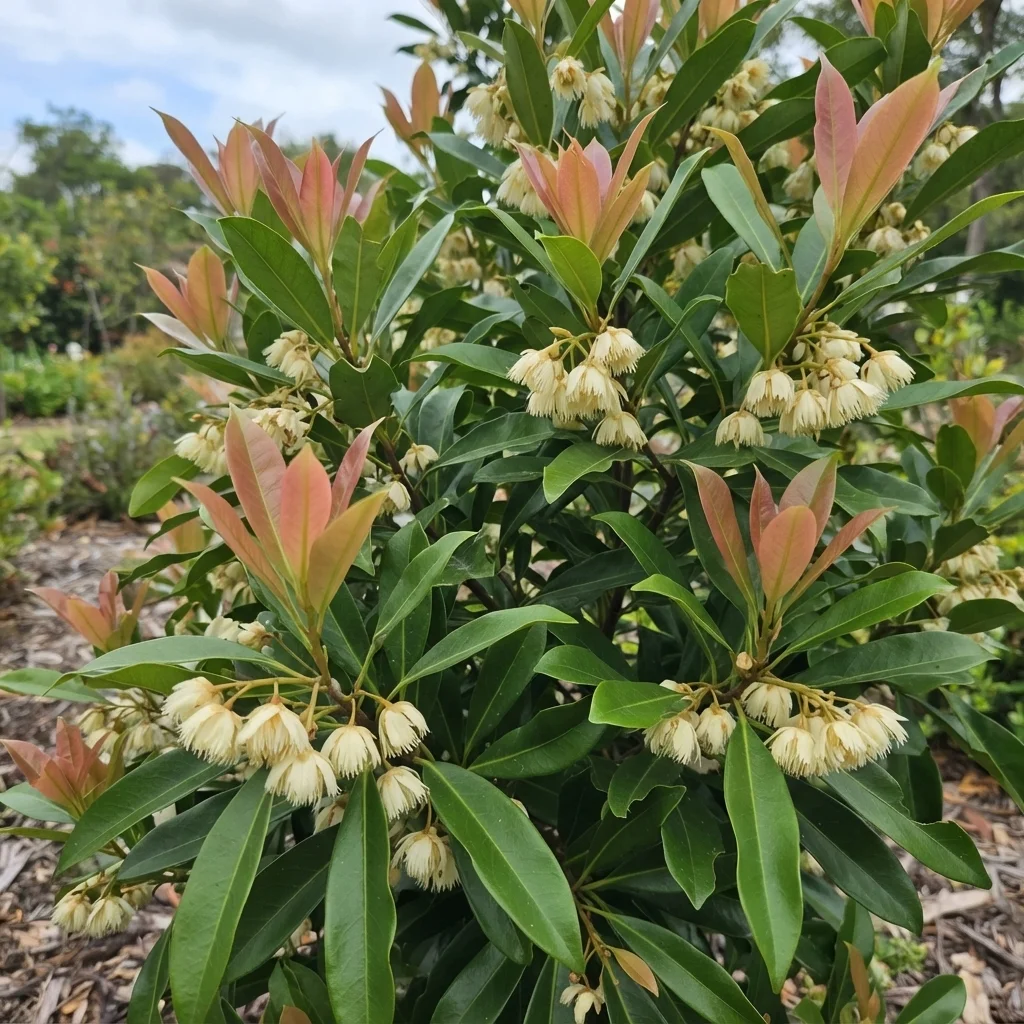
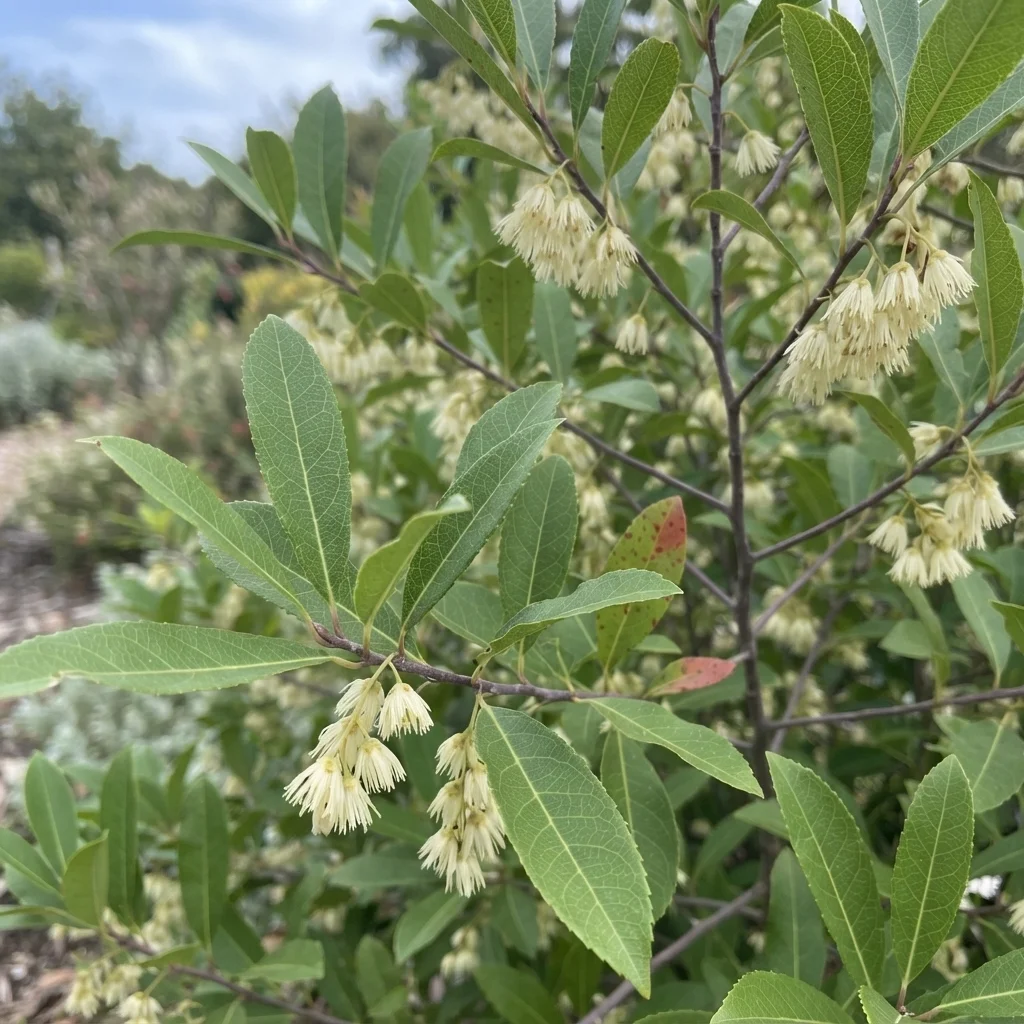
More Elaeocarpus to compare
Keep exploring
Explore the genus
Hardy in your zone?
Grow Japanese Blueberry Tree with confidence
See it in a design of your actual yard, get zone-matched care reminders, and track it season by season in your garden journal.