
The Story
Plant Bio
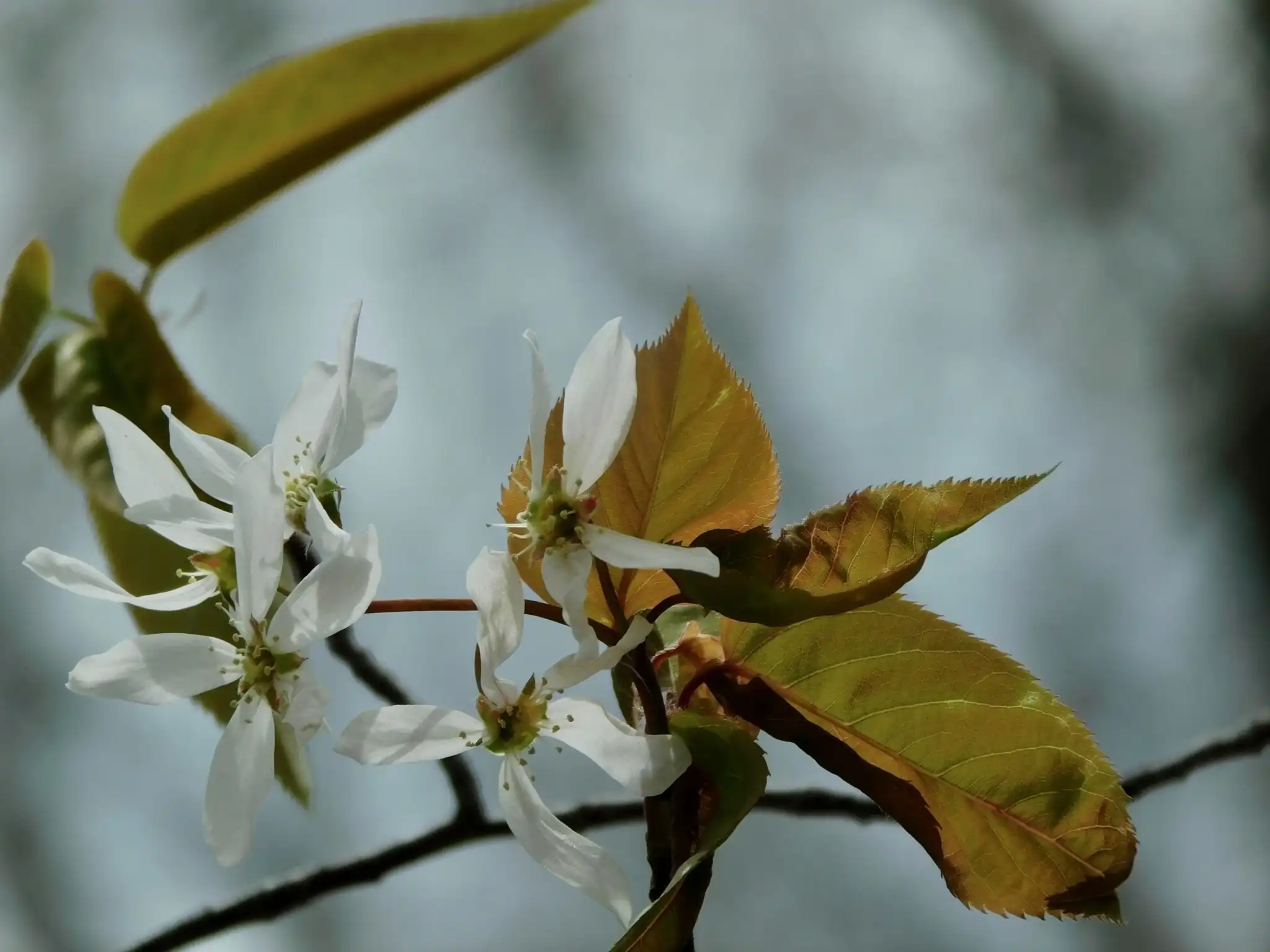
Amelanchier laevis is a small, often multi-stemmed deciduous tree or large shrub native to eastern North America. It is highly prized for its outstanding four-season interest, including delicate spring flowers, edible summer fruit, brilliant fall color, and handsome winter bark.
A key identifying feature of this species is its new leaves, which emerge with a beautiful bronze-purple color in spring, contrasting wonderfully with the clouds of white flowers. The bark is a smooth, silvery-gray with darker vertical striations.
Uses & Benefits:
Essentials
At a Glance
Plant Type
Tree
Height
240"
Width
240"
Light
Full Sun, Partial Sun
Zones
4, 5, 6, 7, 8
Water
Medium
Humidity
Average
Lifespan
40-60 years
Native To
Eastern North America
Toxicity
Non-toxic, fruit is edible
Planting
How to Grow
- Select a site in full sun or light shade with good drainage.
- Amend soil with compost to improve structure and moisture retention.
- Dig a hole two to three times the width of the root ball.
- Set the tree so the root flare is at or slightly above ground level.
- Backfill with native soil and water thoroughly.
- Mulch around the base, but do not let it touch the trunk.
Pro Tip
Plant in a location with good air circulation to help prevent fungal diseases like rust and powdery mildew, which can be common.
Keep It Thriving
Care Guide
Do
- Provide consistent water, especially during establishment and dry periods.
- Encourage a multi-stemmed habit by allowing some basal sprouts to develop.
- Rake up and dispose of fallen leaves in autumn to reduce disease.
- Enjoy the edible berries, which taste like a mild blueberry.
Don't
- Do not plant in dry, compacted, or high pH soils.
- Avoid planting near Eastern Red Cedars (Juniperus virginiana) to minimize cedar-apple rust.
- Don't over-fertilize; a top-dressing of compost is usually sufficient.
- Avoid heavy pruning, which can spoil its natural graceful form.
Seasonal Care Calendar
| Task | Jan | Feb | Mar | Apr | May | Jun | Jul | Aug | Sep | Oct | Nov | Dec |
|---|---|---|---|---|---|---|---|---|---|---|---|---|
| Harvest | ||||||||||||
| Mulch | ||||||||||||
| Plant | ||||||||||||
| Prune |
Watch Out For
Pests & Diseases
Common Pests
Common Diseases
In the Garden
Landscape Uses & Companions
Landscape Uses
Multiply
Propagation Methods
Good to Know
Common Questions
Allegheny Serviceberry questions
What zones can Allegheny Serviceberry grow in?
Allegheny Serviceberry is hardy in USDA Zones 4–8. Inside that range it survives winter in the ground; outside it, grow it as an annual or a container plant you protect.
Is Allegheny Serviceberry deer resistant?
Yes — Allegheny Serviceberry is rated deer-resistant. Deer typically pass it over, though extreme hunger can override any plant's defenses.
When does Allegheny Serviceberry bloom?
Allegheny Serviceberry typically blooms in mid-spring through late spring. Exact timing shifts a week or two with your zone — Sow's bloom calendar maps it to your garden.
Does Allegheny Serviceberry need full sun?
Allegheny Serviceberry does best in full sun to part shade. In hot climates, afternoon shade keeps blooms fresher longer.
More Amelanchier to compare
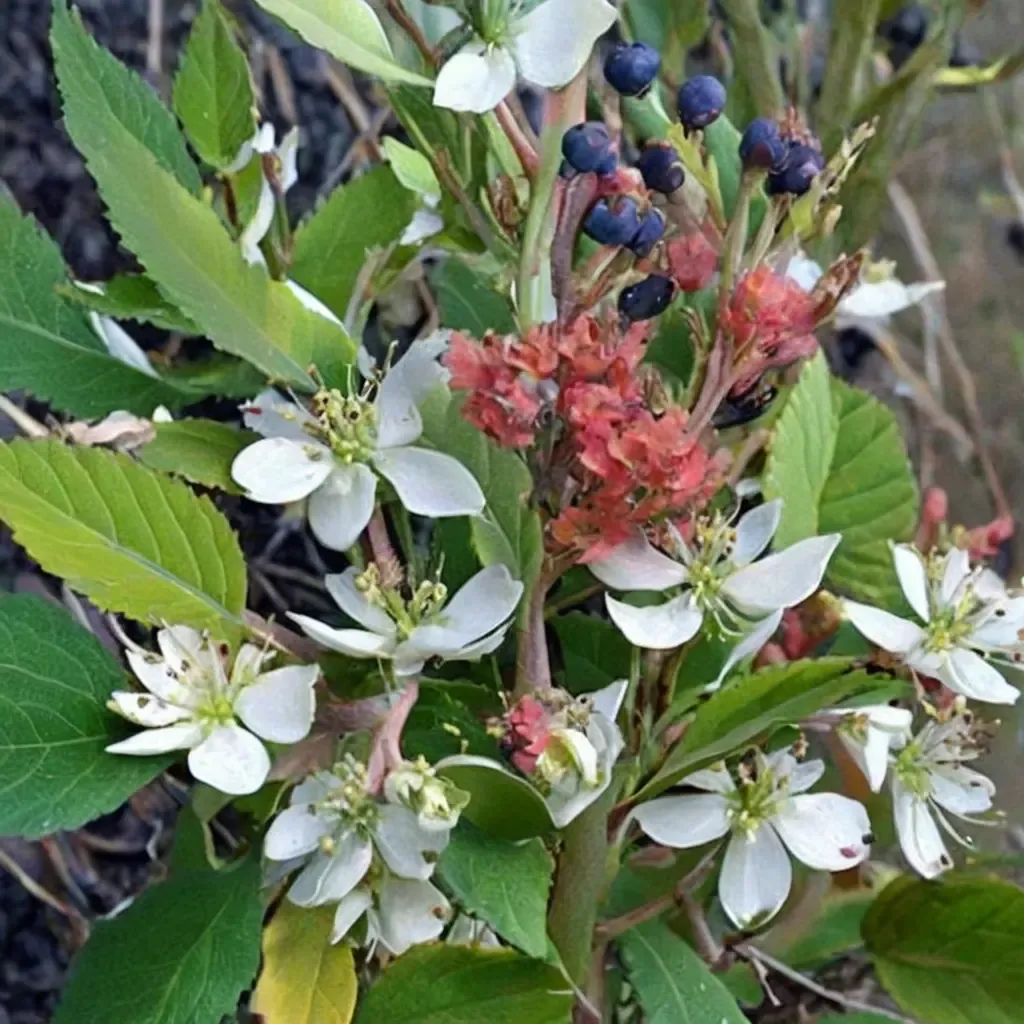
Timm Success Serviceberry
Amelanchier arborea 'Timm Success'
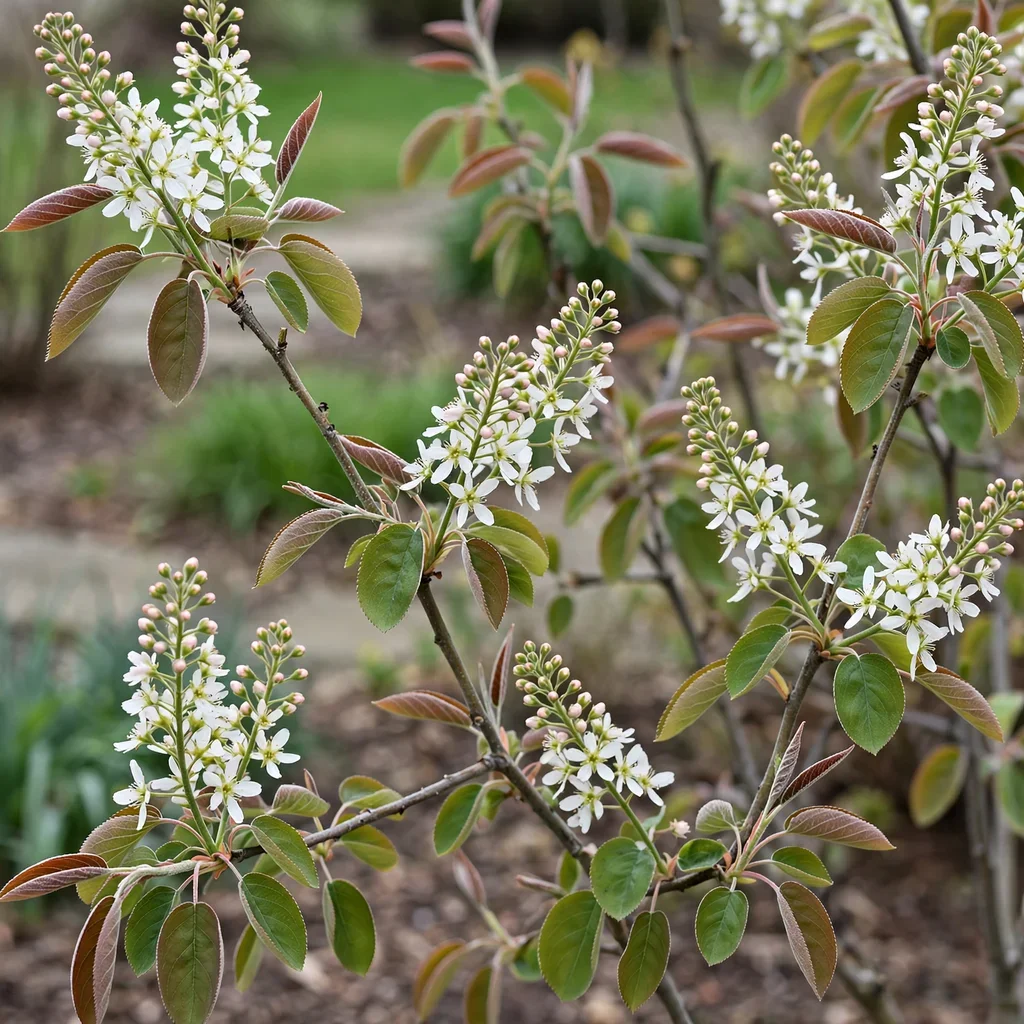
Autumn Brilliance Serviceberry
Amelanchier x grandiflora 'Autumn Brilliance'
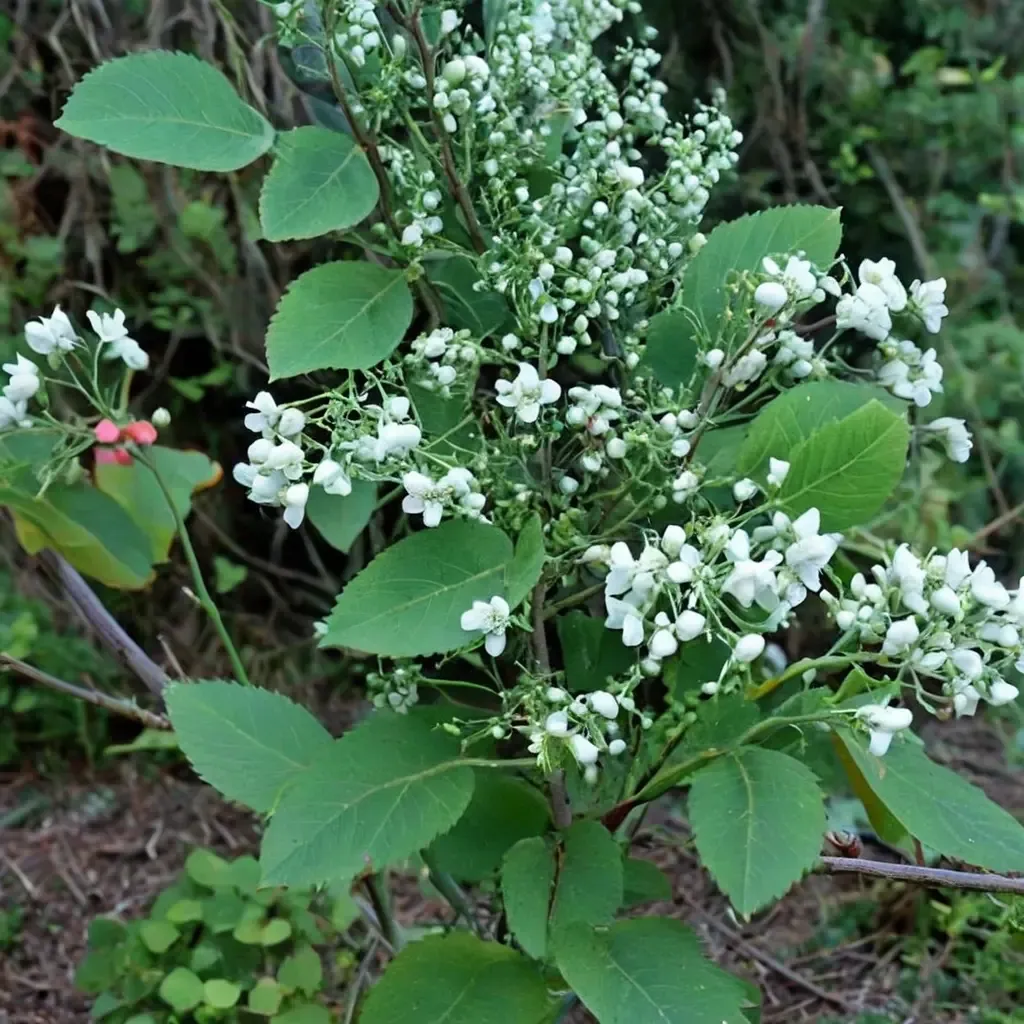
Saskatoon Serviceberry
Amelanchier alnifolia
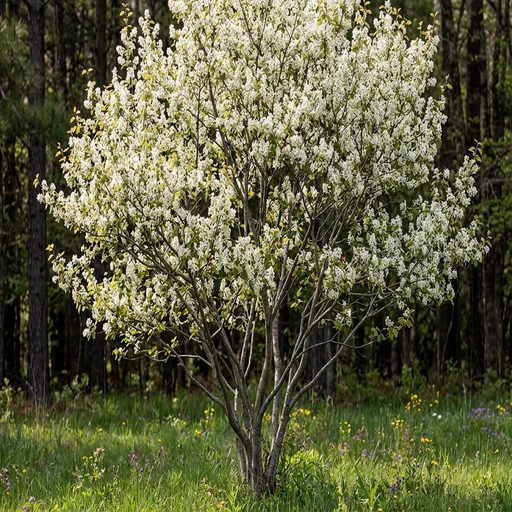
Serviceberry
Amelanchier canadensis
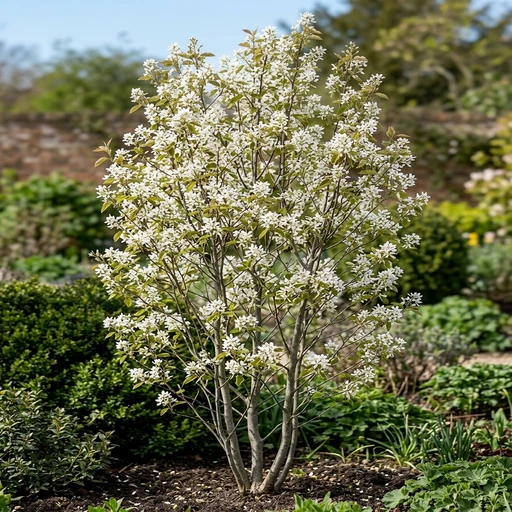
Glennform Serviceberry
Amelanchier canadensis 'Glennform'
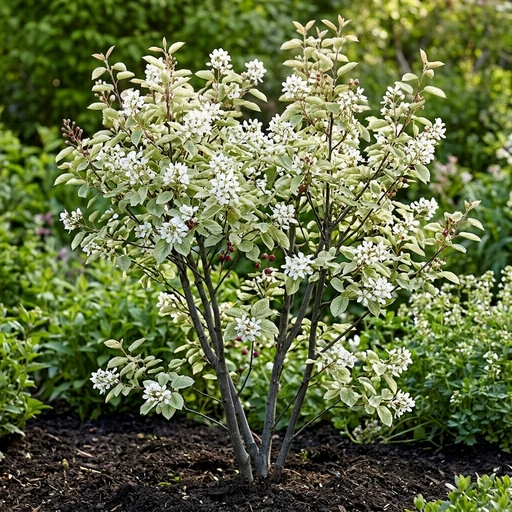
Spring Flurry Serviceberry
Amelanchier laevis 'JFS-Arb'
Keep exploring
Explore the genus
Hardy in your zone?
Grow Allegheny Serviceberry with confidence
See it in a design of your actual yard, get zone-matched care reminders, and track it season by season in your garden journal.