The Story
Plant Bio
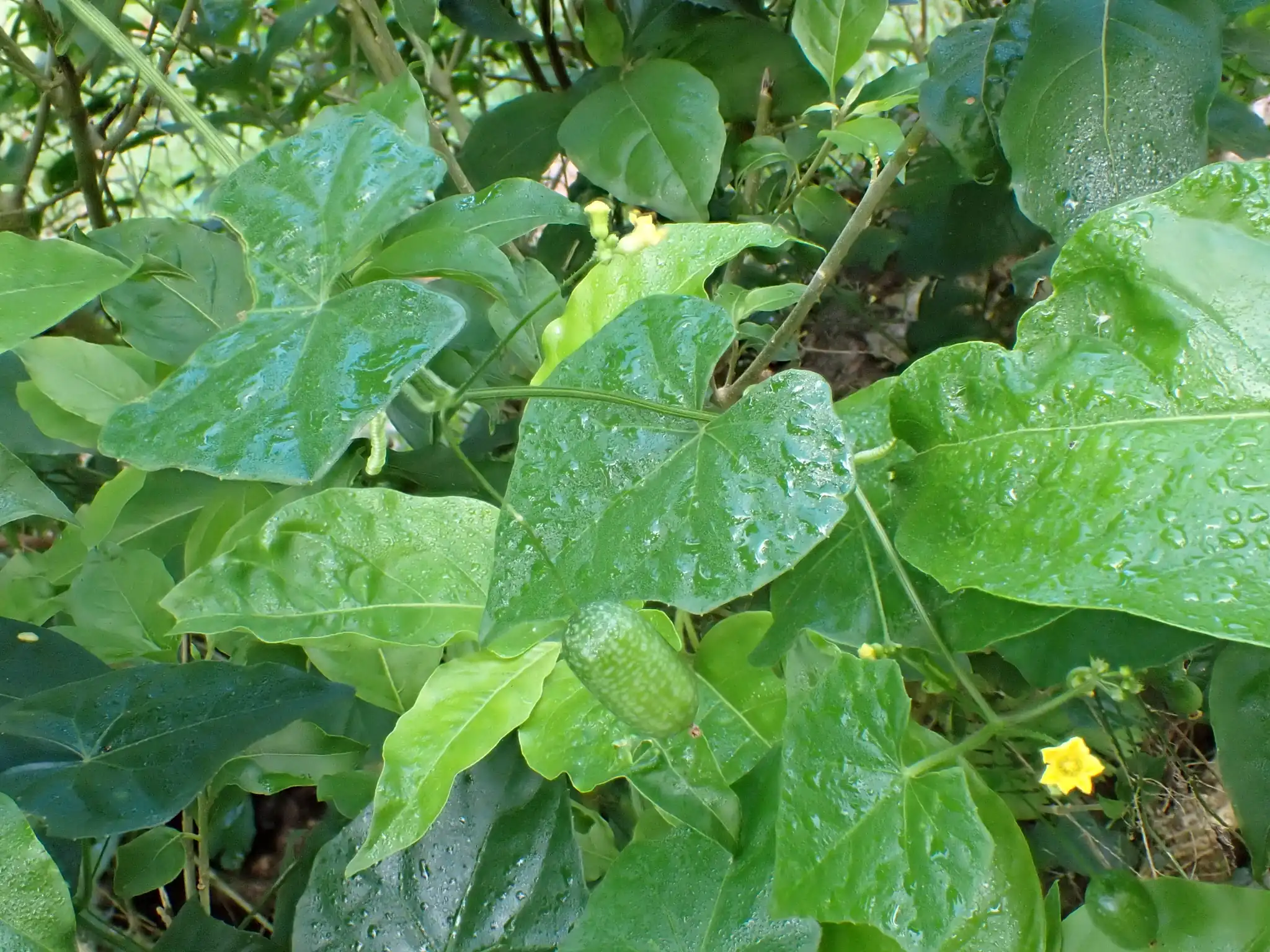
Melothria scabra is a fast-growing, herbaceous climbing vine native to Mexico and Central America that scales supports using double-spiralled tendrils. The plant develops a subterranean tuberous root system that stores water, allowing it to survive as a perennial in frost-free environments.
The vine produces rough-textured, palmately lobed green leaves resembling miniature cucumber foliage and bears small, yellow, bell-shaped flowers throughout the summer. These blossoms develop into smooth-skinned, grape-sized fruits that look like tiny watermelons and feature a tangy, sour-cucumber flavor.
Uses & Benefits:
Essentials
At a Glance
Plant Type
Vine
Height
157"
Width
59"
Light
Full Sun
Zones
8, 9, 10
Water
Moderate
Humidity
High
Lifespan
Perennial (grown as annual in cold zones)
Native To
Mexico to Venezuela
Toxicity
Non-toxic
Bloom period
Summer – Fall
In flower about 6 months of the year
Planting
How to Grow
- Sow seeds indoors 4 to 6 weeks before the last spring frost at a temperature of 23°C (73°F), or direct-sow outdoors once all frost danger has passed.
- Select a planting site in full sun with highly well-drained loam or sandy soil rich in organic matter.
- Install a sturdy trellis, netting, or wire support structure at planting time to accommodate the climbing tendrils.
- Water regularly during establishment, then transition to watering only when the top inch of soil has dried out completely.
Pro Tip
To overwinter the plant in zones colder than 8a, dig up the underground storage tubers after the first light fall frost and store them in dry peat or sand in a cool, frost-free location, replanting them once spring soil warms.
Keep It Thriving
Care Guide
Do
- Feed weekly or bi-weekly with a balanced, high-potash liquid fertilizer once flowering and fruiting commence.
- Ensure excellent soil drainage to prevent the subterranean storage tubers from rotting.
- Use physical fencing or barriers to protect young, tender vines from deer and rabbit browsing.
Don't
- Do not overwater or plant in heavy, poorly drained clay soils, which causes fatal root and tuber rot.
- Do not hard-prune active green growing vines unnecessarily during the active fruiting season.
- Do not leave the tubers in the ground over winter in areas that experience freezing temperatures.
Seasonal Care Calendar
| Task | Jan | Feb | Mar | Apr | May | Jun | Jul | Aug | Sep | Oct | Nov | Dec |
|---|---|---|---|---|---|---|---|---|---|---|---|---|
| Fertilize | ||||||||||||
| Harvest | ||||||||||||
| Lift Store | ||||||||||||
| Plant | ||||||||||||
| Propagate |
Watch Out For
Pests & Diseases
Common Pests
Common Diseases
In the Garden
Landscape Uses & Companions
Landscape Uses
Multiply
Propagation Methods
Good to Know
Common Questions
Cucamelon questions
What zones can Cucamelon grow in?
Cucamelon is hardy in USDA Zones 8–10. Inside that range it survives winter in the ground; outside it, grow it as an annual or a container plant you protect.
Is Cucamelon deer resistant?
Not reliably. Deer may browse Cucamelon, especially tender spring growth — plan on repellents or fencing where pressure is high.
When does Cucamelon bloom?
Cucamelon typically blooms in summer through fall. Exact timing shifts a week or two with your zone — Sow's bloom calendar maps it to your garden.
Does Cucamelon need full sun?
Cucamelon does best in full sun (6+ hours).
Is Cucamelon drought tolerant?
Yes — once established (usually after the first full season), Cucamelon handles dry spells with minimal watering. Water deeply its first year to build the root system that makes that possible.
Keep exploring
Explore the genus
Hardy in your zone?
Grow Cucamelon with confidence
See it in a design of your actual yard, get zone-matched care reminders, and track it season by season in your garden journal.