1 named cultivar
The Story
Plant Bio
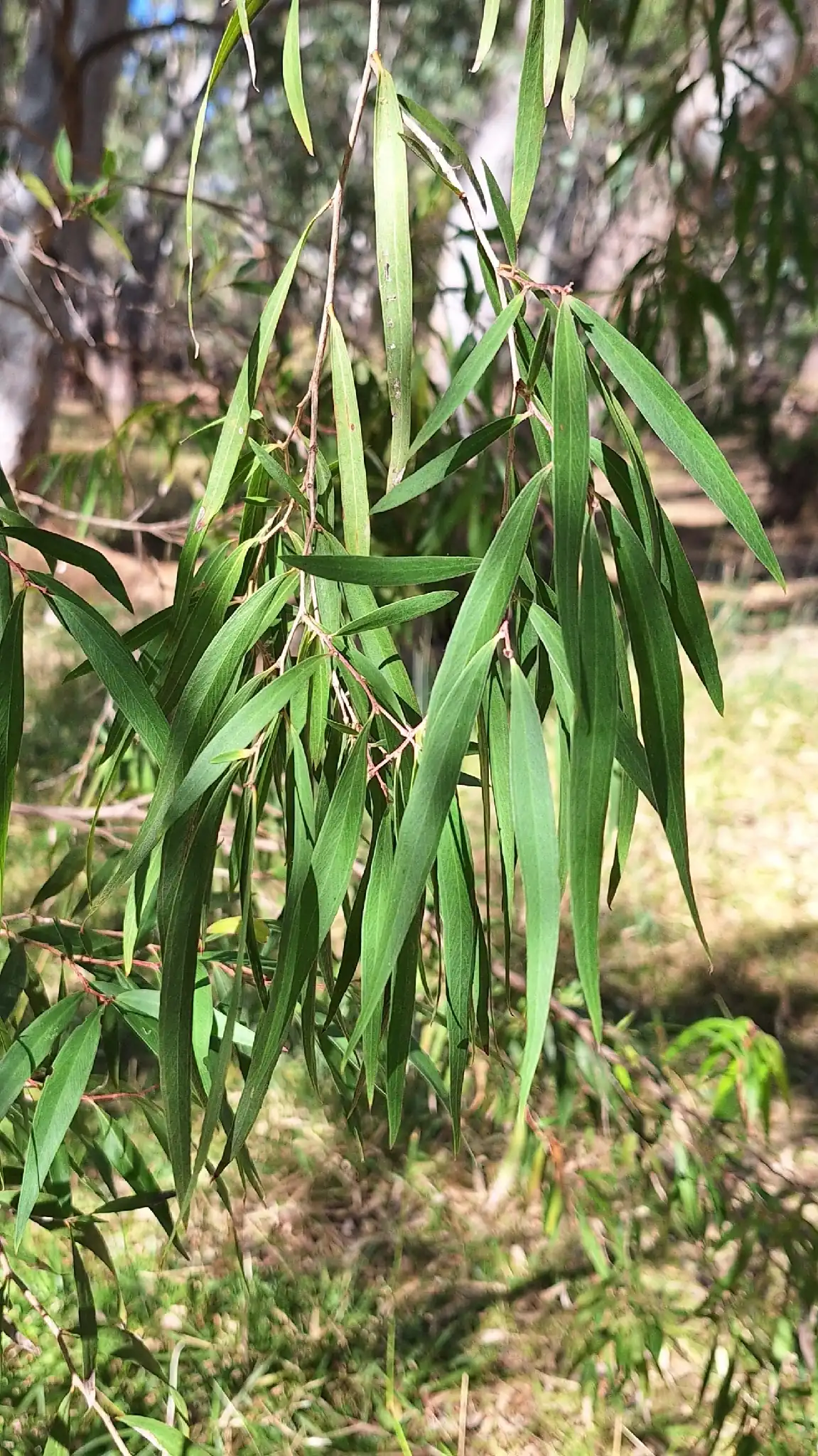
Agonis flexuosa, the peppermint tree, is a weeping evergreen tree native to Western Australia that reaches up to 33 feet in height, characterized by pendulous branches and linear-lanceolate leaves that release a strong peppermint scent when crushed. The small, white to cream flowers are held in dense, sessile clusters in the leaf axils along the branches during spring and summer.
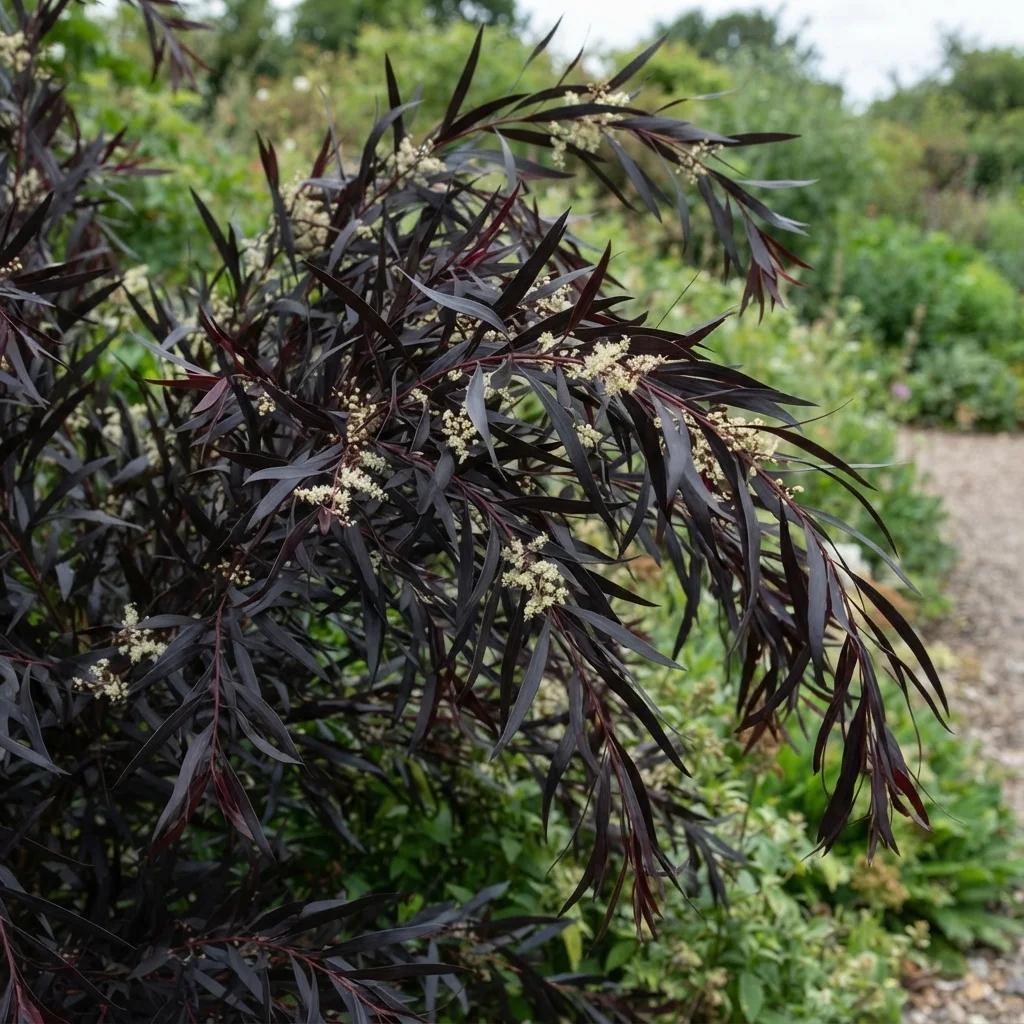
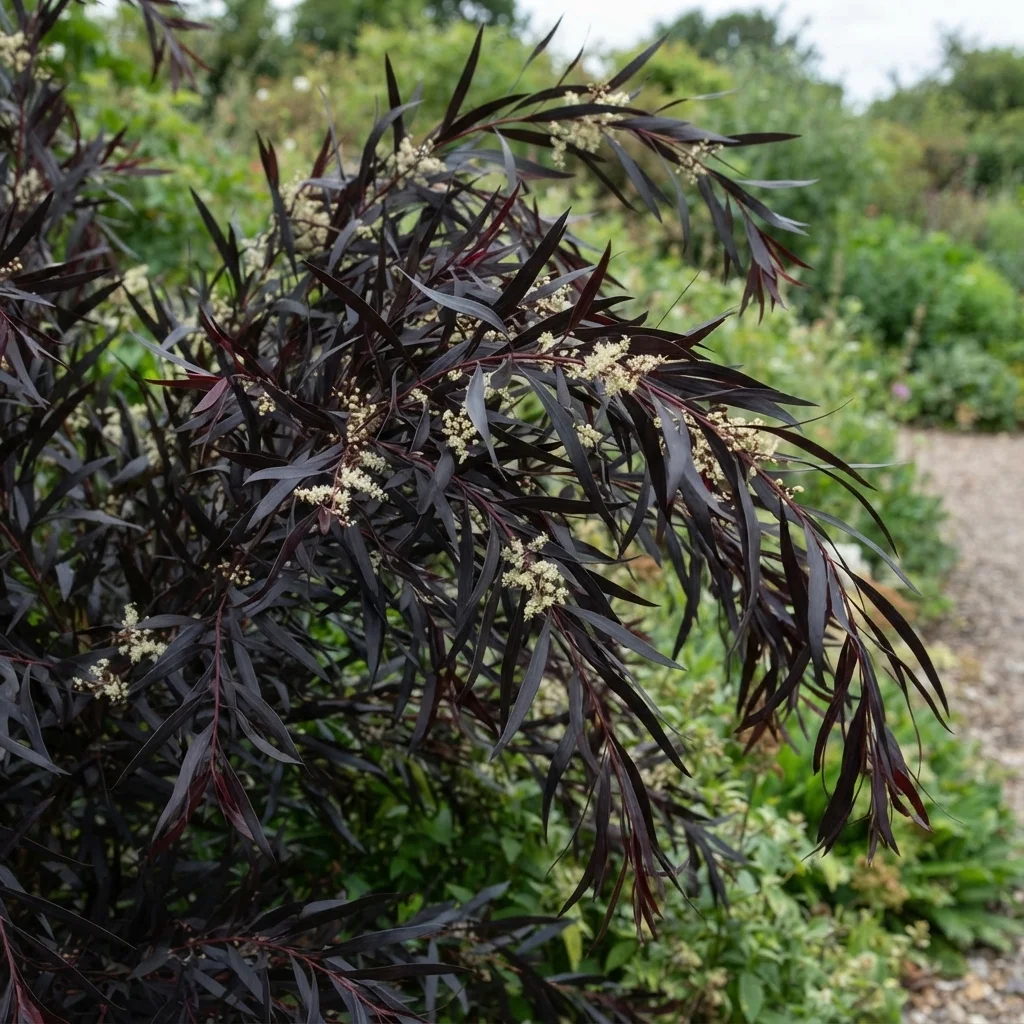
While the wild species features light green new growth, dark-foliaged cultivars like 'After Dark' produce intense burgundy-purple to nearly black juvenile leaves. Cultivars also offer compact alternatives to the large species, with dwarf selections like 'Nana' remaining under five feet tall.
Uses & Benefits:
Essentials
At a Glance
Plant Type
Tree
Height
394"
Width
315"
Light
Full Sun, Partial Sun
Zones
9, 10
Water
Low
Humidity
Low to moderate
Lifespan
Long-lived
Native To
Australia
Toxicity
Non-toxic
Planting
How to Grow
- Select a planting site in full sun to partial shade with highly permeable, well-drained soil.
- Dig a hole twice as wide as the root ball and of equal depth, avoiding heavy, waterlogged clay soils.
- Water deeply but infrequently once planted, allowing the soil to dry out between waterings to prevent root rot.
- Apply a low-phosphorus, slow-release fertilizer sparingly in spring to support steady growth.
Pro Tip
Avoid shearing this species into formal hedges; it naturally develops a weeping, round-headed form that is best maintained with minimal, selective structural pruning.
Keep It Thriving
Care Guide
Do
- Plant in highly adaptable, well-drained sandy loam or loam.
- Prune lightly after flowering to maintain density and shape.
- Protect young plants from deer and rabbit browsing in vulnerable areas.
Don't
- Do not overwater or allow the roots to sit in chronically soggy soil.
- Do not prune heavily into old, leafless interior wood, as it fails to shoot from bare timber.
- Do not shear the branches mechanically into formal geometric shapes.
Seasonal Care Calendar
| Task | Jan | Feb | Mar | Apr | May | Jun | Jul | Aug | Sep | Oct | Nov | Dec |
|---|---|---|---|---|---|---|---|---|---|---|---|---|
| Fertilize | ||||||||||||
| Pest Check | ||||||||||||
| Prune | ||||||||||||
| Winter Prep |
Watch Out For
Pests & Diseases
Common Pests
Common Diseases
In the Garden
Landscape Uses & Companions
Landscape Uses
Companion Plants
Multiply
Propagation Methods
Good to Know
Common Questions
Peppermint Tree questions
What zones can Peppermint Tree grow in?
Peppermint Tree is hardy in USDA Zones 9–10. Inside that range it survives winter in the ground; outside it, grow it as an annual or a container plant you protect.
Is Peppermint Tree deer resistant?
Not reliably. Deer may browse Peppermint Tree, especially tender spring growth — plan on repellents or fencing where pressure is high.
When does Peppermint Tree bloom?
Peppermint Tree typically blooms in spring through summer. Exact timing shifts a week or two with your zone — Sow's bloom calendar maps it to your garden.
Does Peppermint Tree need full sun?
Peppermint Tree does best in full sun to part shade. In hot climates, afternoon shade keeps blooms fresher longer.
Is Peppermint Tree drought tolerant?
Yes — once established (usually after the first full season), Peppermint Tree handles dry spells with minimal watering. Water deeply its first year to build the root system that makes that possible.
More Agonis to compare
Keep exploring
Explore the genus
Hardy in your zone?
Grow Peppermint Tree with confidence
See it in a design of your actual yard, get zone-matched care reminders, and track it season by season in your garden journal.