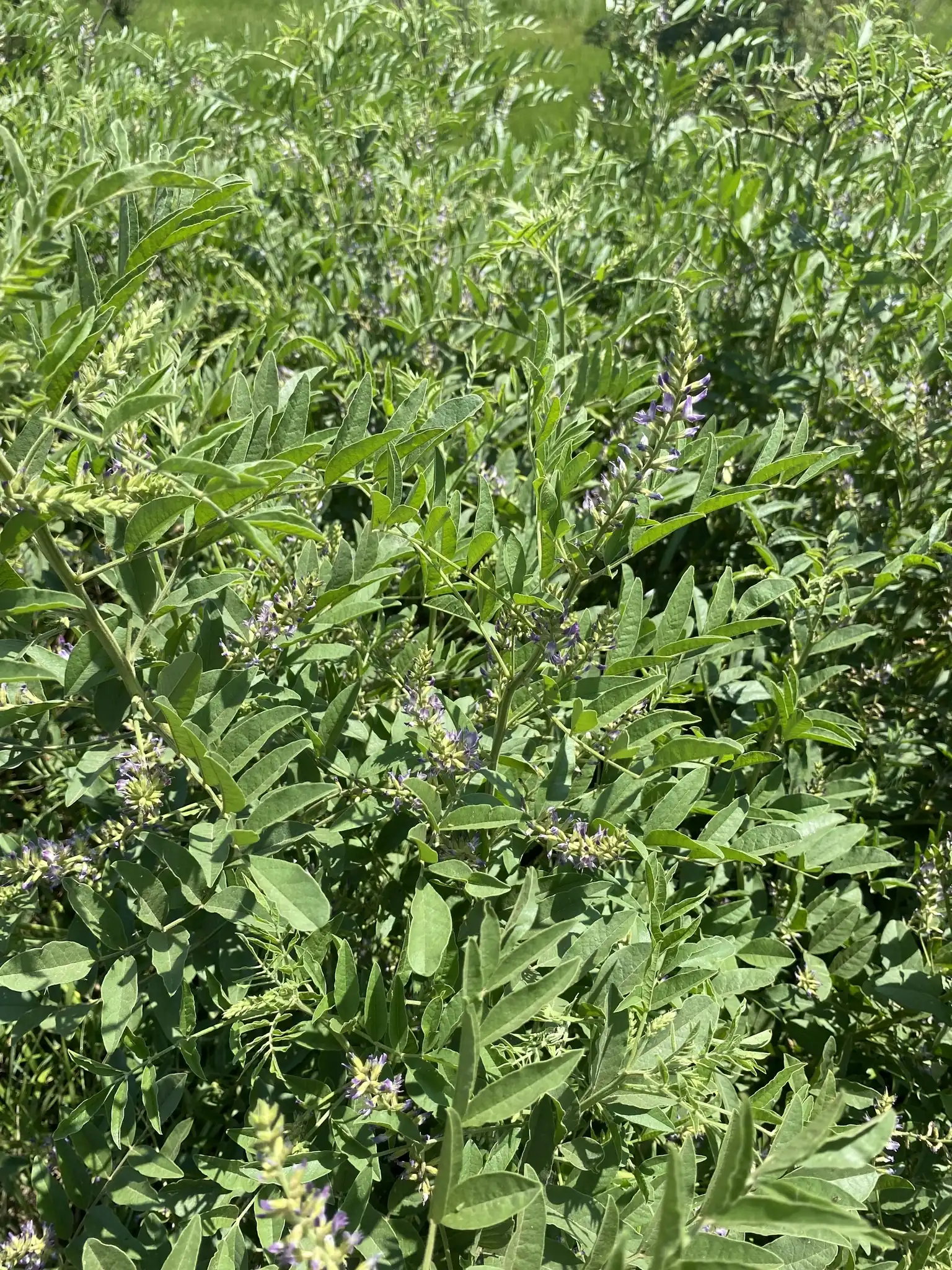
1 named cultivar
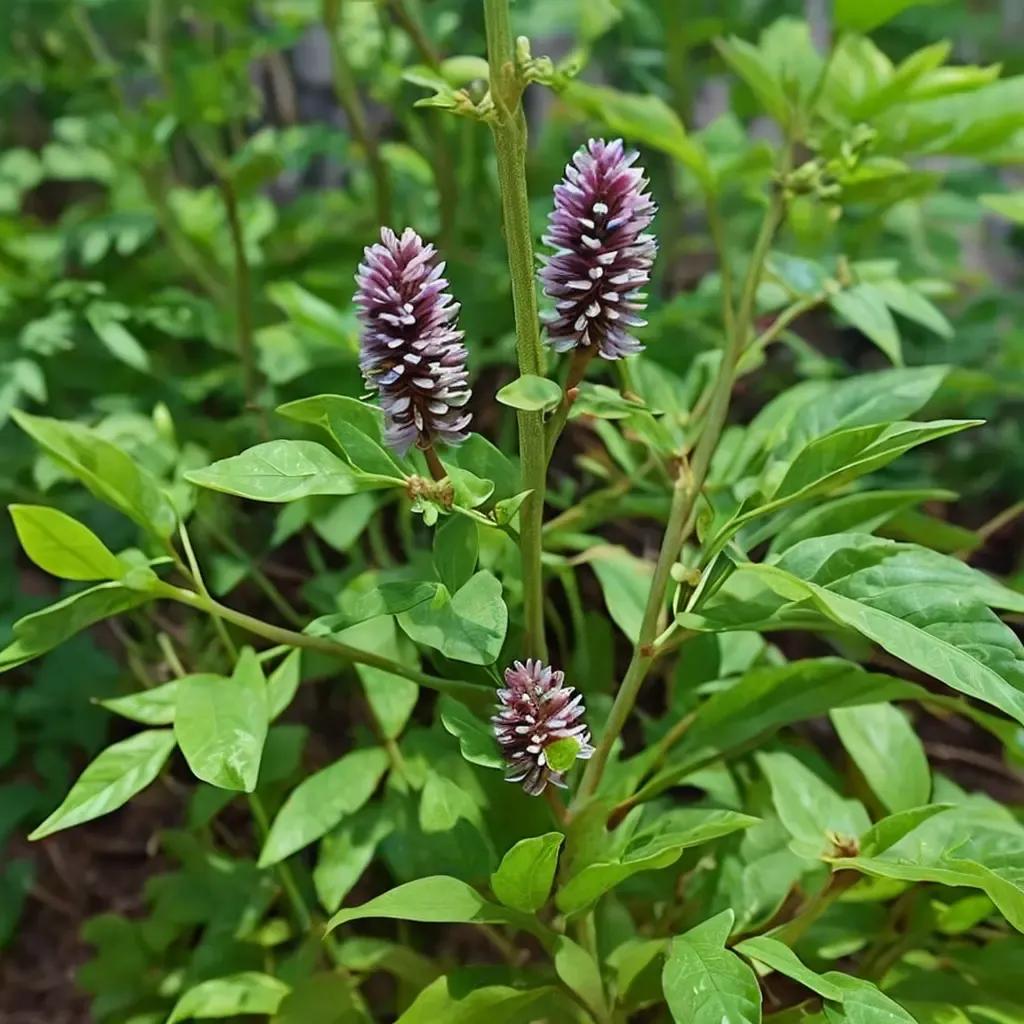
The Story
Plant Bio
Glycyrrhiza glabra, liquorice, is an upright rhizomatous perennial from southern Europe, North Africa and western Asia, reaching about three feet. Pinnate leaves carry four to seven pairs of leaflets on arching stems, small lilac-blue pea flowers open in summer, and the sweet-tasting roots run deep and wide underground.
The crop is the root, and it takes three to four years before it is worth lifting — this is not a plant for a quick return. It also runs strongly by rhizome and is difficult to remove once settled, so give it a permanent corner or a large container. Despite being a confectionery flavouring, sustained consumption raises blood pressure and is genuinely risky.
Uses & Benefits:
Essentials
At a Glance
Plant Type
Perennial
Height
36"
Width
24"
Light
Full Sun, Partial Sun
Zones
7, 8, 9, 10
Water
Moderate
Humidity
Moderate
Lifespan
Perennial
Native To
Southern Europe, North Africa and western Asia
Toxicity
Root edible in small amounts; harmful in quantity
Planting
How to Grow
- Plant in full sun in deep, freely draining soil.
- Choose a permanent position; it resents moving.
- Contain the rhizomes if space is limited.
- Water through the first summers while it roots.
- Wait three to four years before lifting any root.
- Cut top growth down after frost.
Pro Tip
The root needs three or four years before it is worth digging, so plant it where it can simply be left alone.
Keep It Thriving
Care Guide
Do
- Give it deep soil and full sun ☀️
- Choose a permanent position 📍
- Wait years before harvesting root ⏳
- Contain the rhizomes 🚧
Don't
- Move an established plant ❌
- Harvest in the first two years ❌
- Eat the root habitually ❌
Seasonal Care Calendar
| Task | Jan | Feb | Mar | Apr | May | Jun | Jul | Aug | Sep | Oct | Nov | Dec |
|---|---|---|---|---|---|---|---|---|---|---|---|---|
| Cut Back | ||||||||||||
| Harvest |
Watch Out For
Pests & Diseases
Common Pests
Common Diseases
In the Garden
Landscape Uses & Companions
Landscape Uses
Companion Plants
Multiply
Propagation Methods
Good to Know
Common Questions
Licorice questions
What zones can Licorice grow in?
Licorice is hardy in USDA Zones 7–10. Inside that range it survives winter in the ground; outside it, grow it as an annual or a container plant you protect.
Is Licorice deer resistant?
Yes — Licorice is rated deer-resistant. Deer typically pass it over, though extreme hunger can override any plant's defenses.
When does Licorice bloom?
Licorice typically blooms in mid-summer through late summer. Exact timing shifts a week or two with your zone — Sow's bloom calendar maps it to your garden.
Does Licorice need full sun?
Licorice does best in full sun to part shade. In hot climates, afternoon shade keeps blooms fresher longer.
Is Licorice drought tolerant?
Yes — once established (usually after the first full season), Licorice handles dry spells with minimal watering. Water deeply its first year to build the root system that makes that possible.
Keep exploring
Explore the genus
Hardy in your zone?
Grow Licorice with confidence
See it in a design of your actual yard, get zone-matched care reminders, and track it season by season in your garden journal.