1 named cultivar

The Story
Plant Bio
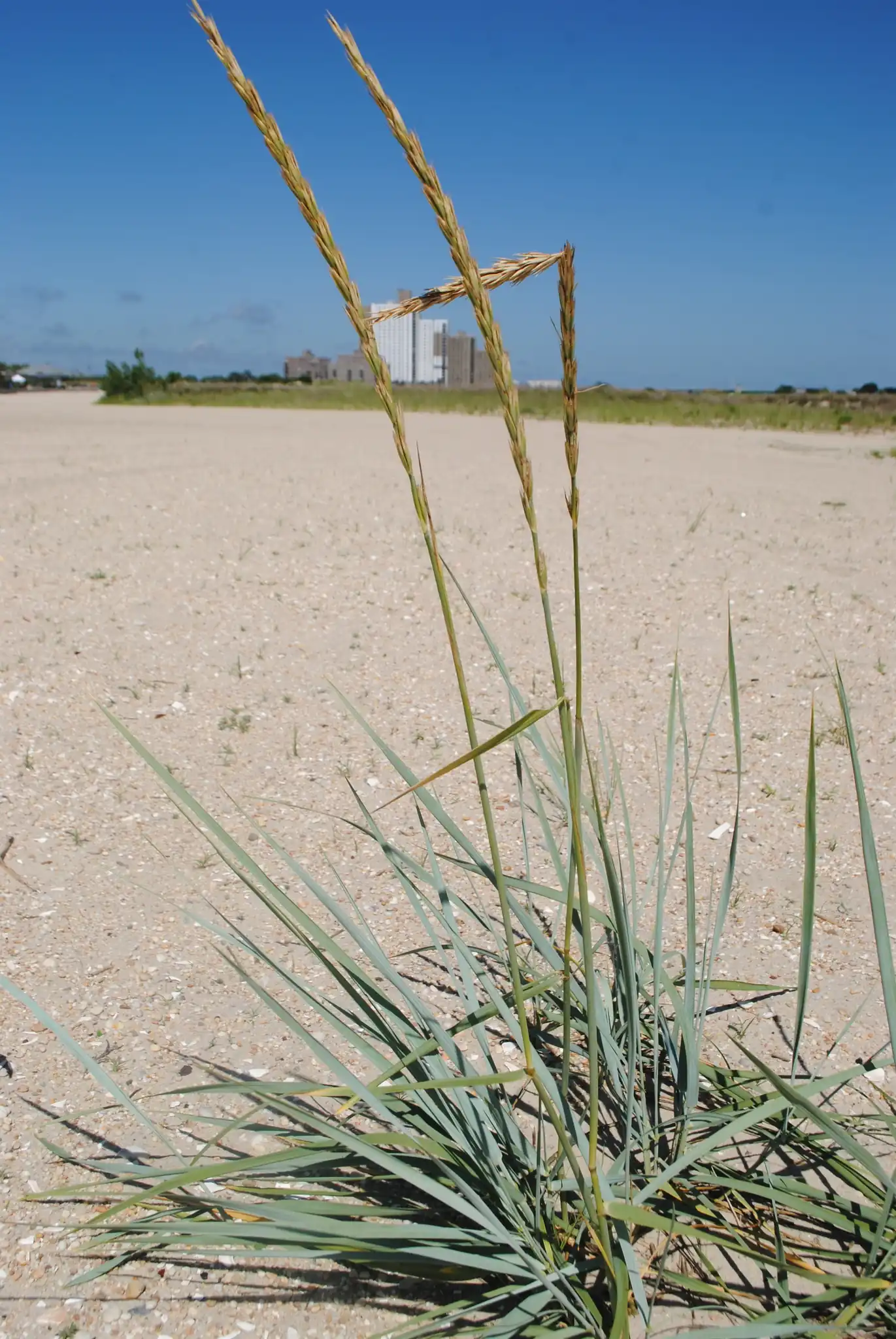
Leymus arenarius, blue lyme grass, is a spreading perennial grass from the coasts of northern and western Europe, two to four feet high. Broad stiff leaves of an intense powder blue rise from running rhizomes, and narrow blue-green flower spikes appear in early summer, turning beige as they dry.
The blue is about as strong as foliage colour gets in a hardy grass, but it runs aggressively by rhizome and will colonise a border within a few seasons — grow it in a sunken container, a gravel bed bounded by hard edges, or on a dune where spreading is the point. Cutting it back in midsummer forces a fresh flush of the brightest blue.
Uses & Benefits:
Essentials
At a Glance
Plant Type
Grass
Height
36"
Width
36"
Light
Full Sun
Zones
4, 5, 6, 7, 8, 9
Water
Low
Humidity
Low
Lifespan
Perennial
Native To
Coastal northern and western Europe
Toxicity
Non-toxic; the grain is edible
Planting
How to Grow
- Contain the rhizomes or plant where spread is welcome.
- Give it full sun in freely drained, ideally sandy soil.
- Cut back in midsummer for the brightest new foliage.
- Water while establishing, then rarely.
- Divide and reduce the clump every few years.
- Use it on dunes and coastal banks where it can run.
Pro Tip
Cut the whole clump back in midsummer — the new growth comes through a far more intense blue than the tired old leaves.
Keep It Thriving
Care Guide
Do
- Contain it or give it a dune ⛰️
- Cut back in midsummer for colour ✂️
- Plant it in sun and sandy soil ☀️
- Divide every few years 🔁
Don't
- Plant it loose in a mixed border ❌
- Feed or over-water it ❌
- Expect it to stay in a clump ❌
Seasonal Care Calendar
| Task | Jan | Feb | Mar | Apr | May | Jun | Jul | Aug | Sep | Oct | Nov | Dec |
|---|---|---|---|---|---|---|---|---|---|---|---|---|
| Contain | ||||||||||||
| Cut Back |
Watch Out For
Pests & Diseases
Common Pests
Common Diseases
In the Garden
Landscape Uses & Companions
Landscape Uses
Companion Plants
Multiply
Propagation Methods
Good to Know
Common Questions
Lyme Grass questions
What zones can Lyme Grass grow in?
Lyme Grass is hardy in USDA Zones 4–9. Inside that range it survives winter in the ground; outside it, grow it as an annual or a container plant you protect.
Is Lyme Grass deer resistant?
Yes — Lyme Grass is rated deer-resistant. Deer typically pass it over, though extreme hunger can override any plant's defenses.
When does Lyme Grass bloom?
Lyme Grass typically blooms in mid-summer through late summer. Exact timing shifts a week or two with your zone — Sow's bloom calendar maps it to your garden.
Does Lyme Grass need full sun?
Lyme Grass does best in full sun (6+ hours).
Is Lyme Grass drought tolerant?
Yes — once established (usually after the first full season), Lyme Grass handles dry spells with minimal watering. Water deeply its first year to build the root system that makes that possible.
More Leymus to compare
Keep exploring
Explore the genus
Grow Lyme Grass with confidence
See it in a design of your actual yard, get zone-matched care reminders, and track it season by season in your garden journal.