The Story
Plant Bio
Goeppertia insignis is an evergreen, clump-forming herbaceous perennial native to the tropical rainforests of Brazil. It grows from underground rhizomes, producing an upright, fountain-like cluster of long, narrow leaves.
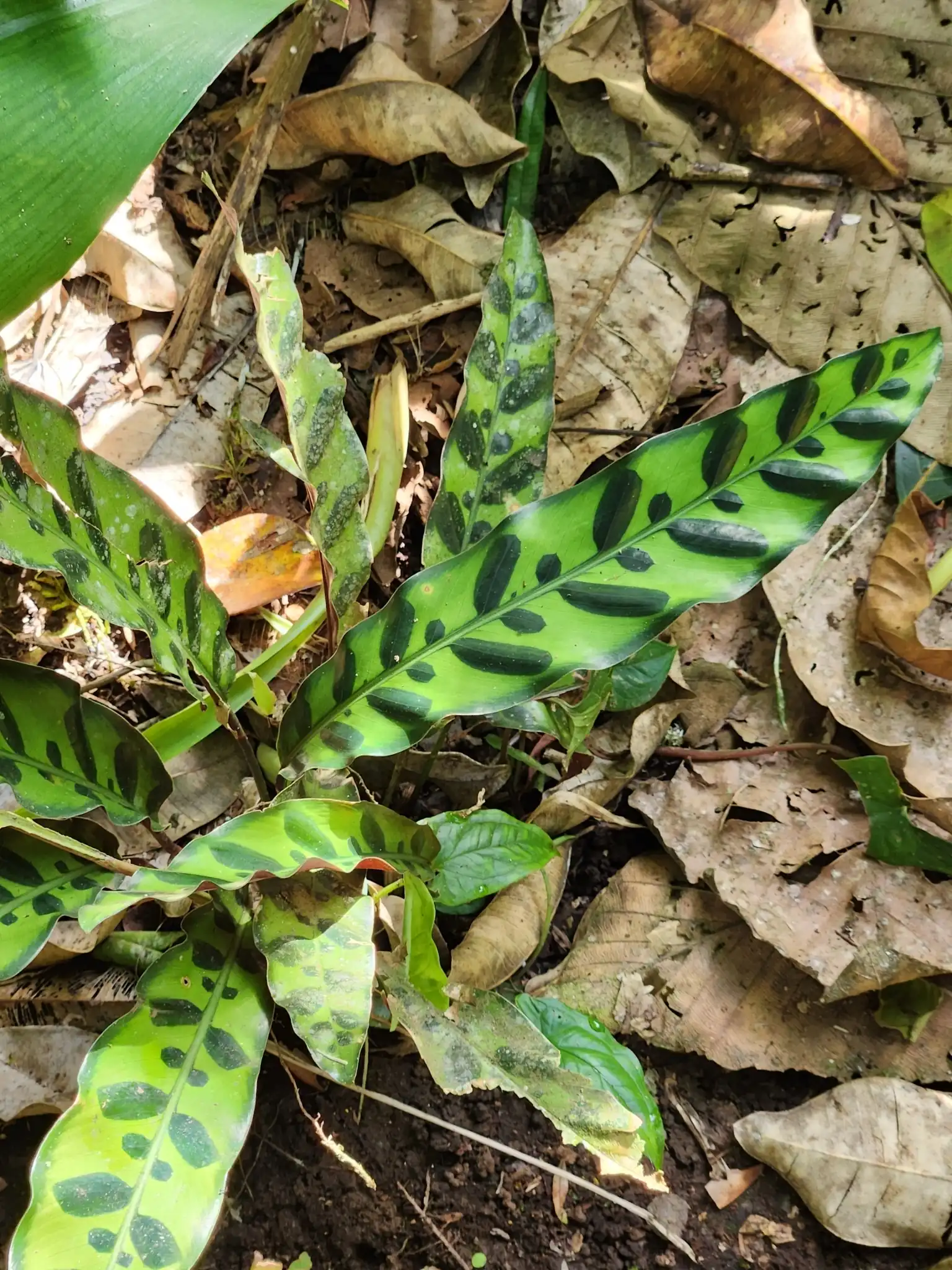
The foliage features a light green upper surface marked with alternating long and short dark green oval blotches resembling rattlesnake skin, contrasted by a deep purple underside. The leaf margins are strongly wavy, and new leaves unroll from the center of the clump with the same distinct variegation.
Uses & Benefits:
Essentials
At a Glance
Plant Type
Tropical
Height
30"
Width
22"
Light
Partial Sun, Shade
Water
Consistently moist, well-drained
Humidity
High (above 50-60%)
Lifespan
Perennial
Native To
Brazil
Toxicity
Non-toxic
Bloom period
Late spring – Early summer
In flower about 2 months of the year
Marketplace
Where to Buy
Shipping costs Year-round shipping Free shipping
Planting
How to Grow
- Select a peaty, organic-rich potting mix that retains moisture while draining freely.
- Position the plant in bright, indirect light, completely shielded from direct afternoon sun to prevent leaf scorching.
- Water thoroughly when the top inch of soil begins to dry, ensuring the pot never sits in standing water.
- Maintain ambient humidity above 50 percent by using a humidifier or placing the pot on a wet pebble tray.
Pro Tip
Avoid using municipal tap water, as accumulated fluoride and chlorine cause severe leaf tip burn; irrigate exclusively with rainwater, distilled water, or reverse-osmosis water.
Keep It Thriving
Care Guide
Do
- Use distilled water or rainwater to prevent mineral salt buildup.
- Prune dead or yellowing leaves at the base with sterile shears.
- Keep the ambient temperature above 60 degrees Fahrenheit year-round.
Don't
- Do not allow the potting medium to dry out completely.
- Do not expose the plant to cold drafts or air-conditioning vents.
- Do not apply full-strength fertilizer, which can damage the sensitive root system.
Seasonal Care Calendar
| Task | Jan | Feb | Mar | Apr | May | Jun | Jul | Aug | Sep | Oct | Nov | Dec |
|---|---|---|---|---|---|---|---|---|---|---|---|---|
| Fertilize | ||||||||||||
| Pest Check | ||||||||||||
| Propagate | ||||||||||||
| Prune |
Watch Out For
Pests & Diseases
Common Pests
Common Diseases
In the Garden
Landscape Uses & Companions
Landscape Uses
Companion Plants
Multiply
Propagation Methods
Good to Know
Common Questions
Rattlesnake Plant questions
When does Rattlesnake Plant bloom?
Rattlesnake Plant typically blooms in late spring through early summer. Exact timing shifts a week or two with your zone — Sow's bloom calendar maps it to your garden.
Does Rattlesnake Plant need full sun?
Rattlesnake Plant does best in part shade.
More Goeppertia to compare
Keep exploring
Explore the genus
Grow Rattlesnake Plant with confidence
See it in a design of your actual yard, get zone-matched care reminders, and track it season by season in your garden journal.