The Story
Plant Bio
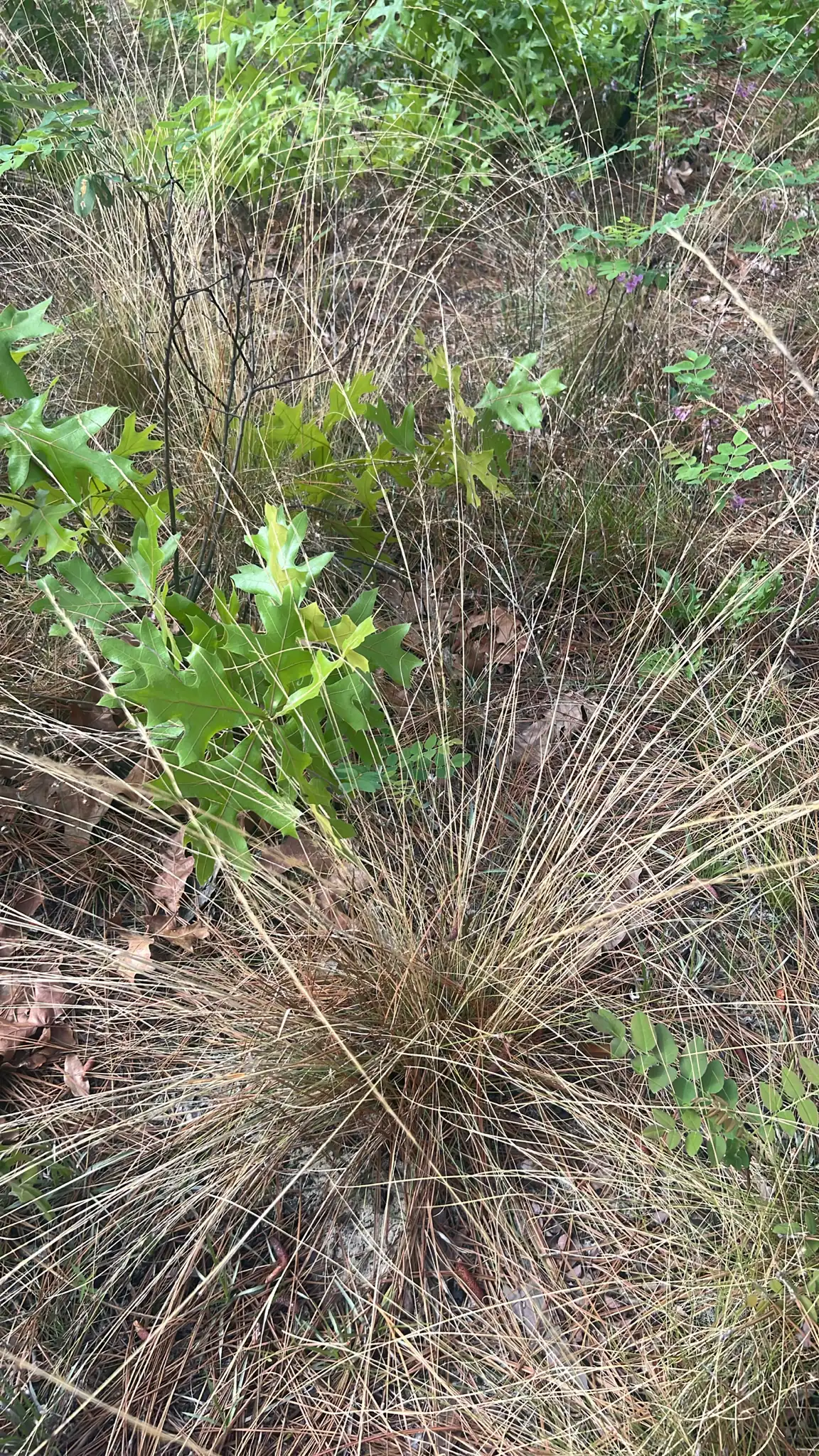
Aristida stricta, commonly known as wiregrass, is a densely tufted, perennial warm-season bunchgrass native to the southeastern United States coastal plain. It forms tight, upright clumps of rigid, needle-like green leaves that provide critical ground cover in fire-dependent pine flatwoods and savannas.
This species is distinguished by its exceptionally narrow, tightly rolled foliage and three-pronged seed awns that appear on spike-like panicles. Flowering and viable seed production are heavily dependent on the ecological cue of summer fires, without which the grass remains primarily vegetative.
Uses & Benefits:
Essentials
At a Glance
Plant Type
Grass
Height
48"
Width
36"
Light
Full Sun, Partial Sun
Zones
8, 9, 10
Water
Low to medium
Humidity
High
Lifespan
Perennial
Native To
North America
Toxicity
Non-toxic
Bloom period
Summer – Fall
In flower about 6 months of the year
Planting
How to Grow
- Select a site with full sun to light shade and extremely well-draining, nutrient-poor sandy soil with an acidic pH below 6.0.
- Plant containerized plugs in late winter or early spring, spacing them 12 to 18 inches apart to allow the clumps to mature.
- Water newly transplanted plugs regularly for the first few weeks to establish the root system, then cease supplemental irrigation.
- Avoid applying any fertilizer, as this species is adapted to sterile soils and excess nutrients will encourage competing weeds.
Pro Tip
Successful establishment requires nutrient-poor, highly acidic sand; planting wiregrass in fertile, heavy garden loam or clay leads to rapid root decline and failure.
Keep It Thriving
Care Guide
Do
- Grow in highly acidic, fast-draining sandy soil.
- Clean up dead foliage gently by hand in late winter if necessary.
- Divide established clumps strictly during late winter dormancy.
Don't
- Do not plant in heavy clay, fertile loam, or poorly drained wet spots.
- Do not apply nitrogen or phosphorus fertilizers.
- Do not cut harshly into the old, leafless woody crown bases during cleanup.
Seasonal Care Calendar
| Task | Jan | Feb | Mar | Apr | May | Jun | Jul | Aug | Sep | Oct | Nov | Dec |
|---|---|---|---|---|---|---|---|---|---|---|---|---|
| Divide | ||||||||||||
| Pest Check | ||||||||||||
| Plant | ||||||||||||
| Spring Cleanup |
Watch Out For
Pests & Diseases
Common Pests
Common Diseases
In the Garden
Landscape Uses & Companions
Landscape Uses
Multiply
Propagation Methods
Good to Know
Common Questions
Wiregrass questions
What zones can Wiregrass grow in?
Wiregrass is hardy in USDA Zones 8–10. Inside that range it survives winter in the ground; outside it, grow it as an annual or a container plant you protect.
Is Wiregrass deer resistant?
Yes — Wiregrass is rated deer-resistant. Deer typically pass it over, though extreme hunger can override any plant's defenses.
When does Wiregrass bloom?
Wiregrass typically blooms in summer through fall. Exact timing shifts a week or two with your zone — Sow's bloom calendar maps it to your garden.
Does Wiregrass need full sun?
Wiregrass does best in full sun to part shade. In hot climates, afternoon shade keeps blooms fresher longer.
Is Wiregrass drought tolerant?
Yes — once established (usually after the first full season), Wiregrass handles dry spells with minimal watering. Water deeply its first year to build the root system that makes that possible.
Keep exploring
Explore the genus
Hardy in your zone?
Grow Wiregrass with confidence
See it in a design of your actual yard, get zone-matched care reminders, and track it season by season in your garden journal.