The Story
Plant Bio
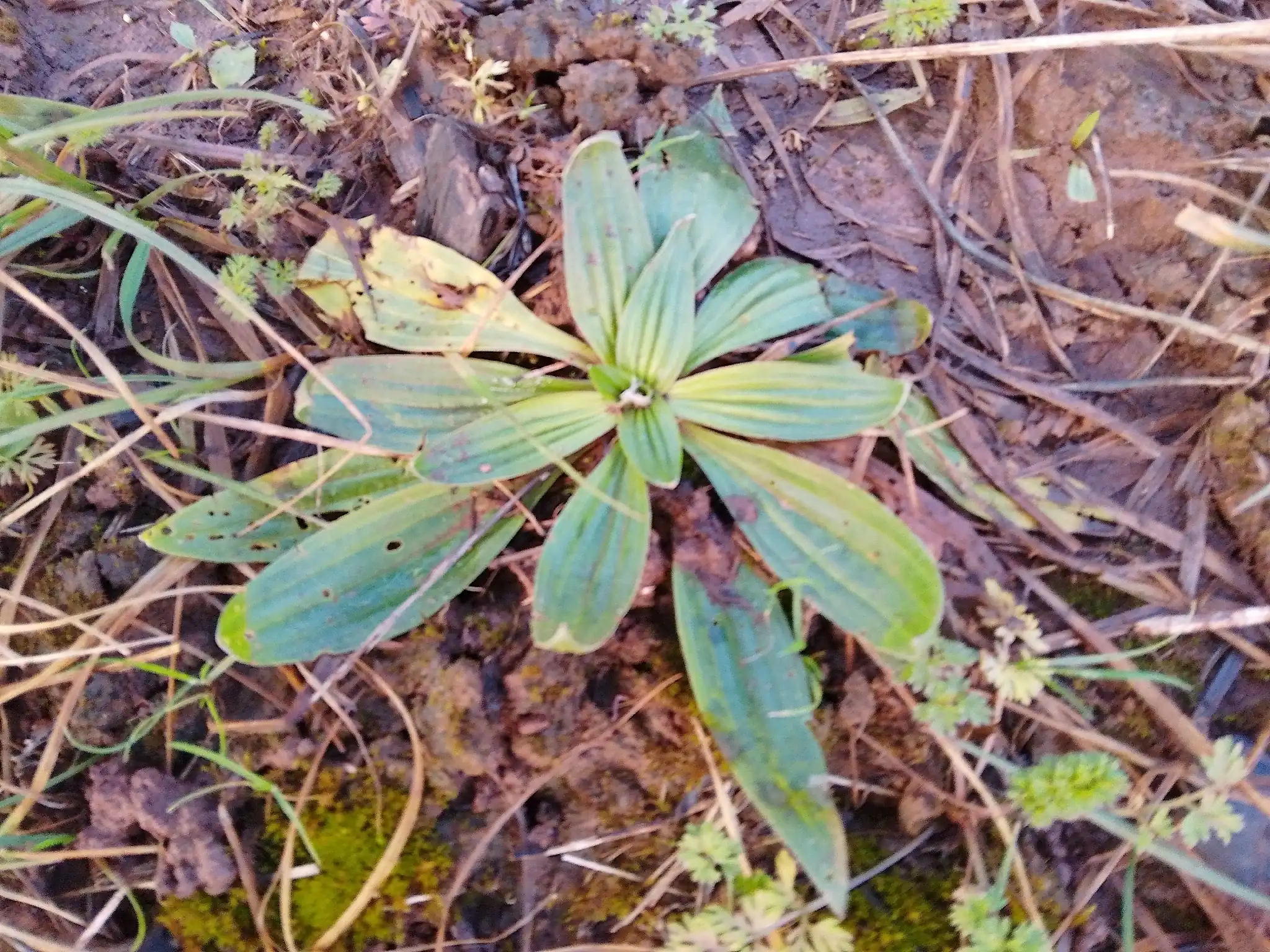
Plantago lanceolata is a herbaceous perennial forming a dense basal rosette of upright, narrow leaves supported by a deep, persistent taproot. The small, brownish flowers are clustered in dense ovoid spikes on long, furrowed stalks, distinguished by highly conspicuous protruding white stamens.
This species is highly adaptable, thriving in compacted, nutrient-poor soils and dry conditions where other plants struggle. The foliage features three to five prominent parallel veins running the length of each lanceolate leaf.
Uses & Benefits:
Essentials
At a Glance
Plant Type
Perennial
Height
22"
Width
12"
Light
Full Sun, Partial Sun
Zones
4, 5, 6, 7, 8, 9
Water
Low to moderate
Humidity
High
Lifespan
Perennial
Native To
Eurasia
Toxicity
Non-toxic
Bloom period
Spring – Fall
In flower about 9 months of the year
Planting
How to Grow
- Sow seeds directly in spring or fall into a prepared bed with moderate to good drainage.
- Position in a site receiving full sun to partial shade, as the plant tolerates a wide range of light levels.
- Water moderately during establishment, after which the deep taproot provides high drought tolerance.
- Avoid applying fertilizer, which causes weak, rank growth and is entirely unnecessary for this species.
Pro Tip
Remove spent flower scapes before they set seed to prevent aggressive self-seeding, and avoid hoeing the surface as any remaining taproot will quickly regenerate.
Keep It Thriving
Care Guide
Do
- Cut back spent flower spikes to limit aggressive self-seeding.
- Ensure the soil has moderate drainage to prevent root rot.
- Wear gloves when handling if you have sensitive skin, as leaf hairs can cause mild irritation.
Don't
- Do not fertilize, as the plant thrives in nutrient-poor soils.
- Do not attempt to eradicate by shallow hoeing, which leaves the taproot intact to re-sprout.
- Do not overwater or plant in waterlogged areas where the root system will decay.
Seasonal Care Calendar
| Task | Jan | Feb | Mar | Apr | May | Jun | Jul | Aug | Sep | Oct | Nov | Dec |
|---|---|---|---|---|---|---|---|---|---|---|---|---|
| Deadhead | ||||||||||||
| Pest Check | ||||||||||||
| Propagate | ||||||||||||
| Spring Cleanup |
Watch Out For
Pests & Diseases
Common Pests
Common Diseases
In the Garden
Landscape Uses & Companions
Landscape Uses
Companion Plants
Multiply
Propagation Methods
Good to Know
Common Questions
Ribwort Plantain questions
What zones can Ribwort Plantain grow in?
Ribwort Plantain is hardy in USDA Zones 4–9. Inside that range it survives winter in the ground; outside it, grow it as an annual or a container plant you protect.
Is Ribwort Plantain deer resistant?
Not reliably. Deer may browse Ribwort Plantain, especially tender spring growth — plan on repellents or fencing where pressure is high.
When does Ribwort Plantain bloom?
Ribwort Plantain typically blooms in spring through fall. Exact timing shifts a week or two with your zone — Sow's bloom calendar maps it to your garden.
Does Ribwort Plantain need full sun?
Ribwort Plantain does best in full sun to part shade. In hot climates, afternoon shade keeps blooms fresher longer.
Is Ribwort Plantain drought tolerant?
Yes — once established (usually after the first full season), Ribwort Plantain handles dry spells with minimal watering. Water deeply its first year to build the root system that makes that possible.
More Plantago to compare
Keep exploring
Explore the genus
Grow Ribwort Plantain with confidence
See it in a design of your actual yard, get zone-matched care reminders, and track it season by season in your garden journal.