
Species
 Eutrochium maculatumSpotted Joe-Pye Weed
1 other cultivar
The Story
Plant Bio
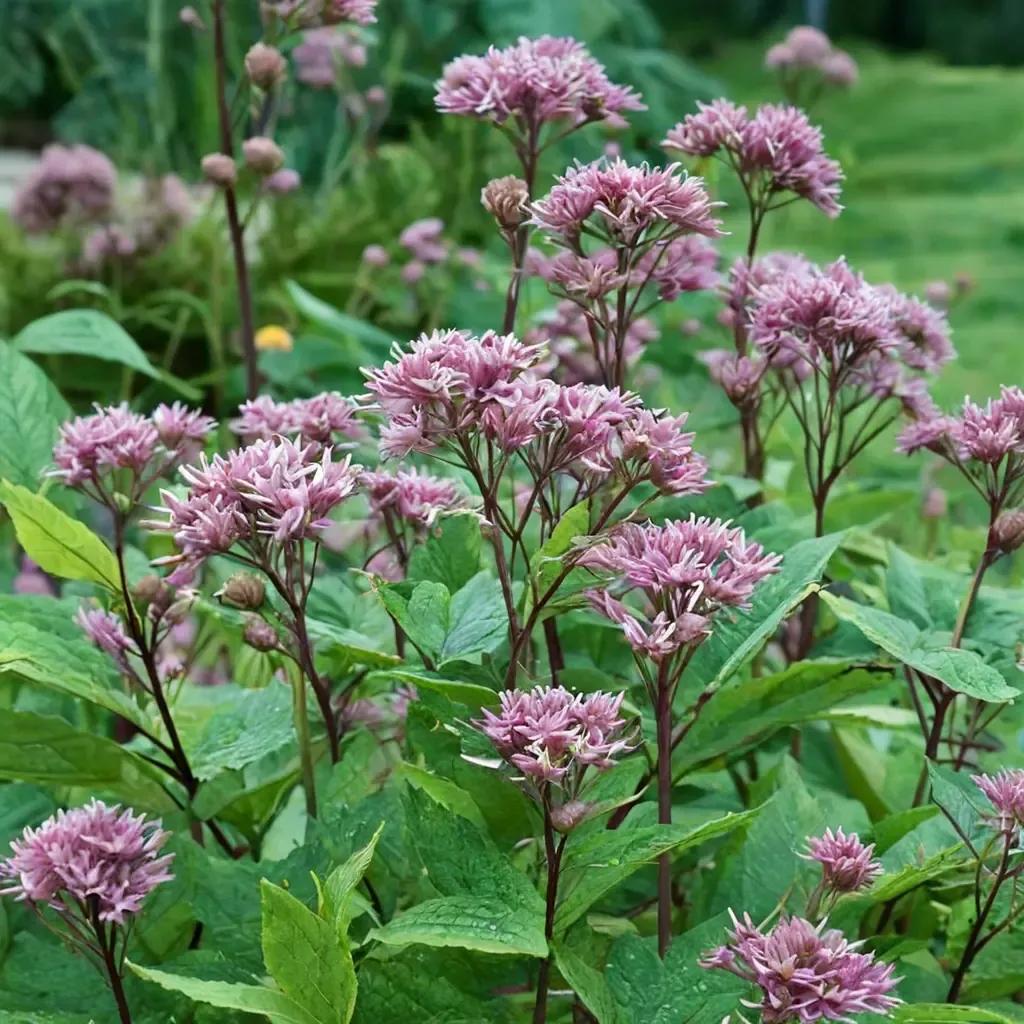
Eutrochium maculatum, or spotted Joe Pye weed, is a tall, stately North American native perennial. It features sturdy stems, whorled leaves, and large, dome-shaped clusters of tiny, fragrant flowers.
'Gateway' is a popular cultivar prized for its more compact size compared to the species, thicker wine-red stems, and enormous mauve-pink flower heads. It is less likely to flop and fits better in garden settings.
Uses & Benefits:
Essentials
At a Glance
Plant Type
Perennial
Height
66"
Width
42"
Light
Full Sun, Partial Sun
Zones
4, 5, 6, 7, 8
Water
High
Humidity
High
Lifespan
Long-lived perennial
Native To
Eastern and Central North America
Toxicity
Non-toxic
Bloom period
Mid-summer – Early fall
In flower about 3 months of the year
Marketplace
Where to Buy
Shipping costs Year-round shipping Free shipping
Planting
How to Grow
- Select a site with full sun and consistently moist to wet soil.
- Amend the soil with compost to improve water retention.
- Dig a hole twice the width of the container.
- Set the plant at the same depth it was in its pot.
- Backfill the hole and water deeply to settle the soil.
- Mulch to conserve soil moisture, especially during the first year.
Pro Tip
Pinch back stems by half in late spring (around Memorial Day) to create a shorter, bushier plant that won't need staking.
Keep It Thriving
Care Guide
Do
- Provide plenty of water, especially in full sun or during dry periods.
- Cut back stems in late fall or early spring.
- Give it plenty of space to reach its mature size.
- Divide clumps every 4-5 years to maintain vigor.
Don't
- Don't let the soil dry out completely, as this will stress the plant.
- Don't plant in deep shade, which causes weak, floppy growth.
- Avoid excessive fertilization, which can lead to weak stems.
- Don't remove spent flower heads if you want to feed birds with the seeds.
Seasonal Care Calendar
| Task | Jan | Feb | Mar | Apr | May | Jun | Jul | Aug | Sep | Oct | Nov | Dec |
|---|---|---|---|---|---|---|---|---|---|---|---|---|
| Divide | ||||||||||||
| Pinch | ||||||||||||
| Plant |
Watch Out For
Pests & Diseases
Common Diseases
In the Garden
Landscape Uses & Companions
Landscape Uses
Multiply
Propagation Methods
Good to Know
Common Questions
Joe Pye Weed questions
What zones can Joe Pye Weed grow in?
Joe Pye Weed is hardy in USDA Zones 4–8. Inside that range it survives winter in the ground; outside it, grow it as an annual or a container plant you protect.
Is Joe Pye Weed deer resistant?
Yes — Joe Pye Weed is rated deer-resistant. Deer typically pass it over, though extreme hunger can override any plant's defenses.
When does Joe Pye Weed bloom?
Joe Pye Weed typically blooms in mid-summer through early fall. Exact timing shifts a week or two with your zone — Sow's bloom calendar maps it to your garden.
Does Joe Pye Weed need full sun?
Joe Pye Weed does best in full sun to part shade. In hot climates, afternoon shade keeps blooms fresher longer.
More Eutrochium to compare
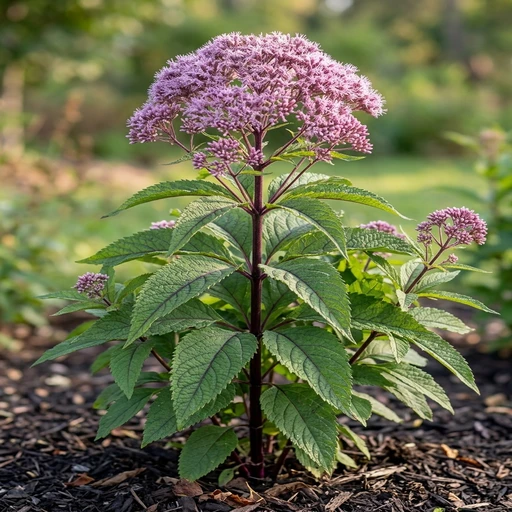
Sweet Joe-Pye Weed
Eutrochium purpureum
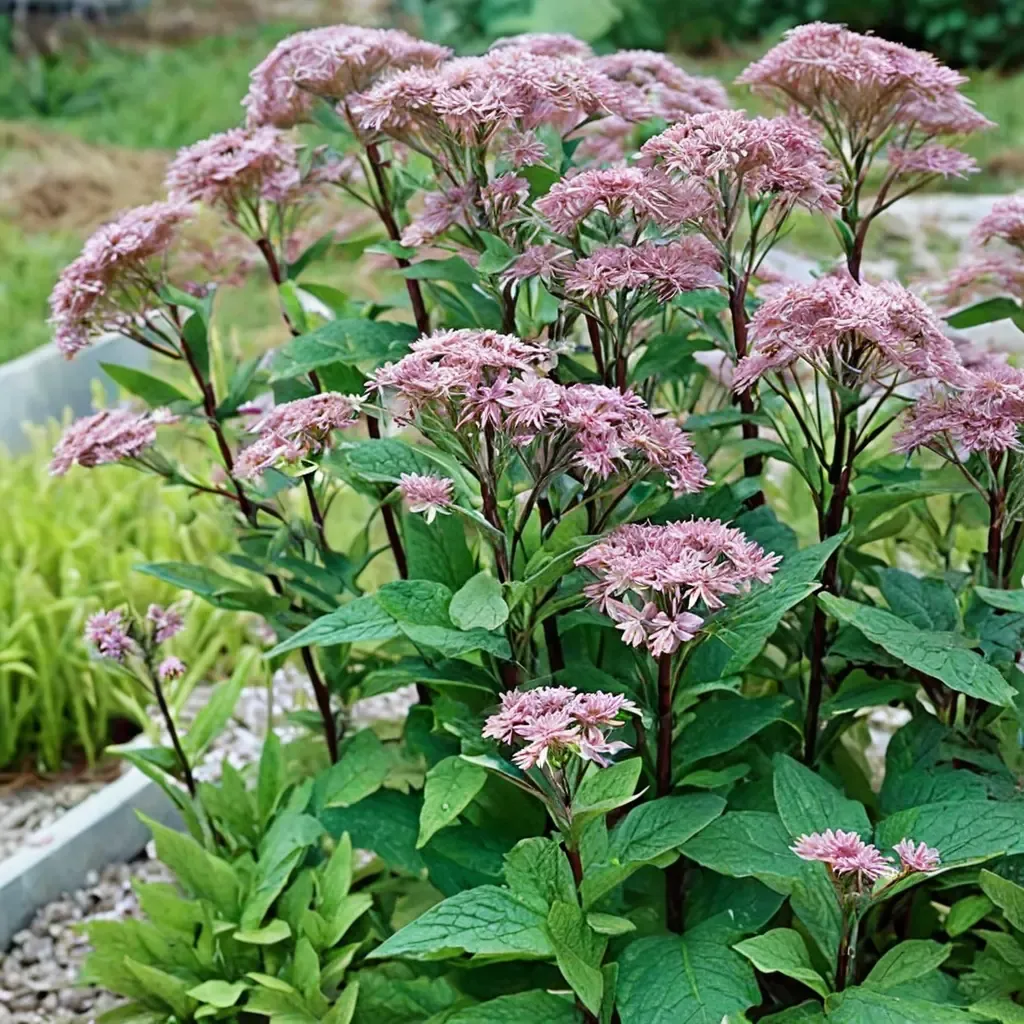
Little Joe Pye Weed
Eutrochium dubium 'Little Joe'
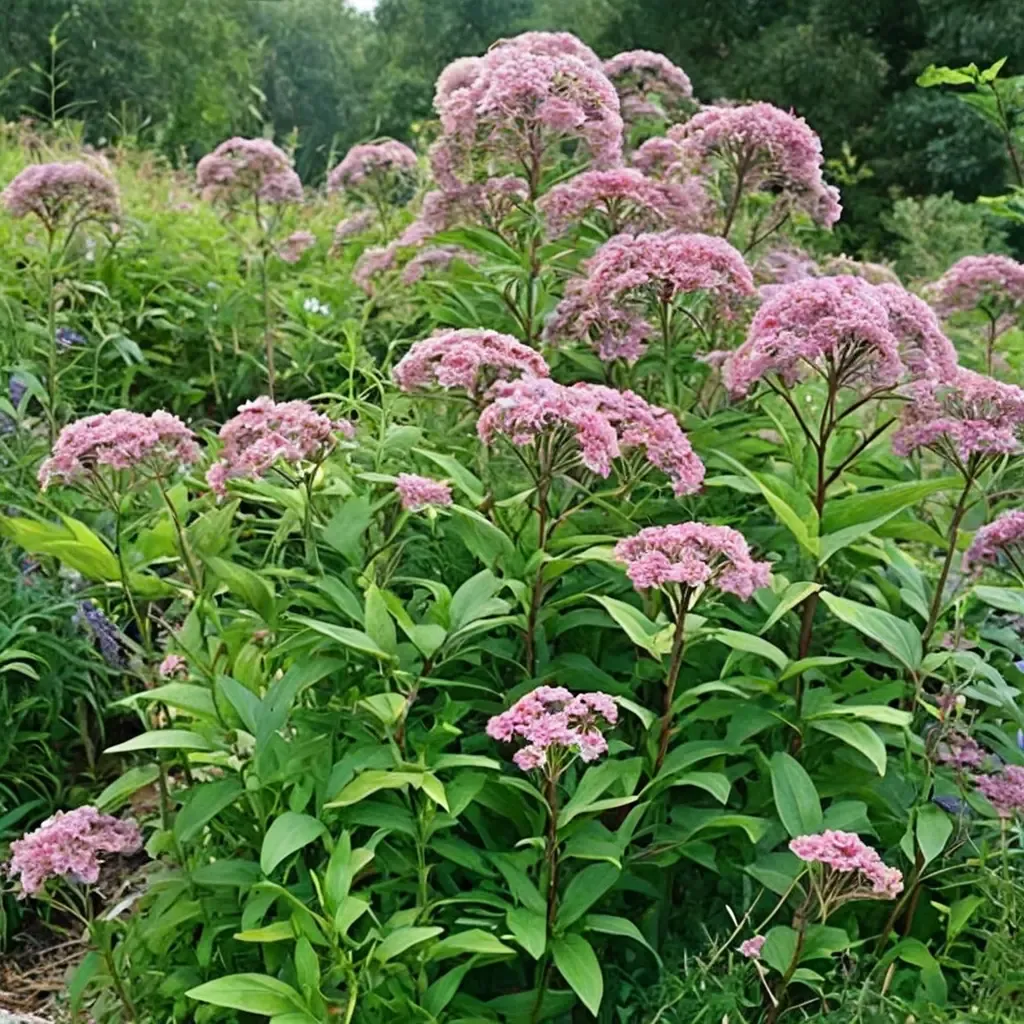
Hollow Joe-Pye Weed
Eutrochium fistulosum
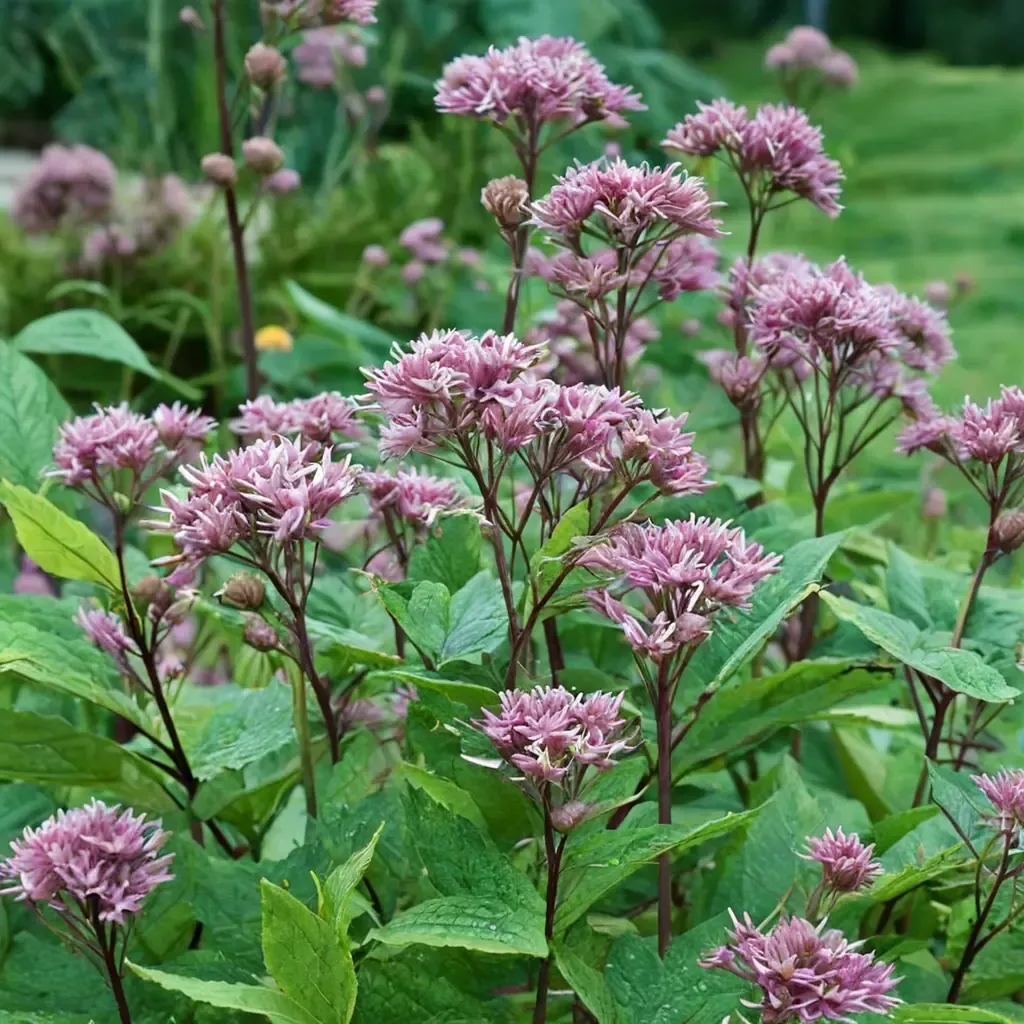
Red Dwarf Joe-Pye Weed
Eutrochium maculatum 'Red Dwarf'
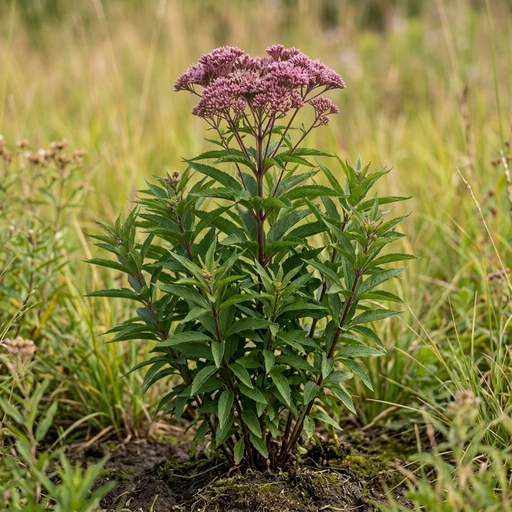
Baby Joe Pye Weed
Eutrochium dubium 'Baby Joe'
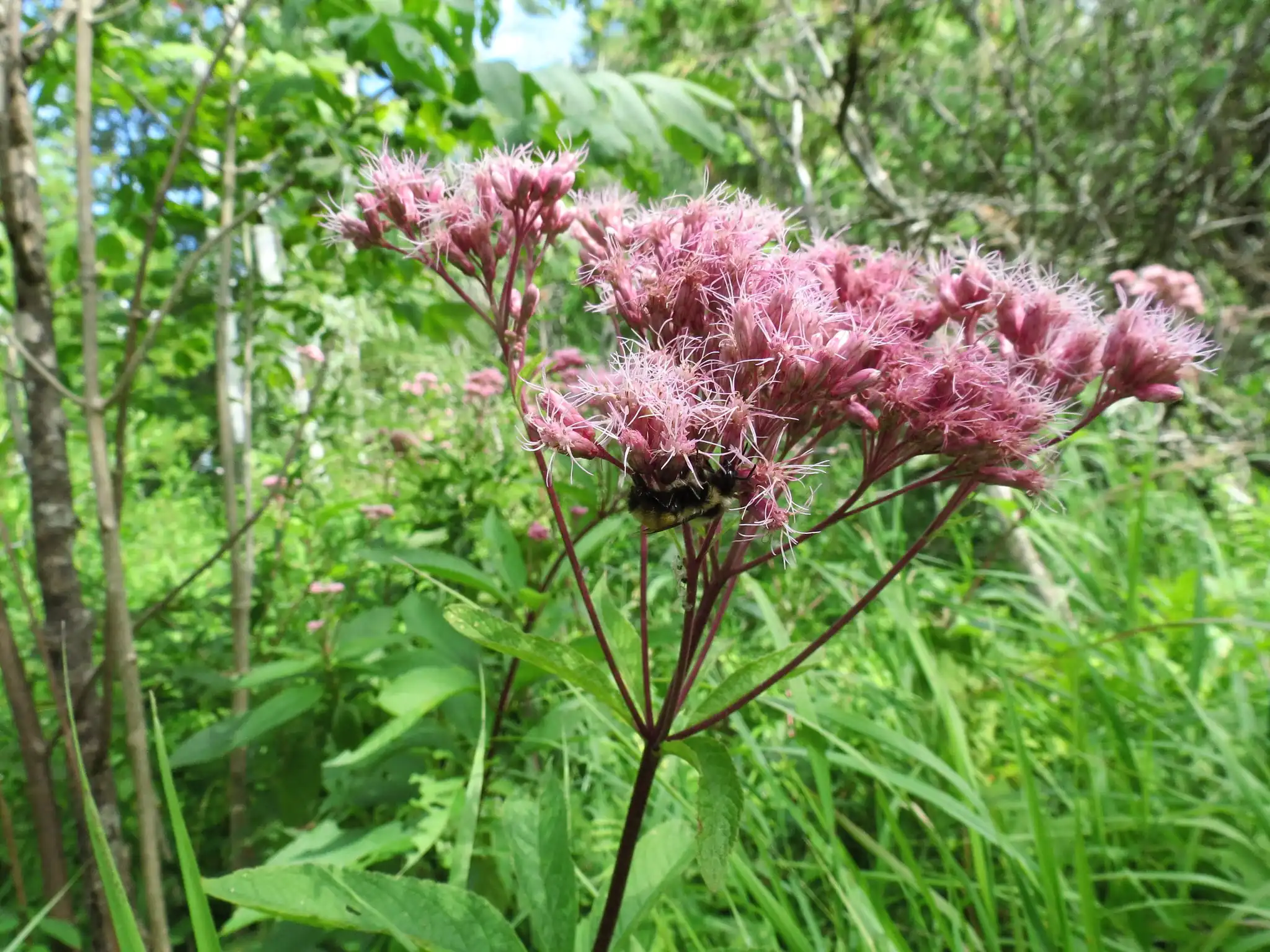
Spotted Joe-Pye Weed
Eutrochium maculatum
Keep exploring
Explore the genus
Hardy in your zone?
Grow Joe Pye Weed with confidence
See it in a design of your actual yard, get zone-matched care reminders, and track it season by season in your garden journal.