The Story
Plant Bio
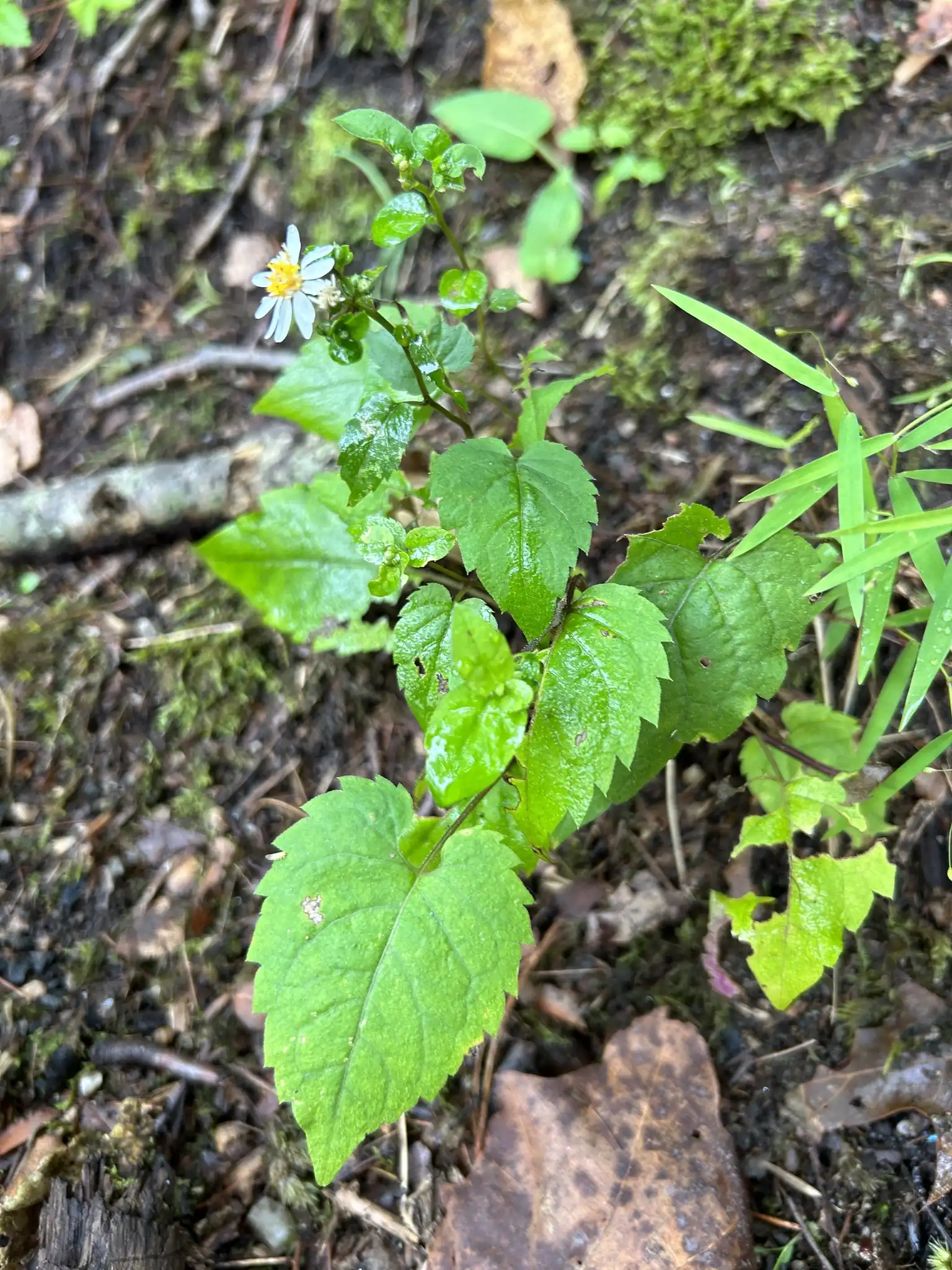
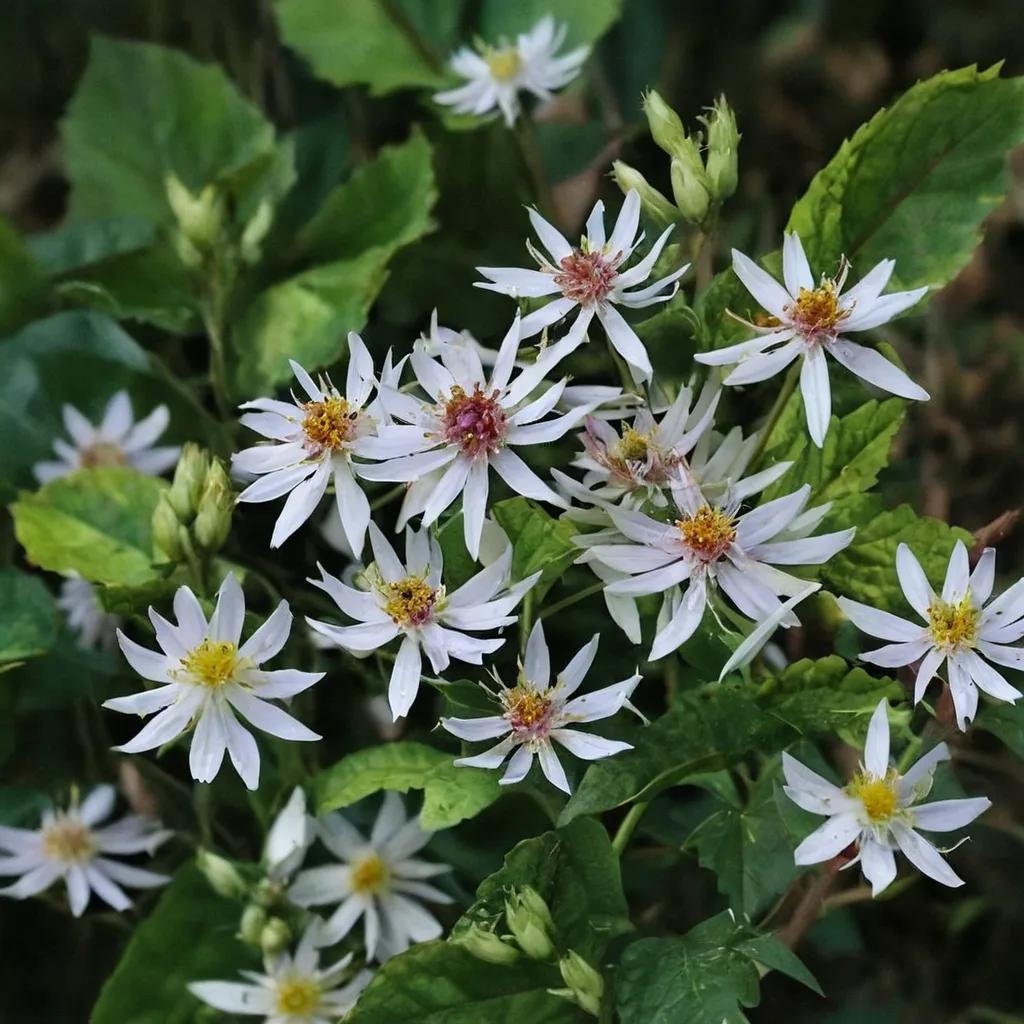
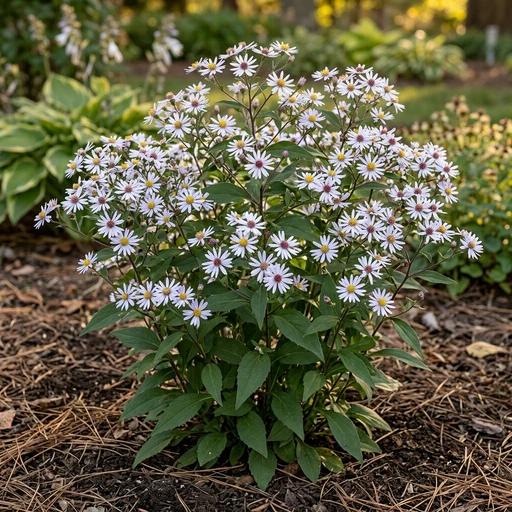
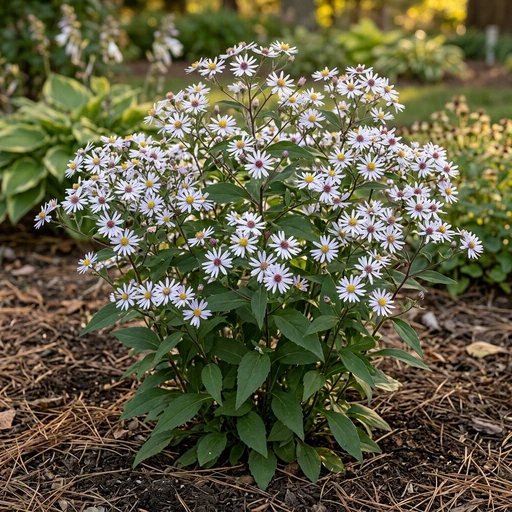
Eurybia divaricata, white wood aster, is a low mounding perennial native to eastern Canada and the United States, reaching one to three feet. Heart-shaped toothed leaves form a spreading clump, and from late summer into autumn the plant carries loose sprays of small white daisies on distinctly dark, near-black wiry stems.
It is one of the very best perennials for dry shade, flowering usefully under trees where most asters refuse, and the contrast of white flowers against near-black stems is a real design asset. It spreads gently by rhizome into drifts rather than clumps, which suits naturalised woodland planting.
Uses & Benefits:
Essentials
At a Glance
Plant Type
Perennial
Height
24"
Width
22"
Light
Partial Sun, Shade
Zones
4, 5, 6, 7, 8
Water
Low
Humidity
Moderate
Lifespan
Perennial
Native To
Eastern Canada and the United States
Toxicity
Non-toxic
Marketplace
Where to Buy
Shipping costs Year-round shipping Free shipping
Planting
How to Grow
- Plant in spring or autumn in well-drained soil.
- Choose partial to deep shade.
- Space about eighteen inches apart; it will knit together.
- Water through the first season, then rarely.
- Cut back in late winter after birds have taken the seed.
- Divide every few years if the centre thins.
Pro Tip
Use it where nothing else flowers — dry shade under mature trees is exactly the situation it was made for.
Keep It Thriving
Care Guide
Do
- Plant in dry shade under trees 🌳
- Let it drift by rhizome 🌱
- Leave seed heads for winter birds 🐦
- Divide if the centre thins ✂️
Don't
- Overwater it ❌
- Plant in full hot sun ❌
- Cut it down in autumn ❌
Seasonal Care Calendar
| Task | Jan | Feb | Mar | Apr | May | Jun | Jul | Aug | Sep | Oct | Nov | Dec |
|---|---|---|---|---|---|---|---|---|---|---|---|---|
| Divide | ||||||||||||
| Prune |
Watch Out For
Pests & Diseases
Common Pests
Common Diseases
In the Garden
Landscape Uses & Companions
Landscape Uses
Multiply
Propagation Methods
Good to Know
Common Questions
White Wood Aster questions
What zones can White Wood Aster grow in?
White Wood Aster is hardy in USDA Zones 4–8. Inside that range it survives winter in the ground; outside it, grow it as an annual or a container plant you protect.
Is White Wood Aster deer resistant?
Yes — White Wood Aster is rated deer-resistant. Deer typically pass it over, though extreme hunger can override any plant's defenses.
When does White Wood Aster bloom?
White Wood Aster typically blooms in late summer to fall through late fall. Exact timing shifts a week or two with your zone — Sow's bloom calendar maps it to your garden.
Does White Wood Aster need full sun?
White Wood Aster does best in part shade.
Is White Wood Aster drought tolerant?
Yes — once established (usually after the first full season), White Wood Aster handles dry spells with minimal watering. Water deeply its first year to build the root system that makes that possible.
More Eurybia to compare
Keep exploring
Explore the genus
Hardy in your zone?
Grow White Wood Aster with confidence
See it in a design of your actual yard, get zone-matched care reminders, and track it season by season in your garden journal.