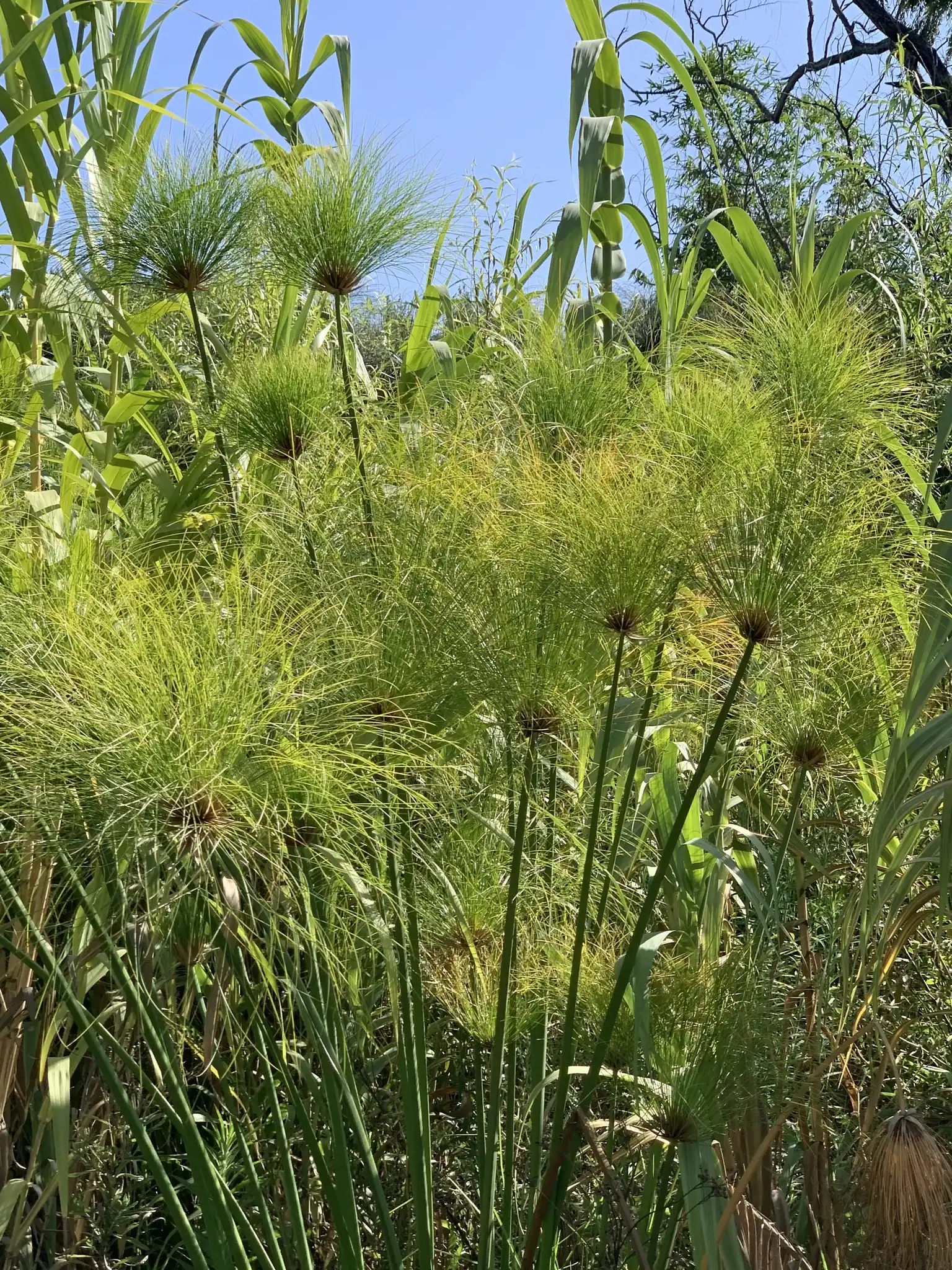
1 named cultivar
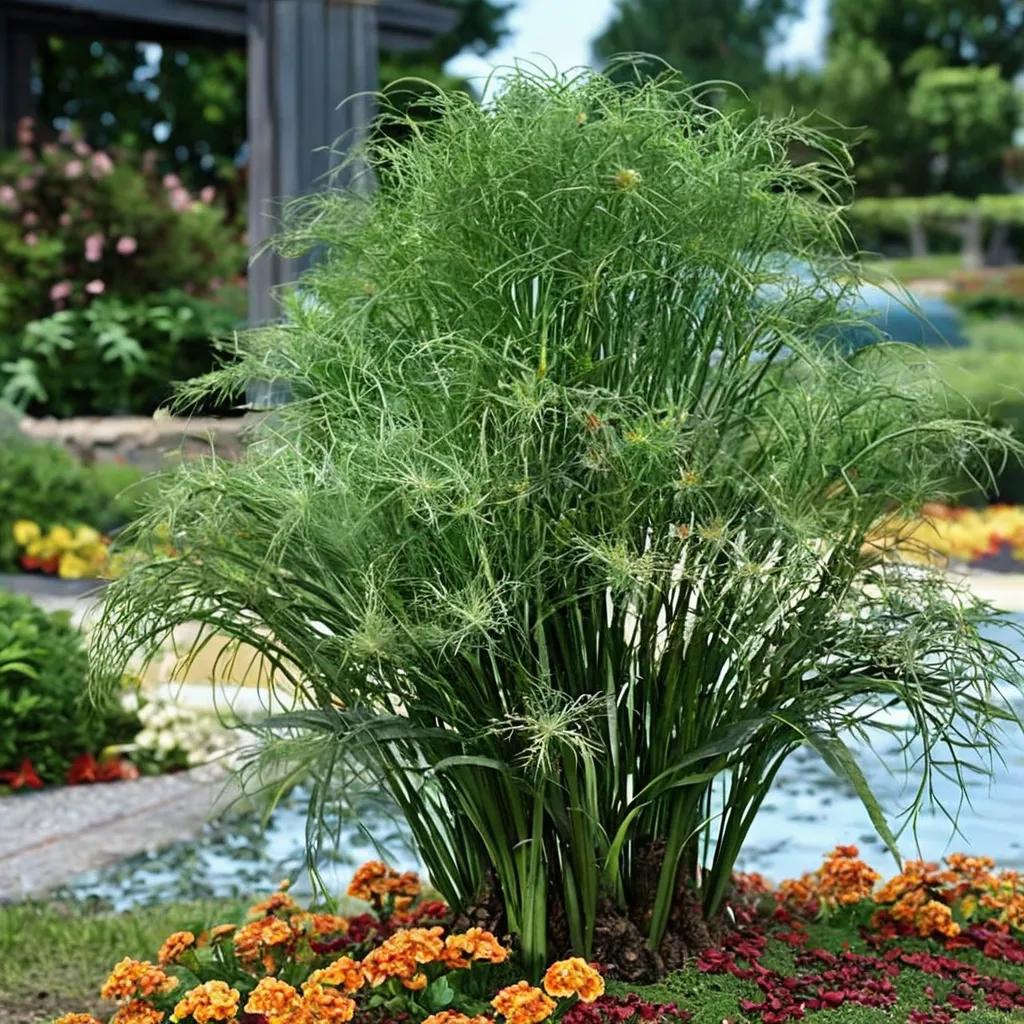
The Story
Plant Bio
Cyperus papyrus, papyrus, is a large clumping water plant from Africa and the Middle East, five to eight feet high and two to four across. Erect three-sided green culms rise from a thick rhizome, each topped by a dense mophead of very fine thread-like rays, and the plant carries only a few papery basal leaves.
This is the plant Egyptian papyrus was made from, by slicing the pith of the culms and pressing the strips into sheets. It is a true marginal — it grows in standing water and will not tolerate drying out, so a pot with no drainage hole standing in a saucer is the simplest way to keep it. Below zone 9 it is an annual or must overwinter indoors.
Uses & Benefits:
Essentials
At a Glance
Plant Type
Perennial
Height
78"
Width
36"
Light
Full Sun, Partial Sun
Zones
9, 10
Water
High
Humidity
High
Lifespan
Perennial
Native To
Africa and the Middle East
Toxicity
Non-toxic; rhizomes traditionally eaten
Planting
How to Grow
- Grow it in standing water or permanently saturated soil.
- Use a pot with no drainage hole, stood in a tray.
- Give it full sun to partial shade.
- Never let the rootball dry out, even briefly.
- Feed monthly through the growing season.
- Move it indoors before frost below zone 9.
Pro Tip
Stand it in water permanently — this is a marginal plant, and letting the pot drain even once sets it back badly.
Keep It Thriving
Care Guide
Do
- Keep it in standing water 💧
- Give it full sun for the tallest culms ☀️
- Feed monthly in growth 🧪
- Bring it in before frost 🏠
Don't
- Let the rootball dry out ❌
- Grow it in an ordinary free-draining pot ❌
- Leave it outdoors below zone 9 ❌
Seasonal Care Calendar
| Task | Jan | Feb | Mar | Apr | May | Jun | Jul | Aug | Sep | Oct | Nov | Dec |
|---|---|---|---|---|---|---|---|---|---|---|---|---|
| Bring In | ||||||||||||
| Feed |
Watch Out For
Pests & Diseases
Common Pests
Common Diseases
In the Garden
Landscape Uses & Companions
Landscape Uses
Companion Plants
Multiply
Propagation Methods
Good to Know
Common Questions
Papyrus questions
What zones can Papyrus grow in?
Papyrus is hardy in USDA Zones 9–10. Inside that range it survives winter in the ground; outside it, grow it as an annual or a container plant you protect.
Is Papyrus deer resistant?
Not reliably. Deer may browse Papyrus, especially tender spring growth — plan on repellents or fencing where pressure is high.
When does Papyrus bloom?
Papyrus typically blooms in summer through late summer. Exact timing shifts a week or two with your zone — Sow's bloom calendar maps it to your garden.
Does Papyrus need full sun?
Papyrus does best in full sun to part shade. In hot climates, afternoon shade keeps blooms fresher longer.
More Cyperus to compare
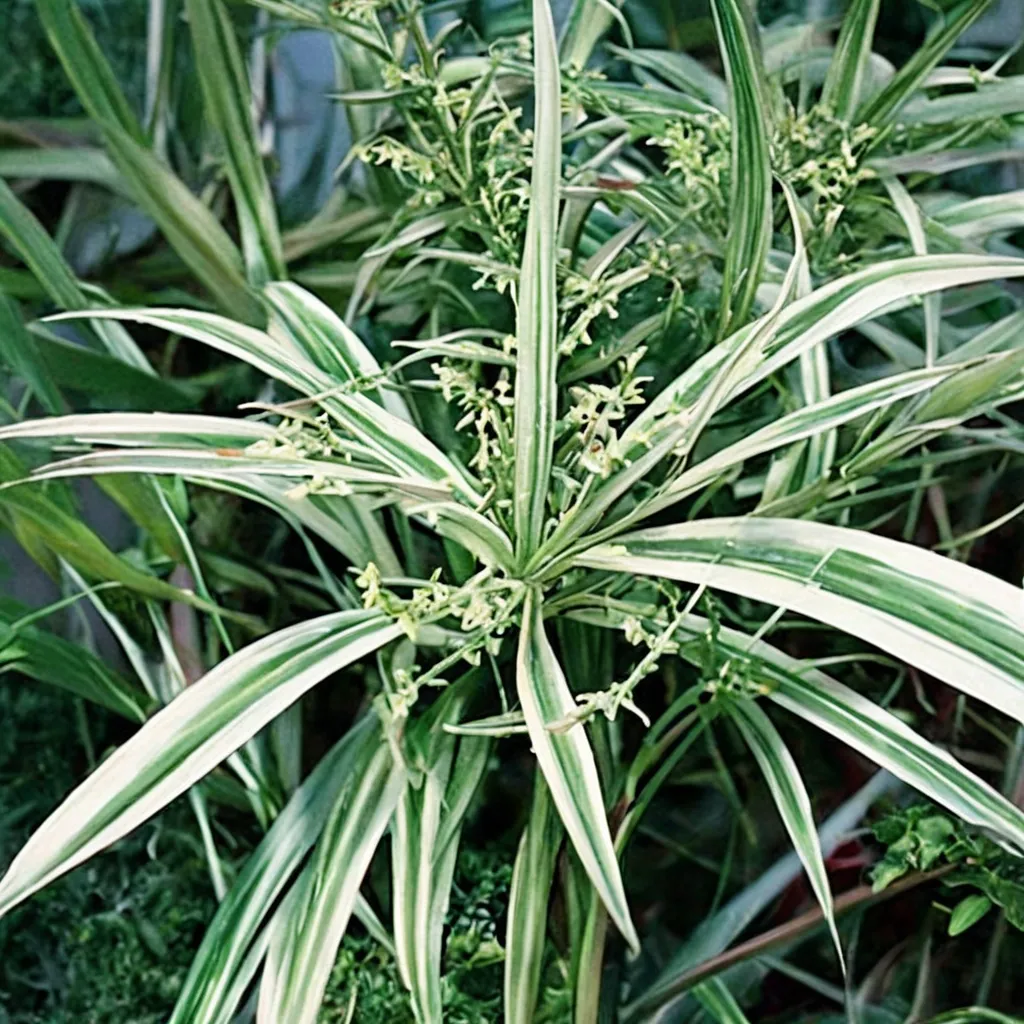
Variegated Dwarf Umbrella Grass
Cyperus albostriatus 'Variegatus'
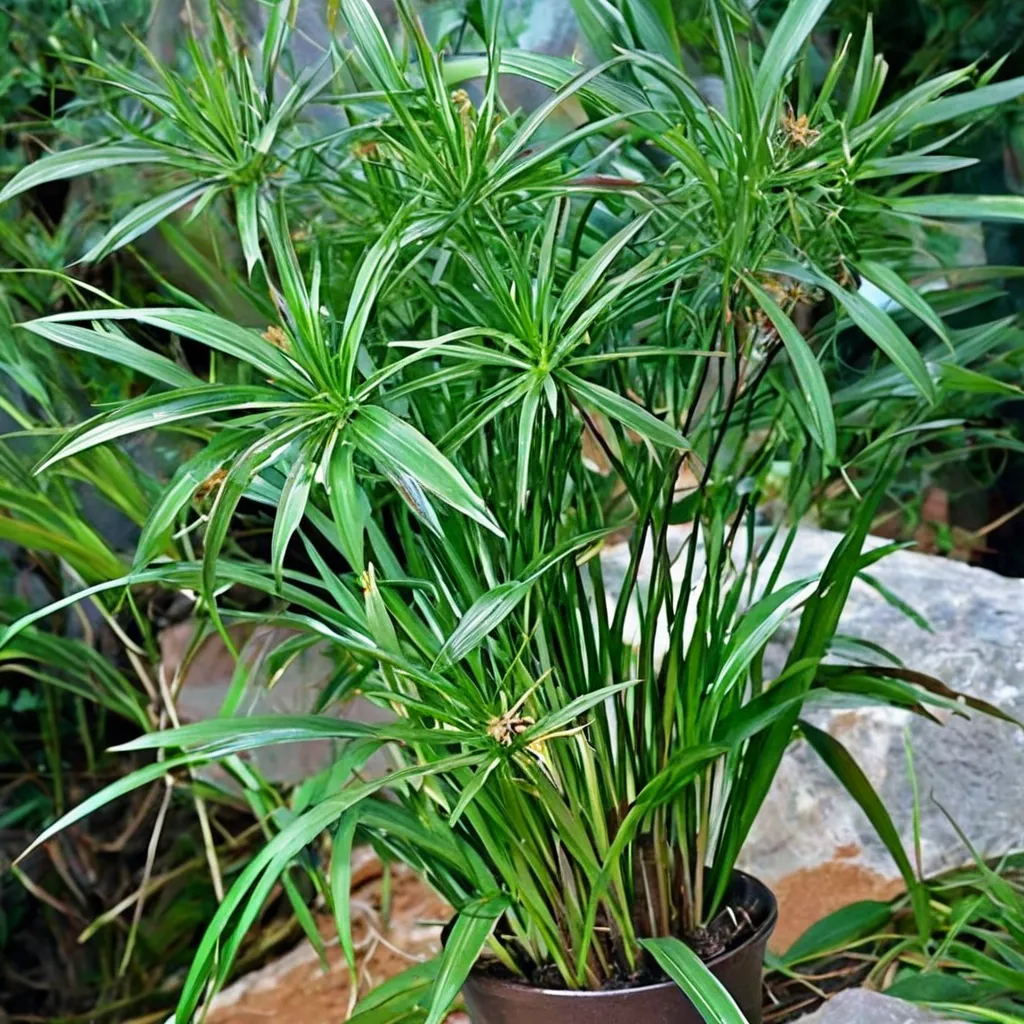
Umbrella Plant
Cyperus alternifolius
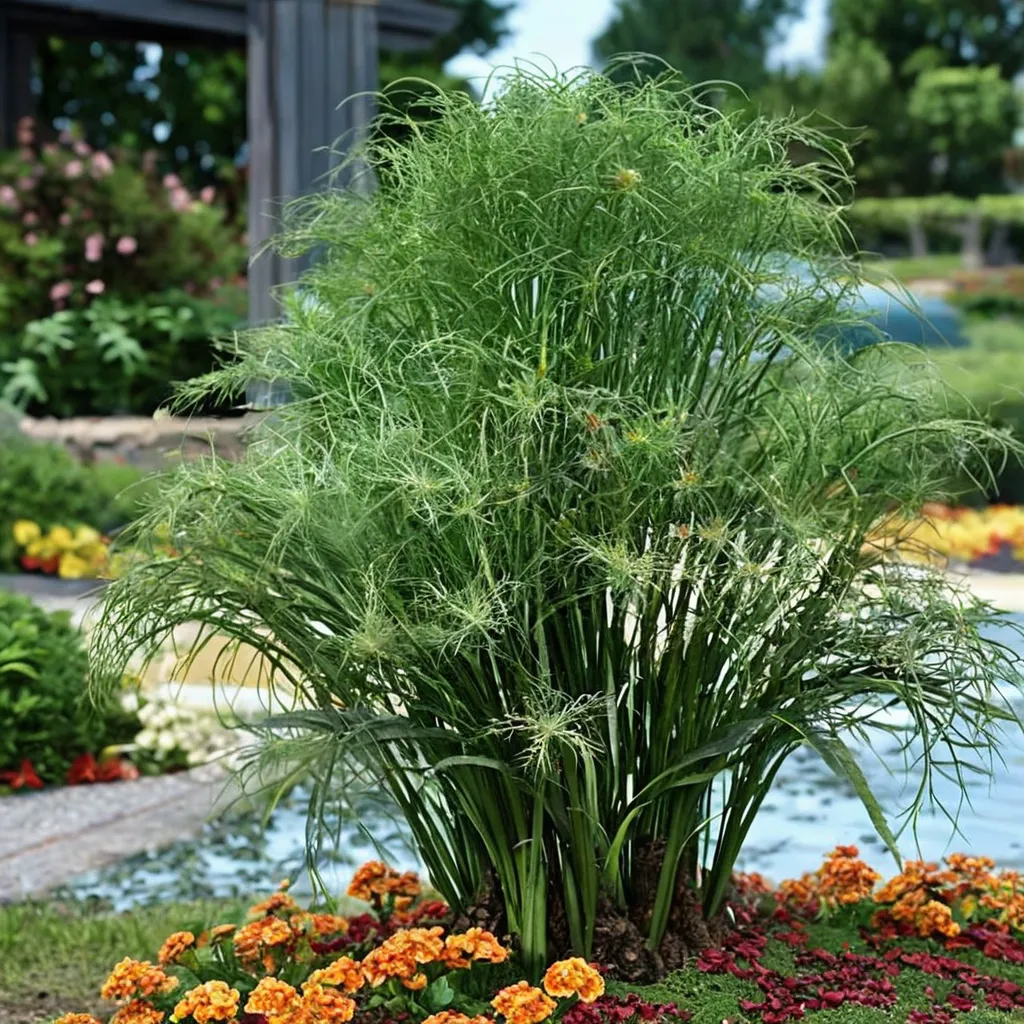
King Tut Papyrus
Cyperus papyrus 'King Tut'
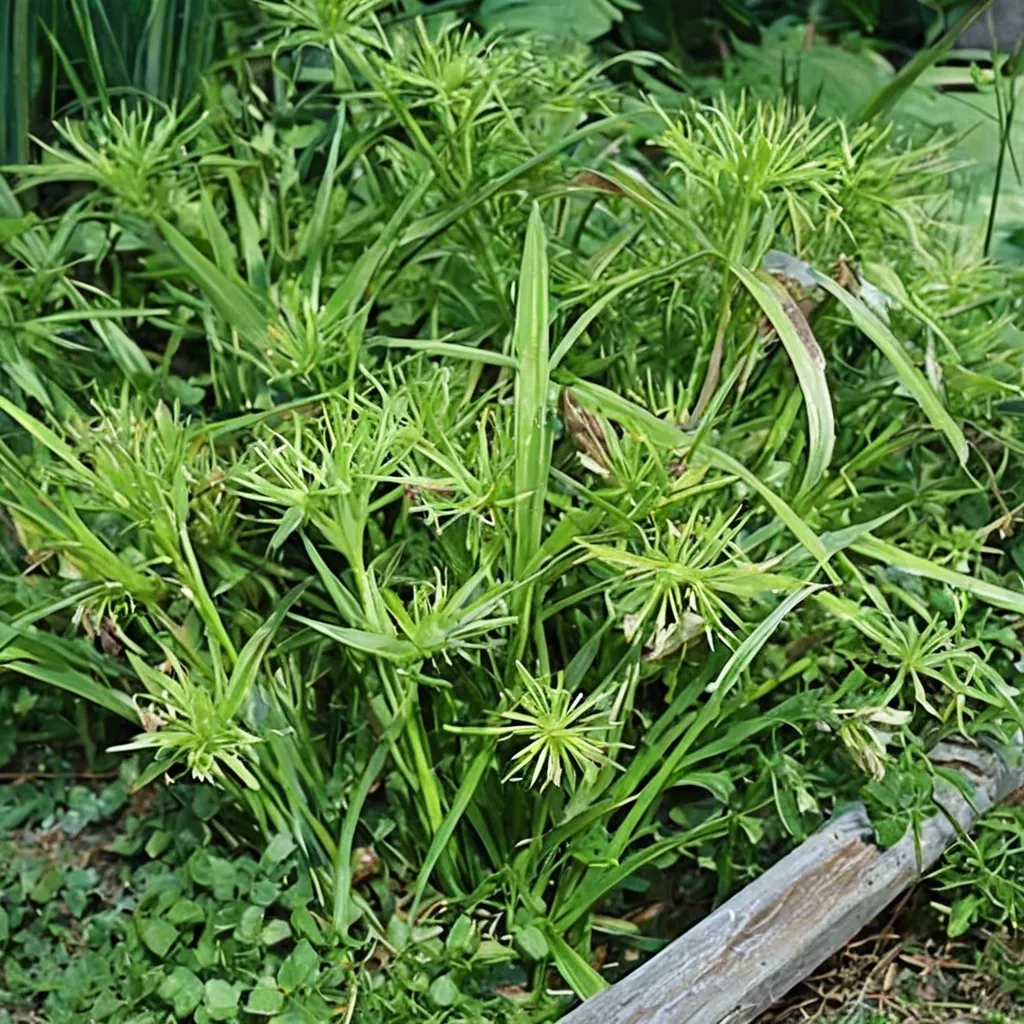
Dwarf Umbrella Plant
Cyperus albostriatus 'Nanus'
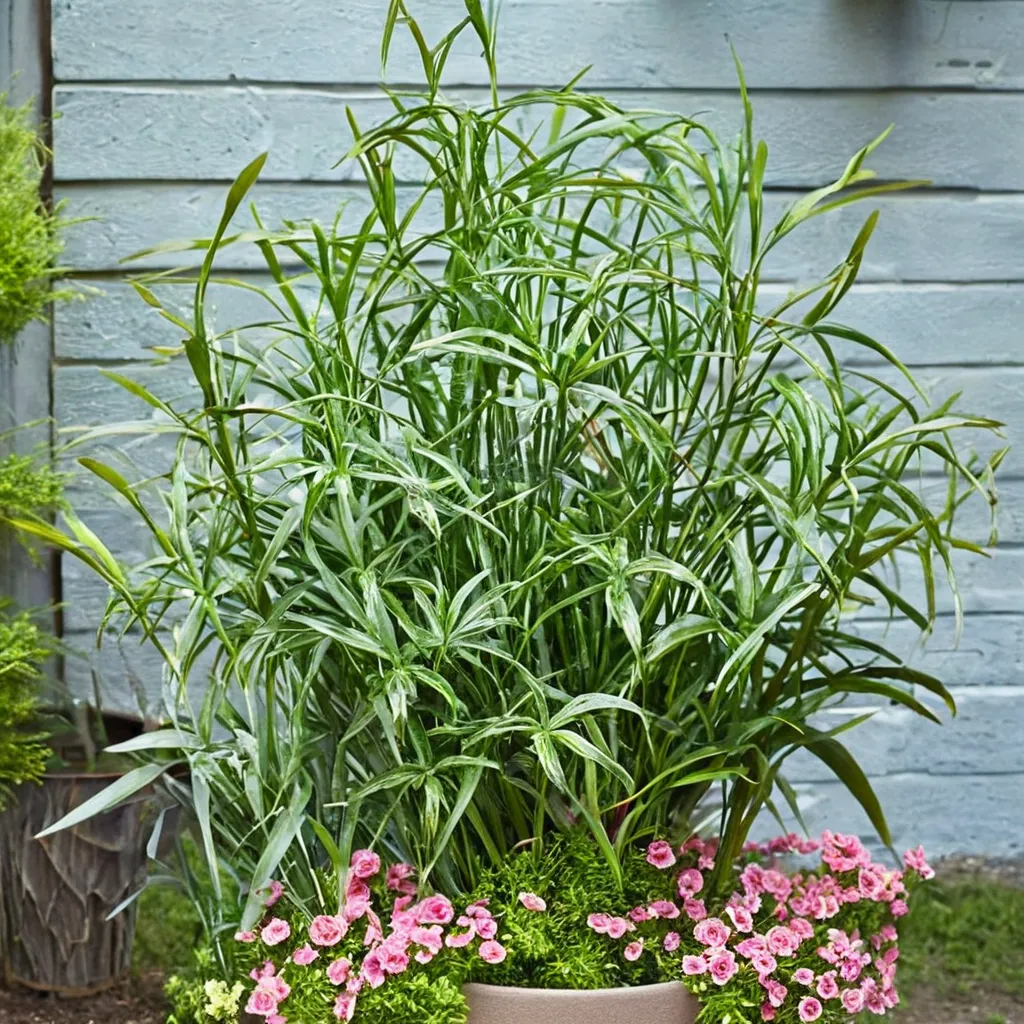
Baby Tut Dwarf Umbrella Plant
Cyperus involucratus 'Baby Tut'

Prince Tut Papyrus
Cyperus involucratus 'Prince Tut'
Keep exploring
Explore the genus
Hardy in your zone?
Grow Papyrus with confidence
See it in a design of your actual yard, get zone-matched care reminders, and track it season by season in your garden journal.