The Story
Plant Bio
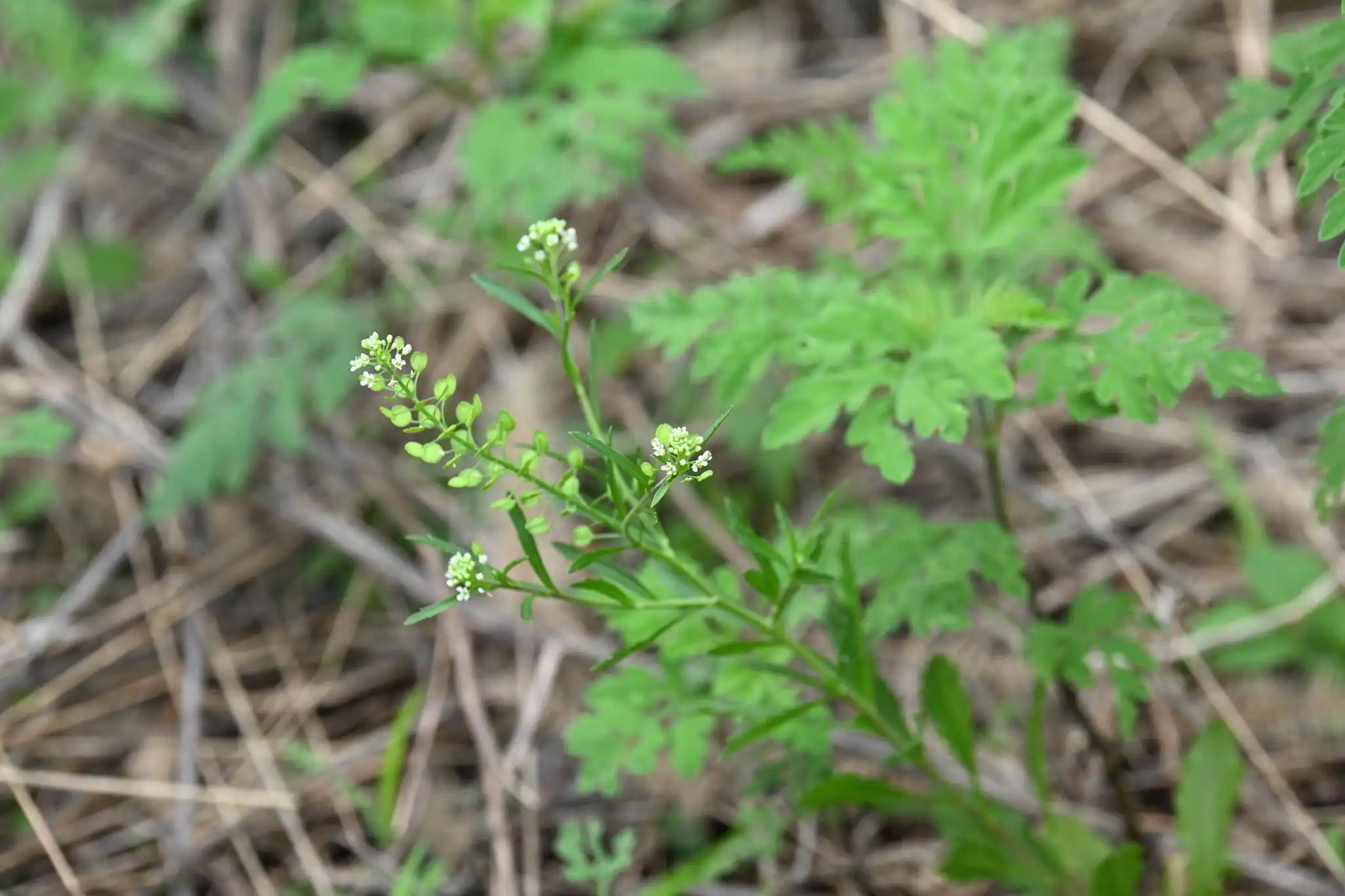
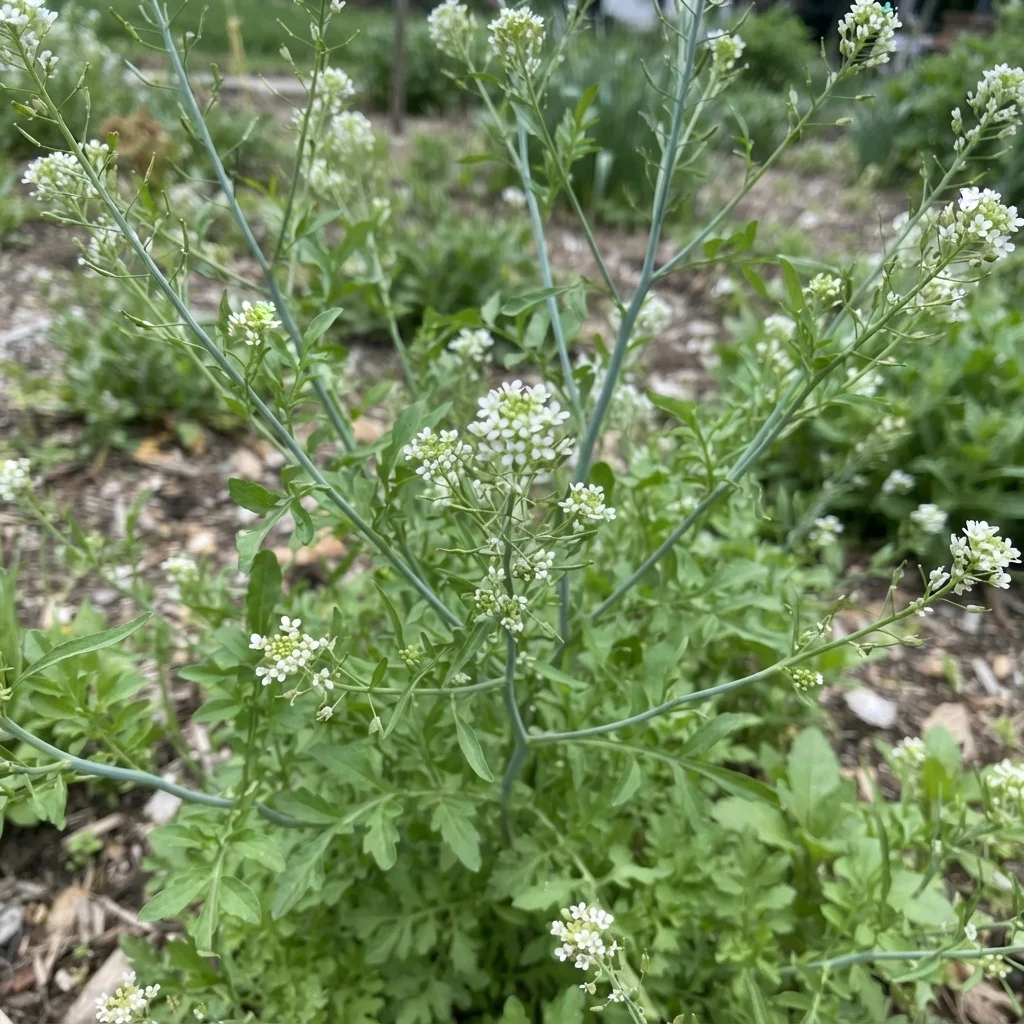
Lepidium virginicum is an erect, herbaceous annual or biennial native to North America, forming a basal rosette of lobed foliage before sending up branching stems. The plant produces elongated racemes of tiny, inconspicuous white flowers that mature into flat, circular, notched seed pods with a distinct peppery flavor.
This pioneer species thrives in highly disturbed, low-fertility soils where few other plants establish, utilizing a deep taproot to access moisture. The seed pods persist on the stems through the season, providing a reliable food source for local granivorous birds.
Uses & Benefits:
Essentials
At a Glance
Plant Type
Annual
Height
24"
Width
12"
Light
Full Sun
Zones
4, 5, 6, 7, 8, 9
Water
Low
Humidity
Moderate to high
Lifespan
Annual or biennial
Native To
North America
Toxicity
Non-toxic
Bloom period
Spring – Fall
In flower about 9 months of the year
Planting
How to Grow
- Sow seeds directly onto the soil surface in spring or fall, pressing them lightly into the ground without burying them.
- Select a site with full sun and dry, sandy, or gravelly soil that drains rapidly.
- Water lightly during the germination phase, then withhold supplemental watering once the root system establishes.
- Deadhead the spent flower spikes before the seed pods split if you wish to prevent aggressive self-seeding in adjacent beds.
Pro Tip
Avoid applying any fertilizer to this species; excess nutrients cause the stems to become weak and leggy, reducing the plant's natural drought and frost resistance.
Keep It Thriving
Care Guide
Do
- Sow seeds in poor, well-draining soil to maintain a compact growth habit.
- Allow the seed heads to mature if you want to attract finches and sparrows to the garden.
Don't
- Do not fertilize, as excess nutrients trigger weak, floppy stem growth.
- Do not plant in heavy, poorly drained clay soils where root rot easily develops.
Seasonal Care Calendar
| Task | Jan | Feb | Mar | Apr | May | Jun | Jul | Aug | Sep | Oct | Nov | Dec |
|---|---|---|---|---|---|---|---|---|---|---|---|---|
| Deadhead | ||||||||||||
| Pest Check | ||||||||||||
| Propagate | ||||||||||||
| Spring Cleanup |
Watch Out For
Pests & Diseases
Common Pests
Common Diseases
In the Garden
Landscape Uses & Companions
Landscape Uses
Companion Plants
Multiply
Propagation Methods
Good to Know
Common Questions
Virginia Peppergrass questions
What zones can Virginia Peppergrass grow in?
Virginia Peppergrass is hardy in USDA Zones 4–9. Inside that range it survives winter in the ground; outside it, grow it as an annual or a container plant you protect.
When does Virginia Peppergrass bloom?
Virginia Peppergrass typically blooms in spring through fall. Exact timing shifts a week or two with your zone — Sow's bloom calendar maps it to your garden.
Does Virginia Peppergrass need full sun?
Virginia Peppergrass does best in full sun (6+ hours).
Is Virginia Peppergrass drought tolerant?
Yes — once established (usually after the first full season), Virginia Peppergrass handles dry spells with minimal watering. Water deeply its first year to build the root system that makes that possible.
More Lepidium to compare
Keep exploring
Explore the genus
Grow Virginia Peppergrass with confidence
See it in a design of your actual yard, get zone-matched care reminders, and track it season by season in your garden journal.