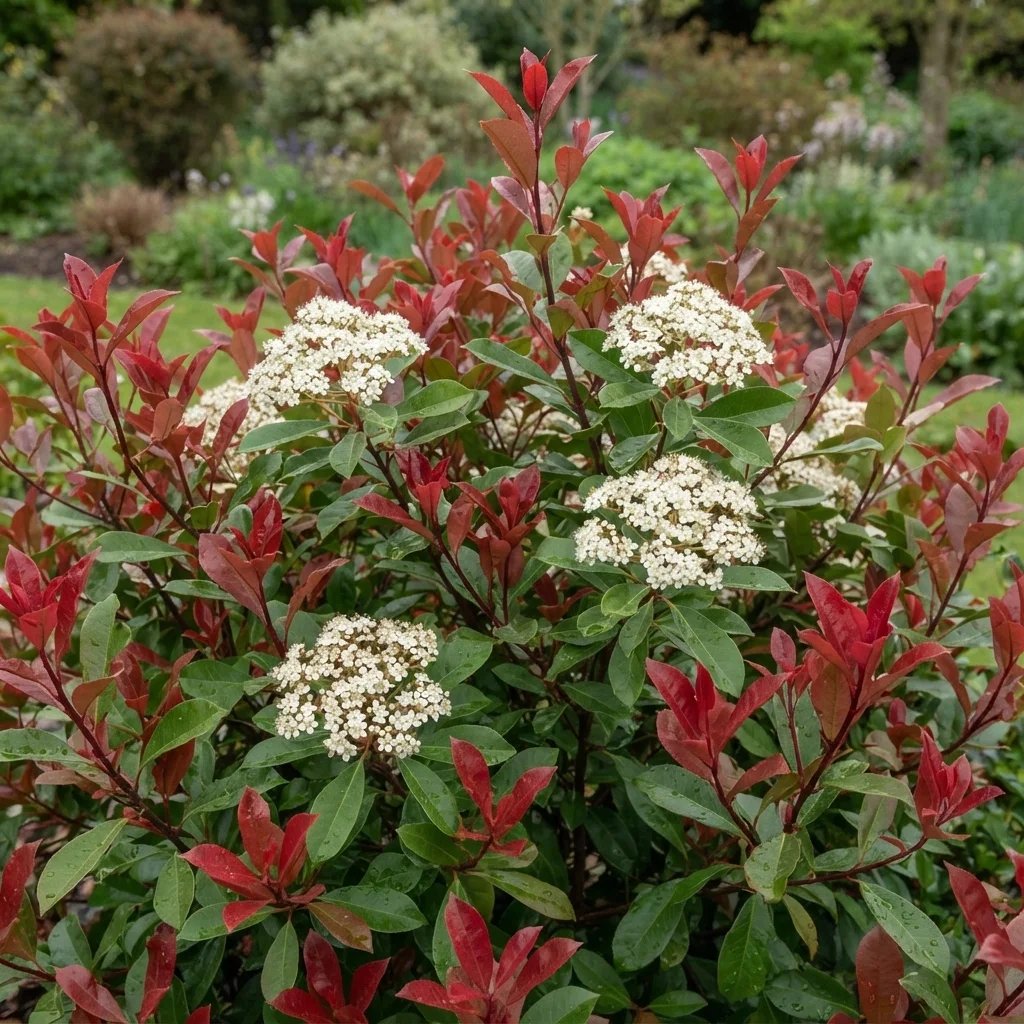
Species
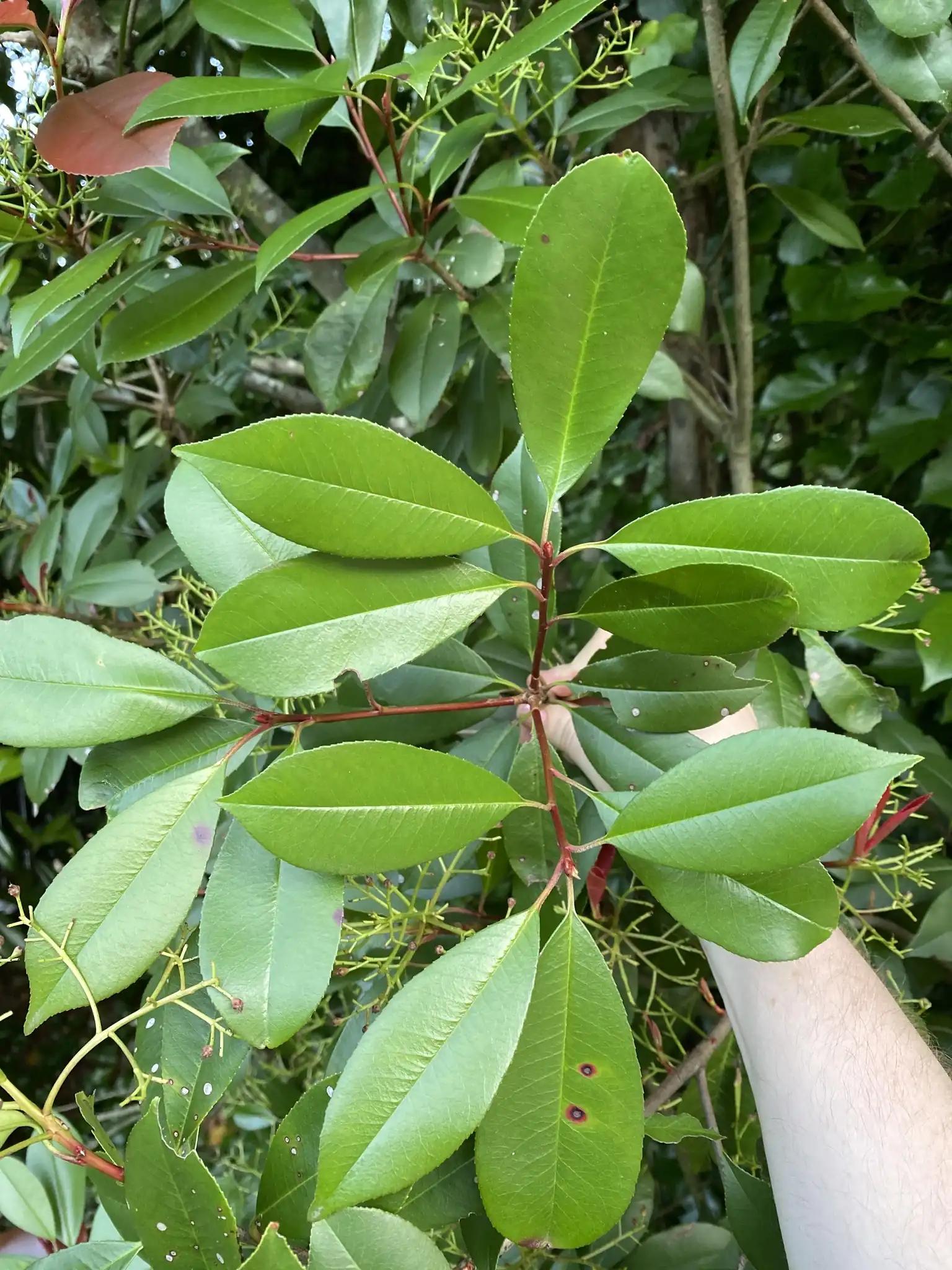 Photinia x fraseriRed Tip Photinia
2 other cultivars
The Story
Plant Bio
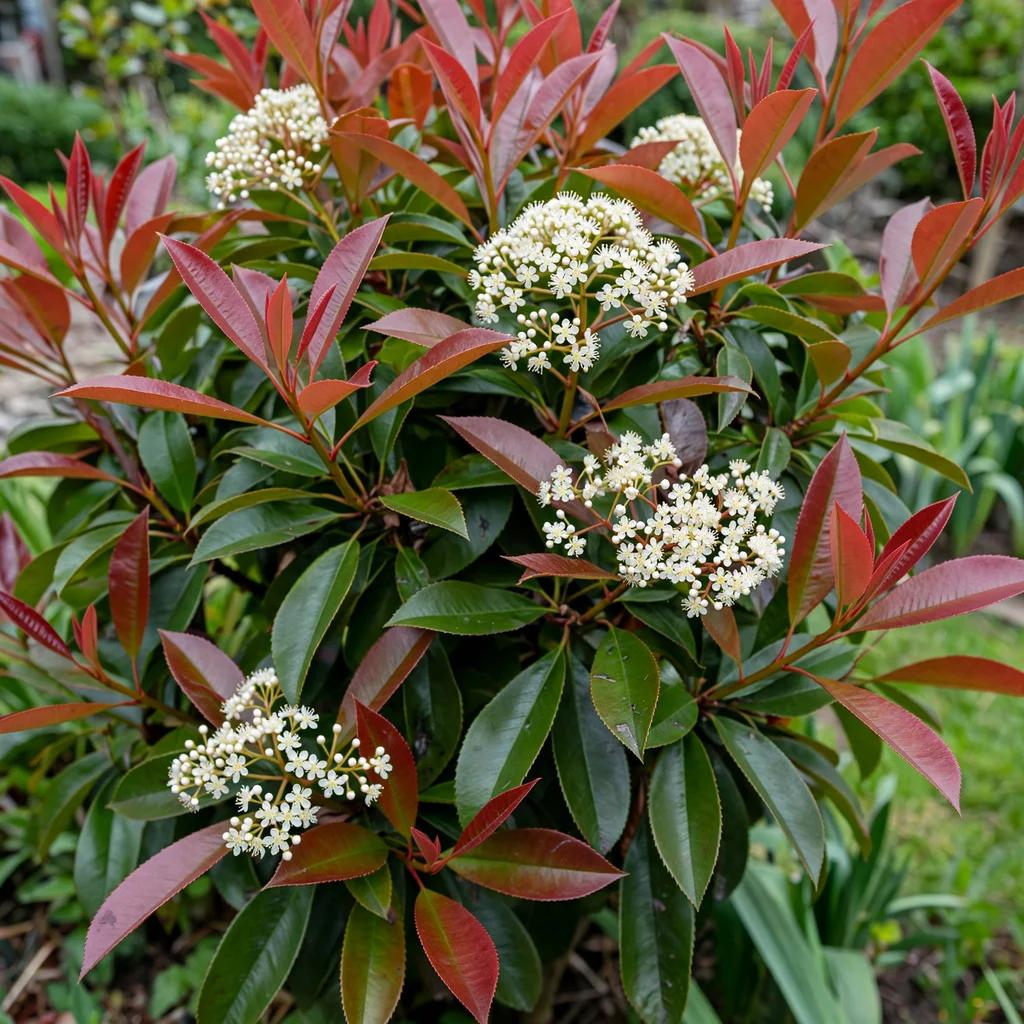
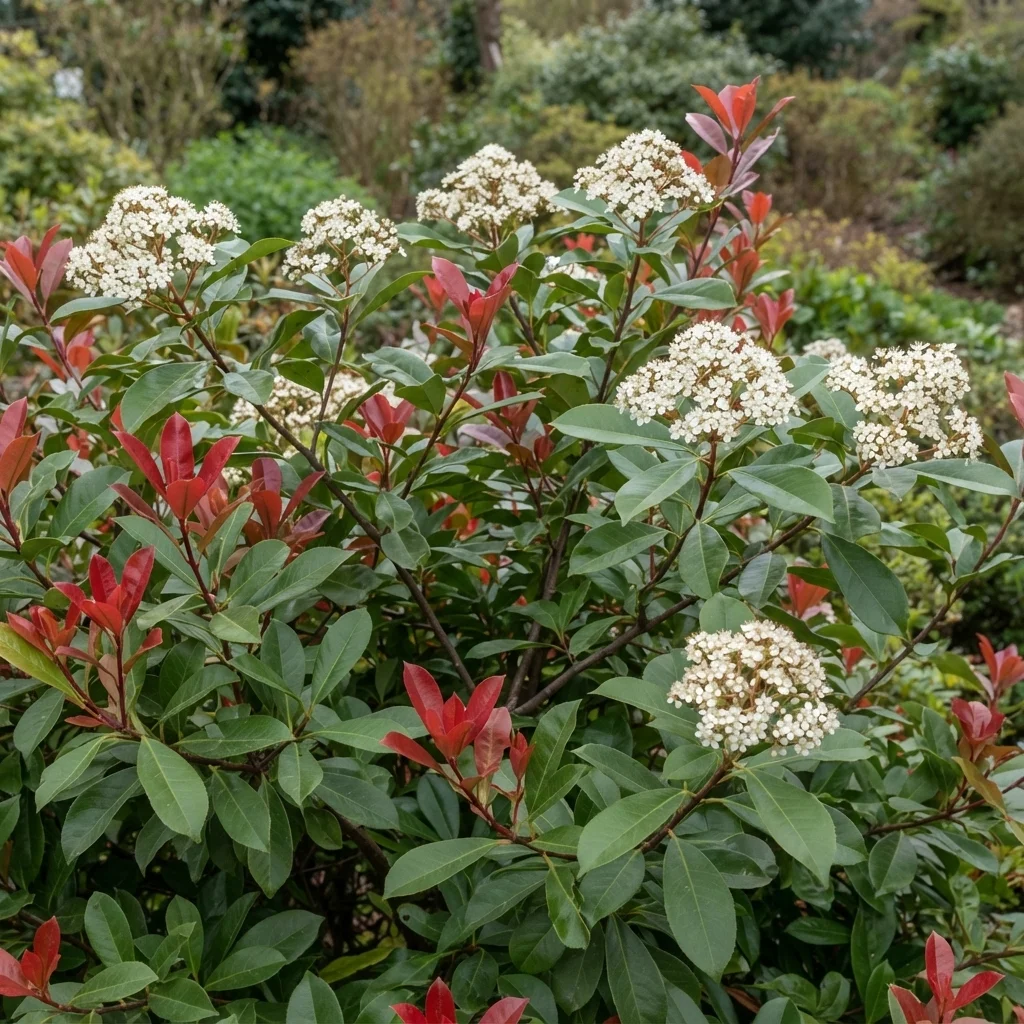
Photinia × fraseri is a dense, evergreen hybrid of garden origin, bred from the Asian parent species Photinia glabra and Photinia serratifolia. The shrub maintains an upright-oval to rounded habit with leathery, finely serrated foliage and produces dense, creamy-white terminal panicles in mid-spring.
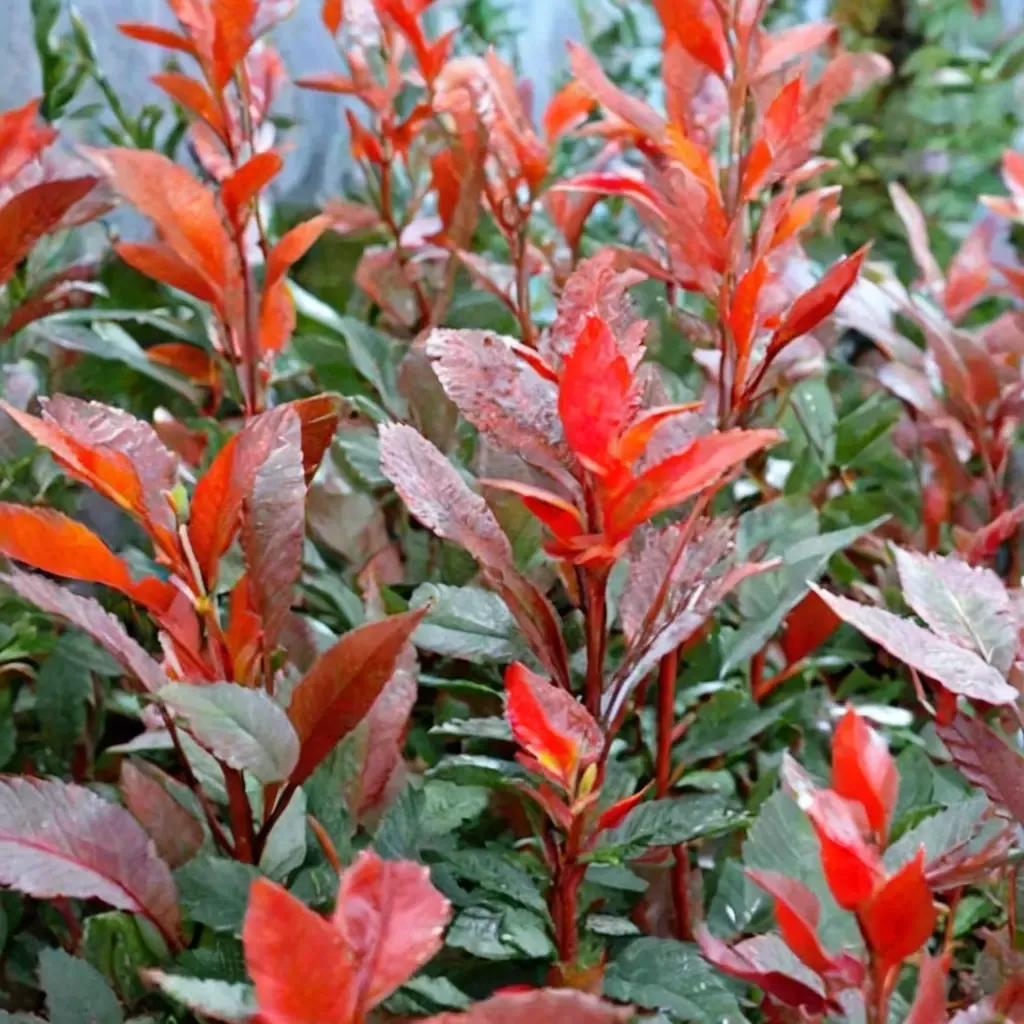
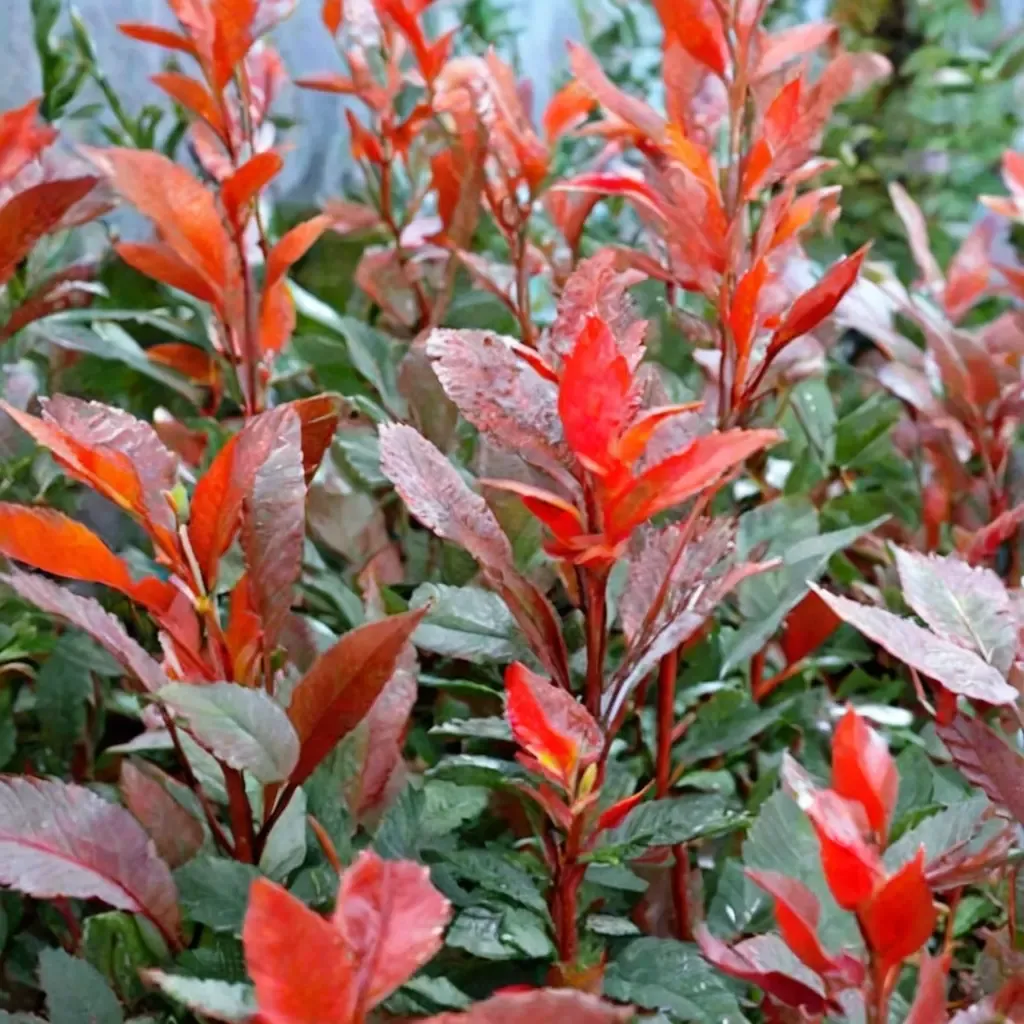
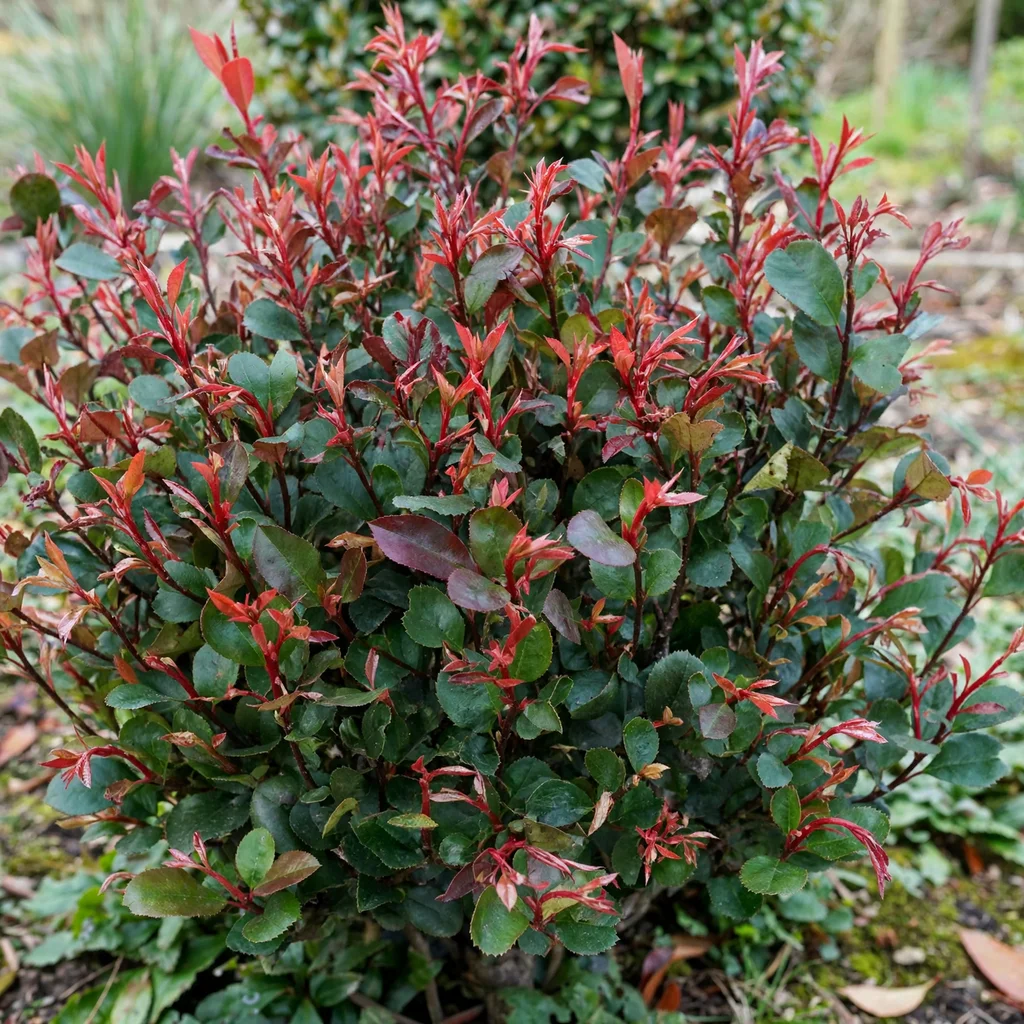
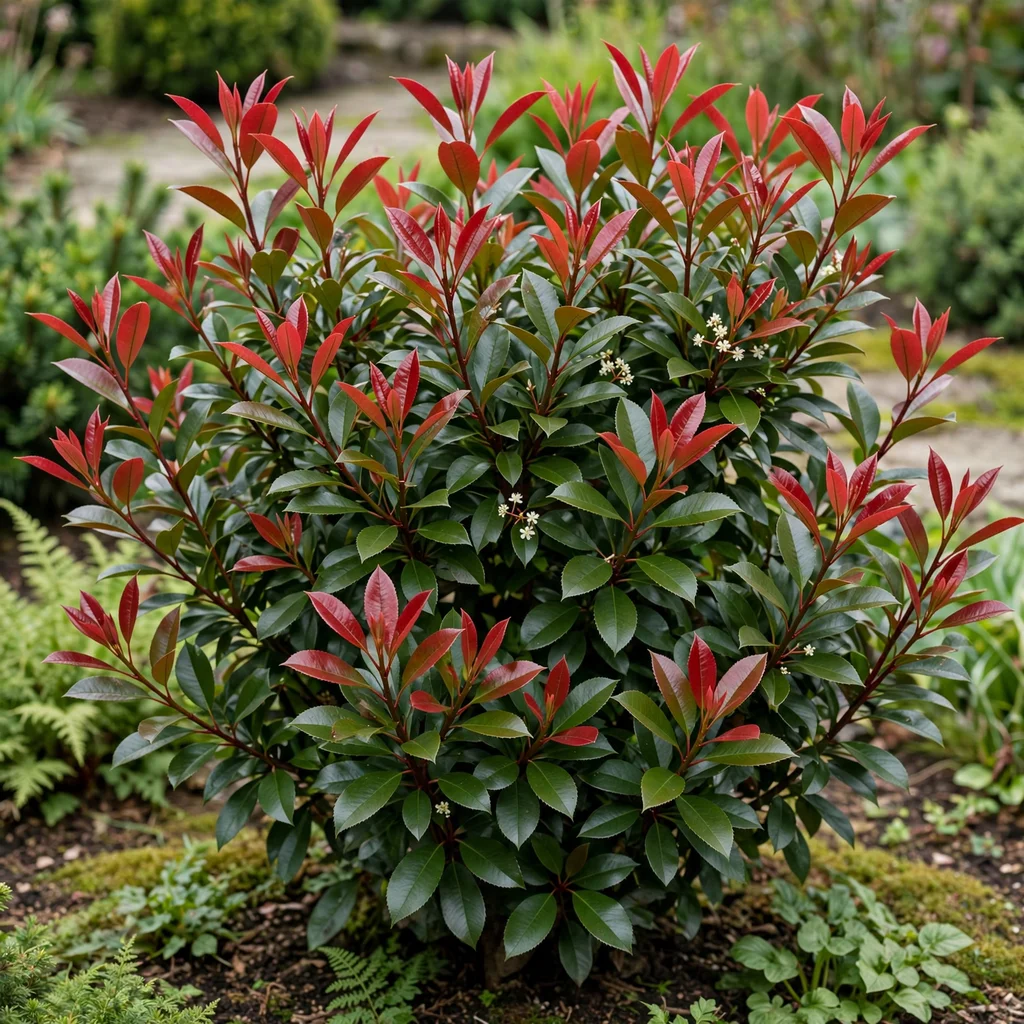
'Red Robin' is distinguished by its compact, bushy form and brilliant crimson-red new foliage that emerges in spring before maturing to a glossy dark green. This cultivar is widely utilized for formal hedging and privacy screens due to its rapid growth and dense branching structure.
Uses & Benefits:
Essentials
At a Glance
Plant Type
Shrub
Height
157"
Width
118"
Light
Full Sun, Partial Sun
Zones
7, 8, 9
Water
Low to moderate
Humidity
Moderate
Lifespan
Multi-decade
Native To
Garden origin (hybrid of Asian parents)
Toxicity
Toxic to pets and humans if ingested
Bloom period
Mid-spring – Late spring
In flower about 2 months of the year
Planting
How to Grow
- Select a planting site in full sun to partial shade with well-drained soil.
- Dig a hole twice as wide as the root ball and set the plant at the same depth it was in the container.
- Backfill with native soil, water deeply to settle, and apply a layer of mulch to retain moisture.
- Water regularly during the first growing season to establish a deep, drought-tolerant root system.
Pro Tip
Selective pruning with hand secateurs just above leaf nodes prevents the unsightly brown, necrotic leaf edges caused by mechanical hedge shears. Avoid planting this cultivar in enclosed, humid spaces with poor air circulation, which triggers severe outbreaks of Entomosporium leaf spot.
Keep It Thriving
Care Guide
Do
- Prune lightly one to three times during the spring and summer to stimulate fresh red growth flushes.
- Use hand secateurs to make clean cuts just above leaf nodes.
- Water at the base of the plant to keep the foliage dry and minimize fungal leaf spot.
Don't
- Do not prune in fall, as this stimulates tender new growth that is easily damaged by winter frost.
- Do not plant in poorly drained, waterlogged soils where the roots are prone to rot.
- Do not use mechanical hedge trimmers that slice the large leaves and leave brown, necrotic edges.
Seasonal Care Calendar
| Task | Jan | Feb | Mar | Apr | May | Jun | Jul | Aug | Sep | Oct | Nov | Dec |
|---|---|---|---|---|---|---|---|---|---|---|---|---|
| Fertilize | ||||||||||||
| Pest Check | ||||||||||||
| Propagate | ||||||||||||
| Prune |
Watch Out For
Pests & Diseases
Common Pests
Common Diseases
In the Garden
Landscape Uses & Companions
Landscape Uses
Companion Plants
Multiply
Propagation Methods
Good to Know
Common Questions
Red Tip Photinia questions
What zones can Red Tip Photinia grow in?
Red Tip Photinia is hardy in USDA Zones 7–9. Inside that range it survives winter in the ground; outside it, grow it as an annual or a container plant you protect.
Is Red Tip Photinia deer resistant?
Not reliably. Deer may browse Red Tip Photinia, especially tender spring growth — plan on repellents or fencing where pressure is high.
When does Red Tip Photinia bloom?
Red Tip Photinia typically blooms in mid-spring through late spring. Exact timing shifts a week or two with your zone — Sow's bloom calendar maps it to your garden.
Does Red Tip Photinia need full sun?
Red Tip Photinia does best in full sun to part shade. In hot climates, afternoon shade keeps blooms fresher longer.
Is Red Tip Photinia drought tolerant?
Yes — once established (usually after the first full season), Red Tip Photinia handles dry spells with minimal watering. Water deeply its first year to build the root system that makes that possible.
More Photinia to compare
Keep exploring
Explore the genus
Hardy in your zone?
Grow Red Tip Photinia with confidence
See it in a design of your actual yard, get zone-matched care reminders, and track it season by season in your garden journal.