14 saves
Photinia
We track 8 varieties; the ones most used by real gardeners.
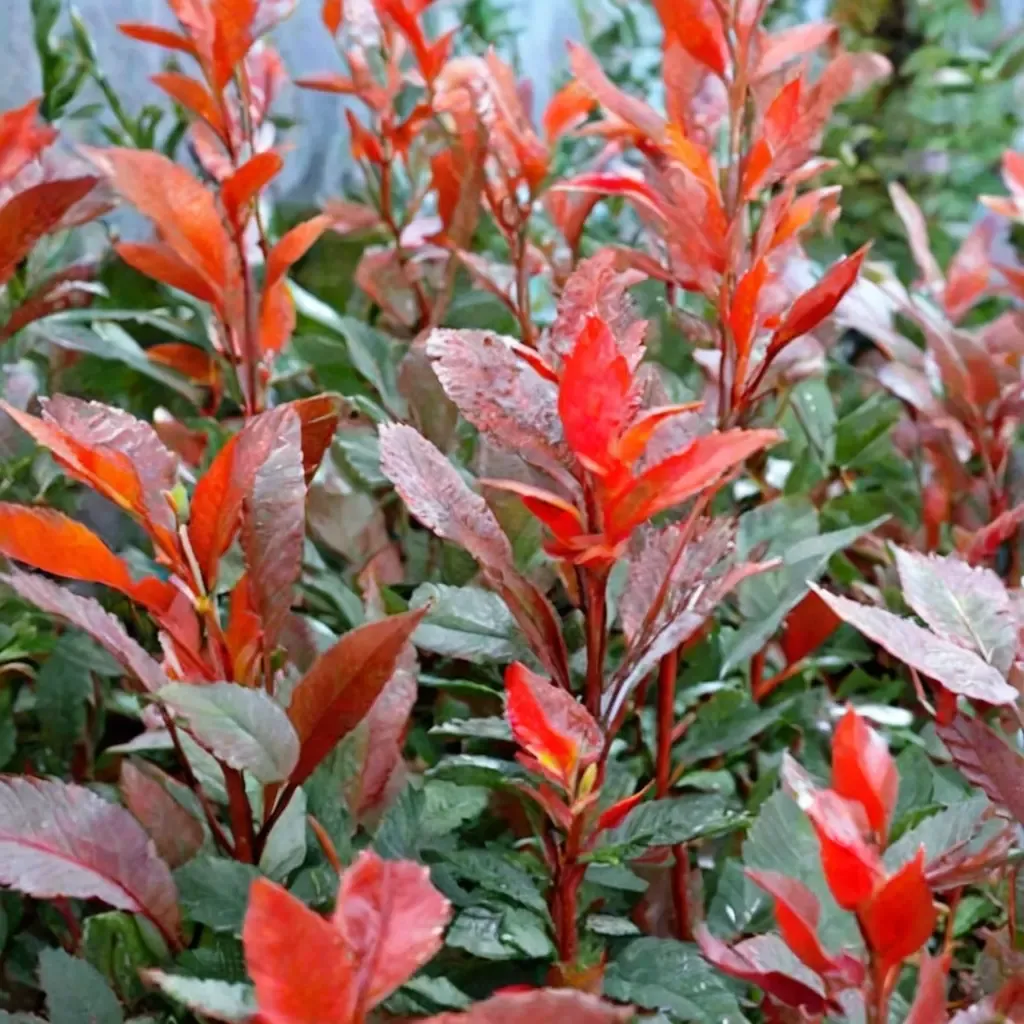
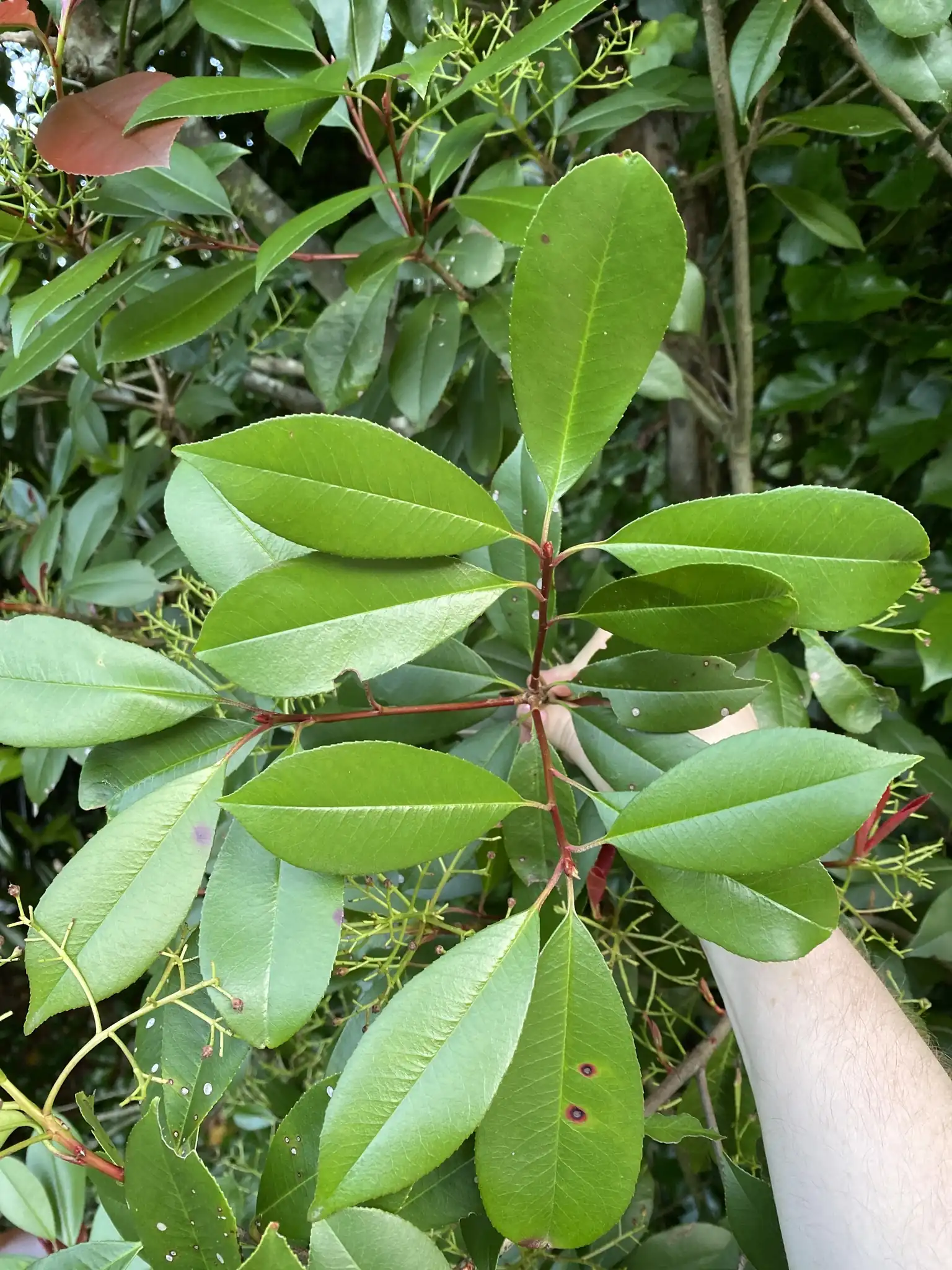
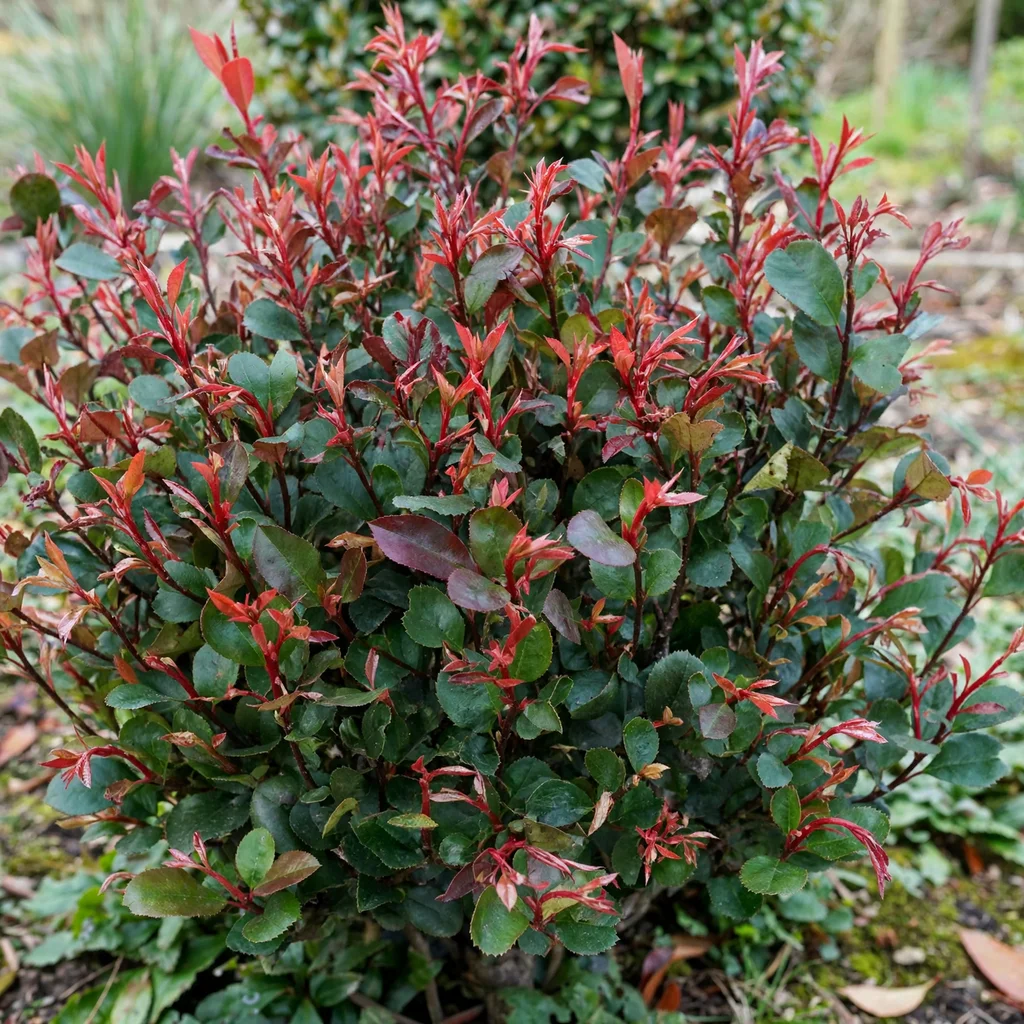
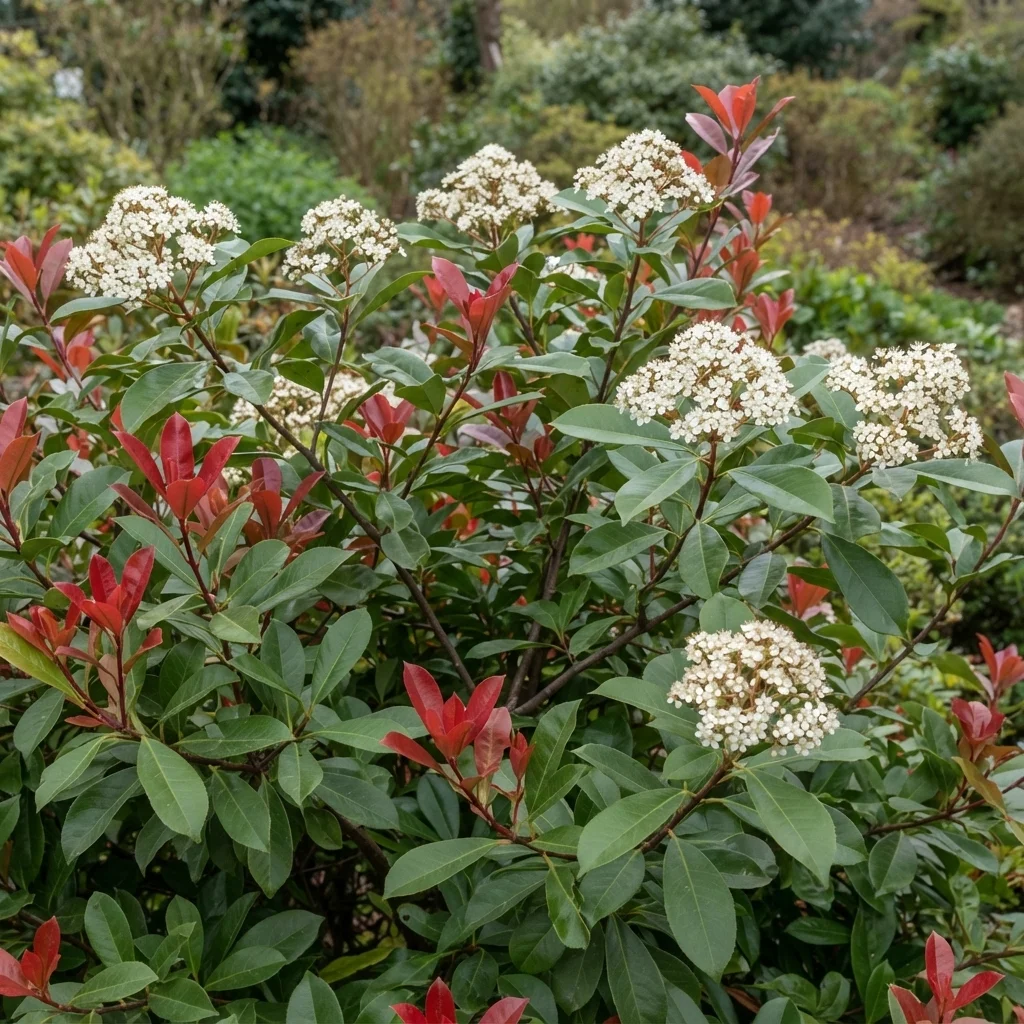
The 5 most-saved Photinia varieties
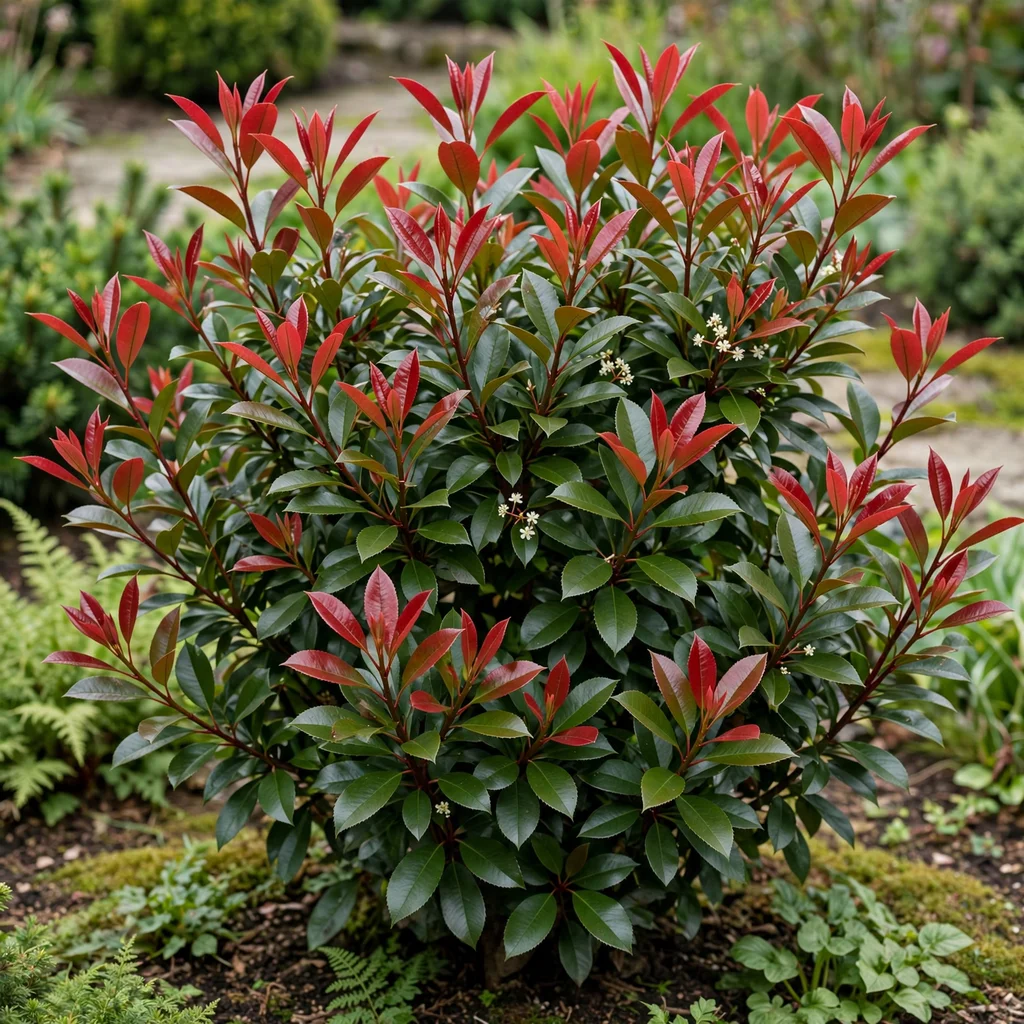
Browse all 8 Photinia varieties →
2 species of Photinia
Each one is a parent of the varieties above.
Track your Photinia in Sow
Save the Photinia you grow and get care reminders timed to your zone.
How to grow Photinia
Whats common across all Photinia varieties in our catalog — drawn from the care records of the 8 most-grown of them.
The Photinia year
- PruneMay and June100% of varieties
Prune lightly after the first red flush fades to stimulate secondary red growth.
- FertilizeMarch88% of varieties
Apply a balanced granular fertilizer at the base in early spring.
- Check for PestsMay–July88% of varieties
Inspect leaf undersides for spider mites and check for signs of leaf spot.
- Spring CleanupMarch38% of varieties
Rake up and destroy any fallen leaves to eliminate overwintering fungal spores.


Do
- Water the root zone directly to keep the foliage dry.
- Prune lightly in late spring to encourage a second flush of red leaves.
- Space plants generously to ensure excellent air circulation around the canopy.
- Prune selectively in late spring or early summer after flowering to stimulate a fresh flush of red foliage.
- Ensure adequate spacing between plants to maximize air movement and prevent fungal leaf diseases.
Avoid
- Do not use overhead sprinkler irrigation, which spreads fungal spores.
- Do not prune hard into old, bare wood lacking active leaves.
- Do not plant in waterlogged heavy clay or highly alkaline soils.
- Do not prune hard into old, leafless bare wood, as it fails to regenerate reliably.
What goes wrong with Photinia
| Problem | What you'll see | What to do |
|---|---|---|
| Aphids | Curled, distorted new growth and sticky honeydew on the leaves. | Blast the shoots with a strong stream of water or apply insecticidal soap. |
| Scale insects | Appear as small, immobile bumps on stems and leaves, depleting plant vigor. | Treat with dormant spray oils in late winter or apply systemic insecticides. |
| Spider mites | Fine webbing on leaf undersides and stippled, dusty-looking foliage. | Increase humidity around the plant and spray with horticultural oil. |
| Deer | Browse on the evergreen foliage and young bark, particularly during winter. | Install physical barriers or apply commercial scent-based repellents. |
| Entomosporium leaf spot | Small, circular red-purple spots on young leaves that expand, develop grey centers, and cause severe defoliation. | Rake and destroy fallen leaves, avoid overhead watering, and apply a preventive copper fungicide in early spring. |
| Fire blight | Sudden blackening and wilting of flower clusters and twigs, resembling fire damage. | Prune infected branches 8 inches below the visible damage, sterilizing tools between cuts with rubbing alcohol. |
| Powdery mildew | Creates a white, powdery fungal coating on the surfaces of leaves and young shoots. | Space plants properly to increase sun exposure and apply preventative fungicides if necessary. |
Making more Photinia
Semi-hardwood cuttings
- Take 4-inch cuttings from semi-mature wood in late summer.
- Remove the lower leaves and dip the cut end in rooting hormone.
- Insert the cutting into a moist, free-draining propagation mix.
- Keep in a humid, warm environment with indirect light until roots establish.
Semi-ripe cuttings
- Take 4-to-6-inch cuttings of semi-ripe wood during the summer months.
- Remove the lower leaves, leaving only the top two or three pairs.
- Dip the cut base in rooting hormone powder to encourage root development.
- Insert into a well-draining propagation mix and maintain high humidity until roots form.
Photinia questions
How many types of Photinia are there?
The Sow catalog tracks 8 distinct Photinia varieties. The most popular — ranked by 14 real gardeners — are shown first above.
What zones does Photinia grow in?
Across its varieties, Photinia covers USDA Zones 6–10. Individual varieties differ — each plant page lists its exact range, and Sow filters the catalog to your zone automatically.
When does Photinia bloom?
Most Photinia varieties bloom in late spring, spring, mid spring. Staggering early, mid, and late varieties extends the genus's season in one bed.
Which Photinia should I choose?
Start from the most-saved varieties above — popularity across thousands of gardens is a strong signal of reliability — then filter by your zone and sun. In the Sow app you can preview any of them in a photo of your actual yard before you buy.