The Story
Plant Bio
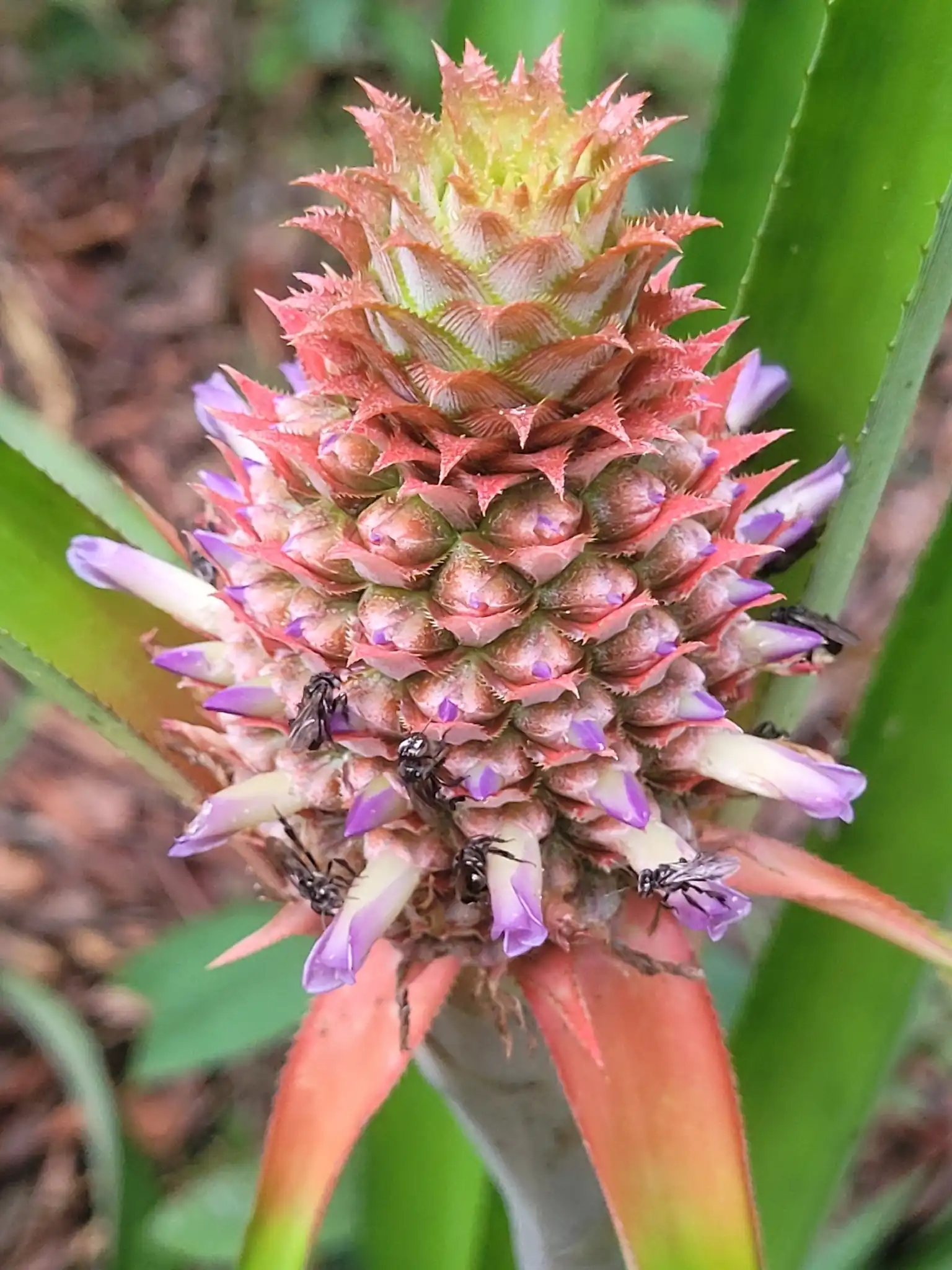
Ananas comosus is a slow-growing, clump-forming tropical perennial that produces a stiff rosette of arching, sword-shaped leaves. The central foliage whorl gives rise to a dense, heavy spike of fused purplish-red flowers topped by a leafy crown, which matures into the edible pineapple fruit.
The long, strap-like leaves feature sharp, serrated spines along the margins that require careful handling. This species utilizes Crassulacean Acid Metabolism (CAM) to conserve water, providing excellent drought tolerance once established.
Uses & Benefits:
Essentials
At a Glance
Plant Type
Tropical
Height
60"
Width
48"
Light
Full Sun
Zones
10
Water
Low to moderate
Humidity
Moderate to high
Lifespan
Perennial
Native To
South America
Toxicity
Skin and oral mucous membrane irritant (bromelain, sharp spines)
Bloom period
Spring – Summer
In flower about 6 months of the year
Planting
How to Grow
- Select a planting site in full sun with sandy, highly porous, acidic soil.
- Plant bare-root crowns or plugs shallowly, ensuring the central growth whorl remains above the soil line.
- Water thoroughly upon planting, then allow the soil to dry out completely before watering again.
- Apply a balanced, low-dose fertilizer sparingly only during the active warm growing season.
Pro Tip
Avoid planting in heavy clay or overwatering; exceptional soil aeration and a distinct dry-down cycle between waterings are vital to prevent Phytophthora root rot.
Keep It Thriving
Care Guide
Do
- Grow in containers in zones colder than USDA 10 to move indoors before freezing temperatures occur.
- Wear thick gloves when handling the foliage to protect against the sharp, spiny leaf margins.
- Ensure the planting container or bed has exceptional drainage to prevent waterlogging.
Don't
- Do not prune into old, leafless wood, as this will result in slow and patchy regrowth.
- Do not overwater or allow the roots to sit in standing water, which triggers rapid root rot.
- Do not ingest large amounts of raw fruit juice if you have sensitive oral mucous membranes, due to the irritating bromelain enzyme.
Seasonal Care Calendar
| Task | Jan | Feb | Mar | Apr | May | Jun | Jul | Aug | Sep | Oct | Nov | Dec |
|---|---|---|---|---|---|---|---|---|---|---|---|---|
| Fertilize | ||||||||||||
| Harvest | ||||||||||||
| Pest Check | ||||||||||||
| Winter Prep |
Watch Out For
Pests & Diseases
Common Pests
Common Diseases
In the Garden
Landscape Uses & Companions
Landscape Uses
Companion Plants
Multiply
Propagation Methods
Good to Know
Common Questions
Pineapple questions
What zones can Pineapple grow in?
Pineapple is hardy in USDA Zone 10. Inside that range it survives winter in the ground; outside it, grow it as an annual or a container plant you protect.
Is Pineapple deer resistant?
Not reliably. Deer may browse Pineapple, especially tender spring growth — plan on repellents or fencing where pressure is high.
When does Pineapple bloom?
Pineapple typically blooms in spring through summer. Exact timing shifts a week or two with your zone — Sow's bloom calendar maps it to your garden.
Does Pineapple need full sun?
Pineapple does best in full sun (6+ hours).
Is Pineapple drought tolerant?
Yes — once established (usually after the first full season), Pineapple handles dry spells with minimal watering. Water deeply its first year to build the root system that makes that possible.
Keep exploring
Explore the genus
Hardy in your zone?
Grow Pineapple with confidence
See it in a design of your actual yard, get zone-matched care reminders, and track it season by season in your garden journal.